




Louis Style Dressing Table
A louis style dressing table brings continental elegance to a bedroom, combining ornate woodwork with practical compartments for daily use.
Louis Style Dressing Table
A louis style dressing table represents the enduring appeal of French court design, adapted across the nineteenth and early twentieth centuries into practical bedroom furniture. These pieces frequently incorporate hinged lids, integrated mirrors, and concealed compartments designed for cosmetics and personal items.
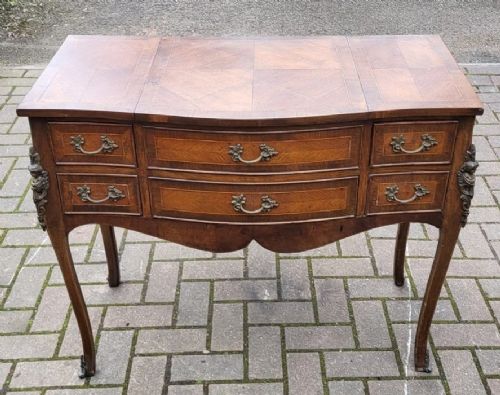
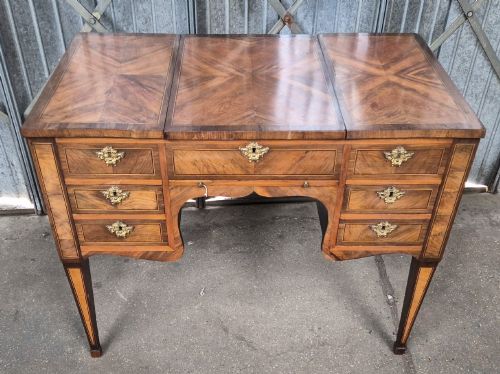
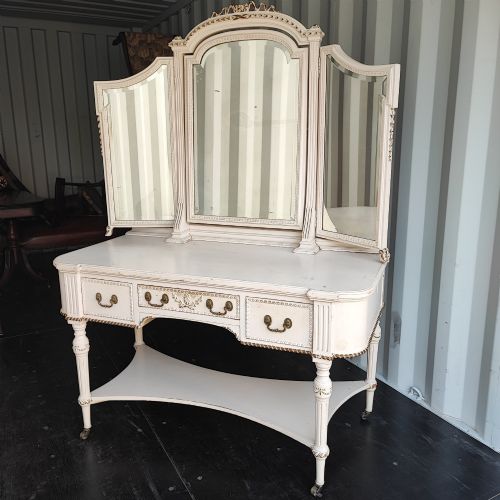
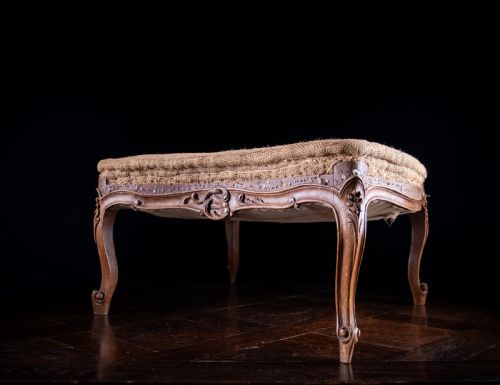
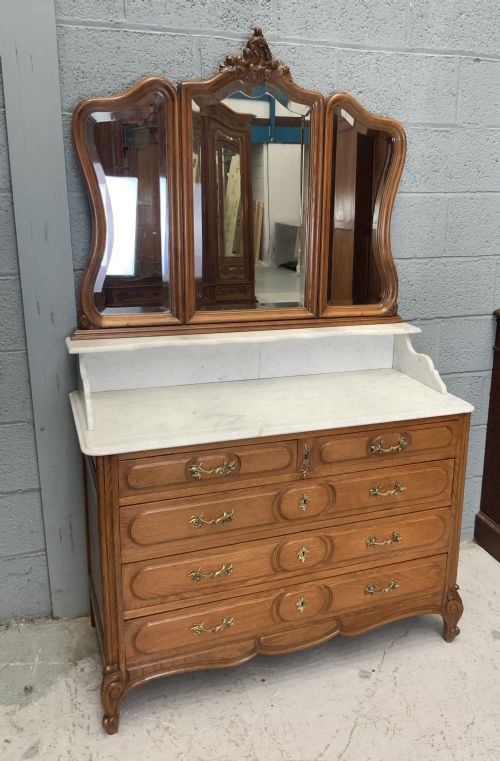
The versions most commonly found here date from the Victorian era through to the early twentieth century, reflecting revivals of Louis XV and Louis XVI aesthetics. They appear in forms such as kidney-shaped poudreuses, walnut dressing tables with triple mirrors, and occasional tables adapted for vanity use.
How they were made
Cabinet makers utilised fine timbers such as walnut, mahogany, kingwood, tulipwood, and rosewood, often displaying elaborate marquetry or crossbanded veneers. Carved beech and painted wood also feature prominently, particularly in pieces following Louis XVI or provincial French traditions.
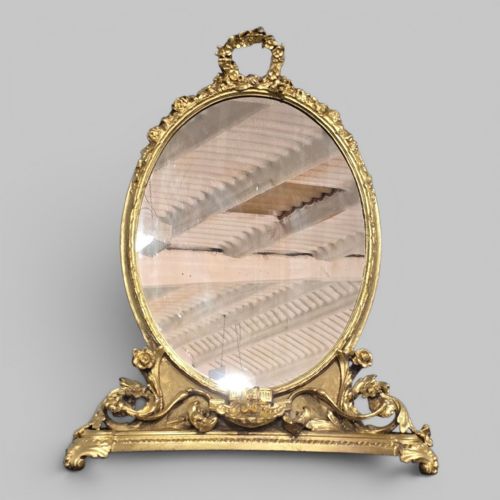
Metal mounts in orrmolu, brass, and gilt work provide decorative contrast to the timber surfaces, accentuating structural curves and drawer edges. Glass mirrors, frequently triple-folding or oval, complete the construction of dressing tables and associated vanity pieces.
Louis Style Dressing Table Retail Price Guide 2026
Typical asking prices for louis style dressing table among the pieces listed under this phrase on Sellingantiques today, from the lower quarter to the upper quarter. They describe what is for sale here now, not the wider market.
Materials recorded across the inventory include walnut, rosewood, kingwood, tulipwood, mahogany, satinwood, brass, orrmolu, fabric, and painted wood.
What varies in quality
Quality rests heavily on the precision of the cabinetwork, particularly the execution of marquetry patterns and the seamless fit of hinged lids and drawers. Superior examples maintain crisp, hand-carved detailing in the wood and secure, finely chased metal mounts rather than mass-produced castings.
The choice of underlying timber and veneer selection dictates the overall presence of the piece, with richly figured walnut, kingwood, or tulipwood elevating the visual depth. Original glass and well-preserved surface finishes also distinguish finer workshops from more utilitarian productions.
Maples of London and Paris
The Louis Style Dressing Table Glossary
- Poudreuse
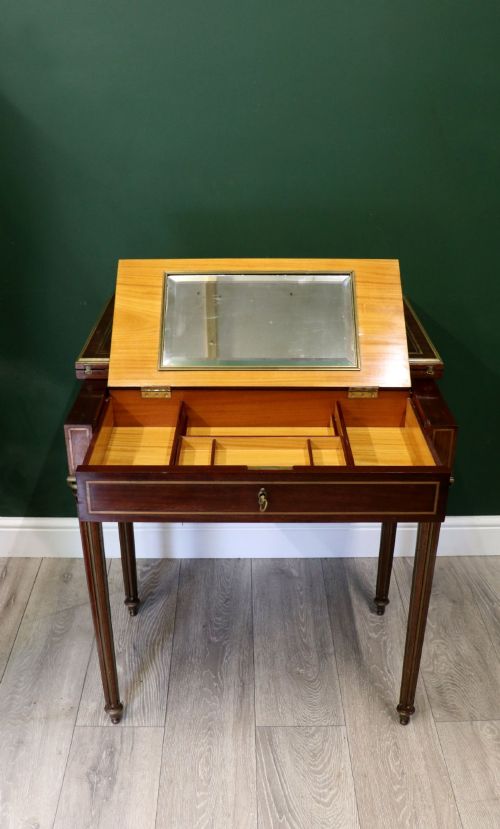
- A traditional French dressing table featuring a hinged top that opens to reveal a mirror and compartments for powder and cosmetics. These low tables often include pull-out writing slides.
- Ormolu
- Gilded bronze mounts applied to furniture for decorative effect, highly characteristic of French revival pieces. The finish requires careful hand-chiselling after casting to achieve sharp detail.
- Marquetry
- The art of applying decorative veneer pieces in various woods to form geometric or floral patterns. Master cabinet makers used contrasting natural tones to create depth without resorting to paint.
- Cheval mirror
- A full-length dressing glass suspended on a vertical frame allowing it to tilt. These freestanding mirrors frequently accompany dressing tables in matching timbers.
Louis Style Dressing Table: Frequently Asked Questions
What is a poudreuse?
A poudreuse is a specific type of French dressing table equipped with a multi-section hinged top that opens to expose a mirror and storage wells. They originated as compact vanity units for elite boudoirs during the eighteenth century.
Nineteenth and early twentieth-century revivals kept this practical layout alive, making them popular for modern bedrooms where concealed storage is beneficial.
How do Louis XV and Louis XVI styles differ?
Louis XV furniture is defined by asymmetrical curves, exuberant floral carvings, and flowing cabriole legs reflecting the Rococo movement. It avoids straight lines in favour of organic, fluid shapes.
Louis XVI style marks a return to neoclassical symmetry, featuring straight fluted legs, rectangular proportions, and restrained geometric or classical ornamentation.
Where should I place a dressing table?
These tables suit bedrooms or dressing rooms where natural light can reach the mirror surface from the side rather than directly behind. Positioning them near a window maximises their utility for daily grooming.
They also function effectively as occasional writing desks in reception rooms when the folding mirror remains closed.
How do I care for antique veneer?
Antique veneer requires protection from direct sunlight and extreme humidity changes, which can cause the underlying glue to dry and the wood to warp. Regular dusting with a dry, soft cloth preserves the polished surface.
Avoid using modern silicone-based polishes, opting instead for traditional beeswax applied sparingly to nourish the timber.