

Louis Style Drawers
Louis style drawers bring sculptural curves and rich French character into a room.
Louis Style Drawers
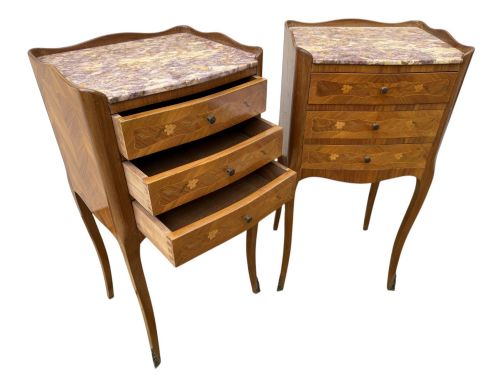
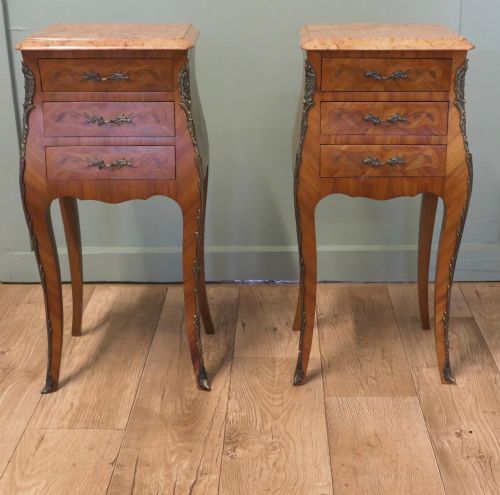
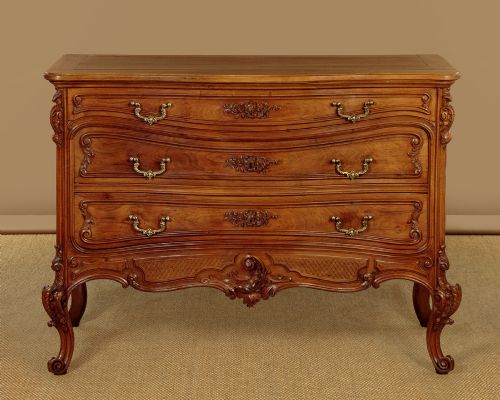
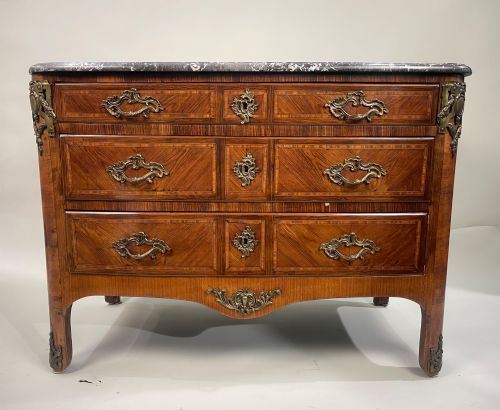
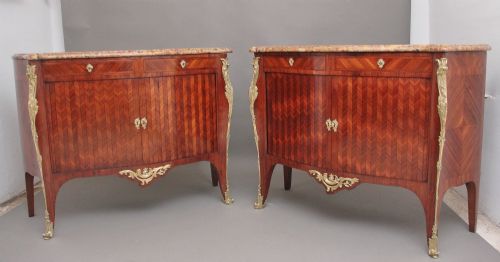
When you search for louis style drawers, you encounter pieces spanning from the eighteenth century to the early twentieth century, taking the form of commodes, bedside cabinets and chests of drawers. The eighteenth-century examples and later revivals display characteristic serpentine lines, bombe profiles and marquetry work.
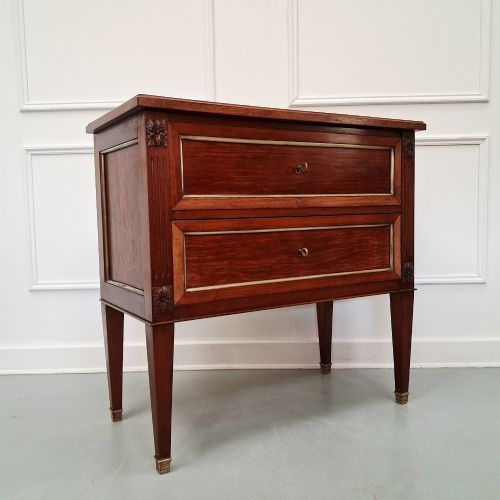
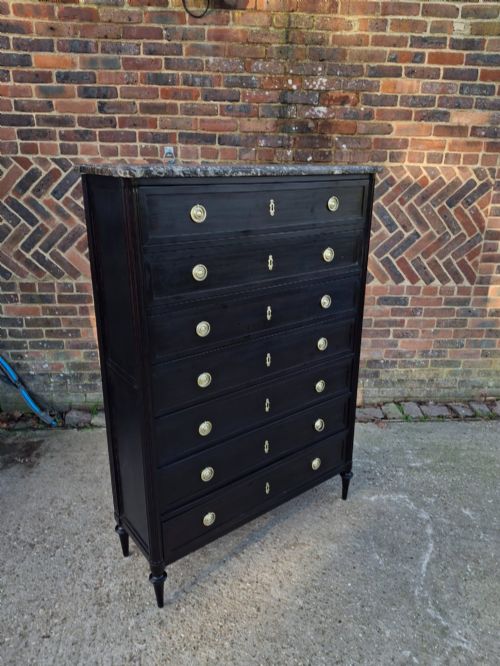
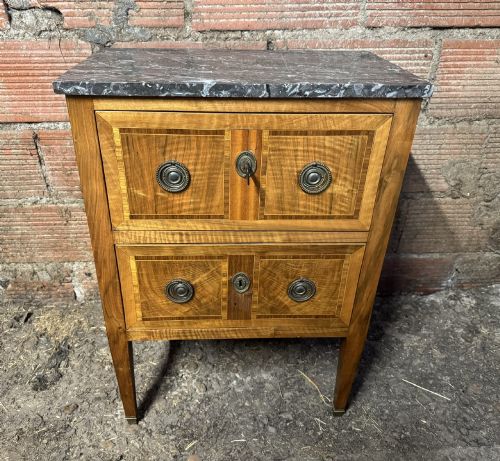
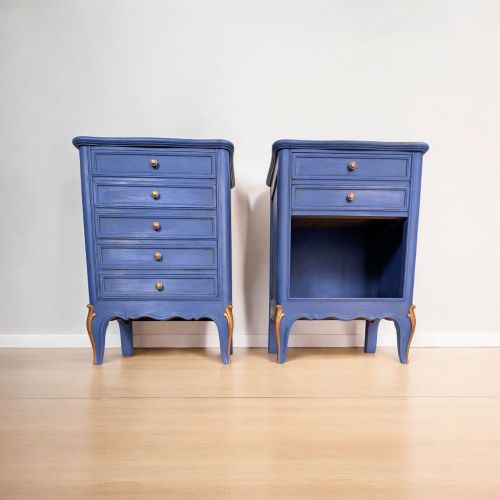
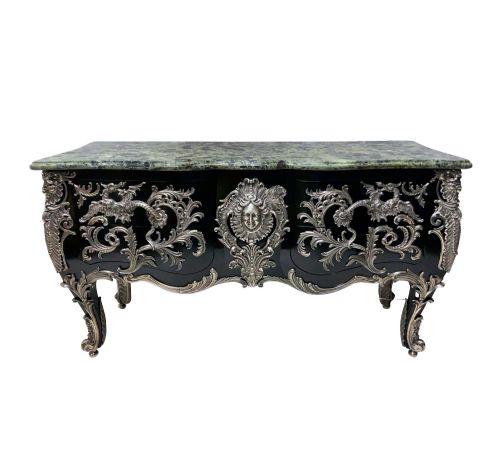
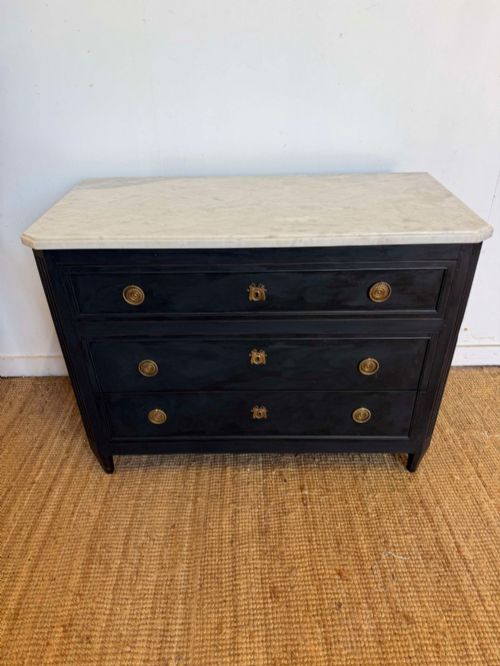
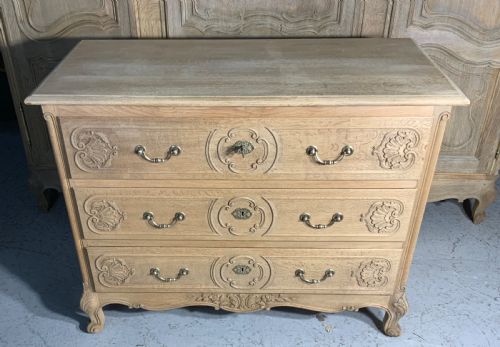
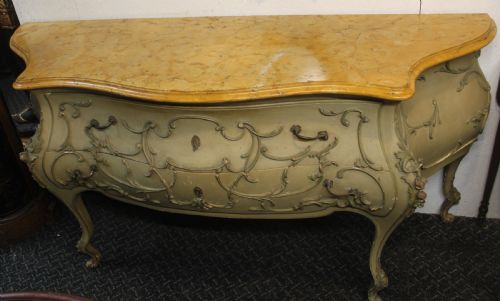
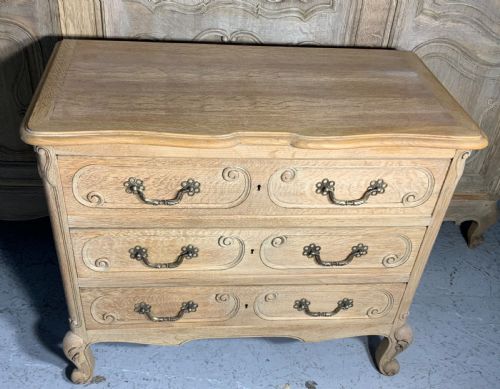
The pieces on this page are predominantly nineteenth-century and early twentieth-century interpretations of French Louis XV and Louis XVI designs. These range from substantial marble-topped commodes with gilt-bronze mounts to simpler provincial walnut and oak bedside chests.
Materials and construction
Cabinetmakers utilised dense timbers such as kingwood, walnut, mahogany and tulipwood, often laying them in intricate parquetry or marquetry patterns across the surfaces. Vernis Martin finishes and lacquered panels also appear on select pieces.
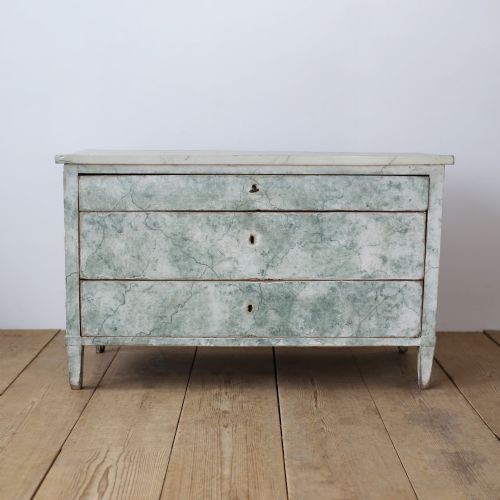
Heavy cast ormolu and gilt-bronze mounts decorate the corners, handles and feet, while thick slabs of marble top many of the commodes and cabinets. Carved oak and painted finishes serve in the provincial and country pieces.
Louis Style Drawers Retail Price Guide 2026
Typical asking prices for louis style drawers among the pieces listed under this phrase on Sellingantiques today, from the lower quarter to the upper quarter. They describe what is for sale here now, not the wider market.
Listings feature pieces spanning from the eighteenth century through to the nineteen-thirties, executed in walnut, kingwood, mahogany and oak.
Distinctions in quality
The finer pieces show crispness in the casting of the ormolu mounts and precision in the cut of the marquetry veneers. Substantial weight in the marble tops and smoothness in the movement of the drawers separate superior examples from standard production.
The choice of timber grain and the complexity of the serpentine or bombe shaping dictate the visual depth of a piece. Artisanal hand-carving on the walnut and oak frames adds distinction to the provincial variants.
The Louis Style Drawers Glossary
- Commode
- A low chest of drawers, typically decorative and fitted with a marble top. These form the core of French antique storage furniture.
- Ormolu
- Gilded bronze used for decorative mounts and handles on furniture. The quality of the chasing defines the work.
- Bombe
- An outward-swelling, bulging contour found on the front and sides of furniture. It requires considerable skill in veneer work.
- Marquetry
- Patterns formed by inserting pieces of coloured wood into a veneer background. Floral and geometric motifs are common.
- Vernis Martin
- A simulated Japanese lacquer technique developed in France. It produces a glossy, translucent finish on panels.
Louis Style Drawers: Frequently Asked Questions
What is a commode?
A commode is a low chest of drawers, generally standing at waist height and frequently topped with marble. In French furniture tradition, it serves as both a functional storage piece and a decorative centrepiece.
These pieces often feature curved fronts and elaborate bronze mounts. They sit comfortably in reception rooms, hallways or bedrooms.
How do I identify Louis XV style?
Louis XV style furniture is characterised by asymmetry, curved lines and naturalistic rococo motifs. Pieces often display cabriole legs and serpentine fronts.
Straight lines are largely avoided in favour of flowing contours. The overall aesthetic is organic and ornate.
Are marble tops original?
Marble tops on these cabinets and chests are frequently original to the piece, serving as a heavy, durable working surface. They arrive in various colours, including white, grey and rouge.
When assessing a top, look for edge profiling that matches the curvature of the wooden frame below. Thickness and veining patterns offer clues to the period.
How do I care for kingwood veneer?
Kingwood veneer requires protection from direct sunlight and excessive moisture to prevent fading and lifting. Regular dusting with a soft, dry cloth maintains the polished surface.
Avoid placing these items near heat sources that might dry out the underlying timber. Occasional application of suitable wax helps preserve the lustre.