

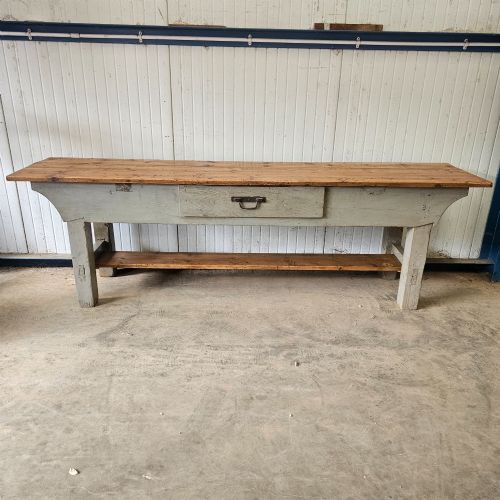



Long Wooden Work Table
A long wooden work table provides a sturdy surface for daily tasks, combining practical utility with centuries of character.
Long Wooden Work Table
A long wooden work table serves heavy daily tasks in domestic and commercial spaces, originating from periods such as the Georgian era and the late nineteenth century. These pieces encompass utilitarian forms like drapers tables, laundry tables, and kitchen preparation tables designed for active service.
Buyers most frequently encounter provincial pieces rooted in French country traditions, alongside examples originating from British rural workshops. These survivors often display generous proportions, accommodating large gatherings or extensive workspace requirements.
The styles seen on this page lean heavily towards rustic farmhouse and provincial aesthetics, eschewing formal ornamentation in favour of honest utility. Such tables frequently show the marks of their working past through surface wear and structural honesty.
Materials and construction
Makers utilised resilient timbers such as pine, oak, and fruitwood to construct these heavy-duty surfaces capable of withstanding constant friction and weight. Pine and fruitwood provide accessible domestic utility, while oak offers robust longevity for demanding environments.
Metal elements like brass and iron appear in structural brackets or functional fittings, reinforcing joints that endured heavy daily use. Paint finishes occasionally coat the pine bases, protecting the soft wood from moisture and wear.
Long Wooden Work Table Retail Price Guide 2026
Typical asking prices for long wooden work table among the pieces listed under this phrase on Sellingantiques today, from the lower quarter to the upper quarter. They describe what is for sale here now, not the wider market.
Some tables retain traces of old laundry starch or flour embedded deep within the grain from centuries of honest work.
Distinctions in quality
The integrity of the timber and the honesty of the construction separate everyday utility pieces from finer examples of period craftsmanship. Tables retaining their original untreated tops or authentic painted bases demonstrate superior historical preservation compared to heavily altered specimens.
Proportion and scale dictate the visual weight of the piece within a room, with balanced stretcher placement and considered leg thickness marking superior workshop execution. The depth of patination accumulated through decades of functional use adds considerable character to the better examples.
The Long Wooden Work Table Glossary
- Drapers table
- A long, narrow table traditionally utilised in textile shops for measuring and folding cloth, usually featuring lower shelves for stock storage.
- Fruitwood
- Dense timber derived from fruit-bearing trees such as pear or cherry, valued by makers for its smooth grain and warm tone.
- Patina
- The surface sheen and colour depth developed by wood and metal over decades of handling, cleaning, and exposure to light.
- Stretcher
- A horizontal wooden brace connecting the legs of a table to improve structural rigidity and prevent lateral movement.
Long Wooden Work Table: Frequently Asked Questions
How were these tables originally used?
These pieces served practical roles in domestic kitchens, dairies, and commercial drapery shops where durable surfaces were essential for daily labour. They accommodated food preparation, laundry sorting, and fabric cutting.
Over time, these utilitarian objects transitioned from working environments into domestic living spaces, where their generous proportions suit modern dining and working needs.
What woods are commonly found?
Pine and oak appear frequently in these listings, offering sturdy construction suited to heavy manual tasks and active household environments. Fruitwood also occurs, providing a denser surface with a distinct grain pattern.
Makers selected these timbers for local availability and structural reliability rather than decorative display, ensuring the furniture endured decades of strenuous work.
How do I care for the wooden top?
Maintain the surface by applying natural waxes periodically to nourish the dry timber and protect against moisture absorption. Avoid harsh chemical cleaners that strip the historical patination.
Use coasters and placemats to prevent heat rings and liquid stains from altering the vulnerable antique wood during daily use.
Are these pieces suitable for modern kitchens?
The generous dimensions and robust construction make them highly functional central islands or preparation surfaces in contemporary cooking spaces. Their historic character adds warmth and textural contrast to modern interiors.
Buyers should measure carefully to ensure clearance for movement around the substantial length and width typical of these tables.