



Long Bedroom Bench
A long bedroom bench brings proportion and function to the foot of a bed, offering a practical surface to sit upon or dress a room.
Long Bedroom Bench
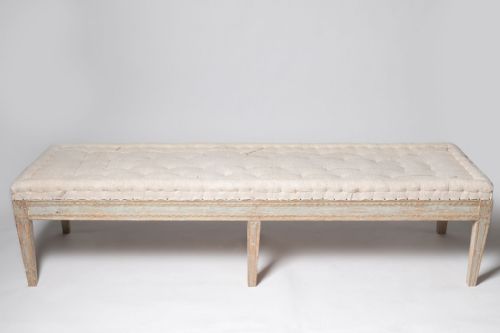
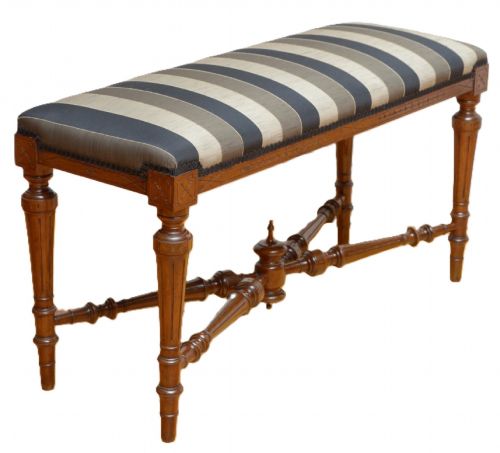
A long bedroom bench provides an extended seat at the foot of a bed or along a wall, bridging the gap between a standard stool and a full window seat. These pieces appear in forms ranging from early twentieth-century Swedish birch stools to nineteenth-century walnut window seats.
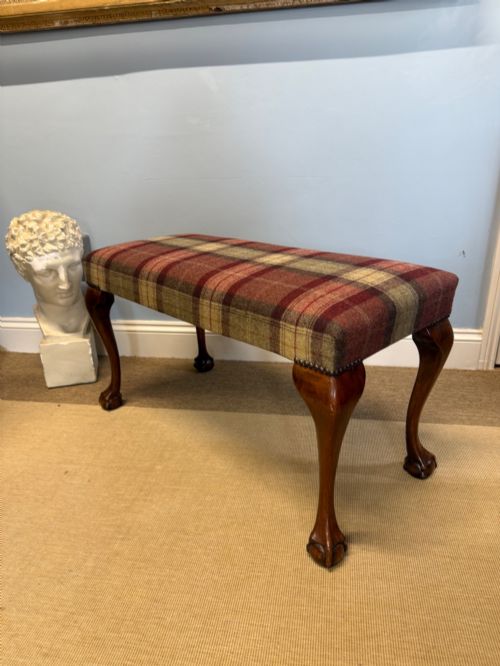
The versions most frequently encountered on this page combine upholstered tops with wooden frames, spanning styles from English country house to French provincial. They serve primarily as dressing stools, window seats, or low tables depending on their height and top construction.
Materials and Construction
Makers built these frames using dense hardwoods such as mahogany, walnut, birch, and painted wood, often incorporating carved details like ball and claw feet or fluted legs. Joinery methods of the nineteenth and early twentieth centuries relied on solid timber construction designed to support weight across extended spans.
Upholstery forms a central component, utilising fabrics such as linen, wool, and general textiles over padded foundations. Brass hardware and partial gilding appear selectively on specific Victorian and revival pieces to highlight structural contours.
Long Bedroom Bench Retail Price Guide 2026
Typical asking prices for long bedroom bench among the pieces listed under this phrase on Sellingantiques today, from the lower quarter to the upper quarter. They describe what is for sale here now, not the wider market.
Listings span the nineteenth century up to the 1920s, featuring walnut, mahogany, birch, and painted wood alongside linen and wool upholstery.
Distinctions in Quality
The refinement of the timber carving and the integrity of the frame construction determine the baseline quality of each piece. Frames utilising dense hardwoods like walnut or mahogany with hand-carved details sit firmly above simpler hardwood structures.
The quality of the upholstery execution and the choice of covering material, such as heavy linen or wool, significantly influence the finished character. Pieces retaining original structural joinery without excessive alterations demonstrate superior preservation.
The Long Bedroom Bench Glossary
- Window seat
- A long, narrow bench designed specifically to fit the architectural recess of a window. These often feature upholstered tops and short legs.
- Duet stool
- An extended seating form originally intended for two people playing a piano together. They frequently appear repurposed as bedroom benches.
- Ball and claw
- A decorative foot motif depicting a bird's talon clutching a ball. This detail is commonly found on revival furniture from the late nineteenth and early twentieth centuries.
- Fluted legs
- Vertical parallel grooves carved into furniture legs to create a classical decorative effect. This treatment appears frequently on neoclassical and revival seating.
Long Bedroom Bench: Frequently Asked Questions
Where should I place a long bedroom bench?
These benches sit most naturally at the foot of a bed to anchor the room's proportions and provide a surface for laying out clothes. They also function effectively positioned against an empty hallway wall or beneath a wide window.
Ensure you measure the width of your bed frame against the length of the bench to maintain balanced visual clearance on either side.
How do I clean upholstered bench fabric?
Routine maintenance involves gentle vacuuming with a soft brush attachment to lift surface dust from the textile fibres. Spot cleaning depends entirely on whether the covering is linen, wool, or standard fabric.
Consult the specific textile type before applying moisture to prevent water marks or shrinkage in older or delicate materials.
Can these benches be used as coffee tables?
Certain low-profile upholstered benches with firm padding function adequately as makeshift coffee or magazine tables when paired with a rigid tray. Flat-topped variants adapt much better to this secondary use than deeply cushioned seating.
Consider the height of the frame relative to your surrounding furniture before utilising a bench for holding objects.
How do I identify nineteenth-century woodwork?
Nineteenth-century pieces generally exhibit dense, heavy hardwoods like mahogany and walnut with hand-finished surfaces rather than modern factory veneers. Inspect the underside of the frame for traditional joinery marks and tool signatures.
Comparing the turned leg profiles and hardware against established period styles helps confirm the era of manufacture.