

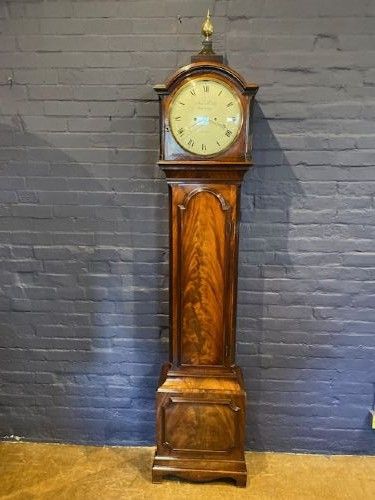
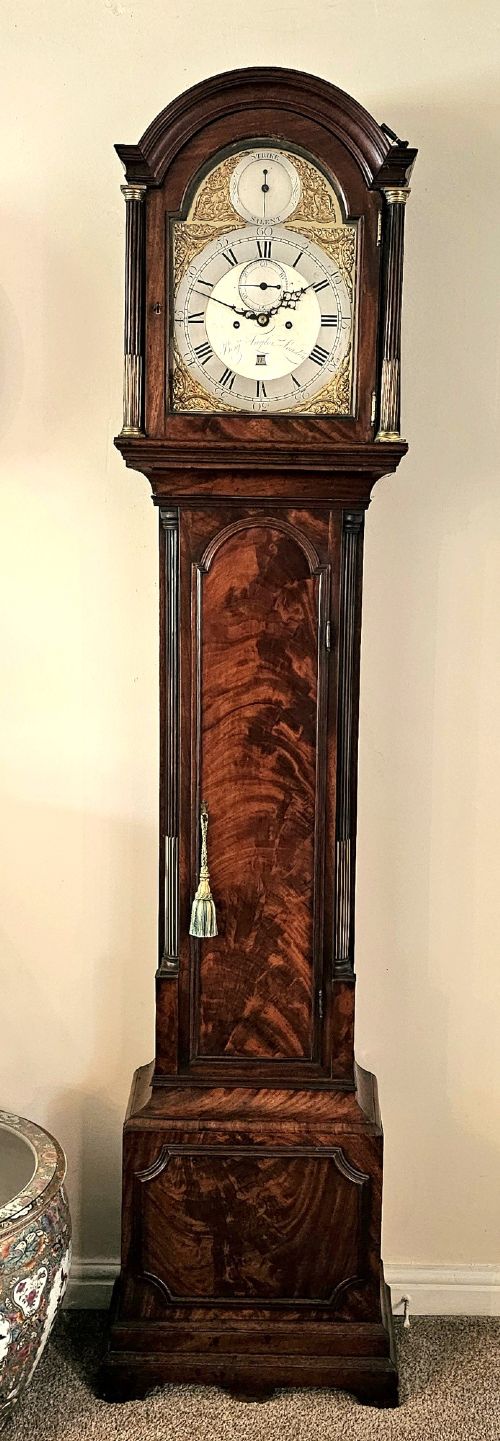
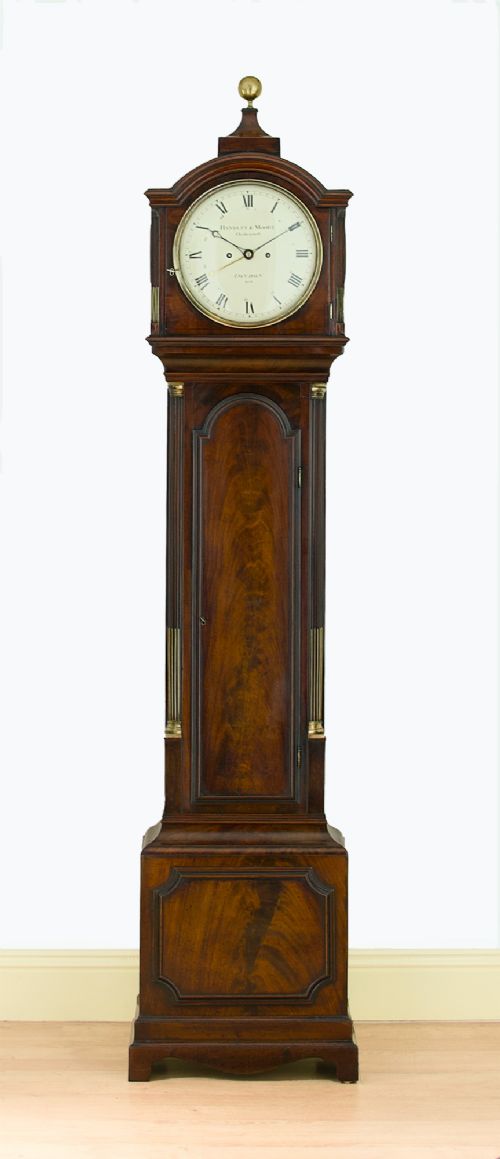
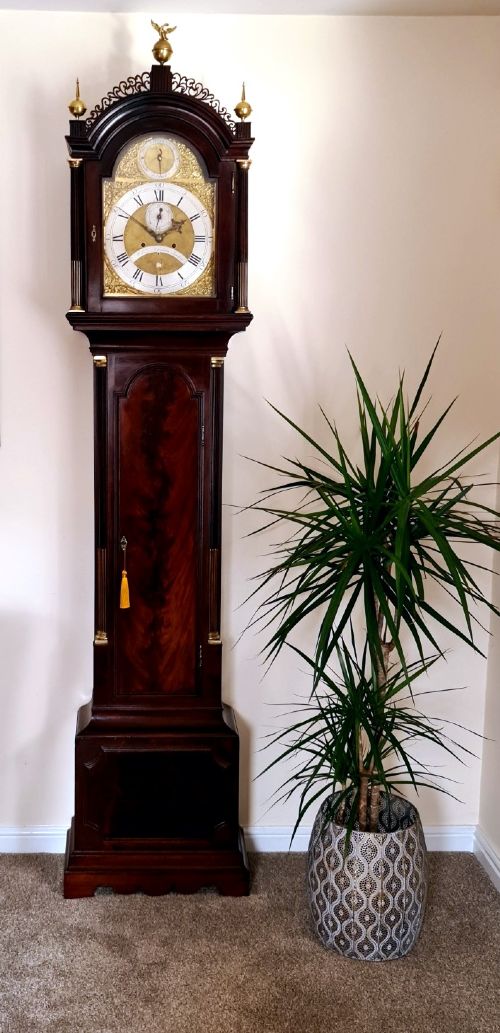


London Grandfather Clock
A london grandfather clock measures the passage of hours through centuries of metropolitan skill, offering a commanding presence in a hall or stairwell.
London Grandfather Clock
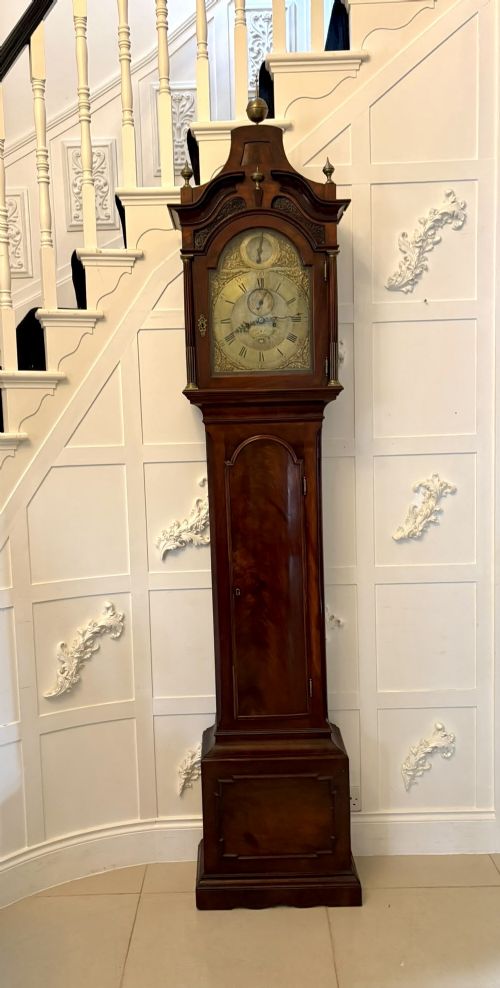
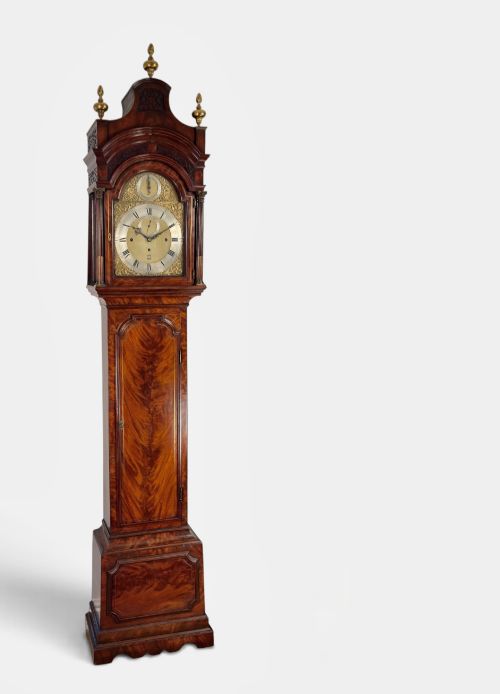
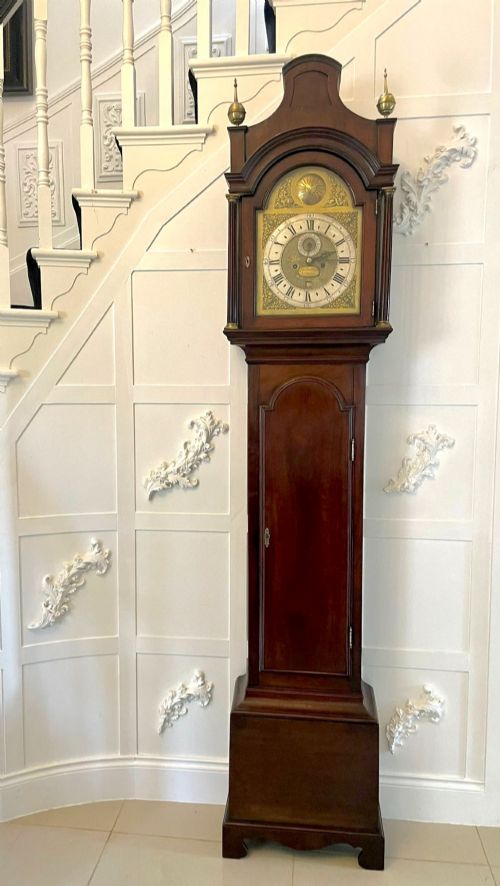
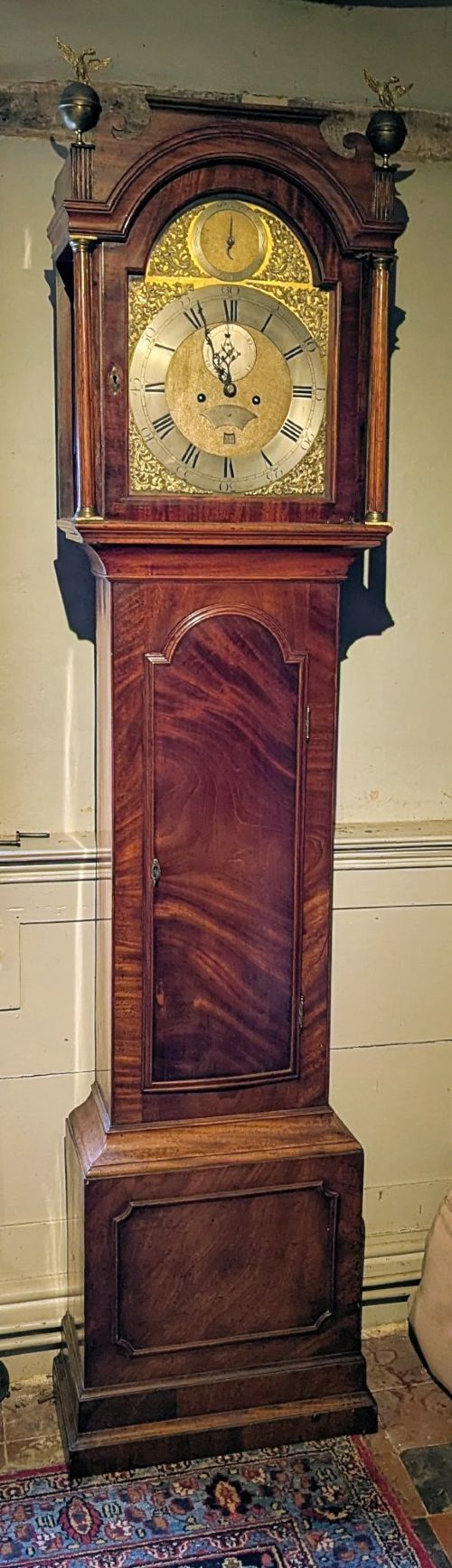
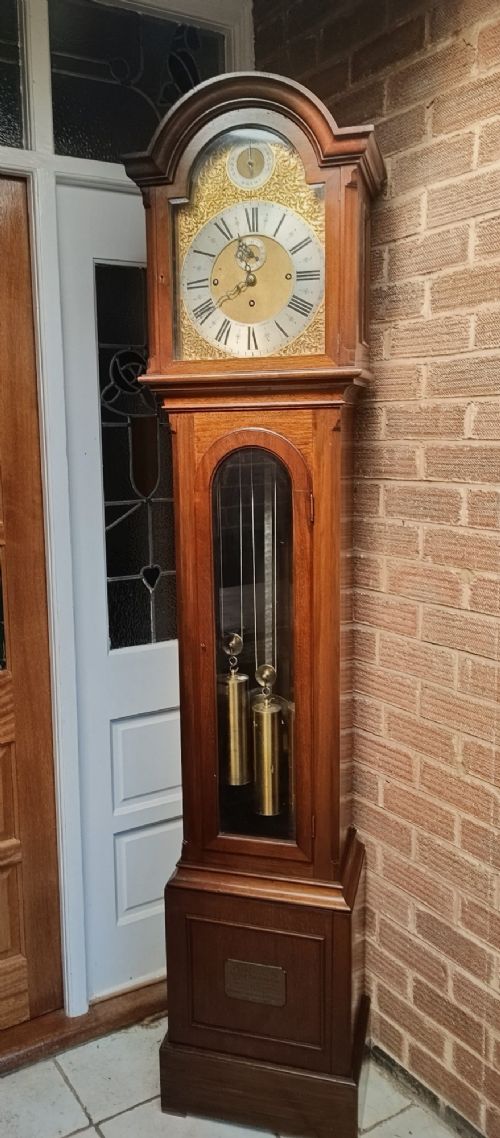
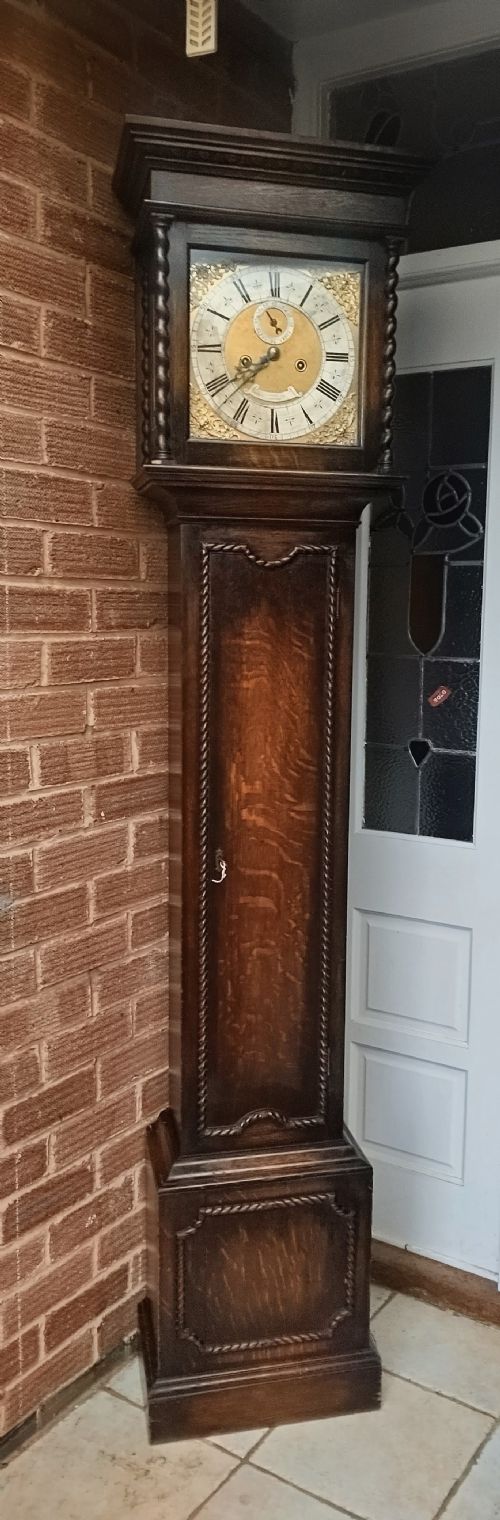
A london grandfather clock stands as a tall domestic timepiece enclosed in a timber case, designed to protect the pendulum and weights while housing a brass dial. These instruments range from restrained walnut and oak examples of the seventeenth and early eighteenth centuries to substantial mahogany or gilt-lacquer pieces from the Georgian and Regency periods.
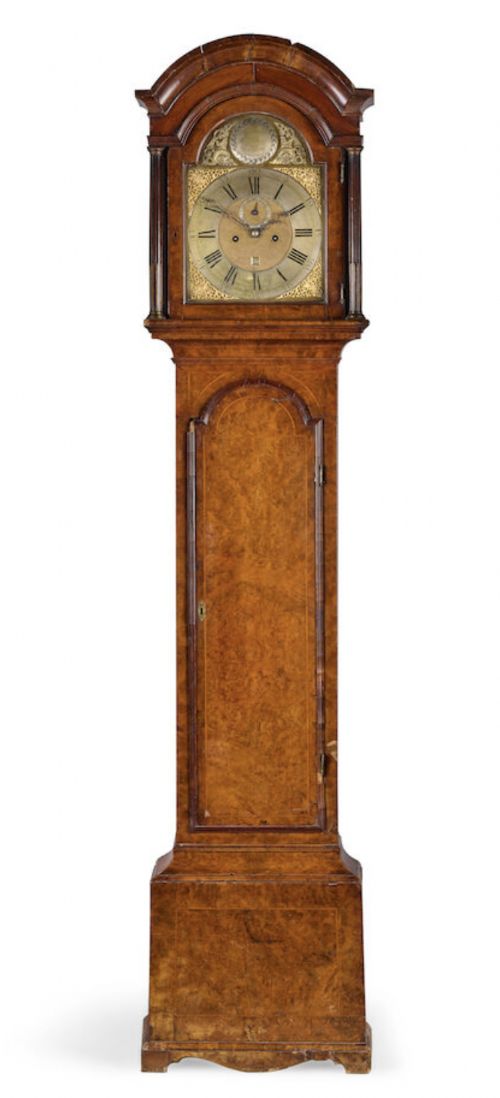
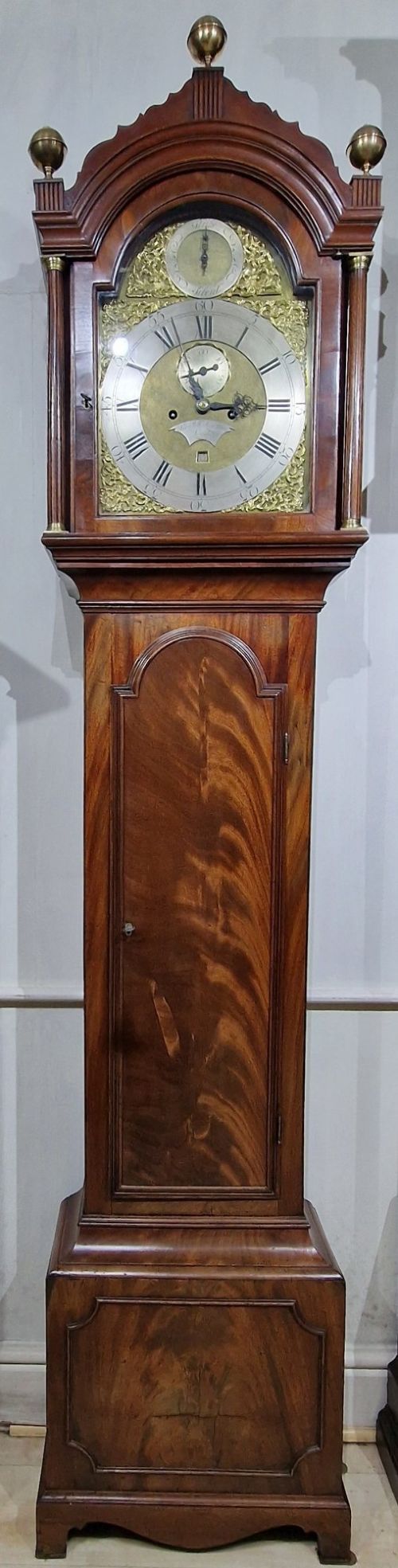
The version most commonly encountered on this page originates in the eighteenth century, often displaying a mahogany or burr walnut exterior housing an eight-day movement. Makers working within the capital produced these architectural clocks for domestic and public spaces, combining precise mechanical output with cabinetmaking of high proportion.
Tall timepieces span multiple eras, including William and Mary, Queen Anne, George I, George III, and later Regency or Edwardian revivals. Each era brings distinct proportions and timber selections, from figured flame mahogany veneers to structured oak frames.
Materials and Construction
Cabinetmakers constructed the tall outer cases using native and imported timbers such as mahogany, walnut, oak, and maple, frequently applying burr walnut or flame mahogany veneers to the visible surfaces. The choice of wood reflects the prevailing taste of the period, supported by glass panels in the hood door to protect the dial.
The internal movements combine brass plates, steel wheels, and pinions, powered by lead or iron weights suspended by cords or chains. Dials employ engraved brass, silvered chapter rings, and sometimes gilt-lacquer decoration or painted metal faces depending on the decade of production.
Joinery techniques relied on dovetailed base boxes, solid timber carcases, and removable hoods that allowed access to the dial and hands. Master horologists signed these brass plates, while specialist cabinetmakers shaped the architectural hoods, trunk doors, and plinths.
London Grandfather Clock Retail Price Guide 2026
Typical asking prices for london grandfather clock among the pieces listed under this phrase on Sellingantiques today, from the lower quarter to the upper quarter. They describe what is for sale here now, not the wider market.
Listings span periods from the 17th century through the Georgian and Regency eras to the Edwardian period, rendered in walnut, mahogany, oak, and brass.
Proportion, Movement and Finish
The distinction between ordinary and superior pieces rests in the integration of the movement and the cabinetwork. A superior london grandfather clock pairs a complex movement - such as quarter striking, musical chimes, or a grid-iron pendulum - with a finely figured timber case possessing original patination and well-proportioned mouldings.
The skill of the dial engraver and the reputation of the horologist alter the standing of an instrument. Signed brass dials with matted centres, subsidiary seconds, and calendar apertures demonstrate greater workshop investment than plain painted faces from later periods.
Originality of components and casework dictates the integrity of the piece over centuries of use. Clocks retaining their untampered movement, authentic weights, pendulum, and untouched timber surfaces command greater respect among collectors.
John Taylor·Charles Shuckburgh·John Ellicott·William Jourdain·Benjamin Taylor·Windmills and Wightman·Henry Weedon·William Kipling·William Moon·Thomas Vernon·Edin Burgis·Langley Bradley·William Allam·James Tregent·John Rainsford·Francis Perigal·Thomas Goddard·Parkinson and Frodsham·John Shelton·John Thompson·Dwerrihouse and Carter·William Tomlinson·Dent·John Harrington
The London Grandfather Clock Glossary
- Longcase clock
- A tall pendulum timekeeper housed in a wooden case consisting of a hood, trunk, and base. These pieces are frequently called grandfather clocks in domestic settings.
- Chapter ring
- The outer ring on a clock dial that bears the numerals for the hours and minutes. It is typically made of silvered brass or engraved metal.
- Hood
- The upper portion of the case that encloses the dial and movement, usually featuring glass panels and a removable door or sliding lid. This element allows access for winding and regulation.
- Grid-iron pendulum
- A temperature-compensated pendulum constructed from alternating rods of steel and brass to prevent expansion and contraction caused by room heat. This mechanism improves the precision of the timekeeping.
- Quarter striking
- A striking train mechanism that sounds the quarters of the hour on a series of bells or gongs in addition to the full hour count. Such movements require additional gear trains within the brass plates.
London Grandfather Clock: Frequently Asked Questions
How do I wind a london grandfather clock?
Winding requires using a matching key on the winding squares located on the dial face, drawing the weights up gently until they reach the correct height.
Care must be taken not to overwind the mechanism, stopping as soon as resistance is felt to protect the gut lines or chains.
Where should I place a longcase clock?
These timepieces require a stable, dry interior wall away from direct sunlight, central heating vents, and exterior doors where vibrations might disturb the pendulum.
A firm floor surface ensures the case stands plumb, allowing the anchor escapement to maintain an even beat.
How do I tell an 18th century clock from a later one?
Eighteenth-century examples typically utilise solid brass dials with engraved details, fire-gilded mounts, and heavy oak or mahogany carcases joined with hand-cut dovetails.
Later nineteenth and twentieth-century interpretations often feature painted dials, stamped brass components, and machine-cut timber fixings.
Why do some dials show phases of the moon?
The arched top of a dial sometimes houses a moonphase mechanism to track the lunar month through a rotating painted disc visible behind two curved apertures.
This complication served a practical purpose for tides and agriculture before modern lighting, while also demonstrating the skill of the maker.