





Locking Whisky Decanter
A locking whisky decanter keeps your preferred spirit secure behind a hinged bar and a working key.
Locking Whisky Decanter
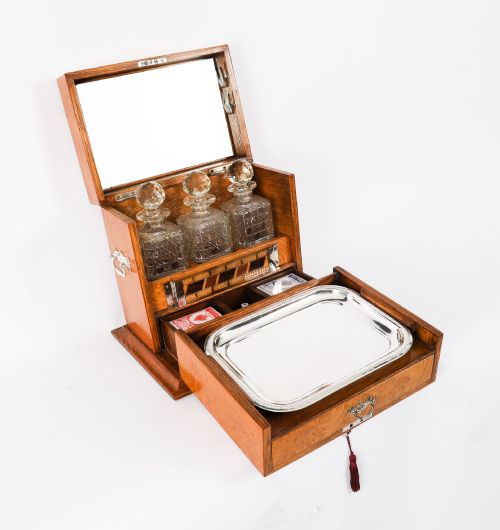
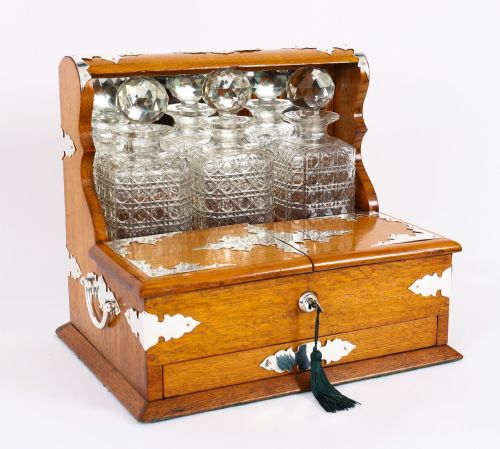
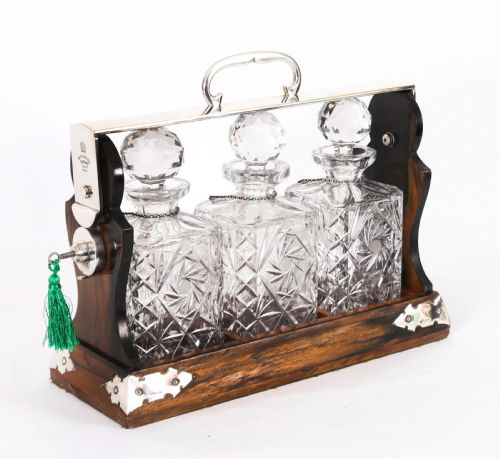
When you search for a locking whisky decanter, you are looking at nineteenth and early twentieth century barware designed to restrict access to spirits. These pieces primarily take the form of a tantalus, holding one, two or three decanters securely within a wooden frame.
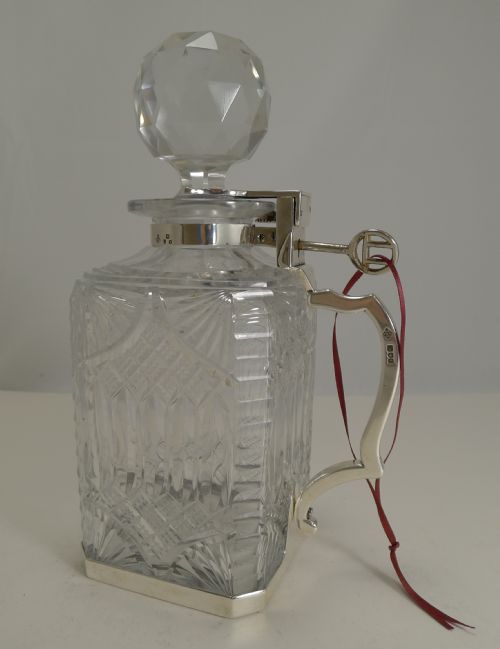
The most common version you will meet on this page is the Victorian or Edwardian oak three-bottle tantalus fitted with a brass or silver-plated locking mechanism. Alongside these framed sets, you also find single cut crystal decanters with integrated sterling silver or plated locking collars.
The periods represented stretch from the mid-nineteenth century through the Edwardian era and into Art Deco designs. Materials span figured oak, walnut, and coromandel, paired with cut glass and crystal bottles.
How they were made
Makers constructed the frames from timbers such as oak, walnut, and coromandel, often finishing them with brass mounts, hinges, and locking bars. Woodworking joined these boxes and stands to withstand the daily weight of heavy glass bottles.
The bottles themselves were shaped from cut glass or cut crystal, featuring deep facets that catch the light. Metalwork components, including locks, keyplates, and handles, relied on cast brass or plated metals, sometimes bearing maker marks or silver hallmarks.
Locking Whisky Decanter Retail Price Guide 2026
Typical asking prices for locking whisky decanter among the pieces listed under this phrase on Sellingantiques today, from the lower quarter to the upper quarter. They describe what is for sale here now, not the wider market.
Listings span the Victorian, Edwardian, and Art Deco periods, utilising materials from oak and coromandel to cut crystal and sterling silver.
What varies in quality
Quality reveals itself in the calibre of the timber framing and the precision of the locking mechanism. Finer examples utilise solid figured woods and substantial cast brass or hallmarked silver mountings rather than thin plating.
The bottles contribute significantly to the standard of the piece, with heavy hand-cut crystal decanters sitting at the upper end compared to simpler moulded glass. Well-integrated games compendiums or supplementary storage compartments also elevate the sophistication of the design.
Betjemann·Hukin and Heath
The Locking Whisky Decanter Glossary
- Tantalus
- A locking drink cabinet or frame that holds decanters upright while preventing removal of the bottles without a key. The name derives from the mythological figure of Tantalus, as the drinks are visible yet out of reach.
- Decanter
- A vessel used for holding and serving spirits such as whisky. These are typically fashioned from heavy cut glass or crystal and fitted with a matching stopper.
- Coromandel
- A dense, dark exotic timber with distinctive contrasting grain patterns. It was frequently utilised for luxury Victorian boxes and cabinetwork.
- Cut Crystal
- Glass containing lead oxide, which increases brilliance and weight, shaped with hand-cut geometric facets. This material forms the sparkling bodies of the better bottles found in these frames.
Locking Whisky Decanter: Frequently Asked Questions
What is a tantalus?
A tantalus is a locking wooden frame or cabinet that holds spirit decanters securely in place. The mechanism prevents the bottles from being lifted out until the locking bar is released with a key.
This clever Victorian invention allowed hosts to lock away expensive spirits from servants or guests while still displaying the crystal decanters on a sideboard or in a dry bar.
How do you open the lock?
Opening the lock requires the matching key to turn the barrel and drop the hinged metal retaining bar. Once lowered, the bar frees the necks of the decanters so they can be lifted from the frame.
Many surviving pieces retain their original working locks and keys, though replacement keys are sometimes fitted to operational standards by locksmiths.
Where were they used?
These locking decanters and tantalus sets sat in the dining rooms, libraries, and drawing rooms of Victorian and Edwardian homes. They formed a standard part of elite household barware.
Gentlemen's clubs and private studies also utilised them to manage access to liquor stores during an era when domestic staff managed household hospitality.
How do I date an antique tantalus?
Dating relies on the style of the woodwork, the metal manufacturing techniques, and any registered design marks or silver hallmarks on the mounts. Victorian examples often feature heavy oak frames and cast brass, while Edwardian and Art Deco pieces introduce sleeker lines.
Consulting the specific wood types, such as figured oak or coromandel, alongside hallmarks helps narrow the decade of manufacture between the mid-nineteenth and early twentieth centuries.