



Locked Liquor Decanter
A locked liquor decanter secures spirits behind clever brass mechanisms and fitted frames.
Locked Liquor Decanter
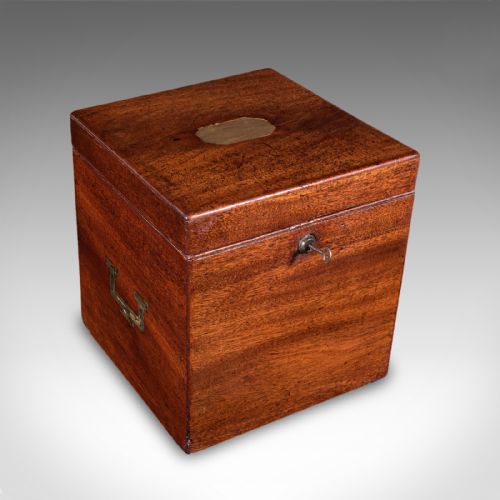
A locked liquor decanter encompasses secure storage boxes, bottle cases, and tantalus cabinets designed to restrict access to spirits. When you search for a locked liquor decanter, you meet pieces primarily from the Victorian and Edwardian periods, alongside Georgian storage boxes and Art Deco examples.
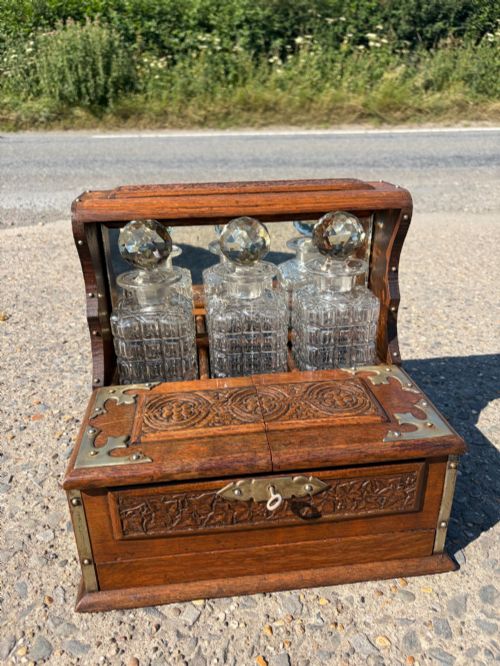
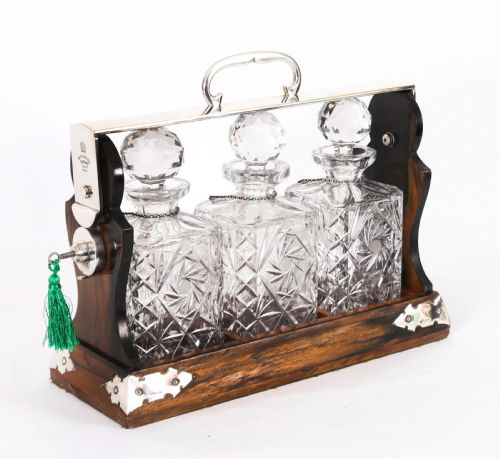
The forms vary from brass-mounted oak and walnut cabinets to luxurious coromandel wood bottle cases housing three crystal decanters. Many incorporate combination locks, Bramah locks, or key-operated locking bars that prevent the extraction of the bottles without a key.
Most examples function as standalone dry bars or games compendiums, merging liquid hospitality with secure storage. You encounter configurations holding two, three, or four decanters, frequently accompanied by silver-plated mounts and matching crystal glassware.
Materials and construction methods
Cabinetmakers utilised dense timbers like oak, pollard oak, walnut, and coromandel wood to construct the heavy frames and storage boxes. These cabinets often feature intricate inlay work, brass carrying handles, and robust structural joinery suited to housing heavy glass bottles.
The locking mechanisms rely on precision engineering, utilising Bramah locks, patent locking bars, and brass plating to secure the spirits securely. Inside, cut glass and cut crystal decanters sit within fitted wooden partitions, often paired with mirror glass panels and silver-plated hardware.
Locked Liquor Decanter Retail Price Guide 2026
Typical asking prices for locked liquor decanter among the pieces listed under this phrase on Sellingantiques today, from the lower quarter to the upper quarter. They describe what is for sale here now, not the wider market.
Listings feature oak, walnut, and coromandel wood cabinets spanning the Georgian, Victorian, Edwardian, and Art Deco periods.
What separates the finest examples
Quality rests in the choice of cabinet timber, with figured coromandel and pollard oak sitting at the upper end of the scale. The sophistication of the mechanism dictates value, particularly systems featuring stamped patent locks or integrated games drawers.
The standard of the glass elevates a piece, distinguished by heavy hand-cut crystal decanters rather than simple moulded bottles. Complete sets retaining matching stoppers and original silver hallmarked or plated mounts demonstrate superior original preservation.
Betjemann·Hukin and Heath
The Locked Liquor Decanter Glossary
- Tantalus
- A locking spirit cabinet that holds decanters in a framework so the stoppers cannot be removed while the bar is locked, teasing the would-be drinker.
- Bramah lock
- A high-security cylindrical lock patented in the eighteenth century, frequently utilised on superior storage boxes and tantalus cabinets.
- Coromandel wood
- A heavy, highly figured exotic timber native to Asia, prized by cabinetmakers for luxury Victorian decorative boxes and tantalus frames.
- Cut crystal
- Glassware shaped with deep geometric facets that catch the light, commonly housed within nineteenth-century spirit cabinets.
- Silver plate
- A thin layer of silver fused to a base metal base, extensively utilised for the handles, mounts, and locking bars of period barware.
Locked Liquor Decanter: Frequently Asked Questions
How do tantalus locks work?
A tantalus secures spirits by passing a metal bar across the glass stoppers, locked in place by a key mechanism at the side or top of the wooden frame. This physical barrier prevents anyone from lifting the decanters out until the lock is released.
Opening the lock swings the retaining bar upward or slides it sideways, freeing the necks of the bottles so they can be lifted from their fitted base.
What woods were used for cabinets?
Cabinetmakers constructed these pieces using durable native and exotic timbers selected for strength and visual grain pattern. Oak, walnut, and figured coromandel wood appear frequently across surviving examples.
More elaborate boxes also incorporated decorative veneers and brass corner brackets to protect the edges from daily wear on sideboards and tables.
Are keys usually included?
Many surviving pieces retain their original working keys, though some older locking mechanisms require professional adjustment or replacement keys. Specialist locksmiths can often cut replacement keys for Bramah and lever locks.
When a key is missing, the locking bar may remain in the open position depending on how the spring mechanism settled when last used.
How should I clean crystal?
Wash cut crystal decanters by hand using warm water and mild detergent, avoiding sudden temperature changes that can crack old glass. A bottle brush with soft bristles helps clean interior residues safely.
Dry the exterior with a lint-free cloth and leave the stopper out until the interior is completely dry to prevent moisture trapping.