



Lochs and Mountains Art
Lochs and mountains art captures the rugged drama of highland topography through the skilled brushwork of Victorian and Edwardian painters.
Lochs and Mountains Art
When you search for lochs and mountains art, you are looking at landscape paintings that celebrate the topography of Scottish bodies of water and elevated peaks. These works record vast Highland vistas, often featuring specific locations such as Loch Long, Loch Tay, and Ben Lawers.
The pieces on this page span the Victorian and Edwardian eras through to the mid-twentieth century. You will encounter framed oil paintings on canvas alongside delicate watercolour and gouache works on paper.
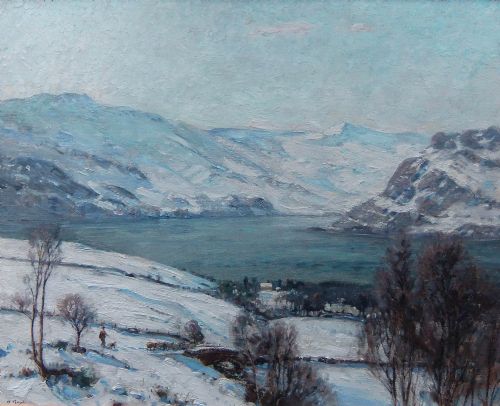
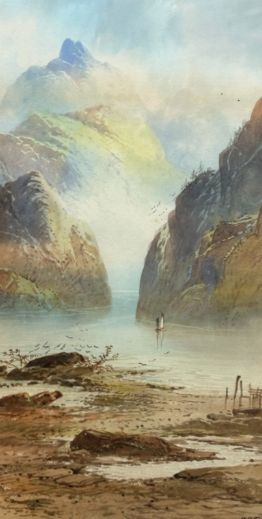
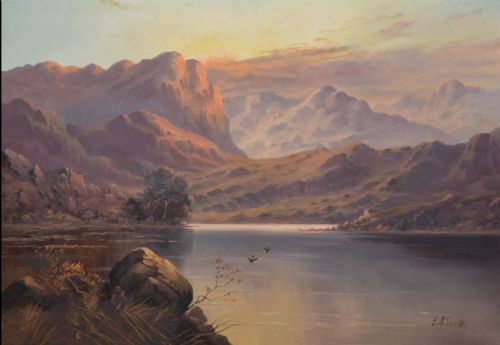
Compositions frequently incorporate atmospheric conditions like morning mist or sunset light, sometimes populated with highland cattle by the water's edge. The tradition encompasses both named artists of the Scottish school and accomplished contemporaries working in a realistic or impressionistic style.
Materials and Techniques
Artists rendering lochs and mountains art typically employed oil paint on canvas or watercolour on paper. The medium dictated the handling, with oil allowing for rich impasto to build mountain crags, while watercolour achieved the soft diffusion of morning mist over water.
Works are usually housed within period wood frames, sometimes protected beneath glass in the case of watercolours and gouaches. The application of paint ranges from the tight, precise realism of the nineteenth century to the looser brushwork of later impressionist interpretations.
Lochs and Mountains Art Retail Price Guide 2026
Typical asking prices for lochs and mountains art among the pieces listed under this phrase on Sellingantiques today, from the lower quarter to the upper quarter. They describe what is for sale here now, not the wider market.
Listings feature works created across the Victorian and Edwardian periods up to the nineteen-sixties, utilising canvas, paper, and wood.
Assessing Quality
Quality in lochs and mountains art rests on the artist's command of atmospheric perspective and natural light. Stronger works convey the chill of a winter morning or the golden warmth of a sunset without relying on excessive formula.
The handling of water and sky distinguishes superior compositions from routine topographical records. A skilled hand balances the solid weight of granite peaks with the reflective, fluid surface of the loch below.
Herbert Royle·William Henry Earp·William Miller Frazer·Alfred de Breanski Snr·AJ Thornton·Gustave De Breanski·George Melvin Rennie·E M Seaton
The Lochs and Mountains Art Glossary
- Gouache
- An opaque watercolour medium used by artists to achieve rich, solid blocks of colour and fine detail on paper. It offers a heavier matte finish than traditional transparent watercolours.
- Impasto
- Paint applied thickly to a canvas so that it stands out from the surface, creating palpable texture. Artists often utilise this technique to render the rugged edges of rocks and mountains.
- Impressionism
- A style of painting that focuses on the visual impression of a scene, particularly the shifting effects of light and atmosphere. In Scottish art, this translates to looser brushwork capturing fleeting weather on the water.
Lochs and Mountains Art: Frequently Asked Questions
How do I identify a Victorian Scottish landscape?
Victorian Scottish landscapes are typically characterised by dramatic realism depicting recognizable highland lochs under misty or sunset skies. They often include traditional elements like highland cattle by the shoreline.
Physical indicators such as period canvas stretchers, historical framing methods, and nineteenth-century pigments help confirm the era of production.
What is the difference between oil and watercolour?
Oil paintings utilise pigment suspended in drying oils applied to canvas, allowing for rich texture and deep colour saturation. They present a robust surface that traditionally hangs without glass protection.
Watercolours use water-soluble pigments on paper, creating a luminous and transparent effect. These works require glazing under glass to protect the paper surface from environmental damage.
How should I frame and display these paintings?
These works suit traditional wood frames that complement their nineteenth or twentieth-century origins. Ensure they hang away from direct sunlight and damp conditions to preserve the canvas or paper.
Watercolours require archival mounting behind glass with adequate spacing to prevent the paper from touching the glazing.
Are these paintings signed by the artists?
Many works feature artist signatures, either directly painted on the canvas or inscribed in pencil or ink on watercolours. Signatures often appear in the lower corners of the composition.
Unsigned pieces still find attribution through stylistic comparison, subject matter, and period framing techniques common to specific regional schools.