

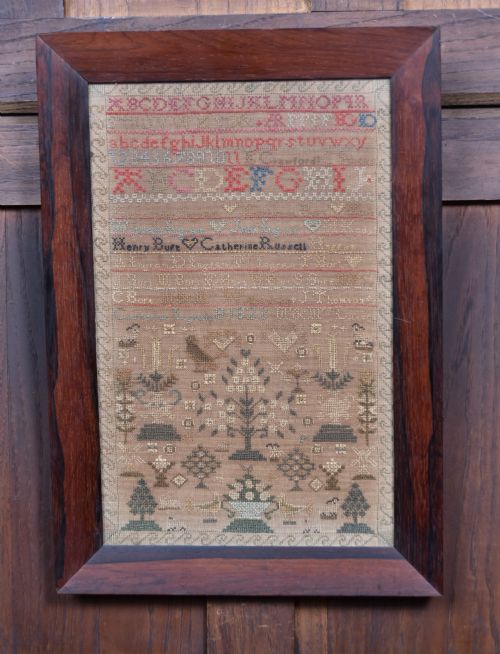


Linen Embroidery Panel
Linen embroidery panel objects bring together centuries of needlework, sampler design, and textile art from English, Greek, and Ottoman traditions.
Linen Embroidery Panel
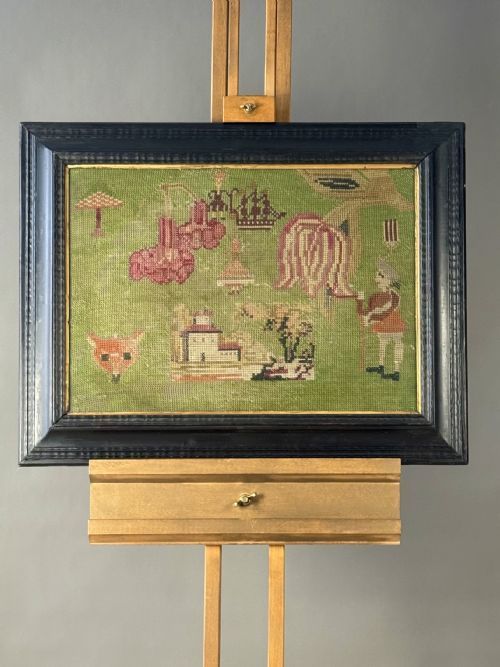
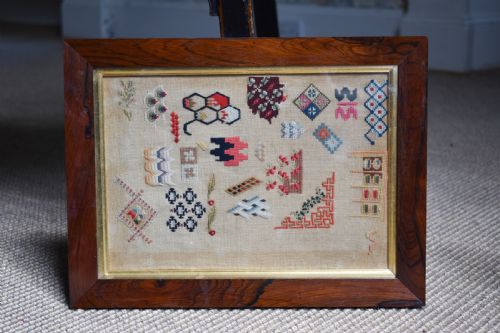
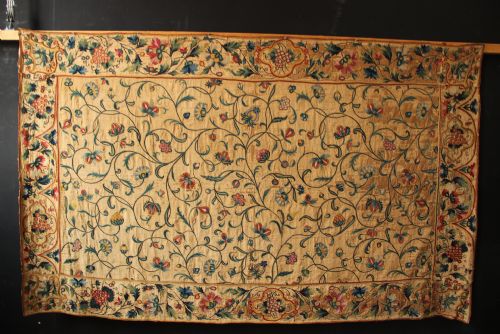
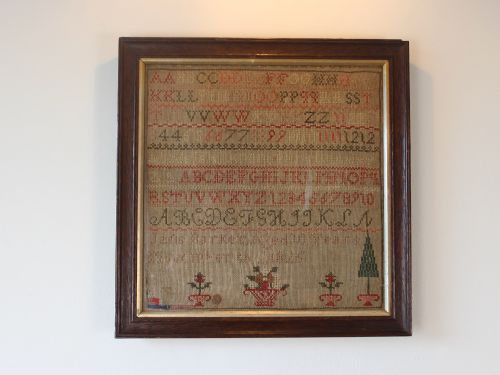
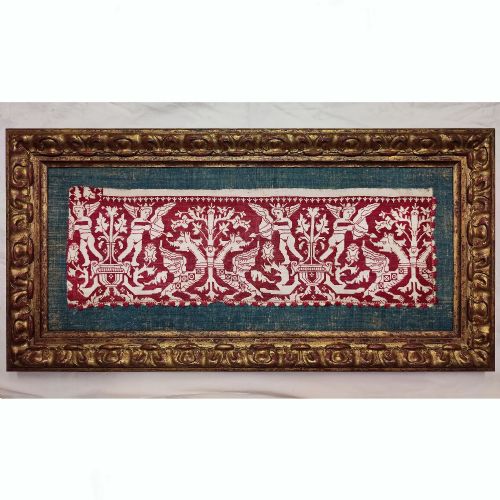
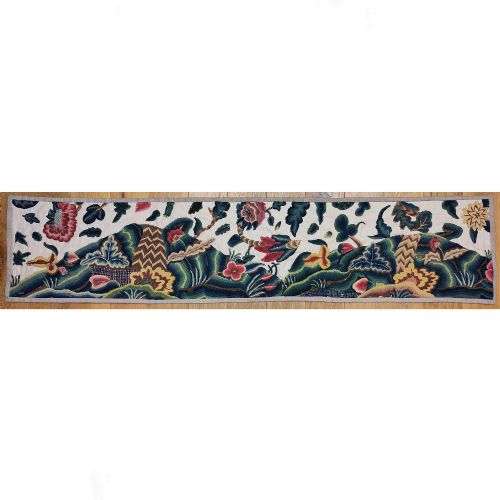
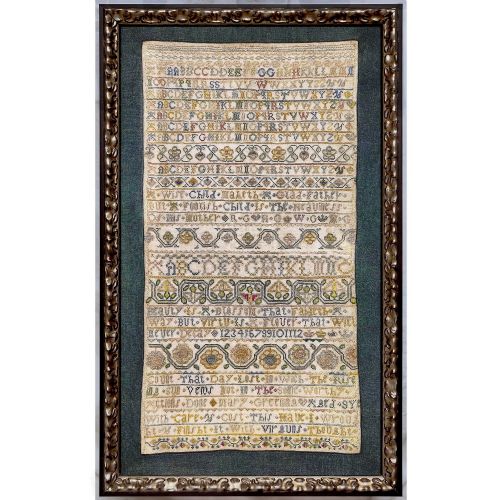
When you search for a linen embroidery panel, you encounter a range of antique textile art spanning the seventeenth century through to the Victorian era. These pieces include needlework samplers, framed panels, crewelwork, and embroidered borders made across England, Scotland, the Greek Islands, and Uzbekistan.
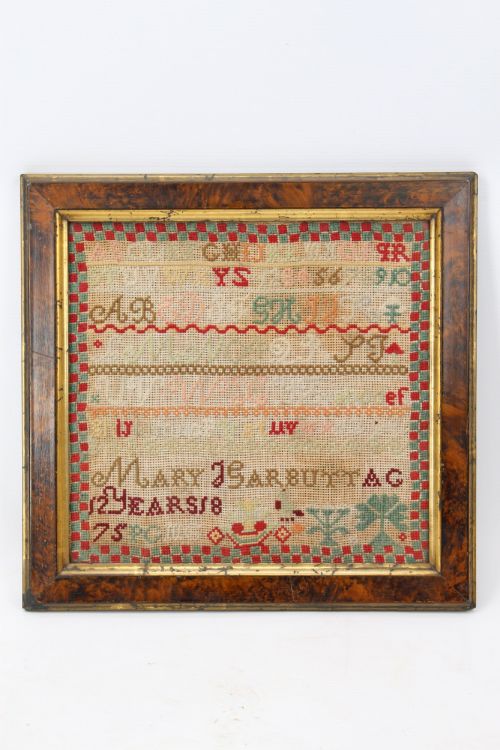
The selection on this page leans heavily toward needlework samplers worked by young makers, alongside larger crewelwork panels, bedsheet borders, and regional embroidery. Pieces date from the seventeen hundreds through the nineteenth century, reflecting diverse domestic and folk traditions.
Materials and construction
Makers utilised linen as the foundational cloth for these embroideries, working stitches across the surface using silk thread, wool, and crewel wool. Glass elements occasionally appear in framing or mounting, while wooden frames support many of the wall-hung panels.
Techniques range from precise alphabet and pictorial stitching on schoolgirl samplers to dense crewelwork and regional Greek island embroidery styles. Threads are worked directly into the woven linen ground to build up lettering, motifs, and borders.
Listings feature linen grounds combined with silk thread, wool, and glass across 17th, 18th, and 19th century periods.
Judging quality in antique panels
Quality rests upon the fineness of the linen ground, the complexity of the needlework, and the precision of the stitching. Early English crewelwork and detailed samplers demonstrate technical skill through varied stitch execution and well-composed pictorial designs.
Condition and legibility also separate examples, with clarity of lettering on samplers and the intact survival of silk and wool threads determining the visual strength of the panel.
The Linen Embroidery Panel Glossary
- Sampler
- A piece of needlework produced to demonstrate proficiency in various stitches and alphabets, often worked by young girls.
- Crewelwork
- Embroidery executed with wool yarn on a linen or cotton twill ground, commonly seen in seventeenth-century English panels.
- Band sampler
- A long, narrow format of needlework displaying horizontal rows of distinct decorative stitch patterns.
- Coif
- A close-fitting cap worn in the seventeenth century, frequently decorated with fine embroidery on linen.
Linen Embroidery Panel: Frequently Asked Questions
What is a linen embroidery panel?
These items are historical needlework pieces created on woven linen using wool, silk thread, or crewel materials. They encompass samplers, framed wall art, and decorative borders.
Originating from domestic and regional traditions, they preserve centuries of textile techniques ranging from structured English alphabets to Greek island folk designs.
How were samplers used?
Samplers served as practice pieces and reference guides for needleworkers to record different stitches, alphabets, numbers, and motifs. Young girls often worked them to demonstrate their domestic education.
Once completed, many of these textile panels were framed and displayed in homes as decorative records of the maker's skill and age.
How do I date an antique sampler?
Many samplers include embroidered dates, the maker's name, and sometimes their age, which provides a direct point of reference. Stylistic elements like font shapes, border designs, and materials also help identify whether a piece belongs to the seventeenth, eighteenth, or nineteenth century.
Comparing the backing linen, thread types, and framing methods offers additional clues to the period of manufacture.
How should I care for a textile panel?
Keep antique embroidery away from direct sunlight to prevent silk and wool threads from fading and weakening over time. Displaying panels behind protective glass in stable environmental conditions helps guard against dust and humidity.
Avoid hanging textiles in damp areas, and consult a textile conservator if cleaning or restitching support is required.