





Linen Embroidery Art
Linen embroidery art brings together centuries of hand-stitched samplers, maps, and textile fragments framed for the wall.
Linen Embroidery Art
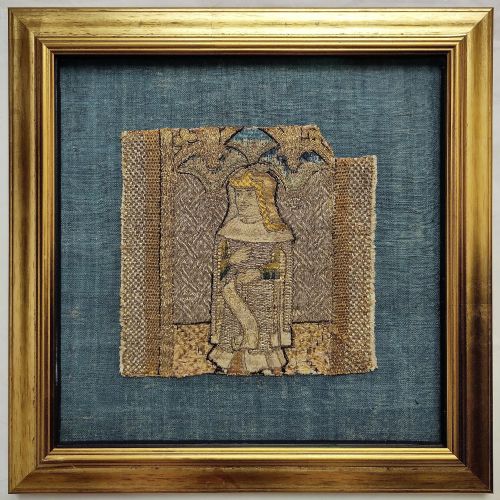
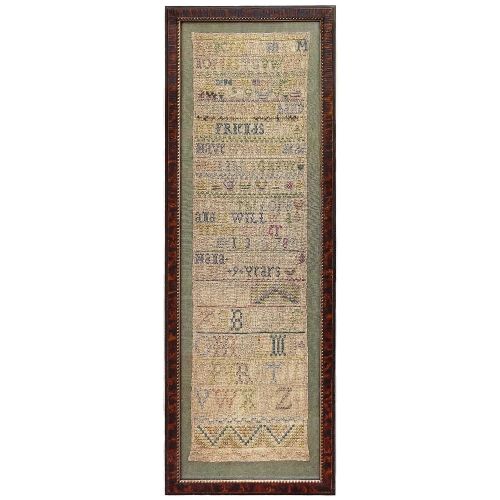
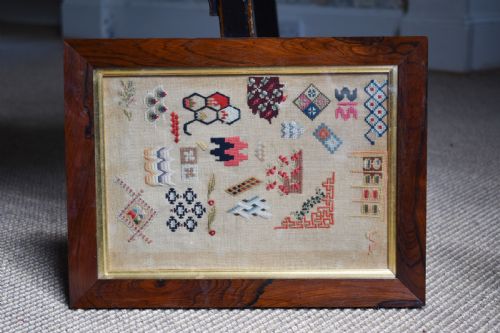
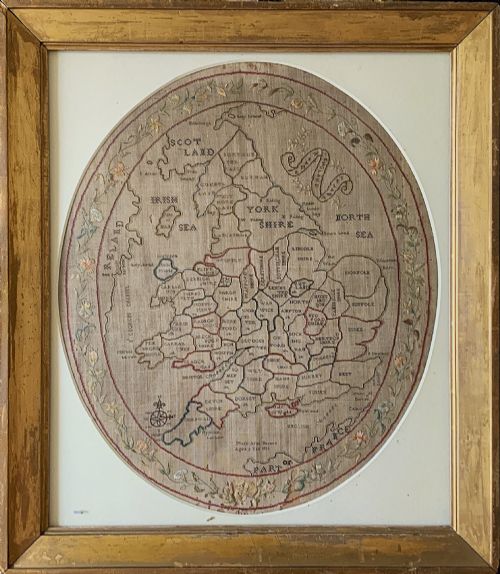
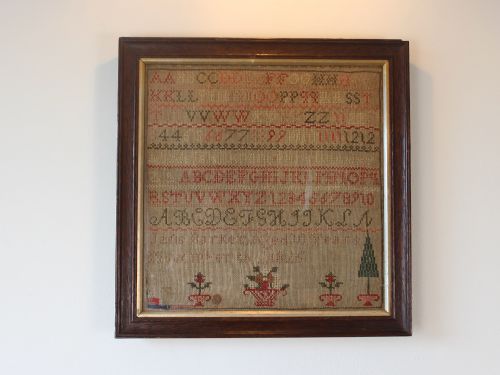
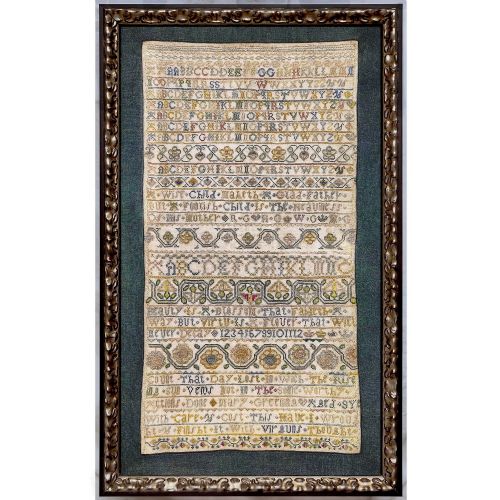
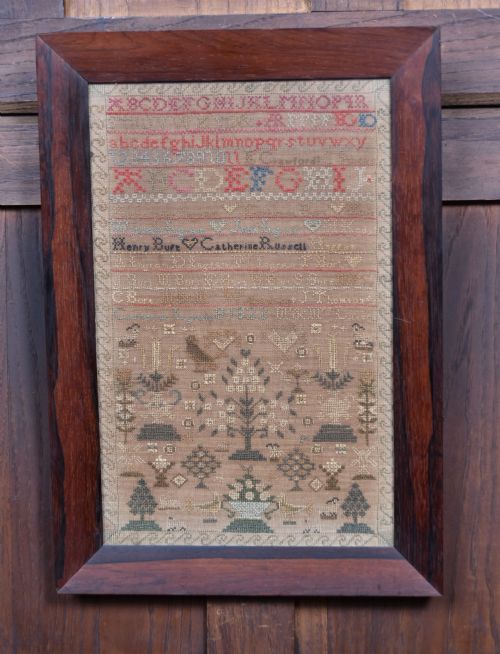
When you search for linen embroidery art, you encounter needlework samplers and framed textile pieces spanning the seventeenth century through to the twentieth. These works include alphabets, maps of England and Wales, school room exercises, and floral band samplers stitched by young makers.
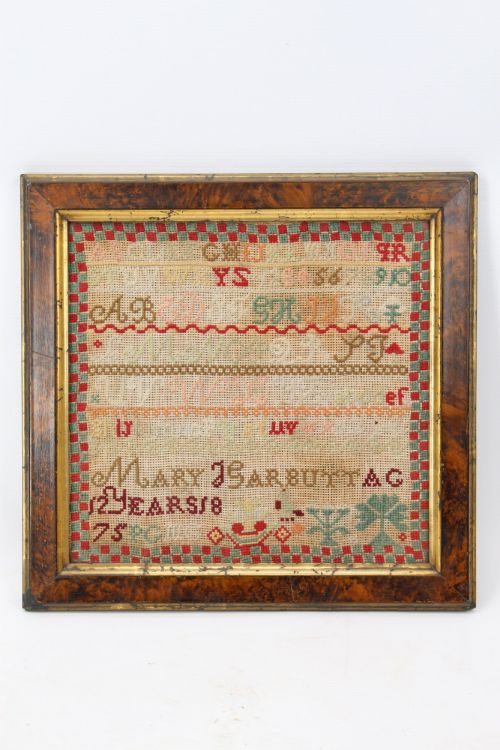
The pieces on this page are predominantly framed wall art and textile panels worked on linen grounds. Many carry the signatures and ages of girls as young as eleven, recording domestic education in Georgian and Victorian schoolrooms.
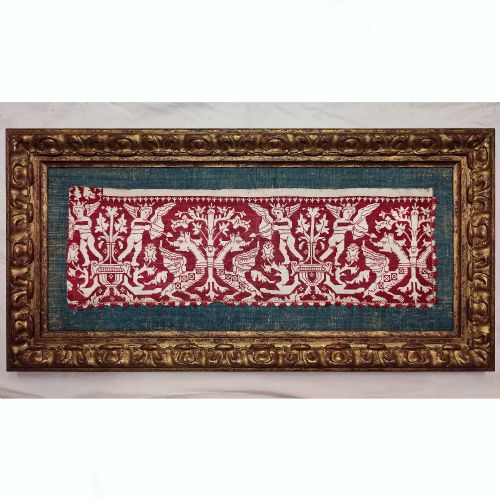
Regional variations appear alongside school room pieces, from Scottish and French examples to Greek Island and Italian embroidered borders. Each form reflects the specific stitching traditions and educational requirements of its period.
How they were made
Makers worked primarily with silk thread, wool, and silk floss on a linen ground, often framing the completed needlework behind glass in wood frames. The selection of materials dictated the texture and longevity of the piece, with tightly spun threads retaining their tone over centuries.
Stitching techniques combined basic alphabet rows with complex pictorial motifs, topographical maps, and borders. School girls utilised standard counted-thread methods to build up numbers, letters, and figures under instruction.
Linen Embroidery Art Retail Price Guide 2026
Typical asking prices for linen embroidery art among the pieces listed under this phrase on Sellingantiques today, from the lower quarter to the upper quarter. They describe what is for sale here now, not the wider market.
Listings feature textiles spanning the seventeenth to the twentieth century, using linen, silk, wool, and glass.
What varies in quality
Quality rests on the clarity of the stitching, the complexity of the design, and the survival of the linen ground. Map samplers and detailed pictorial works demand greater skill than standard alphabet rows.
Condition separates standard pieces from exceptional ones, particularly the preservation of original wood frames and glass protection. Clear signatures, legible dates, and named schools enhance the historical documentary value of the textile.
The Linen Embroidery Art Glossary
- Sampler
- A piece of needlework produced as a demonstration or test of skill in various stitches. These works frequently display alphabets, numerals, and moral verses.
- Band sampler
- A long, narrow textile featuring horizontal bands of different embroidery patterns. This format was popular in the seventeenth and eighteenth centuries.
- Map sampler
- A geographical needlework project depicting countries or regions, commonly England and Wales during the Georgian era. Young makers stitched these to demonstrate proficiency in both geography and needlecraft.
- Silk floss
- A loose, unspun silk fibre utilised for embroidery to provide a glossy sheen. It appears frequently on eighteenth and nineteenth-century examples.
- Needlepoint
- A type of canvas work where yarn is stitched through a mesh or linen ground to cover the surface entirely. It creates a dense, durable picture.
Linen Embroidery Art: Frequently Asked Questions
What is a needlework sampler?
A needlework sampler is a piece of textile art created to practice or demonstrate stitching proficiency. Makers included alphabets, numbers, and motifs to show their skill.
These pieces were typically framed and hung in homes as decorative items and records of a young maker's education.
How old are these embroidered pieces?
The items range from the seventeenth century through the Victorian era and into the twentieth century. Many carry explicit dates and the ages of their makers.
Georgian and Victorian school room pieces form the majority of the examples available here.
Were these made by children?
Many samplers were worked by girls aged ten to fourteen in schools and academies. Their names, ages, and schools often appear stitched directly into the linen.
Adult makers also produced embroidery art, particularly in regional and continental workshops.
How should I hang framed textiles?
Framed linen embroidery art needs protection from direct sunlight to prevent the silk threads and linen grounds from fading. Glass fronts keep dust and atmospheric moisture away from the fragile stitches.
Keep them away from damp walls and fluctuating temperatures to preserve the historic materials.