
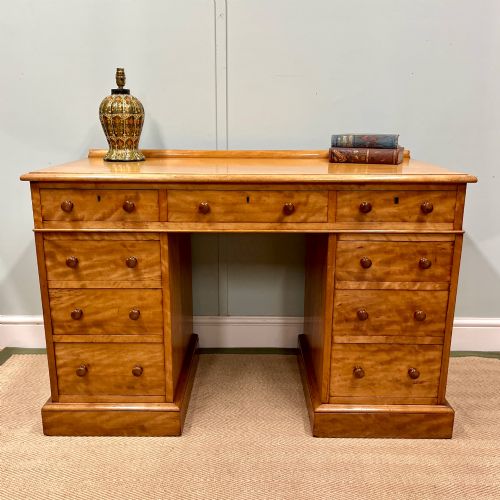


Light Wood Writing Desk
A light wood writing desk brings a warm, pale grain to a study, offering a clean surface for correspondence and daily work.
Light Wood Writing Desk
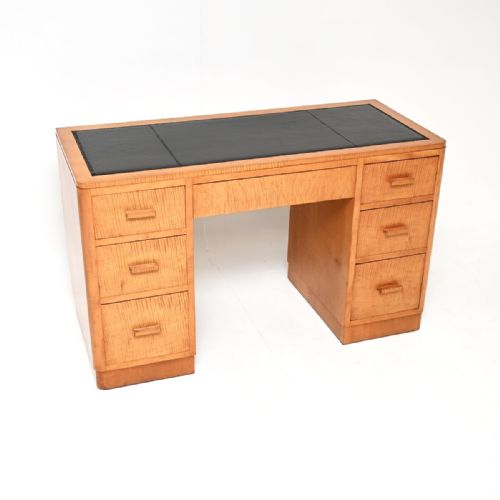
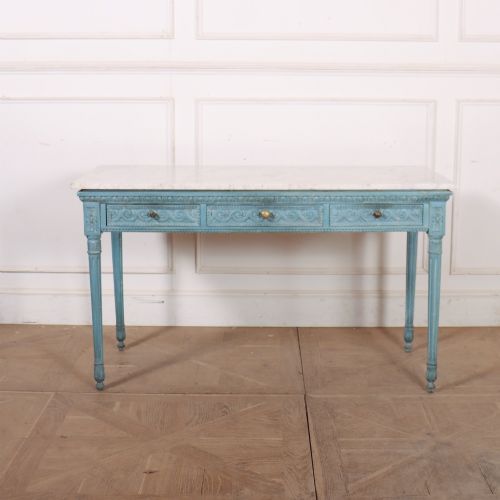
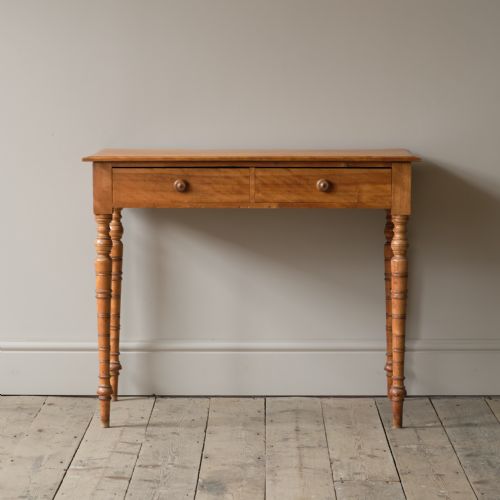
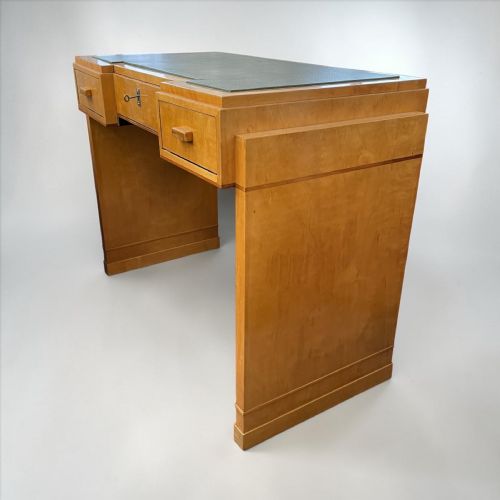
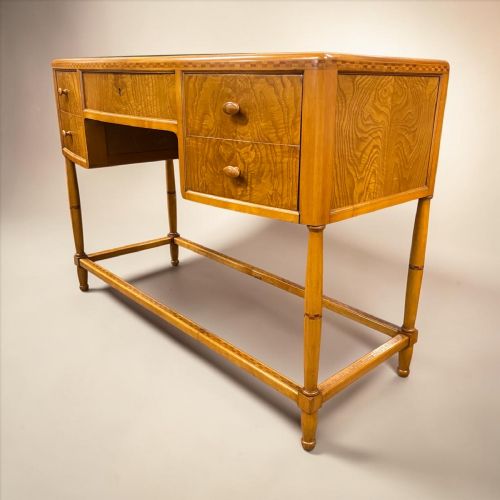
A light wood writing desk covers a broad span of pale timbers used for practical writing furniture, from compact tables to substantial pedestals. You encounter pieces in satin birch, elm, ash, and birds eye maple, originating from English workshops, Scandinavian makers, and French provinces.
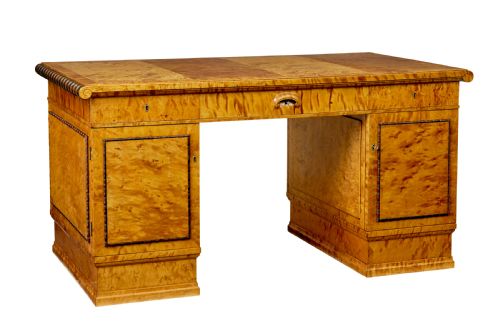
The most frequent form on this page is the pedestal desk or side table in satin birch, originating largely from the nineteenth century and the Art Deco period of nineteen thirty. These items range from simple nine drawer late Victorian workstations to grander Italian and French console tables adapted for writing.
Makers utilised lighter timbers to brighten domestic interiors, moving away from darker mahoganies and walnuts. Buyers select these desks for their pale visual weight, which keeps smaller rooms feeling open while retaining traditional joinery and functional storage.
How they were made
Makers constructed these desks using solid timbers and decorative veneers over secondary woods, selecting satin birch, ash, and elm for their distinct grain patterns. Cabinetmakers applied French polish or clear varnishes to protect the pale wood while accentuating the natural figure of the timber.
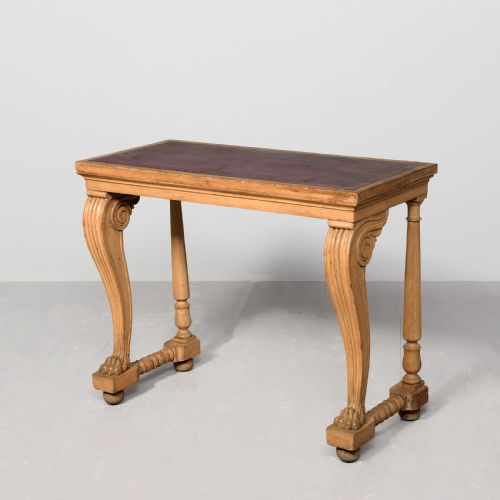
Many examples incorporate inset leather writing surfaces, bordered with blind or gilt tooling, paired with brass handles and escutcheons on the drawers. Structural integrity relies on traditional dovetail joints for the drawers and pegged mortise and tenon frames for the tables and pedestals.
Listings feature items built from satin birch, ash, elm, and birds eye maple across the nineteenth century and Art Deco periods.
What varies in quality
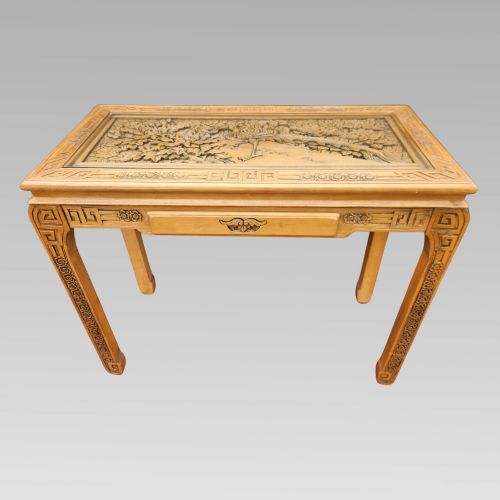
Quality rests in the selection of the timber veneer and the crispness of any carved detailing, such as the foliate work on Victorian pieces or the clean geometric lines of Art Deco designs. Higher grade desks display matching grain patterns across drawer fronts and smooth, unwarped writing surfaces.
Construction methods also separate standard commercial output from finer workshop pieces, seen in secondary woods like oak or mahogany used inside drawer boxes rather than plain pine. Original hardware, intact leather inserts, and properly fitted locking mechanisms elevate the standing of a desk.
James Mein of Kelso·Heal and son
The Light Wood Writing Desk Glossary
- Satin birch
- A pale, lustrous timber with a fine grain, frequently utilised in nineteenth century and Art Deco cabinetmaking. It provides the characteristic bright finish seen across many desks on this page.
- Pedestal desk
- A freestanding desk comprising a top surface supported by two banks of drawers. This form offers substantial workspace and multiple storage compartments.
- Console table
- A table designed to stand against a wall, frequently adapted in period settings to serve as a compact writing desk. These items often feature decorative carving on the legs and apron.
- Birds eye maple
- A figured maple wood showing small knots that resemble tiny eyes, prized for decorative veneer work. It appears on French and nineteenth century writing furniture.
- Dovetail
- A traditional wood joint formed by interlocking wedge shaped fingers, used primarily in drawer construction. Hand cut dovetails indicate older, workshop built furniture.
Light Wood Writing Desk: Frequently Asked Questions
What periods do these light wood desks come from?
The listings on this page span the nineteenth century, including Victorian and late Victorian eras, alongside Georgian examples and nineteen thirty Art Deco pieces.
Cabinetmakers of each era applied pale timbers differently, shifting from simple country pieces to polished pedestal designs.
Are these desks suitable for daily computer work?
Many of these pieces provide a sturdy surface and adequate knee clearance for modern writing tasks and laptop use, though older drawer depths vary.
Buyers should check internal dimensions to ensure compatibility with modern office equipment.
How do I care for satin birch and pale woods?
Pale timbers benefit from regular dusting with a soft, dry cloth and protection from direct sunlight to prevent the grain from darkening or fading unevenly.
Applying occasional appropriate wax preserves the polished finish without building up heavy residue.