

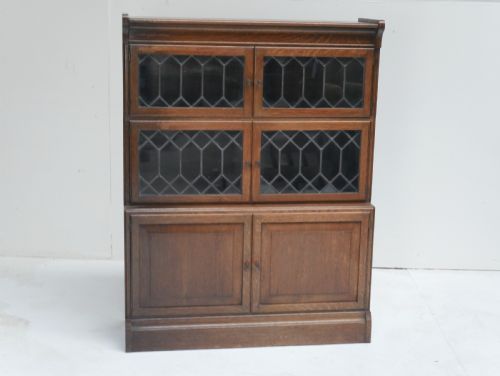


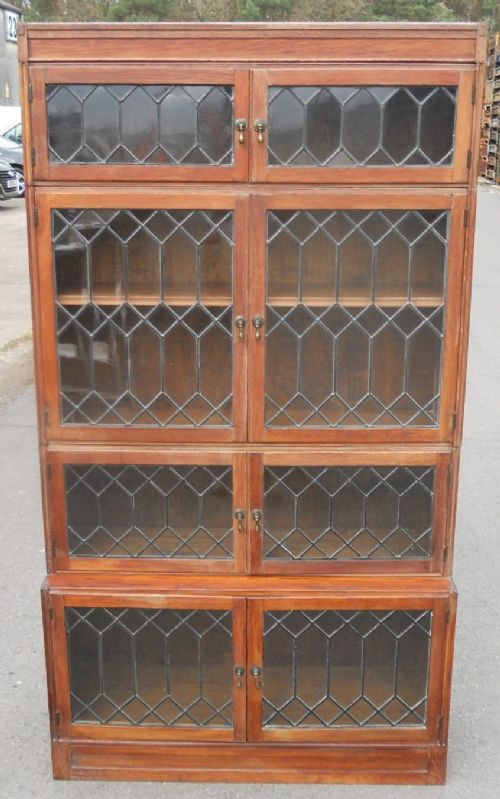
Light Oak Glass Cabinet
A light oak glass cabinet brings warmth and clear display to a room, uniting timber storage with visible shelving for books and objects.
Light Oak Glass Cabinet
When you search for a light oak glass cabinet, you are looking at practical storage pieces designed to hold books, collections, or household items while keeping them visible behind transparent panes. These furnishings combine pale timber frames with glazed doors or panels, offering a lighter visual weight than darker woods.
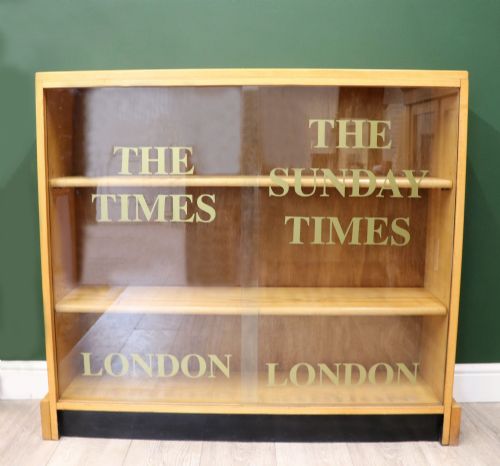
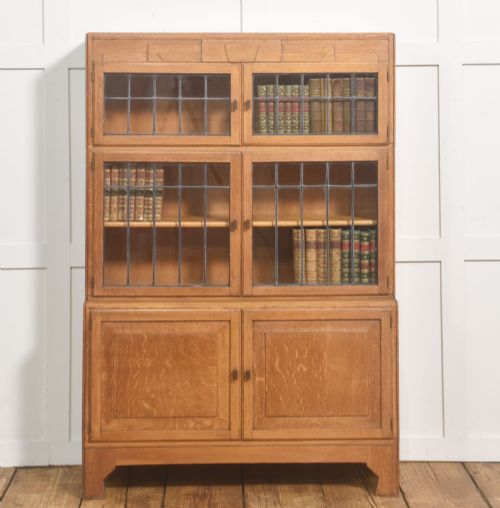
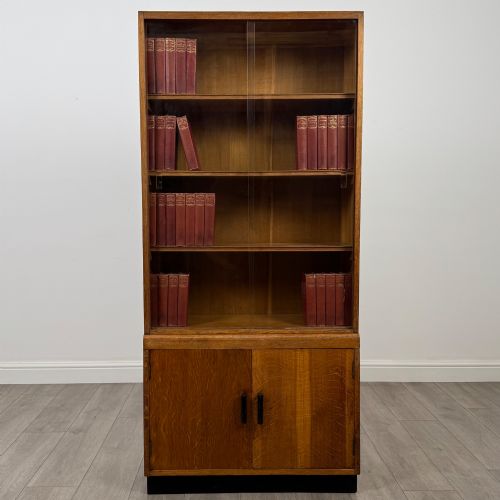
On this page, the pieces you are most likely to meet range across the Edwardian era, the 1910s, 1920s, and 1930s. Common forms include stacking barrister bookcases, shop display cabinets, and tall glazed cupboards created in styles from Arts and Crafts to Art Deco and Mid-Century Modern.
The materials recorded in these listings rely principally on oak and glass, sometimes enhanced by lead, brass, and veneer. Structural variations span from modular stacking sections to single large display compartments and kitchen cupboards.
How they were made
Makers built these cabinets using solid oak and oak veneers, selected for sturdy framing and prominent grain patterns. Timber sections were joined to support the weight of heavy books and glass doors.
Glass panes were fitted securely into wooden frames, frequently held in place with lead came in Arts and Crafts and Art Deco examples. Brass fittings provided functional hardware for hinges, handles, and stacking mechanisms.
Light Oak Glass Cabinet Retail Price Guide 2026
Typical asking prices for light oak glass cabinet among the pieces listed under this phrase on Sellingantiques today, from the lower quarter to the upper quarter. They describe what is for sale here now, not the wider market.
Listings span periods from Victorian Gothic Revival and Edwardian through to the 1910s, 1920s, and 1930s Art Deco and Mid-Century Modern eras.
What varies in quality
The standard of construction separates simpler utility cupboards from refined cabinetwork by known makers or specific workshops. Precision in the joinery of stacking modular units and the finish of the timber surfaces dictate the overall calibre.
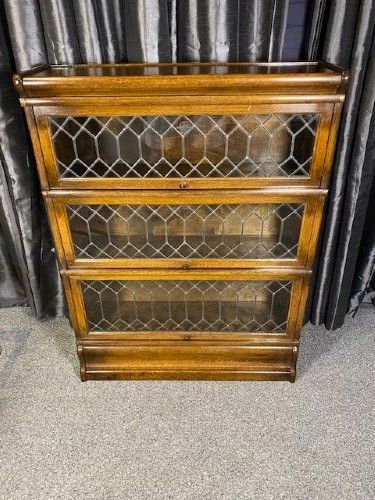
Detailing in the glazing, such as leaded geometric patterns, and the quality of original brass hardware elevate certain pieces above standard production models. The clarity and selection of the oak grain also influence the visual depth of the cabinet.
F. Sage & Co·Globe Wernicke·Minty
The Light Oak Glass Cabinet Glossary
- Edwardian
- A period spanning from roughly 1901 to 1910, known for lighter domestic furniture styles that moved away from heavy Victorian designs. Pieces from this era often feature simpler lines and brighter oak tones.
- Art Deco
- A design style prominent in the 1920s and 1930s characterised by streamlined geometric forms and modern materials. Cabinets in this style utilise stylized patterns and clean vertical or horizontal emphasis.
- Arts and Crafts
- A movement emphasising handcraftsmanship, simple forms, and visible construction methods. Furniture from this tradition often highlights the natural grain of oak alongside leaded glass windows.
- Stacking bookcase
- A modular shelving unit made of multiple interchangeable tiers with upward-lifting glass doors, often associated with barrister offices. These sections sit atop one another without permanent fixing.
Light Oak Glass Cabinet: Frequently Asked Questions
What is a barrister bookcase?
A barrister bookcase is a stacking cabinet featuring multiple tiers with glass doors that lift and slide inward above the books. These modular units were designed for easy transport and reorganization.
Legal professionals originally used them to protect reference volumes in offices. Today, they function well in homes for displaying collections while keeping dust away from the contents.
How do I date an oak cabinet?
Dating relies on observing construction methods, hardware, stylistic markers, and the presence of makers' marks or patent labels. Edwardian and 1910s pieces often show simpler Arts and Crafts influences, while 1920s and 1930s examples lean towards Art Deco geometry.
Examining the backboards, drawer joints, and type of glass can also narrow down the manufacturing decade. Comparing the piece to documented examples from firms like Minty or Globe Wernicke provides further context.
Are these cabinets made of solid oak?
Many listings feature solid oak construction, while others incorporate oak veneers over secondary timbers for stability on large surfaces. Veneers allowed makers to display attractive grain patterns across wide panel doors.
Both solid and veneered examples appear across the Edwardian, 1910, 1920, and 1930 periods. Each method served specific structural purposes in cabinetmaking.
How should I care for light oak furniture?
Maintain light oak furniture by keeping it away from direct sunlight and extreme temperature fluctuations that can dry out the timber. Dust regularly with a soft, dry cloth to protect the surface finish.
Avoid using silicone-based polishes that can build up over time. Natural wax applied occasionally helps nourish the grain and preserve the lustre of the oak.