

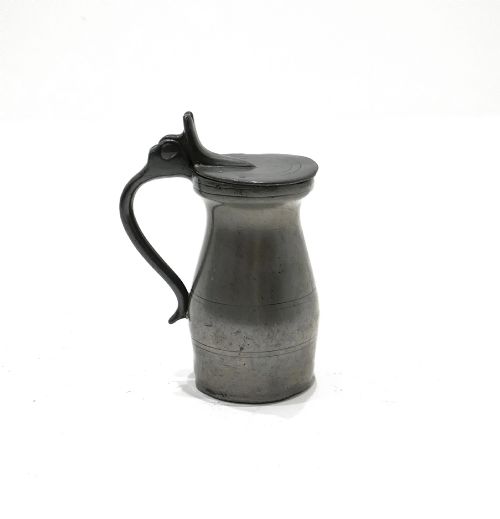
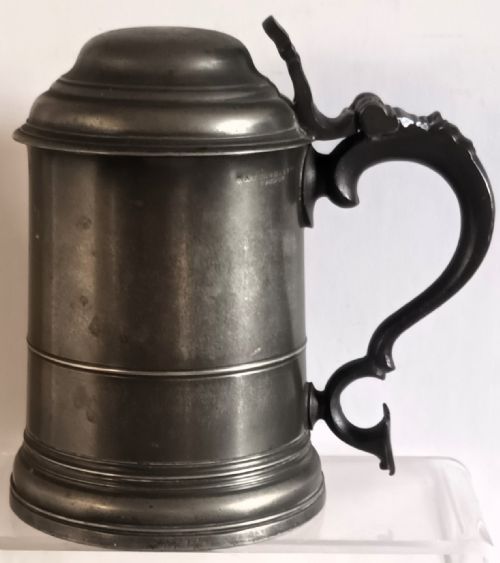


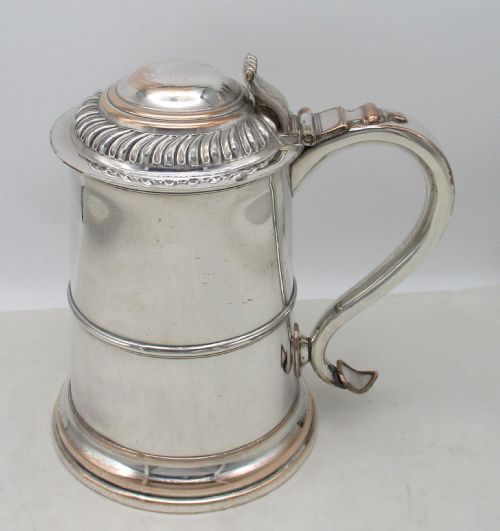


Lidded Metal Tankard
A lidded metal tankard offers robust historical utility, rendered in pewter, silver plate or copper for everyday drinking or formal display.
Lidded Metal Tankard
A lidded metal tankard encompasses drinking vessels, flagons, measures and jugs designed with hinged or fitted covers to protect contents. The selection draws primarily from the 18th and 19th centuries, capturing periods when durable metal vessels were standard table and tavern equipment.
You will encounter pieces ranging from humble half-gill spirit measures and pint mugs to massive church flagons and quart flagons. Materials span traditional pewter and brass alongside Old Sheffield Plate, electroplated nickel silver and Japanese cloisonné enamel.
Origins vary from English and Scottish workshops to Irish, German and Japanese makers. Styles reflect Georgian, Victorian, Edwardian, Arts and Crafts, Art Nouveau and Queen Anne aesthetics.
How they were made
Pewter examples rely on metal casting and hammering techniques, shaping tin alloys into sturdy bodies with soldered handles and thumbpieces for the lids. Master pewterers marked their work with touchmarks to guarantee alloy standards.
Old Sheffield Plate pieces employ a fused layer of silver over a copper base, creating durable vessels with rich metallic contrast. Cloisonné enamel examples integrate wire cells on metal foundations filled with vitreous paste and fired.
Lidded Metal Tankard Retail Price Guide 2026
Typical asking prices for lidded metal tankard among the pieces listed under this phrase on Sellingantiques today, from the lower quarter to the upper quarter. They describe what is for sale here now, not the wider market.
The inventory spans the 18th and 19th centuries alongside Edwardian and late Edo period examples.
What varies in quality
Quality rests on the integrity of the metalwork, the crispness of maker touchmarks or crests, and the survival of original lids and thumbpieces. Heavy gauge walls and well-balanced proportions separate utilitarian vessels from finer presentation pieces.
Artistic collaboration elevates certain items, such as pewter designed by known figures within Arts and Crafts circles. Surface wear and patination tell the history of use without diminishing the structural form.
Watts & Harton·John Heaney of Dublin·Archibald Knox for Liberty·Robert Iles of London·Burgum & Catcott of Bristol
The Lidded Metal Tankard Glossary
- Touchmark
- A stamped maker mark pressed into pewter to identify the workshop or guild standard. These stamps help historians attribute pieces to specific craftsmen.
- Flagon
- A large drinking vessel or vessel for church wine, typically featuring a lid and handle. They often held larger quantities than standard drinking mugs.
- Tappit Hen
- A traditional Scottish pewter measure with a distinct lid and knob, usually holding specific capacities like a Scots pint. They remain prized regional forms.
- Old Sheffield Plate
- An early fusing technique bonding a thin sheet of silver to a copper core before forming into vessels. This predates standard electroplating methods.
- Spirit Measure
- A smaller verified vessel used for dispensing precise volumes of alcohol in taverns and homes. These range from half gills to half pints.
Lidded Metal Tankard: Frequently Asked Questions
What is a lidded metal tankard used for?
These vessels served primarily for consuming and serving beer, ale, cider or church wine. The fitted lid kept contents clean and preserved temperature during extended tavern gatherings or formal meals.
Over time, many transitioned into decorative display pieces or household measures. Their durable metal construction ensured they survived generations of heavy use.
How do I clean an antique tankard?
Pewter and silver plate require gentle washing with mild soap and warm water using a soft cloth. Avoid harsh chemical cleaners or abrasive pads that strip historic patination.
Dry thoroughly with a soft towel to prevent water spots. Proper handling preserves the soft metallic finish accumulated over centuries.
How can I tell the period of a tankard?
Dating relies on maker touchmarks, handle styles, lid designs and capacity stamps. Georgian and 18th-century pieces often feature flat or dome lids with simpler thumbpieces.
Later Victorian and Edwardian examples incorporate decorative motifs like hops or Celtic patterns. Comparing the weight and construction method provides further clues.