





Lidded Cut Glass Pot
A lidded cut glass pot is a heavy table or dressing table vessel paired with a fitted metal mount, designed to hold condiments, ink, or cosmetics.
Lidded Cut Glass Pot
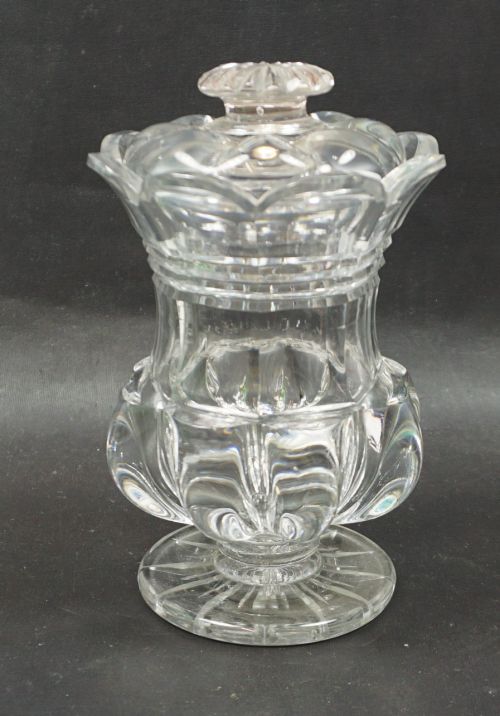
A lidded cut glass pot encompasses a variety of dressing table jars, vanity boxes, inkwells, preserve jars, and butter dishes spanning the Georgian, Victorian, Edwardian, Art Deco, and Mid-Century Modern periods. These vessels primarily combine heavy glass bodies with metal fittings such as sterling silver or brass.
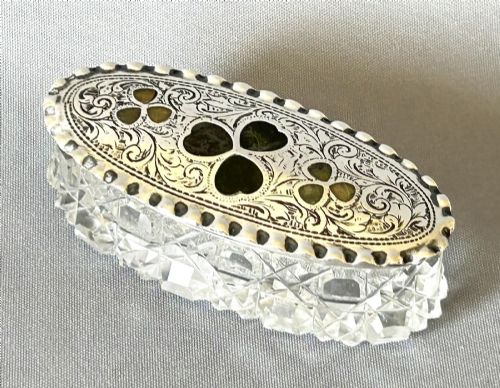
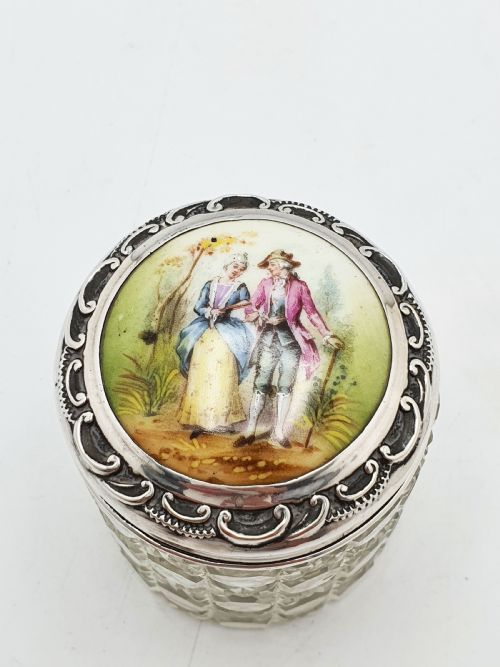
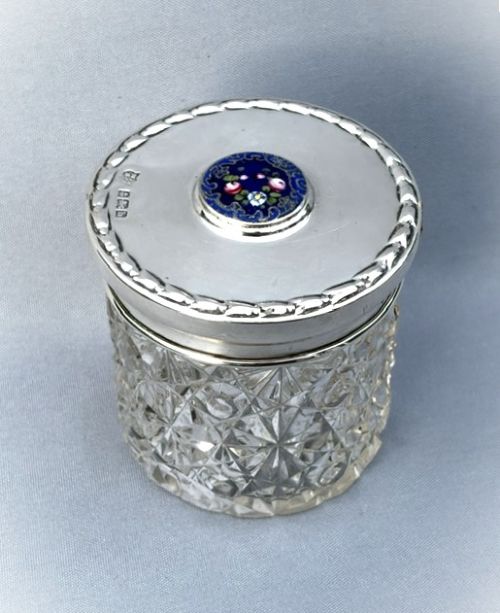
The versions most commonly met on this page are Edwardian and Victorian vanity jars and dressing table pots, often topped with a silver or enamel lid. Alongside these, collectors frequently encounter preserve pots, inkwells, and trinket boxes spanning from the 1800s through to the 1960s.
What varies in quality
Quality in a lidded cut glass pot rests upon the crispness of the glass cutting and the weight of the material used. Deeper, sharper facet cuts and heavier lead crystal indicate superior manufacture.
The standard of the metal mount and its accompanying lid also defines the tier of the piece. Substantial sterling silver mounts, intact enamel work, and identifiable maker marks elevate a piece above standard domestic wares.
Lidded Cut Glass Pot Retail Price Guide 2026
Typical asking prices for lidded cut glass pot among the pieces listed under this phrase on Sellingantiques today, from the lower quarter to the upper quarter. They describe what is for sale here now, not the wider market.
Several pieces double as glue pots and rouge containers, proving that even Victorian desk accessories needed a touch of vanity.
Asprey & Co.
The Lidded Cut Glass Pot Glossary
- Cut glass
- Glass decorated by grinding facets or patterns into the surface using a rotating wheel. This technique creates sharp geometric edges and brilliance.
- Vanity jar
- A dressing table container intended for creams, powders, or pins. These pots usually feature a removable silver or metal lid.
- Inkwell
- A small desk pot designed to hold liquid writing ink. They frequently incorporate a heavy glass or crystal base to prevent tipping during use.
- Preserve jar
- A tableware vessel designed to hold jams or condiments. They often include a matching spoon and a fitted metal lid.
Lidded Cut Glass Pot: Frequently Asked Questions
What were lidded cut glass pots used for?
These vessels served diverse household functions depending on their form, ranging from holding vanity creams and dressing table pins to containing desk ink or table preserves.
Smaller lidded pots sat upon dressing tables for cosmetics, while larger lidded vessels functioned as ink pots, butter dishes, or preserve jars in the dining room or study.
How do I date a silver and glass pot?
Dating relies primarily on the metal hallmarks stamped onto the silver mounts, which indicate the assay office and year of manufacture.
Stylistic shifts also help narrow the period, moving from heavy Georgian cut glass and Victorian brass mounts to Edwardian silver lids and geometric Art Deco enamel designs.
How do I care for antique cut glass?
Wash the glass and silver components separately using lukewarm water and a mild detergent, avoiding harsh chemical dips on the metal mounts.
Dry the silver promptly with a soft cloth to preserve the finish, and take care around delicate enamel or tortoiseshell lid inserts.
What is the difference between cut glass and cut crystal?
Cut crystal contains lead oxide, which adds weight, brilliance, and a clearer ring when struck compared to standard cut glass.
Both materials were utilised across different periods for vanity jars and inkwells, though crystal pieces generally offer greater refractive quality.