

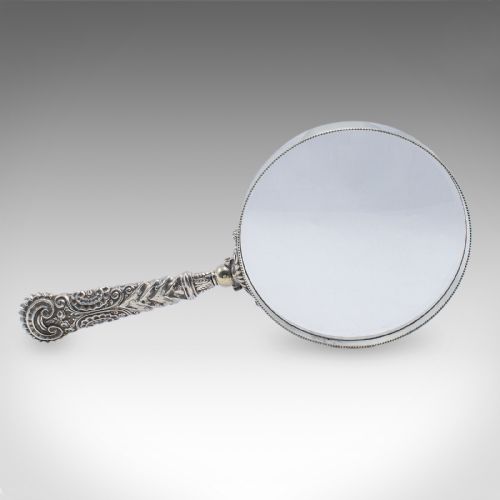


Library Reading Glass
These library reading glass pieces combine brass, silver, and glass to aid close study, offering both functional utility and period desk charm.
Library Reading Glass
A library reading glass serves as a practical desktop magnifier or illumination tool designed for close study and reading. When searching for a library reading glass, collectors encounter objects ranging from Victorian and Edwardian examples to 1930s pieces.
The inventory on this page spans desk accessories, magnifying glasses, and desk lamps, connecting traditional forms with period craftsmanship. Brass and glass dominate the selection, appearing alongside silver plate, shagreen, and rosewood.
Examples stretch from the nineteenth century through the Art Deco era, encompassing traditional styles alongside adjustable and swing-arm designs. Buyers frequently find magnifying glasses paired with specialised desk lighting from the same eras.
Materials and construction methods
Makers shaped these pieces using solid brass, silver plate, and rosewood, often pairing metal frames with clear or opaline glass lenses and shades. Construction relies on mechanical joints, weighted bases, and hand-fitted bezels designed for everyday desk use.
Specialist items incorporate luxury coverings such as shagreen over metal frameworks, demonstrating detailed surface work typical of Birmingham silversmiths. Lamps and magnifiers utilise adjustable arms, swan necks, and swivel mechanisms to direct light and focus.
Library Reading Glass Retail Price Guide 2026
Typical asking prices for library reading glass among the pieces listed under this phrase on Sellingantiques today, from the lower quarter to the upper quarter. They describe what is for sale here now, not the wider market.
Some magnifiers are large enough to be called mammoth map glasses, ensuring no small print escapes notice.
Distinctions in craftsmanship and material
Quality rests in the weight of the metalwork, the clarity of the glass, and the smooth operation of adjustable joints and weighted bases. Superior examples retain original surface finishes, unblemished lenses, and intact organic materials like rosewood or shagreen.
Maker marks and hallmarking elevate specific pieces, distinguishing standard workshop production from signed items created by established firms. The integration of functional adjustments, such as swan neck stems or counterweighted arms, separates simpler items from more sophisticated designs.
Mappin and Webb·Wild and Wessel
The Library Reading Glass Glossary
- Opaline Glass
- A translucent white or tinted glass often used for lamp shades to diffuse light evenly across a desk surface. It appears frequently in Edwardian and Victorian light fittings.
- Shagreen
- Prepared sharkskin or stingray skin used as a luxury decorative covering on small objects and desk items. It provides a distinct textured surface popular during the Art Deco period.
- Swan Neck
- A curved metal arm shape utilised on desk lamps and magnifying stands to allow directional movement. This form provides flexibility in positioning the glass or shade.
- Silver Plate
- A thin layer of silver applied over a base metal foundation to create a lustrous finish without solid silver costs. Birmingham workshops utilised this technique for various desk accessories.
Library Reading Glass: Frequently Asked Questions
What is a library reading glass?
A library reading glass is a handheld or mounted magnifier used historically for examining maps, books, and fine print in study spaces.
These pieces often feature brass frames, rosewood handles, or weighted stands designed for continuous desk use.
How do I date an antique magnifier?
Dating relies on material combinations, manufacturing techniques, and style markers typical of specific decades like the Victorian era or Art Deco period.
Examining metal casting methods and any associated maker marks helps narrow down the exact period of production.
Were these items used for desks?
Many of these pieces were specifically designed for nineteenth and early twentieth-century libraries, studies, and administrative desks.
They served as functional desk accessories alongside adjustable lamps and reading stands to improve visibility.
How should I clean brass fittings?
Brass components benefit from gentle dusting with a soft cloth to preserve any existing historic patina accumulated over the decades.
Harsh chemical polishes should be avoided to maintain the original surface character of the metal.