

Library Centre Table
A library centre table anchors a grand room, designed to stand free in the middle of a floor.
Library Centre Table
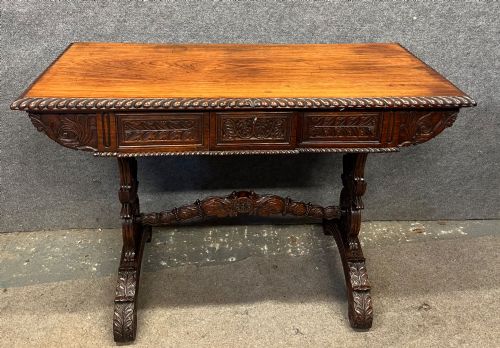
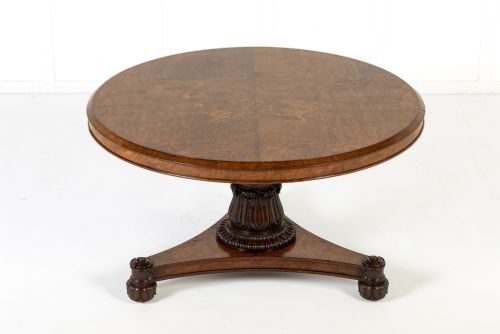
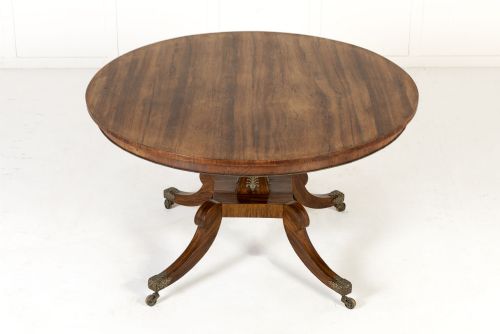
A library centre table stands independently in a room, finished on all sides rather than pushed against a wall. The examples collected under this search phrase span from the seventeenth century through the Georgian and Regency eras into the Victorian period, reflecting evolving domestic spaces.
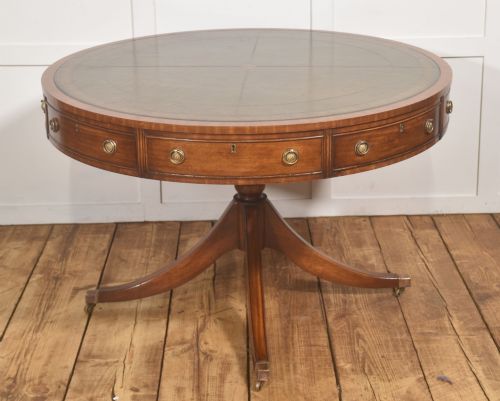
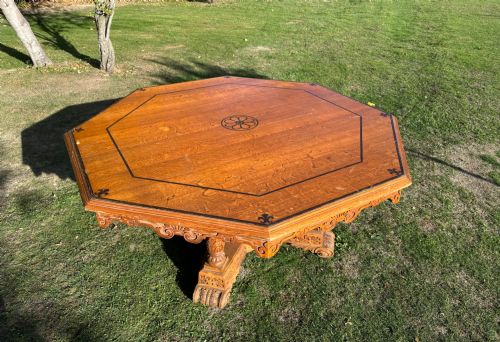
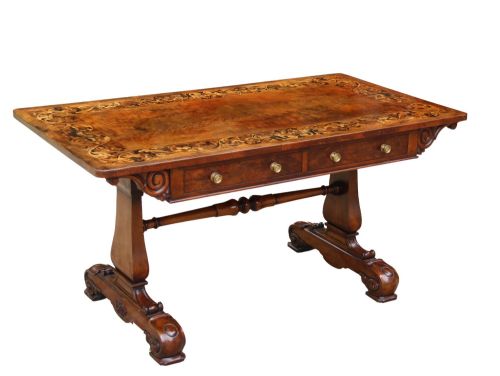
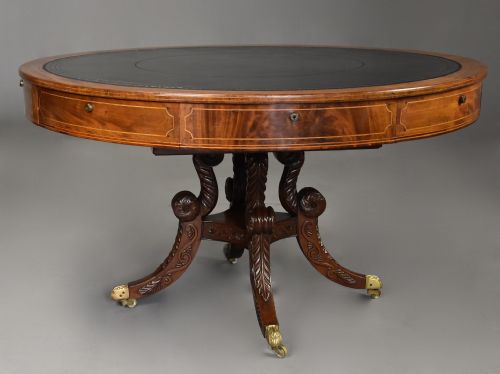
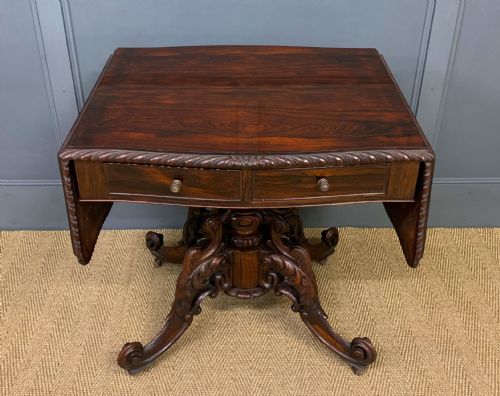
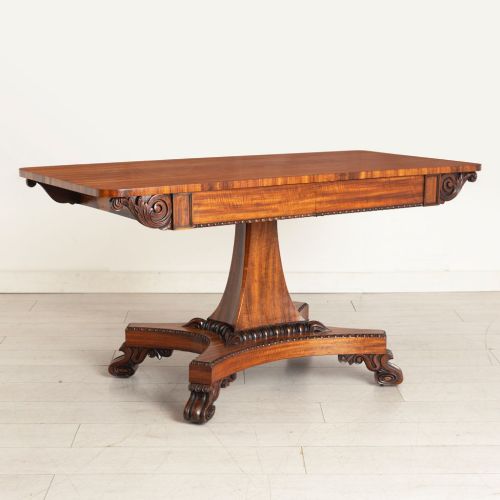
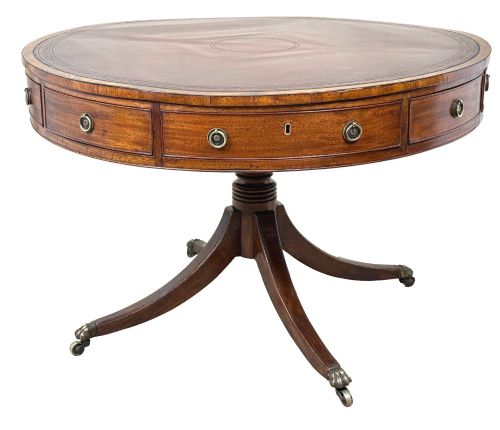
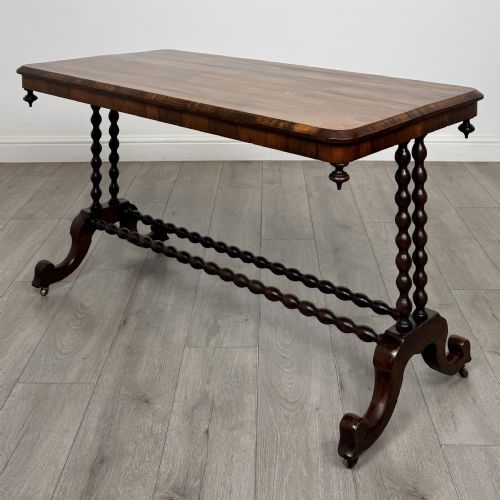
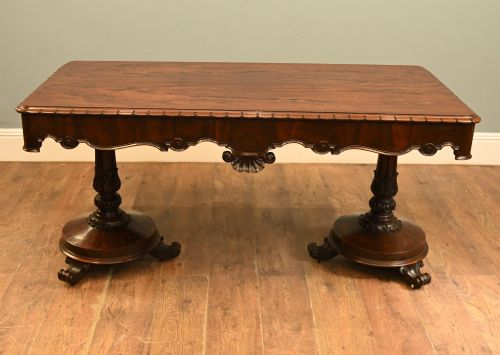
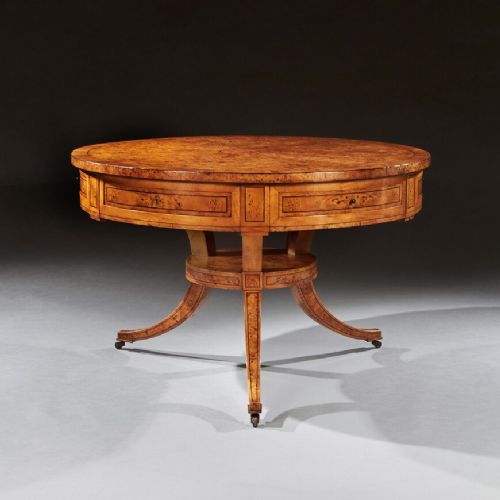
Most pieces seen here belong to the nineteenth century and the Victorian era, alongside Regency and Georgian iterations. Formats range from circular drum tables and sofa tables to writing desks and large freestanding tables.
Cabinetmakers constructed these pieces for serious study, administrative work or formal display in large houses. Their central placement demands architectural presence and balanced proportions from every angle.
Materials and construction
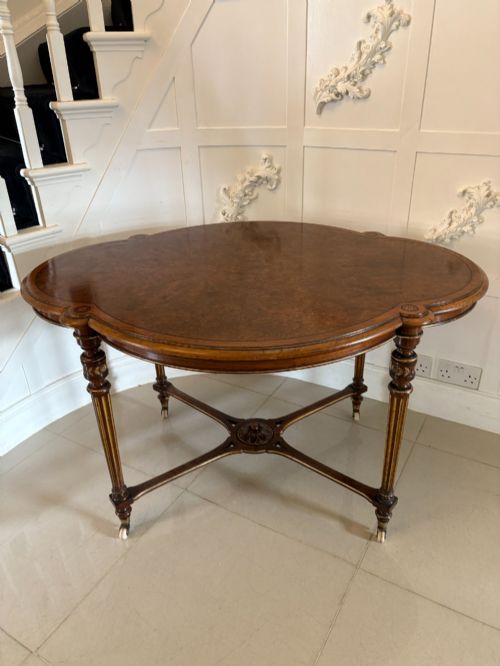
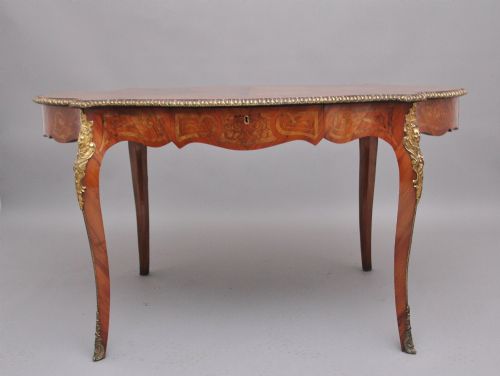
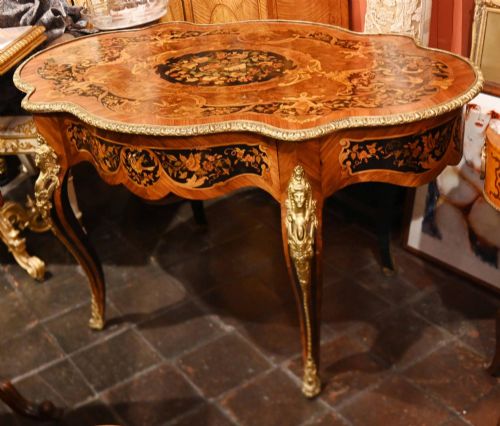
Craftsmen utilised dense timbers such as mahogany, rosewood, walnut and oak, frequently applying burr walnut or burr root maple veneers to create rich surface patterns. Brass mounts, ormolu, and inset leather writing surfaces complete the construction of finer examples.
Turning, carving, and marquetry inlay demonstrate the manual skill invested in these pieces. Many incorporate structural elements like castors to facilitate movement across heavy carpets.
Library Centre Table Retail Price Guide 2026
Typical asking prices for library centre table among the pieces listed under this phrase on Sellingantiques today, from the lower quarter to the upper quarter. They describe what is for sale here now, not the wider market.
Several pieces roll away on hidden castors, ready to escape long committee meetings.
Judging execution
Quality rests upon the selection of timber figures and the crispness of carved detail, distinguishing standard production from exceptional workshops. Grain matching across large surfaces and the precision of marquetry inlay separate superior examples from simpler ones.
The integrity of the structural joinery and original secondary timbers dictate long-term durability. Refinement in turning, such as bobbin or spiral details, and the quality of original brass fittings elevate a piece further.
Edward’s And Robert’s·Mein of Kelso·Williams and Gibton·Gillows
The Library Centre Table Glossary
- Drum table
- A circular library table with a deep top containing drawers around the perimeter, frequently supported by a central pillar and tripod base.
- Sofa table
- An oblong table designed to stand in front of a sofa, fitted with drop leaves at either end and usually twin pedestals.
- Ormolu
- Gilt-bronze mounts applied to furniture for decorative enrichment, common in nineteenth-century revival styles.
- Marquetry
- Decorative patterns formed by fitting together thin veneers of wood and other materials onto a structural carcase.
Library Centre Table: Frequently Asked Questions
Where should a library centre table go?
These tables are designed to stand in the middle of a room rather than against a wall, as their finished backs and sides permit viewing from any angle. They function well in large reception rooms or home studies where floor space allows full circulation around the piece.
Positioning one beneath a central ceiling light or chandelier highlights the grain of the timber and any decorative inlay on the top.
How do I care for leather tabletops?
Leather insets require gentle treatment using specialised leather balms to prevent drying and cracking over time. Avoid placing hot mugs or damp items directly onto the surface to protect both the leather and the surrounding wood.
Regular dusting with a dry, soft cloth maintains the finish without introducing moisture that could damage the underlying timber substrate.
How do I identify a Regency table?
Regency tables often display classical architectural influences, utilising exotic woods like rosewood and mahogany alongside brass inlay or gilt mounts. Proportions tend to be clean and restrained, reflecting early nineteenth-century design trends.
Look for robust pedestals, sabre legs, and characteristic use of dense tropical hardwoods that indicate the period's preference for dark, highly polished surfaces.