

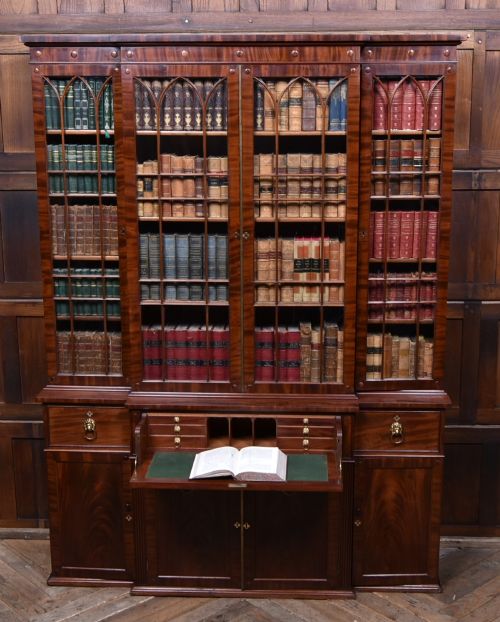
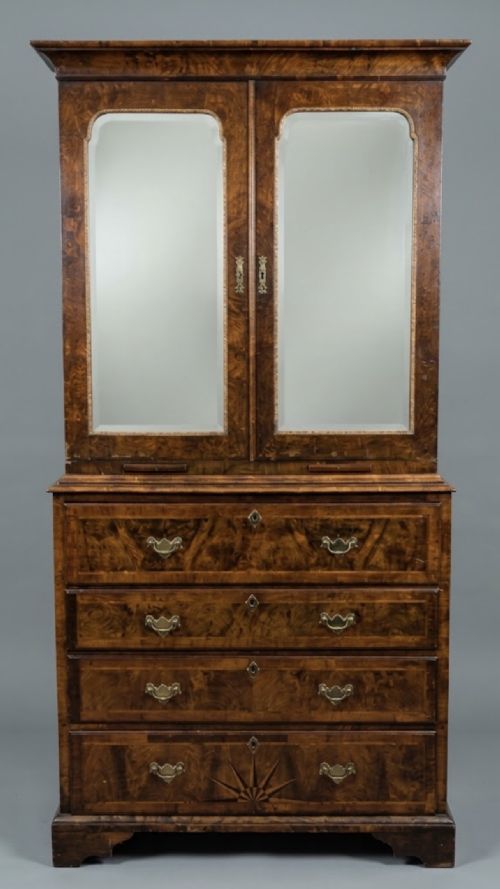

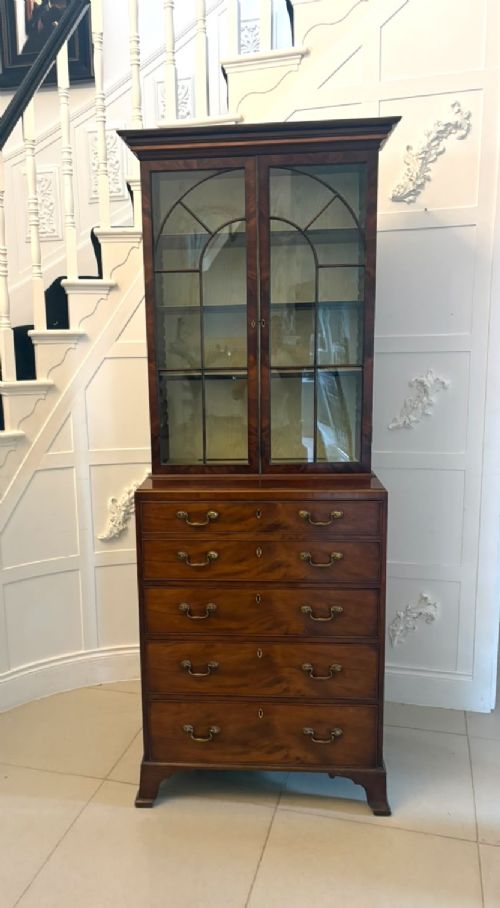
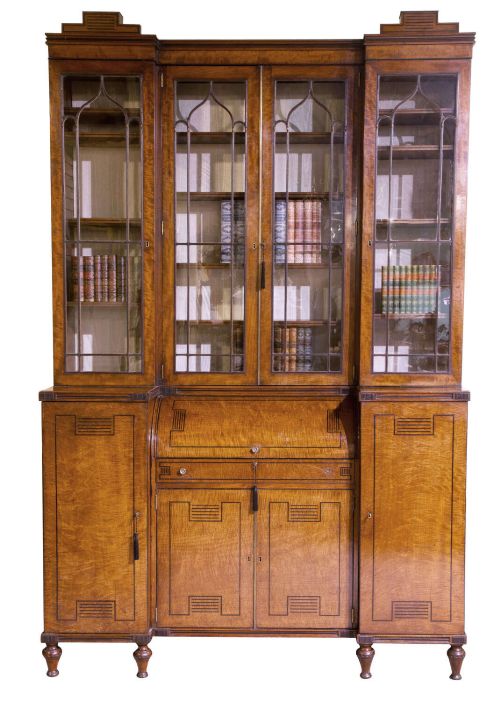



Library Bookcase Desk
A library bookcase desk brings together upper storage and a fitted writing compartment, offering a practical workspace wrapped in period timber.
Library Bookcase Desk
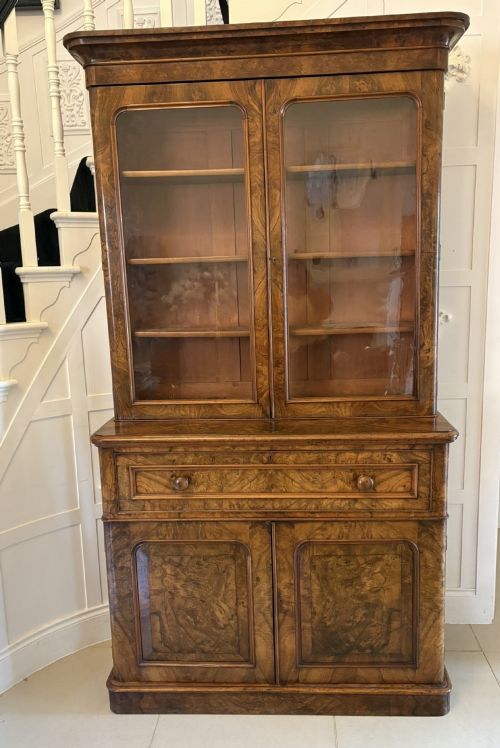
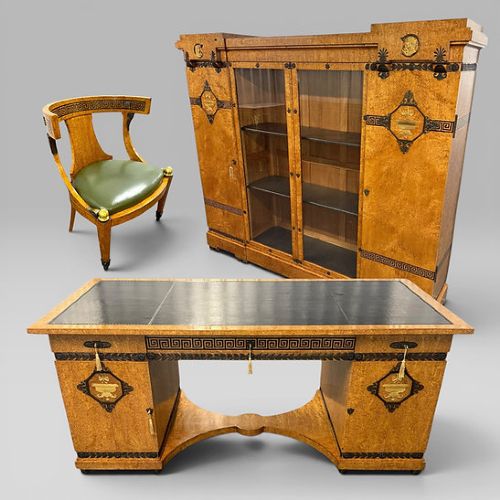
A library bookcase desk combines tall glazed or open shelving with a drop-down writing flap or fitted drawer, serving both study and display functions. The pieces appearing under this search phrase span George III, Regency, and Victorian eras, alongside Edwardian revolving designs.
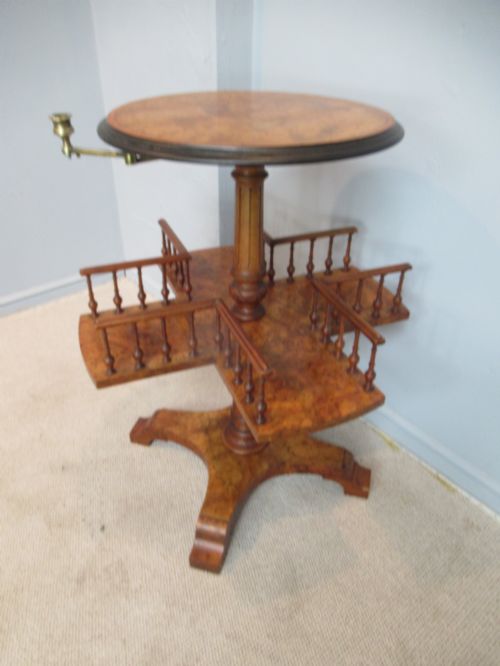
Most examples rely on the form of the secretaire bookcase, where a central drawer pulls down to reveal pigeonholes and small drawers for correspondence. Alongside these tall architectural cabinets, you will also find smaller revolving bookstands and desk accessories designed to hold working volumes close at hand.
Origins stretch from English workshops to French ateliers, utilising traditional forms like the breakfront cabinet or the freestanding revolving bookcase. Each version reflects the shifting domestic requirements of scholars and collectors across the eighteenth and nineteenth centuries.
Materials and construction
Makers relied heavily on mahogany as the primary structural timber, often selecting figured burr walnut, satinwood, or oak for decorative impact on primary surfaces. Glass doors feature distinct glazing bars, while brass hardware secures doors and internal compartments.
Writing surfaces frequently incorporate fitted leather inserts, sometimes highlighted with gilt tooling to provide a durable writing plane. Internal drawers utilise secondary timbers and dovetail joints, reflecting standard cabinet-making practices of the Georgian and Victorian periods.
Library Bookcase Desk Retail Price Guide 2026
Typical asking prices for library bookcase desk among the pieces listed under this phrase on Sellingantiques today, from the lower quarter to the upper quarter. They describe what is for sale here now, not the wider market.
Listings feature mahogany, burr walnut, and oak across Georgian, Victorian, and Edwardian periods.
Assessing quality and execution
Superior execution shows in the selection of timbers, where highly figured veneers and book-matched grains are deployed with deliberate balance across large surfaces. The integration of the writing drawer demands precise mechanical fitting so the drop-front lowers smoothly on its supports.
Glazing quality sets apart finer pieces, visible in the delicacy of wooden astragal bars and the clarity of early glass panes. Proportion and carving detail, particularly on breakfront cornices and bracket feet, separate standard workshop output from exceptional cabinet work.
Gillows·Mercier Frères
The Library Bookcase Desk Glossary
- Secretaire bookcase
- A tall cabinet featuring a fitted writing drawer with a drop-down front, positioned beneath upper bookshelves. This configuration allows a full desk workspace without requiring a separate table.
- Breakfront
- A cabinet design where the central section projects forward from the flanking wings. This architectural arrangement creates depth and shadow across large library furniture.
- Astragal glazed
- Glass doors divided into smaller panes by narrow wooden mouldings known as glazing bars. These grids protect the book collection while maintaining visibility.
- Revolving bookcase
- A compact, rotating bookstand designed to sit on a floor or tabletop for easy volume access. They utilise a central pivot mechanism hidden within the base.
Library Bookcase Desk: Frequently Asked Questions
How do I use a secretaire drawer?
Pull the drawer forward and lower the front panel to reveal internal pigeonholes and small drawers.
Support arms engage automatically to hold the writing surface level while in use.
Where were these bookcases placed?
They stood primarily in private libraries, studies, and formal drawing rooms of large townhouses and country estates.
Their dual function made them essential for managing correspondence and housing reference volumes.
How do I date a mahogany bookcase?
Examine the secondary timbers inside the drawers and the style of the brass hardware used.
Georgian pieces often display straight architectural lines, while Victorian examples introduce heavier carved details.