

Library Book Table
A library book table combines surface space with organised volume storage, serving readers who want reference material within arm's reach.
Library Book Table
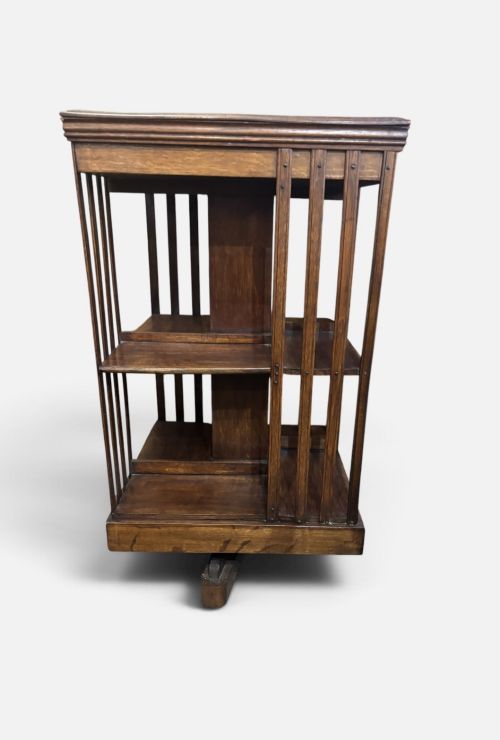
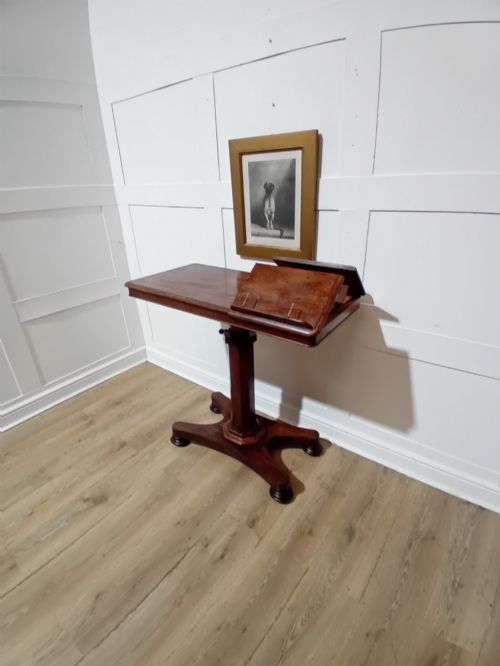
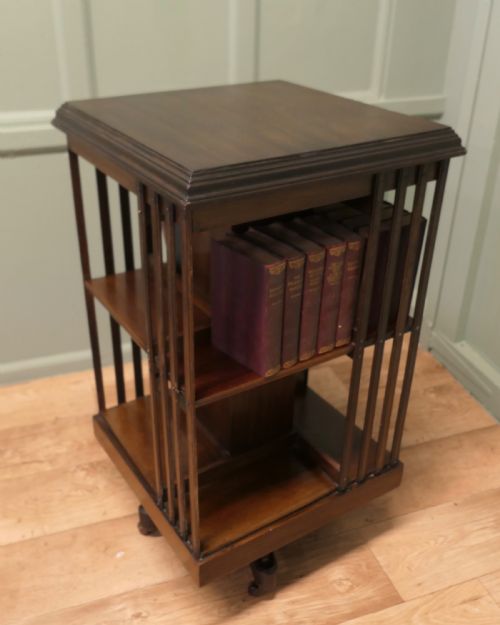
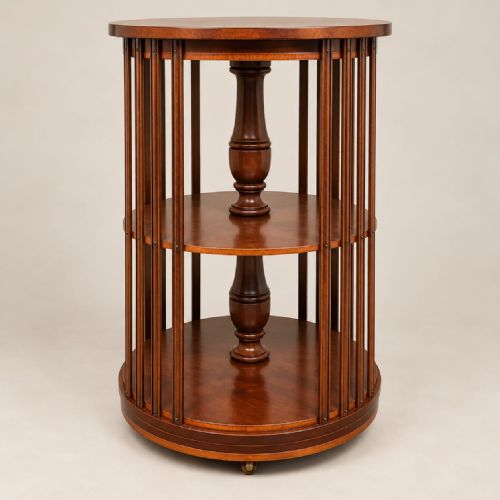
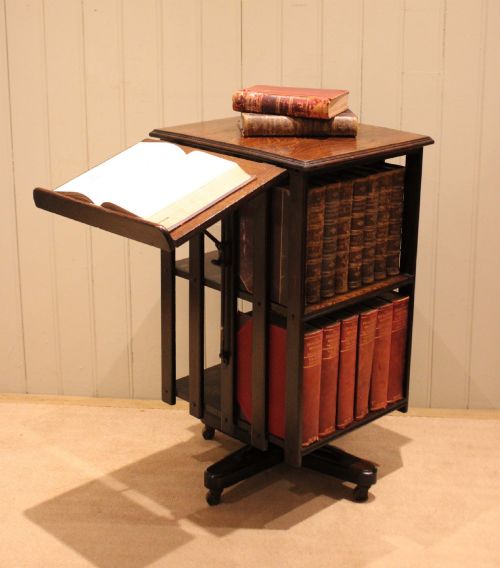
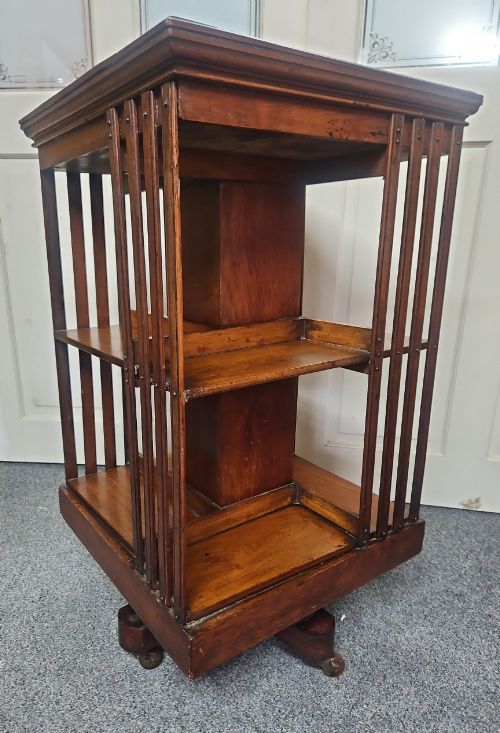
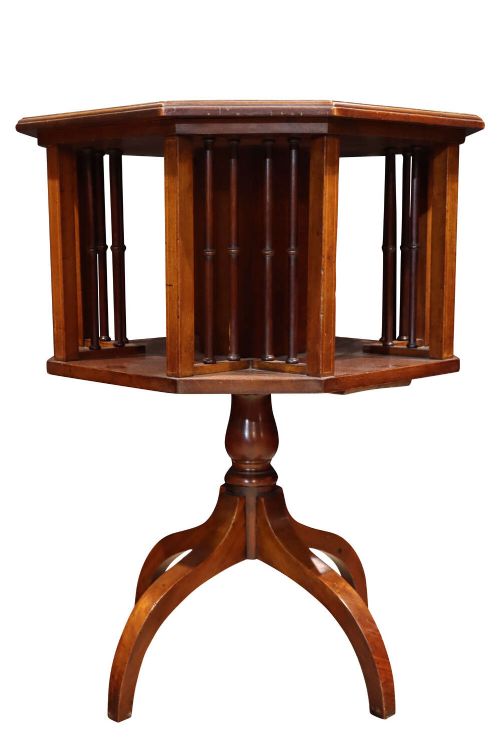
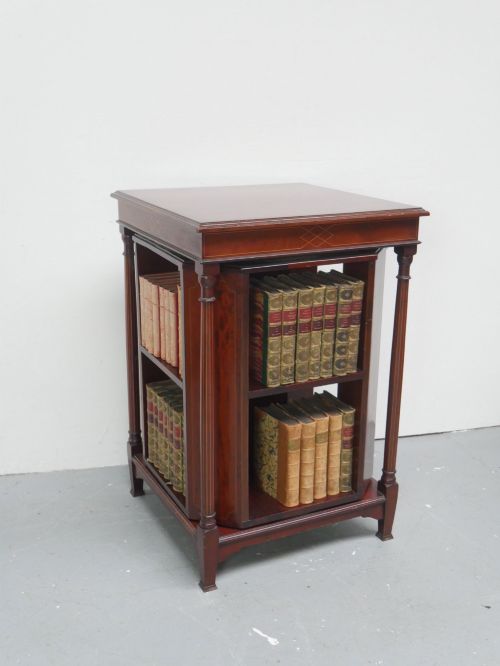
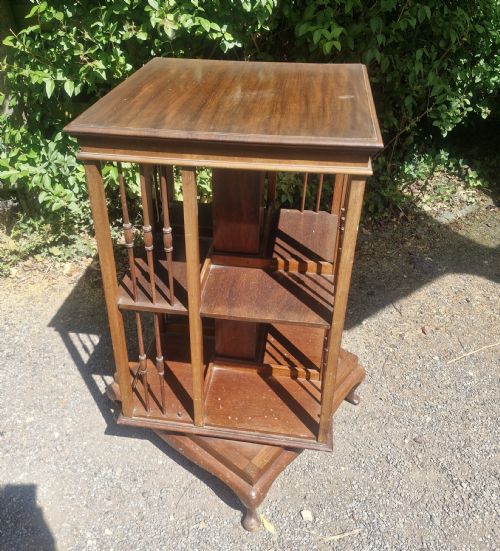
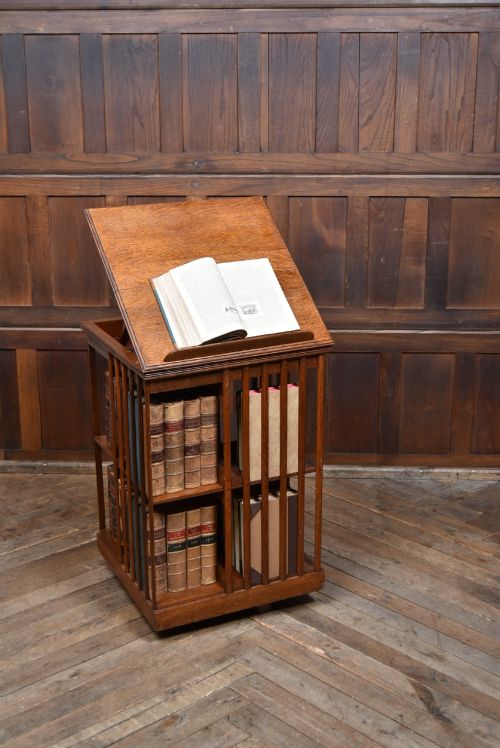
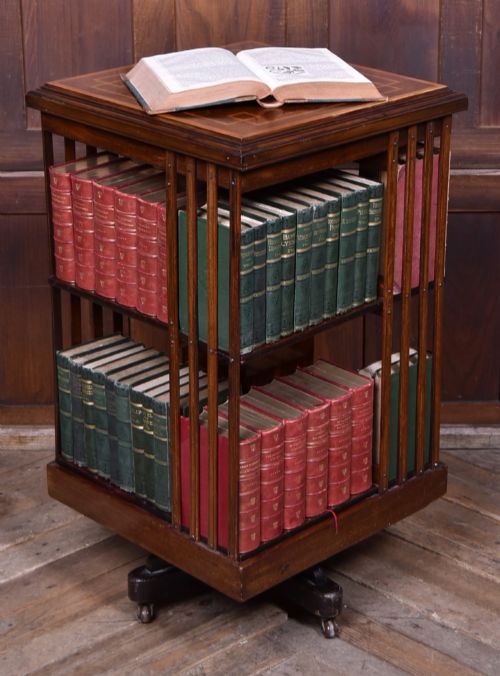
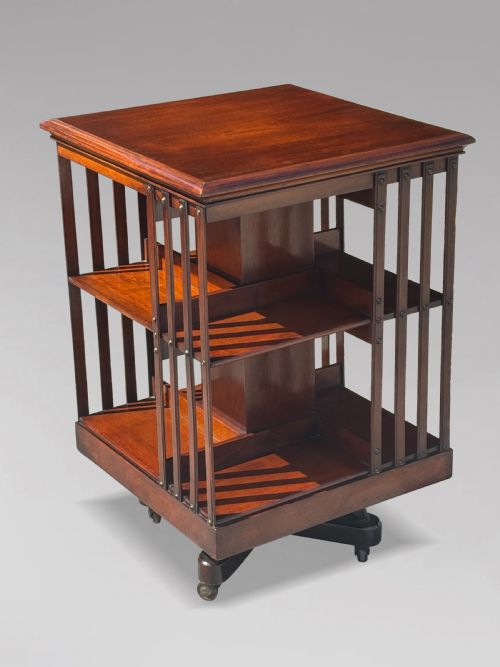
A library book table encompasses revolving bookcases, reading stands, and adjustable reading tables designed for domestic studies and larger libraries. When you search for a library book table, the most common form encountered is the revolving bookcase, particularly from the Edwardian and Victorian periods.
These pieces originate primarily from the nineteenth and early twentieth centuries, spanning periods from George II through Art Deco and the interwar years. Makers utilised dense timbers to support heavy volumes, producing circular, octagonal, and square tiers that sit on low, stable pedestals or castors.
Materials and Construction
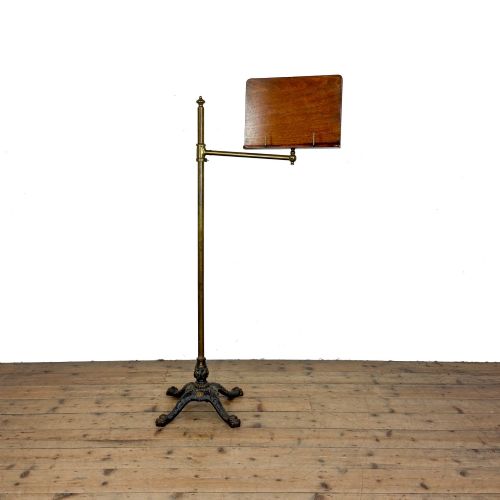
Makers constructed these tables predominantly in mahogany, oak, and walnut, often selecting figured veneers and flame mahogany for visible surfaces. Brass and cast iron appear in structural mechanisms, notably on adjustable reading stands and revolving bookstand pivots.
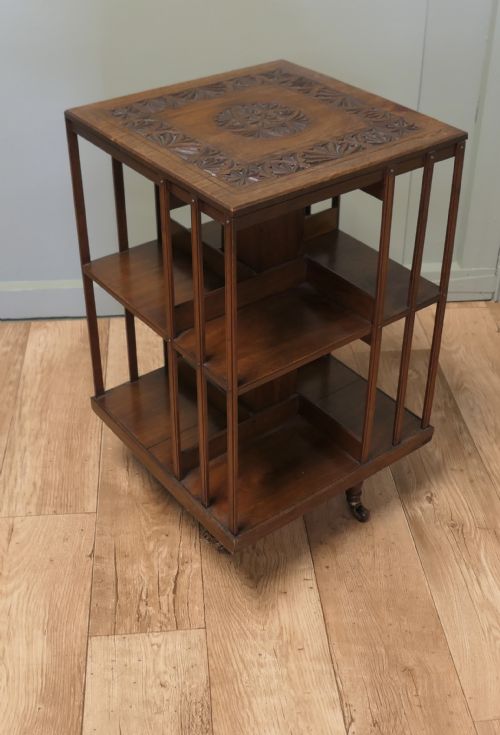
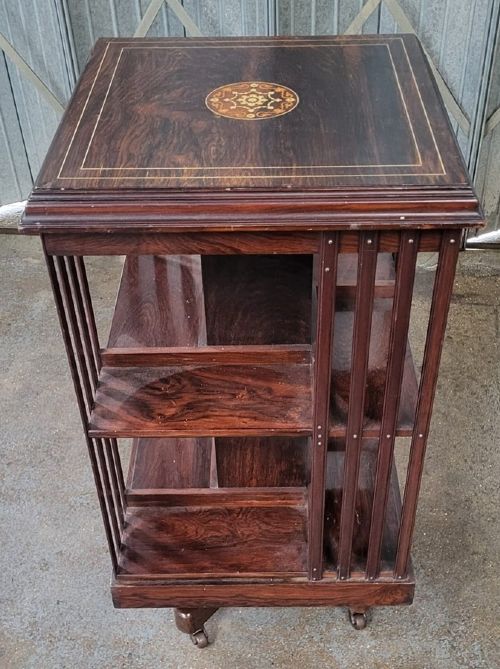
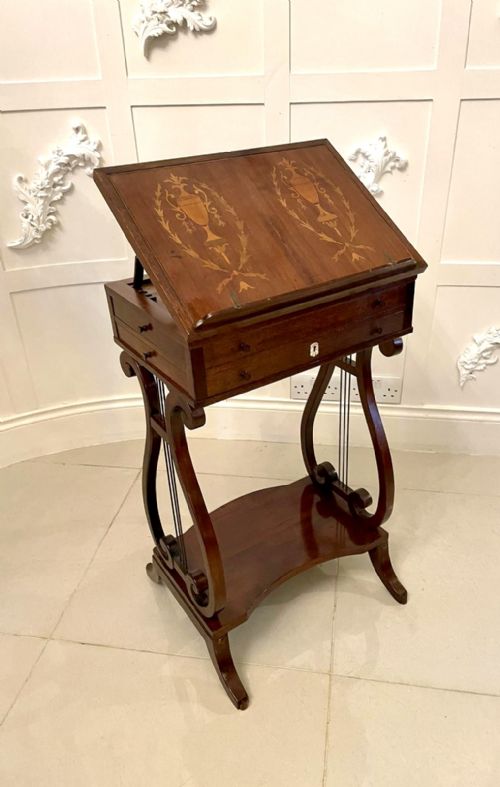
Inlays of satinwood and marquetry feature on finer Edwardian and Dutch floral examples, while structural joinery relies on solid timber frames and slatted partitions to bear the weight of heavy books.
Library Book Table Retail Price Guide 2026
Typical asking prices for library book table among the pieces listed under this phrase on Sellingantiques today, from the lower quarter to the upper quarter. They describe what is for sale here now, not the wider market.
Several Victorian items include leather-bound faux book games boards, concealing leisure inside a study facade.
Craftsmanship and Design
Quality rests in the smoothness of the revolving mechanism and the stability of the central axis under asymmetric loads. Fine examples employ robust internal cross-framing that prevents the tiers from sagging over decades of use.
Selection of timber grain and subtlety of inlay separate standard production from superior pieces. Crisp carving on the slats and original brass castors elevate the standing of a reading table or revolving bookcase.
Maple & Co
The Library Book Table Glossary
- Revolving bookcase
- A tiered wooden stand mounted on a concealed pivot and cruciform base allowing rotation. This design lets a reader access multiple shelves of books from a stationary seat.
- Adjustable reading table
- A specialised stand featuring a tilting top or mechanical support for holding books at an ergonomic angle. These often include sliding book ledges.
- Marquetry
- Decorative veneer work forming pictorial patterns using various coloured woods. Dutch floral examples employ this technique extensively across table tops.
- Flame mahogany
- Timber cut from the fork of the mahogany tree to produce a distinctive flame-like grain pattern. Cabinet makers used this for high-status table tops and bookcase panels.
- Reading stand
- A raised support designed to hold a single large volume or folio for standing or seated study. They frequently incorporate height-adjustment mechanisms.
Library Book Table: Frequently Asked Questions
How do revolving book tables work?
A concealed central iron spindle and ball-bearing or wooden pivot allow the tiers to turn smoothly. This mechanism supports the weight of dense volumes while letting the user access every side from one position.
Most models sit on a low cruciform base fitted with castors for stability and mobility across study floors.
Where were library book tables used?
These tables served in private libraries, studies, and drawing rooms where reference books needed to remain close to a writing desk or armchair. Adjustable reading stands were positioned beside seating for extended periods of study.
Smaller revolving bookcases fit easily into tight corners or beside low seating where wall shelving was unavailable.
How do I identify an Edwardian bookcase?
Edwardian revolving bookcases typically date from around 1900 and feature lighter mahogany or inlaid rosewood construction. They often display delicate satinwood stringing and subtle crossbanding on the top tier.
The proportions tend to be neat and domestic, reflecting the interior tastes of the early twentieth century.
Can these tables hold heavy books?
Solid mahogany and oak examples possess strong slatted partitions designed to bear heavy leather-bound volumes. The internal framework distributes weight evenly across the revolving base.
Lighter satinwood or inlaid pieces suit standard octavo volumes rather than massive folio atlases.