

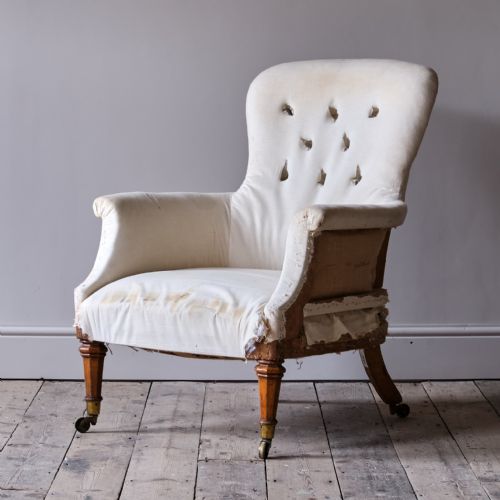

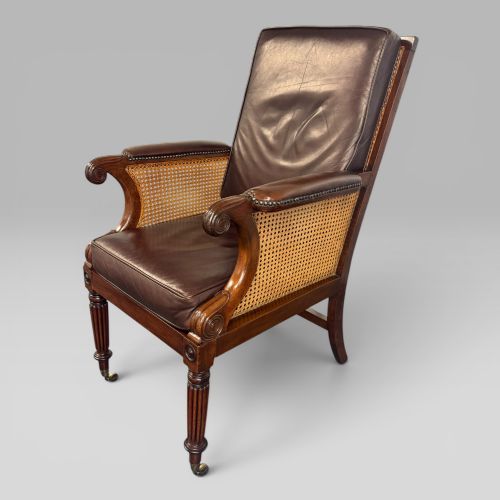
Library Armchair on Castors
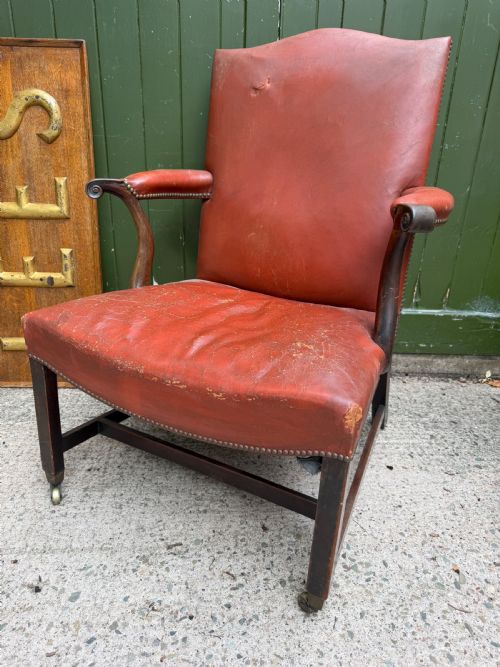
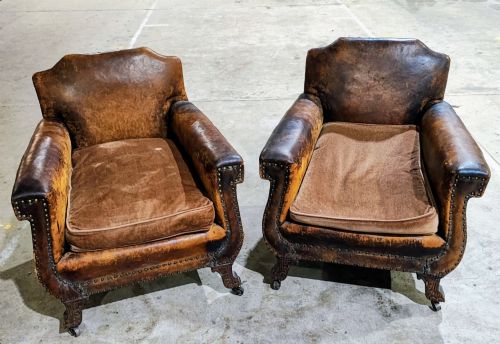
A library armchair on castors provides sturdy comfort for the study, most often encountered in mahogany, walnut, or oak framing with leather upholstery.
Library Armchair on Castors
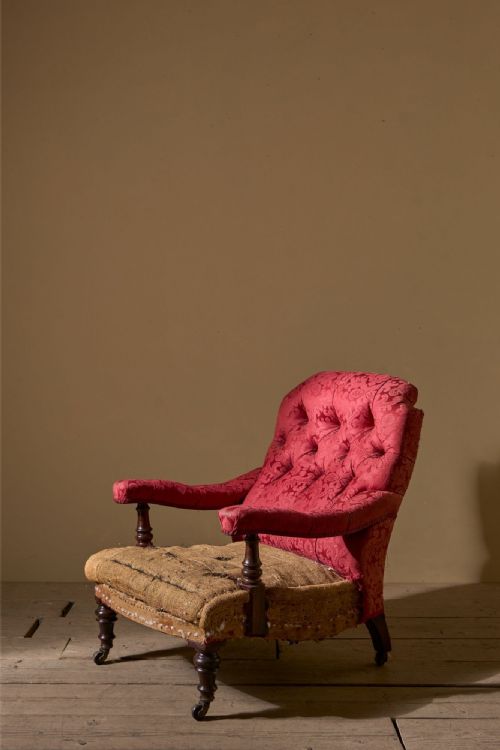
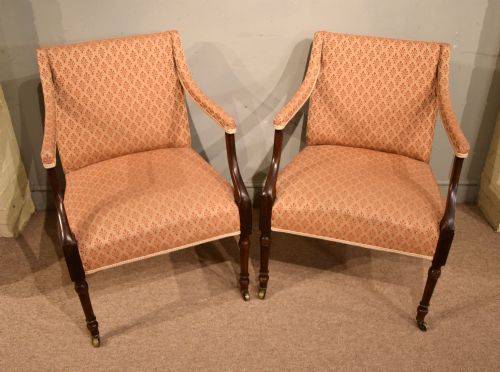
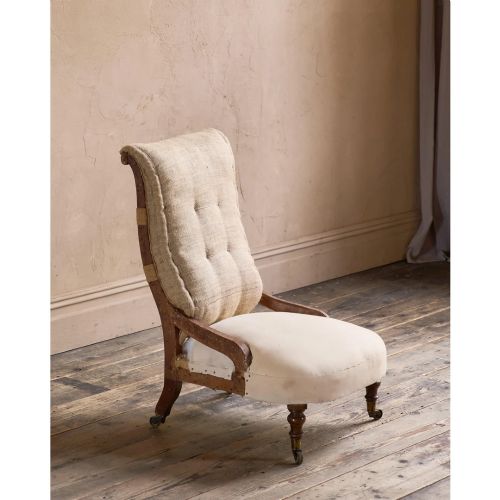
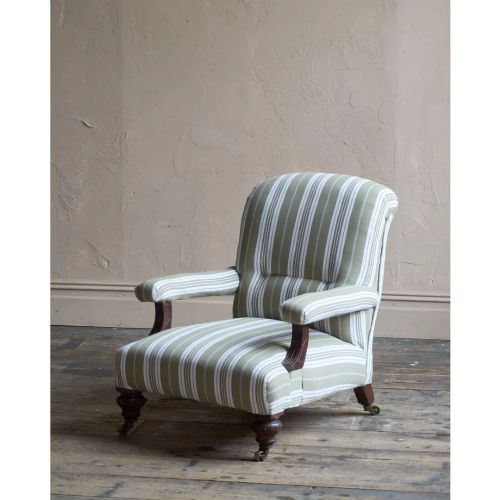
A library armchair on castors is a substantial seating form designed for reading and writing rooms, combining sturdy timber frames with deep upholstery. You will most frequently meet nineteenth-century examples, spanning the Regency, Victorian, and Edwardian periods, alongside earlier George III and George IV iterations.
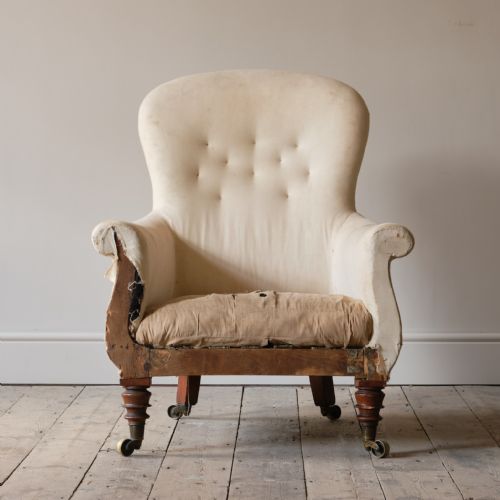
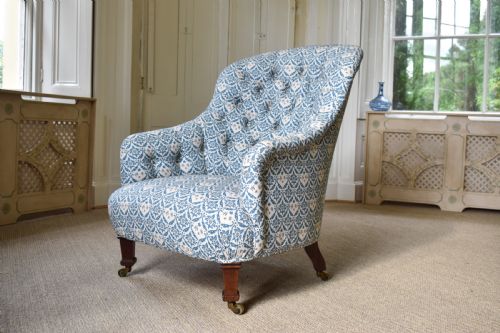
The selection ranges from open armchairs and button-backed club chairs to caned bergères and desk chairs. Many pieces reflect country house origins, built with generous proportions for long hours of study or desk work.
How they were made
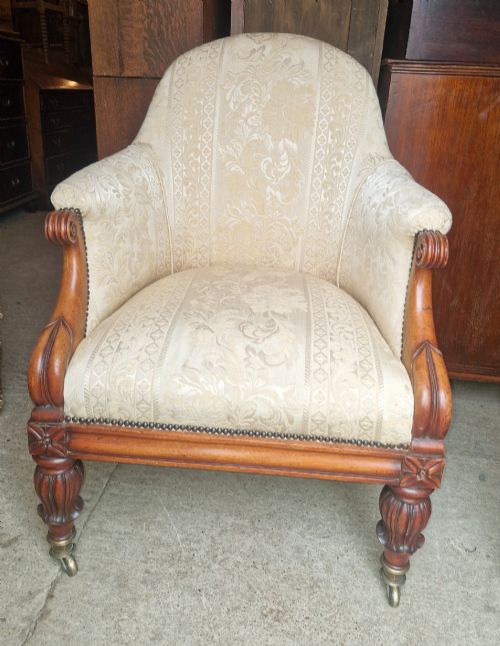
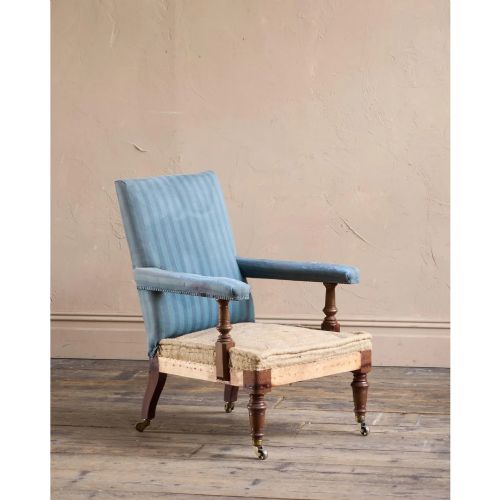
Frames are constructed from dense hardwoods such as mahogany, walnut, rosewood, and oak, providing the necessary structural integrity for heavy everyday use. These timbers are shaped into reeded legs, turned supports, and curved armrests.
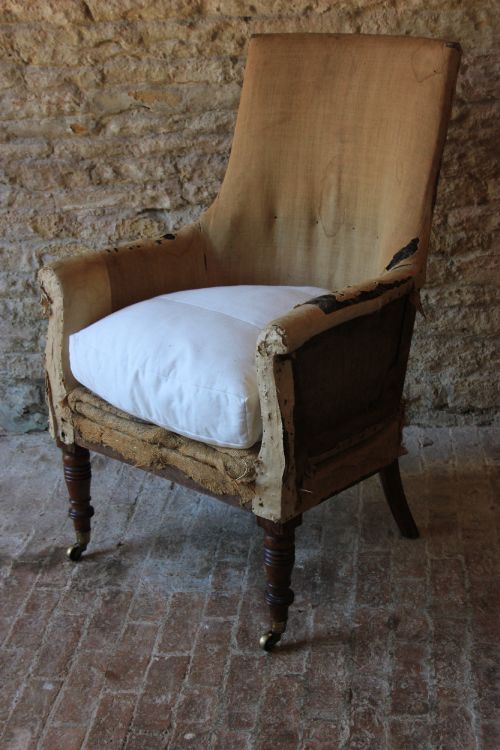
Upholstery relies on traditional stuffing secured beneath materials like leather, velvet, calico, hessian, and fabric. Brass castors are fitted to the timber feet, allowing the heavy chairs to move smoothly across carpet and floorboards.
Several chairs arrive with brass castors still rolling smoothly after two centuries of chasing library books.
What varies in quality
Quality rests in the architectural proportions of the wooden frame and the crispness of its carving or turning. Superior examples maintain balance and harmony in their scale, whether over-scaled or neat, without appearing clumsy.
The execution of the joinery and the selection of fine timbers, such as figured mahogany or rosewood, mark the upper tiers of production. Maker attribution, through stamps or known workshop traits, further distinguishes exceptional pieces from standard provincial work.
Howard and Sons·Morison and Co·Holland and Sons·Hindley and Sons·Gillows·Cope and Collinson·William Birch
The Library Armchair on Castors Glossary
- Castor
- A small wheel mounted on a swivel assembly attached to the foot of a piece of furniture. This allows heavy library chairs to be repositioned easily.
- Mahogany
- A durable tropical hardwood prized for its deep reddish-brown colour and stable grain. It forms the primary structure for many nineteenth-century library chairs.
- Leather
- A tough, flexible material produced by tanning animal rawhide. It is traditionally used to cover the seats and backs of study and library armchairs.
Library Armchair on Castors: Frequently Asked Questions
How do I identify a library armchair?
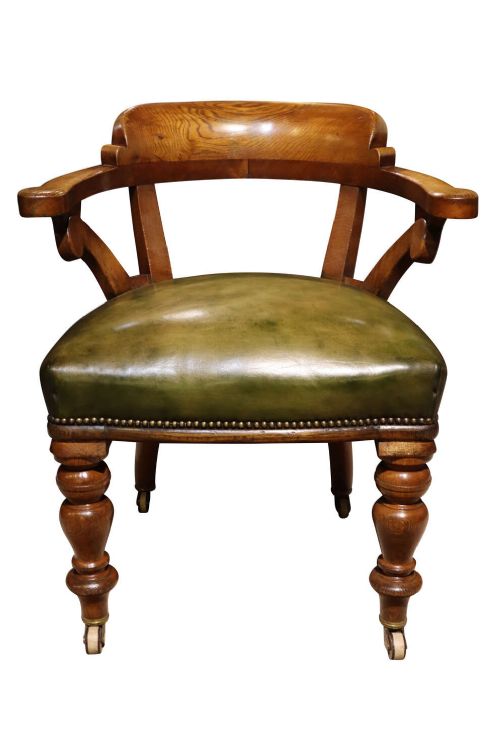
Look for a sturdy timber frame, often in mahogany or oak, paired with deep leather or fabric upholstery designed for prolonged sitting. The inclusion of brass castors on the feet is a defining characteristic that allowed these heavy chairs to move freely around a study.
Many examples feature open arms or enclosed padded sides suitable for a desk or reading table. Their proportions tend to be deeper and more substantial than standard parlour seating.
What periods do these chairs cover?
The available pieces primarily span the nineteenth century, including Regency, William IV, George IV, and Victorian eras. You will also encounter Edwardian examples from the early twentieth century alongside occasional eighteenth-century George III pieces.
Each period imparts distinct stylistic traits to the woodwork, moving from the classical lines of the Regency to the heavier, button-backed forms of the late Victorian period.
Were these chairs used at desks?
Many of these chairs served double duty at large partners desks, library tables, and writing desks. Desk chairs and captain's chairs within the selection offer supportive arm heights and mobility via castors for turning towards shelves.
Their robust construction accommodated the daily demands of scholars, gentlemen, and clerks working in country houses and private libraries.
How should I care for leather upholstery?
Leather upholstery requires regular dusting and occasional conditioning to maintain its suppleness and prevent cracking. Keep antique leather away from direct sunlight and heat sources to preserve its natural colour and texture.
Original leather surfaces, such as red morocco, benefit from gentle cleaning methods that respect their age and patina.