

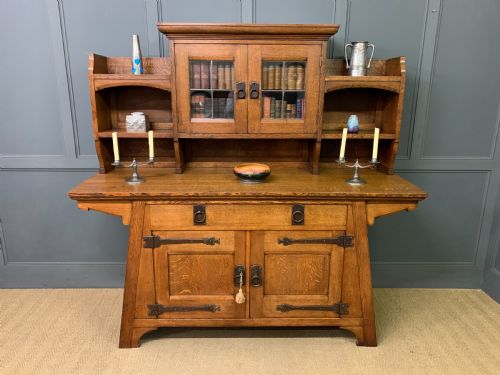
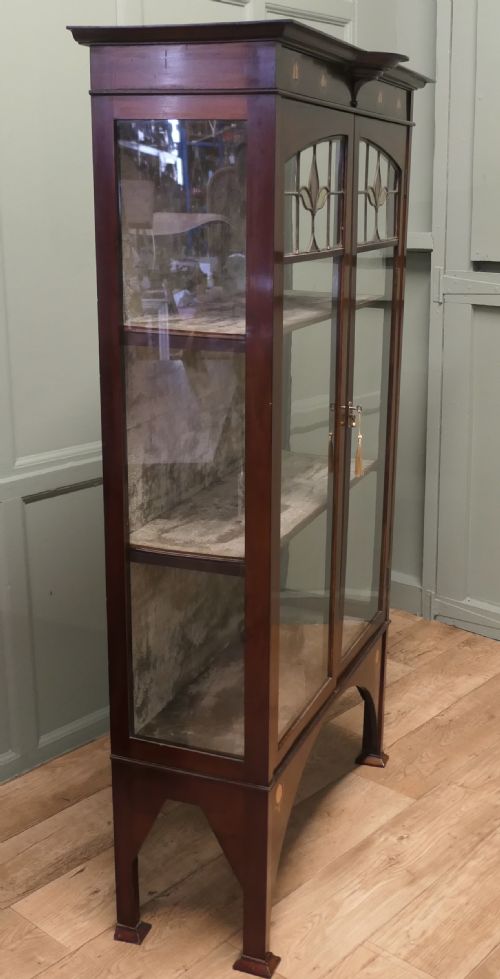
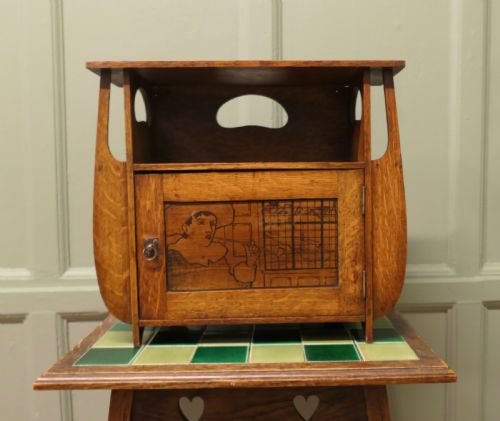
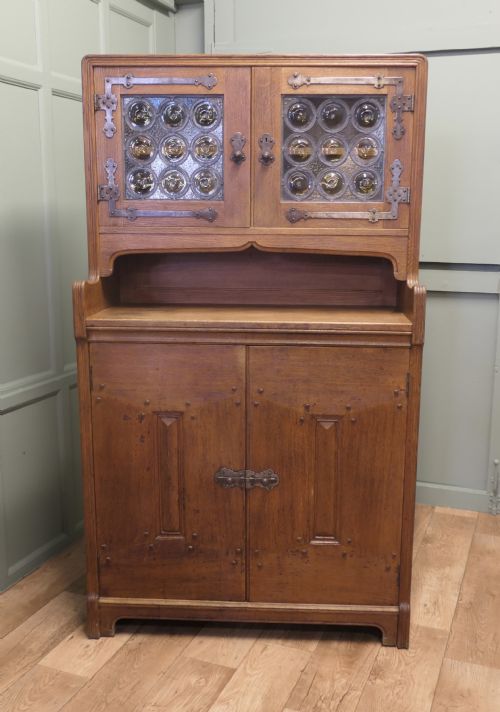




Liberty Display Cabinet
These liberty display cabinet pieces combine period craftsmanship with distinctive aesthetic movement design, offering both utility and character for the home.
Liberty Display Cabinet
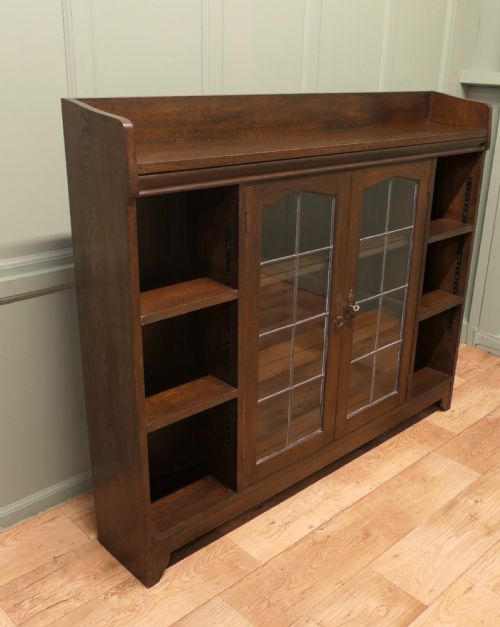
A liberty display cabinet encompasses a range of domestic furniture from the late Victorian, Edwardian, and turn-of-the-century periods, spanning the Arts and Crafts and Aesthetic movements. These items typically include glazed cabinets, bookcases, wall cabinets, and dressers constructed from timbers like oak and mahogany.
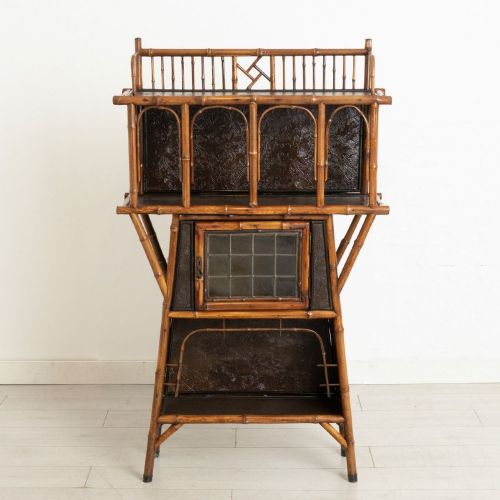
The objects found here reflect the distinctive output associated with Liberty and Co, alongside broader Arts and Crafts and Anglo-Moorish styles. Buyers frequently encounter oak sideboards, bamboo occasional tables, and compact wall-mounted display units dating from 1880 to 1910.
Selecting a liberty display cabinet involves choosing between taller freestanding glazed bookcases and smaller wall-mounted cabinets designed to showcase ceramics and decorative objects. Each form demonstrates the functional yet artistic priorities of late nineteenth-century British cabinet-making.
How they were made
Construction relies heavily on solid oak and mahogany, often enhanced by brass hardware and leaded glass panels that define the apertures of display doors. Metal elements such as copper and iron appear in strap hinges and decorative escutcheons, reinforcing the structural honesty favoured by Arts and Crafts makers.
Cabinet makers utilised traditional joinery techniques, framing glass with timber glazing bars and occasionally incorporating inlaid details or bamboo framing for lighter occasional pieces. The timber surfaces typically receive simple polishing that highlights the natural grain, particularly on golden oak and figured mahogany.
Liberty Display Cabinet Retail Price Guide 2026
Typical asking prices for liberty display cabinet among the pieces listed under this phrase on Sellingantiques today, from the lower quarter to the upper quarter. They describe what is for sale here now, not the wider market.
Bamboo occasional tables prove that Victorian London was thoroughly obsessed with distant horizons and botanical novelty.
What varies in quality
Quality in a liberty display cabinet rests on the selection of timber, the refinement of the joinery, and the integration of decorative elements like leaded glass and brass work. Pieces featuring substantial golden oak or finely figured mahogany alongside thoughtful inlay demonstrate superior workshop execution.
The distinction between standard commercial output and finer attribution lies in the crispness of the carving, the weight of the hardware, and the proportion of the glazing bars. More accomplished examples display a harmonious balance between utility and the distinctive decorative vocabulary of the period.
Liberty and Co·Leonard Wyburd·Shapland and Petter
The Liberty Display Cabinet Glossary
- Arts and Crafts
- A design movement promoting handcraftsmanship, traditional joinery, and simple forms. It rejected mass production in favour of honest materials and structural clarity.
- Aesthetic Movement
- A late nineteenth-century movement emphasising aesthetic value over didactic purpose. It often incorporated elements of Japanese and Moorish design into British furniture.
- Anglo-Moorish
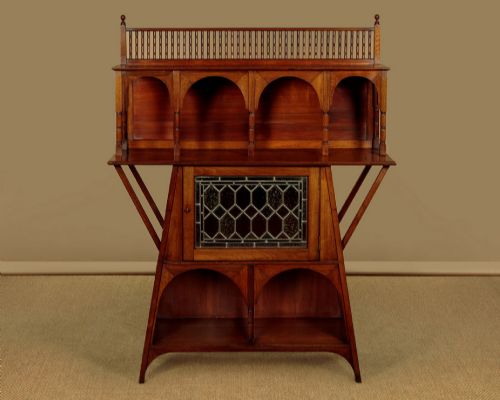
- A style popularised in the late Victorian era featuring geometric lattice work, fretwork, and turned spindle galleries inspired by Islamic architecture.
- Bijouterie Cabinet
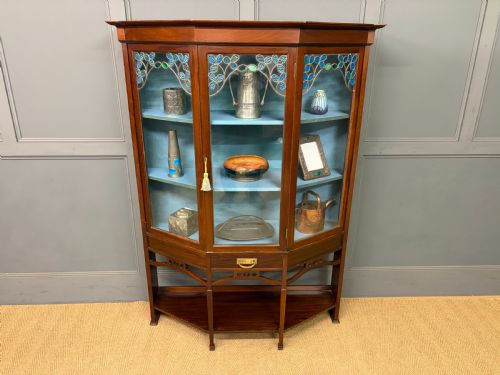
- A small glass-topped or glass-sided cabinet designed for displaying small precious objects, medals, or jewellery. These pieces often sit on slender legs.
- Glazing Bars
- The strips of wood or metal that hold the panes of glass within a window or cabinet door. Their arrangement is a key stylistic feature of period joinery.
Liberty Display Cabinet: Frequently Asked Questions
What is a liberty display cabinet?
A liberty display cabinet is a piece of furniture associated with the London retailer Liberty and Co, dating from the late nineteenth or early twentieth century. These cabinets reflect Arts and Crafts or Aesthetic Movement design principles, prioritising visible timber grain and functional utility.
They often incorporate glazed doors, leaded glass, and brass fittings to showcase ceramics and decorative items within a domestic interior.
How do I date a liberty display cabinet?
Dating these cabinets involves examining the construction methods, timber choice, and stylistic markers such as brass hardware and glazing bar patterns. Pieces from the 1880s and 1890s frequently display heavy oak or bamboo framing characteristic of early Aesthetic and Anglo-Moorish experiments.
Later Edwardian examples tend towards lighter proportions and refined mahogany surfaces, aligning with shifting tastes at the turn of the century.
Where were these cabinets placed?
Original placement depended largely on the specific form, with taller glazed bookcases and dressers occupying principal reception rooms or libraries. Wall cabinets were secured in smaller spaces to display collections of porcelain or curiosities without occupying floor area.
Compact occasional tables and corner cabinets served to utilise awkward angles and provide surfaces for lamps and decorative objects in Victorian and Edwardian homes.
How do I care for period oak furniture?
Maintaining period oak requires keeping furniture away from direct heat sources and dramatic humidity fluctuations to prevent timber splitting or warping. Regular dusting with a dry, soft cloth preserves the polish without building up chemical residues on the surface.
Applying a traditional beeswax sparingly helps nourish dry timber and maintains the natural lustre of the wood over time.