





Leather Vanity Casket
These leather vanity casket examples combine sturdy hides with fitted interiors to organise treasures with genuine period character.
Leather Vanity Casket
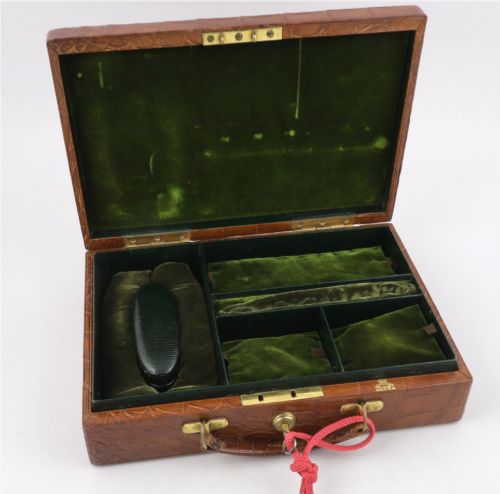
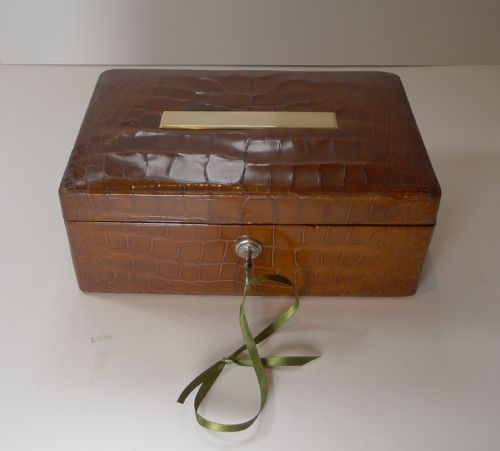
A leather vanity casket is a portable container designed to hold valuables, writing tools, or scent bottles securely while travelling or at home. The leather vanity casket forms seen here range from simple nineteenth-century wood and leather boxes to fully fitted Victorian compartments and crocodile skin cases.
Most pieces date from the Regency era through to the early twentieth century, spanning Victorian, Edwardian, and Art Deco styles. Buyers will frequently encounter jewellery boxes, scent bottle caskets, and writing slopes covered in leather or exotic skins like crocodile.
Many survivors retain their original internal fittings, such as cut glass scent bottles, velvet linings, or compartments for watches and cufflinks. These items served affluent travellers and households who required secure storage for personal grooming and adornment items.
Materials and construction
Makers constructed these caskets using a wooden carcass covered in leather, embossed leather, or crocodile skin, often secured with brass hardware. The outer hides were frequently stamped or embossed with decorative patterns before being mounted onto the wooden frames.
Interiors were lined with materials like velvet to protect delicate items such as jewellery and glass scent bottles from damage. Structural elements combined robust woodwork with specialised leather-working techniques to withstand the rigours of nineteenth-century travel.
Leather Vanity Casket Retail Price Guide 2026
Typical asking prices for leather vanity casket among the pieces listed under this phrase on Sellingantiques today, from the lower quarter to the upper quarter. They describe what is for sale here now, not the wider market.
Listings span the nineteenth and early twentieth centuries, featuring materials such as brass, rosewood, velvet, and mother-of-pearl alongside standard leather.
What separates the best from the rest
Quality in a leather vanity casket depends on the completeness of its internal fittings and the choice of exterior materials. Caskets retaining original cut glass bottles, engraved brass details, and untouched velvet linings sit at the higher end of the range.
The sophistication of the internal mechanism, such as concealed drawers or fully fitted compartments for specialised items like watches and cufflinks, dictates the distinction between standard boxes and finer caskets.
J C Vickery
The Leather Vanity Casket Glossary
- Regency
- A British period spanning the early nineteenth century known for classical restraint and elegance in decorative arts. Pieces from this era often feature clean geometric lines and fine wood craftsmanship.
- Victorian
- The period of Queen Victoria's reign characterised by diverse stylistic revivals and an emphasis on domestic comfort and ornate decoration. Items from this time frequently display heavier ornamentation and complex fitted interiors.
- Casket
- A decorative box or chest used for holding jewellery, valuables, or precious items. These containers often feature secure locking mechanisms and elaborate interior arrangements.
- Cut glass
- Glass decorated by cutting facets or patterns into the surface using a wheel. This technique was frequently utilised for the scent bottles housed within travel caskets.
Leather Vanity Casket: Frequently Asked Questions
What fits inside a leather vanity casket?
These caskets were built to hold small personal valuables, including rings, necklaces, watches, and cufflinks. Many also contained dedicated slots for glass scent bottles or writing implements.
The specific internal arrangement depended on the intended use, whether for general jewellery storage, perfumery, or portable writing tasks during travel.
How do I date a leather vanity casket?
Dating relies on observing the hardware style, wood types, lining materials, and overall construction methods. Regency pieces often exhibit simpler, cleaner woodwork, while Victorian examples lean towards heavier fitted compartments.
Maker marks, engraved initials, and stylistic cues from periods like Art Deco or Edwardian eras provide further chronological markers for individual pieces.
Are the glass bottles usually original?
Many surviving caskets retain their original cut glass scent bottles nestled securely within custom velvet-lined compartments. These bottles were integral to the travelling set and match the exact dimensions of the internal spaces.
Because bottles were fragile and prone to breaking during travel, replacements do occur, making matching historical sets particularly desirable.
How should I clean antique leather?
Antique leather requires gentle maintenance to preserve the original hide and any embossed details. Avoid modern chemical cleaners that might strip the historic finish or discolour the material.
Keeping the leather away from direct sunlight and excessive moisture helps maintain the structural integrity of both the outer skin and the inner wooden carcass.