





Leather Top Lamp Table
A leather top lamp table brings a disciplined writing surface and rich tactile warmth right beside your favourite armchair.
Leather Top Lamp Table
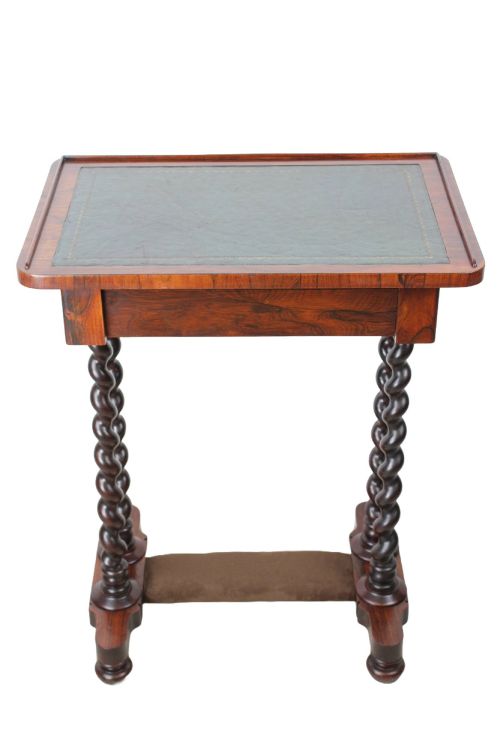
A leather top lamp table combines a compact timber frame with a supple leather insert, serving as a functional side table or occasional surface. You will frequently encounter mahogany and rosewood examples dating from the Regency era through to the nineteen-thirties.
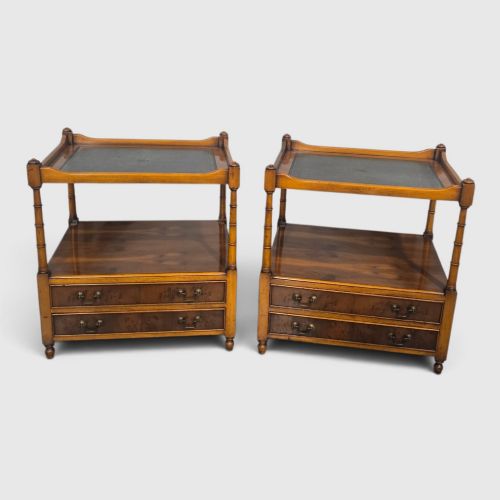
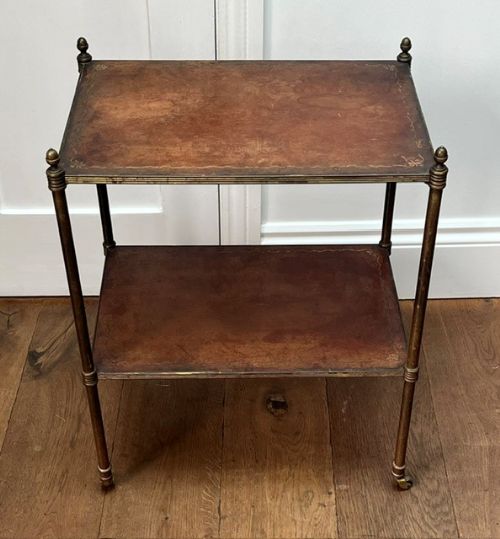
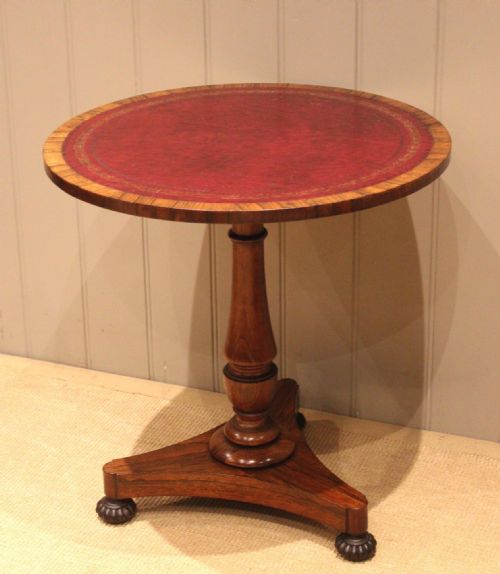
These tables manifest in various configurations, including two-tier occasional pieces, circular wine tables, and bamboo frames. Their primary purpose is to hold lighting and small objects while adding traditional character to a room.
How they were made
Cabinetmakers constructed the frames using dense hardwoods like mahogany, rosewood, and yew, occasionally incorporating bamboo and rattan for lighter aesthetic effects. Brass mounts, gilt-metal details, and gold leaf tooling were applied to enhance the decorative finish of the timber.
The inset writing surfaces were typically fashioned from leather, sometimes embellished with blind tooling or gold leaf accents. Joinery techniques varied according to the period, ranging from traditional cabinet construction to lacquered brass assemblies.
Leather Top Lamp Table Retail Price Guide 2026
Typical asking prices for leather top lamp table among the pieces listed under this phrase on Sellingantiques today, from the lower quarter to the upper quarter. They describe what is for sale here now, not the wider market.
One listed etagere comes with the intriguing attribution 'in the manner of Mallett of London', proving that even furniture likes to dress up as someone important.
What varies in quality
The grade of timber and the precision of the joinery set finer examples apart from standard production pieces. Dense grains in rosewood and mahogany indicate superior material selection by the maker.
Detailing such as refined gold leaf tooling on the leather and the integration of cast brass mounts distinguish higher-tier pieces. The crispness of the carving and the overall structural integrity reveal the standard of workshop execution.
Liberty and Co·Willmington and Cope·Whytock and Reid
The Leather Top Lamp Table Glossary
- Regency
- A British design style spanning the early nineteenth century, characterised by classical restraint and polished hardwoods. It draws heavily on ancient Roman and Greek motifs.
- Rosewood
- A dense, heavily figured timber prized for its dark grain and rich reddish-brown colour. It takes a high polish and was favoured in fine cabinetmaking.
- Etagere
- A set of open shelves for displaying small objects, often taking a multi-tiered form. These pieces combine decorative utility with accessible storage.
- Tooling
- The impression of decorative patterns onto leather using heated brass rolls or stamps. Gold leaf is frequently pressed into these grooves for added brilliance.
Leather Top Lamp Table: Frequently Asked Questions
What is a leather top lamp table used for?
These tables provide a sturdy, resilient surface beside seating areas to hold lamps, books, and drinking glasses. The leather insert offers a softer texture than bare wood.
Historically, compact tables of this type served various occasional functions in drawing rooms and parlours. Their portable nature allowed them to be moved easily around the home as needed.
How do I identify a Regency period table?
Regency pieces typically feature clean architectural lines, dark polished mahogany or rosewood, and restrained classical ornamentation. Brass inlay and sabots are also common indicators.
Authentic pieces from this era reflect early nineteenth-century design principles. Comparing the construction methods to known examples helps confirm the period.
Are these tables suitable for modern rooms?
Their compact dimensions and classic materials allow them to sit comfortably alongside contemporary furnishings. They add warmth and historical texture to minimalist spaces.
Using an antique table in a modern setting creates an effective focal point. The mix of timber and leather complements both neutral and bold colour schemes.
What maintenance does the leather surface need?
The leather top benefits from occasional dusting with a dry cloth and gentle conditioning to prevent drying out. Avoiding direct sunlight preserves the colour and gold tooling.
Care should be taken to use coasters to protect the leather from moisture and heat. Proper upkeep ensures the surface retains its tactile quality over time.