

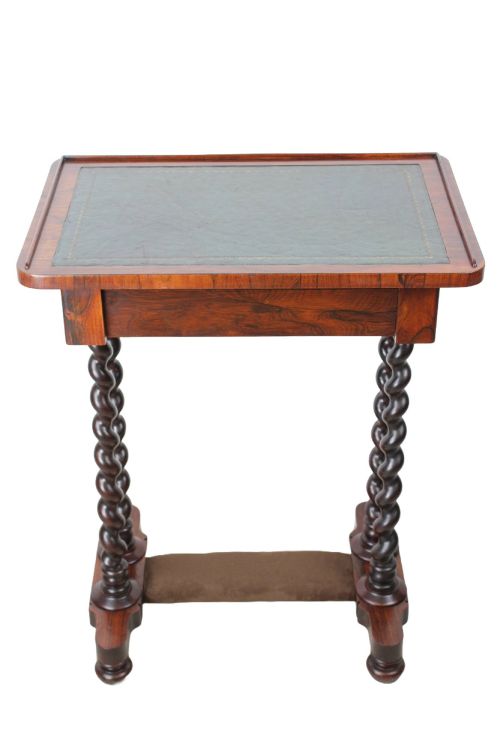

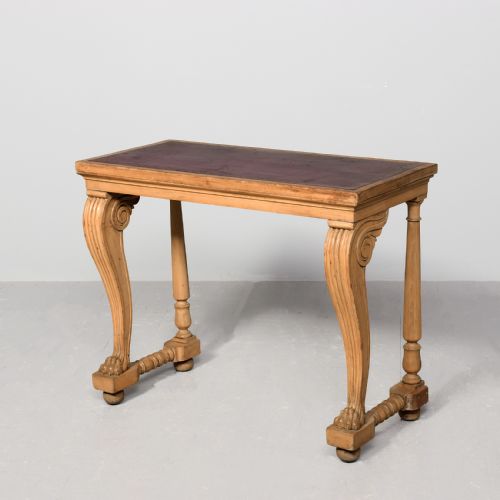


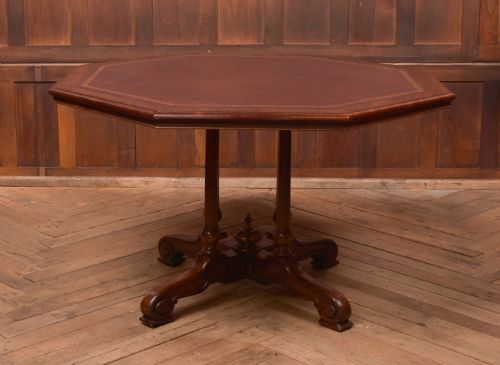


Leather Top Hall Table
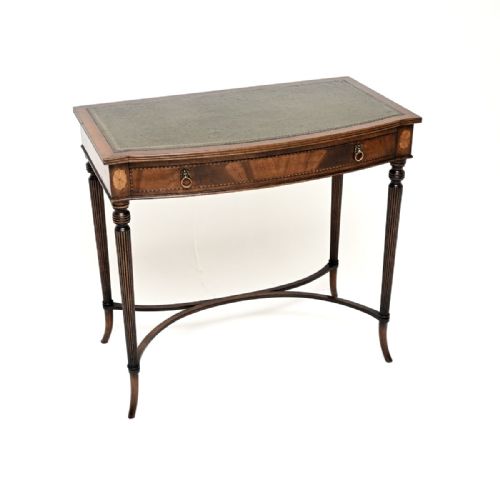
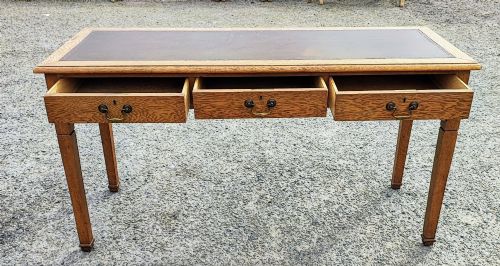
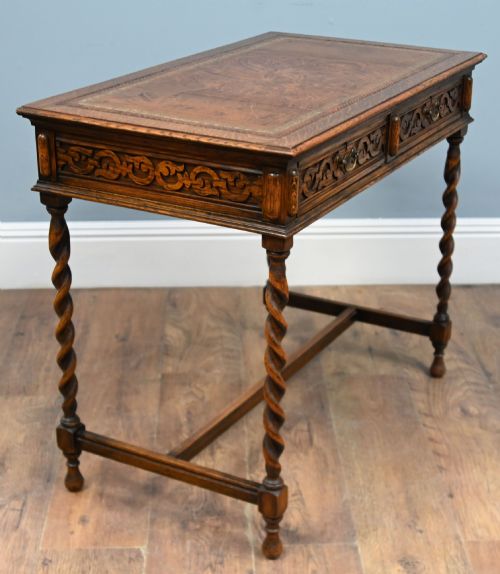
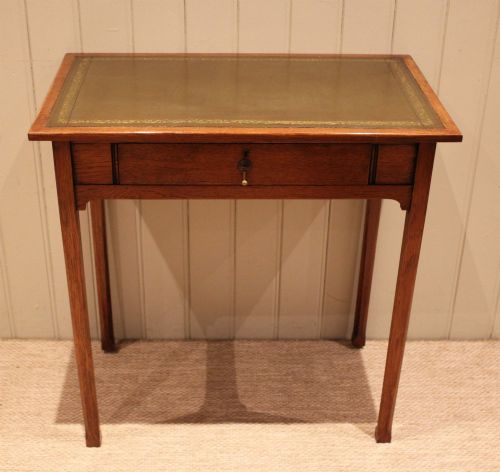
A leather top hall table brings together a practical writing surface and the rich grain of mahogany, rosewood or oak for an entrance hall.
Leather Top Hall Table
When searching for a leather top hall table, one encounters a variety of compact forms designed for narrow spaces, including side tables, console tables and writing desks. These pieces serve as functional surfaces in an entrance or hallway while displaying period cabinet-making.
The selections on this page span several centuries and styles, ranging from Georgian and Regency models to Victorian, Edwardian and Arts and Crafts interpretations. Mahogany, walnut and oak appear frequently, often paired with tooled leather inserts in the top.
Makers and workshops of the nineteenth and early twentieth centuries adapted these forms for domestic hallways and libraries, producing both rectangular side pieces and rotating drum tables.
How they were made
Cabinet-makers relied on dense timbers such as mahogany, rosewood, walnut and oak, frequently selecting figured veneers or flame mahogany for the primary surfaces. Inlaid details in satinwood or contrasting woods add linear definition to the framing.
Writing and hall surfaces are inset with leather, often finished with gold leaf tooling around the perimeter. Brass castors, handles and subtle carved or ebonised details complete the construction of these tables.
Leather Top Hall Table Retail Price Guide 2026
Typical asking prices for leather top hall table among the pieces listed under this phrase on Sellingantiques today, from the lower quarter to the upper quarter. They describe what is for sale here now, not the wider market.
Mahogany and oak are the most common timbers found across these listings, spanning the Georgian, Victorian and Edwardian periods.
What varies in quality
The calibre of a piece rests upon the choice of timber and the precision of the cabinet-making, from the selection of figured mahogany veneers to the crispness of any carved details. Tables attributed to documented makers or workshops generally display finer secondary woods and more considered proportions.
The condition and age of the inset leather surface also influence the character of the piece, alongside whether the brass hardware and castors remain original to the table.
James Mein of Kelso·Holland and Sons·Willmington and Cope·Whytock and Reid·Gillows
The Leather Top Hall Table Glossary
- Leather top
- A writing or working surface inset with leather, frequently decorated with blind or gilt tooling along the edges.
- Console table
- A table designed to stand against a wall, often supported by legs or brackets that anchor it visually to the room.
- Drum table
- A circular library or centre table with a deep frieze containing drawers, resembling the shape of a drum.
- Sofa table
- A rectangular table traditionally placed in front of a sofa, featuring drop leaves at either end.
- Frieze
- The horizontal band or section beneath the top surface of a table, which occasionally houses one or more small drawers.
Leather Top Hall Table: Frequently Asked Questions
Where should I place a leather top hall table?
These tables fit naturally in entrance halls, corridors or narrow reception spaces where a functional surface is required without blocking passage.
Their compact proportions also allow them to function as writing desks or side tables in a study or library.
How do I care for the leather insert?
Keep the leather surface away from direct sunlight and excessive moisture to prevent drying or cracking over time.
Applying a specialist leather balm occasionally will maintain the suppleness and appearance of the hide.
How do I identify a Regency period table?
Regency pieces often feature classical restraint, dark mahogany timbers, brass inlay and sabre or turned legs reflecting early nineteenth-century design.
Proportions tend to be neat and architectural, drawing on ancient Greek and Roman motifs.
Are these tables suitable for daily writing use?
The inset leather surfaces provide a smooth, traditional platform for correspondence and modern writing instruments.
Many period examples include small frieze drawers designed specifically to hold stationery and pens.