






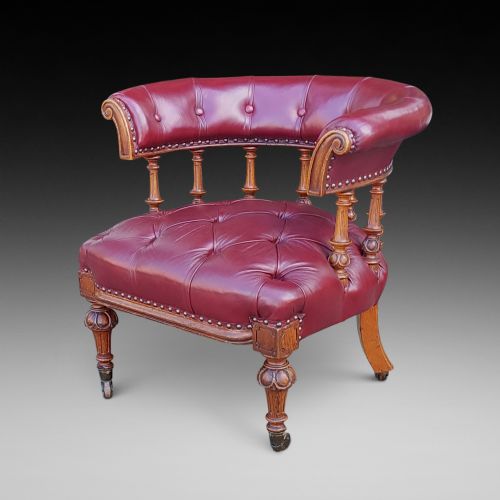

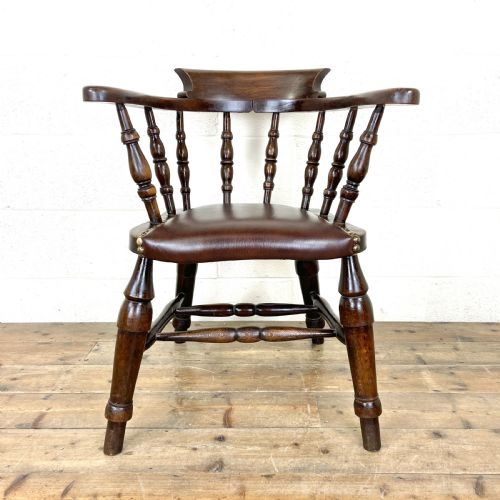
Leather Smokers Chair
A leather smokers chair offers sturdy comfort and timber construction, built for libraries, studies, and offices during the Victorian and Edwardian eras.
Leather Smokers Chair
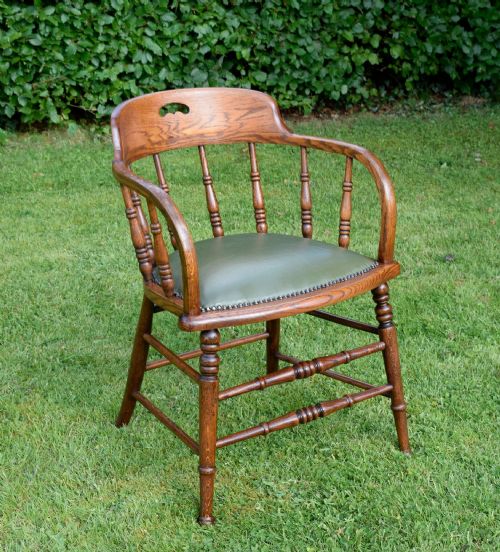
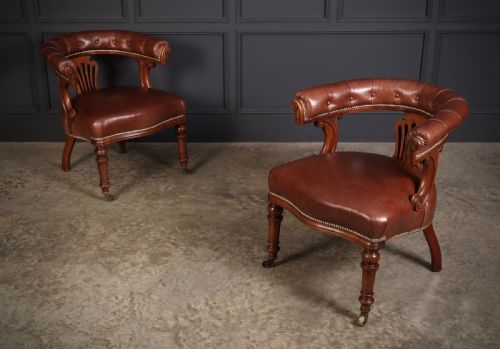
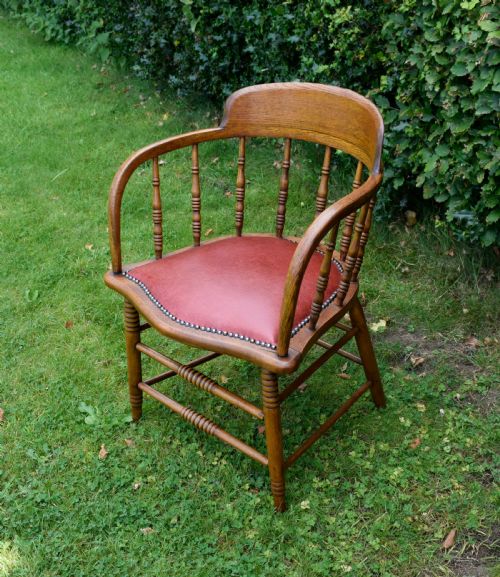
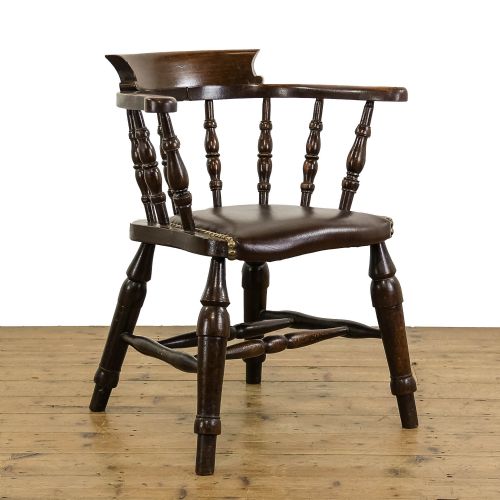
A leather smokers chair combines the low, supportive armrests of a traditional smokers bow with the padded upholstery required for long hours at a desk. When exploring this selection, buyers frequently encounter Victorian and Edwardian examples fashioned as captain's chairs, desk armchairs, and club elbow chairs.
The forms span robust oak frames from the nineteenth century alongside walnut, mahogany, beech, and elm variants. Many pieces incorporate low enclosing backs and turned spindles typical of traditional country and office seating from the period.
Originating in the nineteenth century and extending into the Edwardian era, these chairs serve multiple rooms as office seats, library chairs, and occasional armchairs. The integration of a leather seat or upholstered back distinguishes them from plain wooden bow-backs.
Materials and construction
Makers constructed the timber frameworks using dense native hardwoods including oak, mahogany, walnut, beech, elm, and occasionally metal components. Frames frequently feature steam-bent wooden rails for the characteristic curved backrest.
Upholstery relies on durable brown or tan hide secured to the wooden seats and armrests with brass studs or tacks. Joinery combines traditional methods with sturdy spindle supports and turned legs suited to daily office use.
Some chairs retain the original brass tacks that secretly held generations of pipe smoke in the padding.
Judging quality and craftsmanship
Quality rests in the choice of timber and the integrity of the frame construction, where dense oak and figured mahogany command greater attention than softer utility woods. The weight of the timber and the depth of the turning on the legs and spindles indicate the care taken by the maker.
The condition and thickness of the original leather upholstery, along with the retention of traditional brass fixings, separate standard utility seating from finer library and desk armchairs.
The Leather Smokers Chair Glossary
- Smokers Bow
- A sturdy wooden armchair with a low, continuous curved back rail supported by turned spindles. This form provides robust seating suited to reading rooms and studies.
- Captain's Chair
- A swivel or stationary desk chair featuring a rounded low back and upholstered seat. These pieces provide compact support for office and library use.
- Elbow Chair
- An armchair with short arms designed to fit neatly beneath a desk or table. These chairs offer support without encumbering movement.
- Hide
- The natural leather skin used for upholstery on seats and armrests. Tan and brown hides provide a durable surface that develops a rich patina over time.
Leather Smokers Chair: Frequently Asked Questions
What is a leather smokers chair?
A leather smokers chair is a timber-framed seating piece featuring a low curved back and a padded leather seat or upholstery. They were originally designed for studies, offices, and smoking rooms.
These chairs combine the sturdy framework of nineteenth-century bow-back seats with the comfort of leather padding for desk work.
How do I date a leather smokers chair?
Dating relies on observing timber choices, framing styles, and hardware details such as brass studs. Victorian and Edwardian pieces show specific turning patterns and construction methods.
Earlier nineteenth-century examples often utilise heavy oak or mahogany, while later Edwardian versions incorporate lighter beech and oak frames.
Where should I place a desk armchair?
These chairs suit home offices, studies, and libraries where their compact proportions allow them to sit neatly beneath desks. Their supportive arms make them practical for daily seating.
They also function effectively as occasional chairs in living spaces or reading corners alongside other nineteenth-century furniture.
What woods were used for these chairs?
Makers utilised a range of domestic hardwoods including oak, mahogany, walnut, beech, and elm. Each timber contributes a distinct grain and weight to the frame.
Oak and mahogany appear frequently in Victorian library chairs, while beech and elm often support country vernacular pieces.