

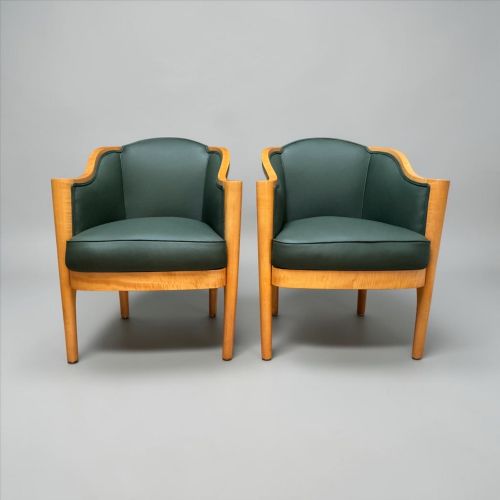
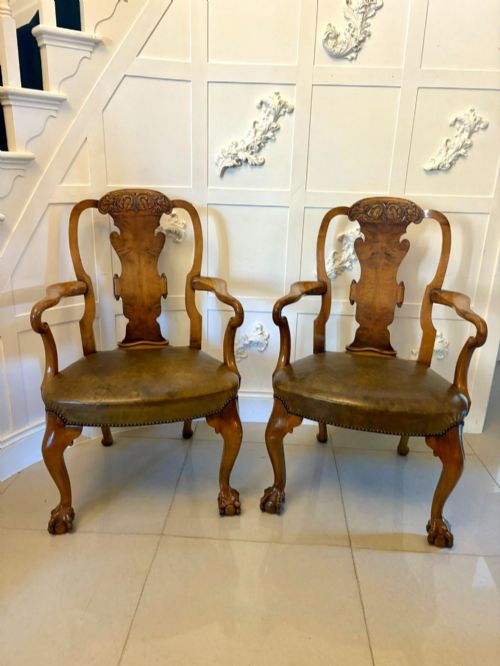
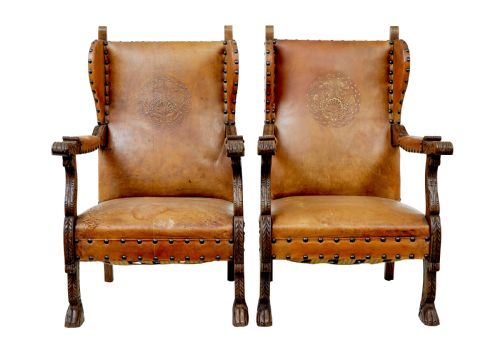
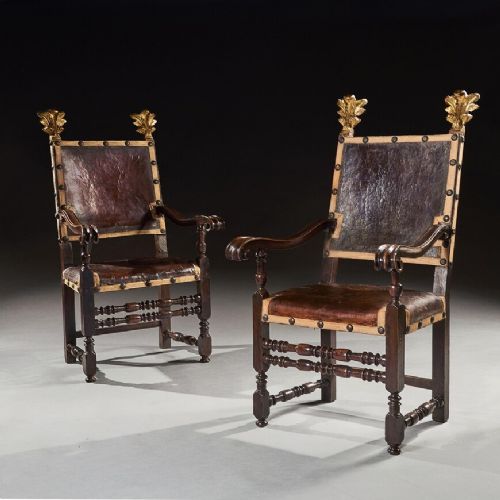

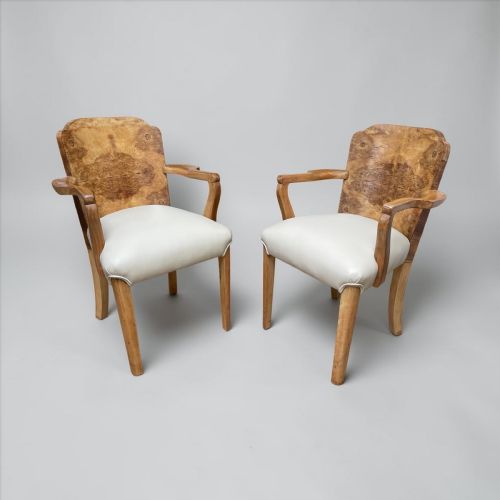
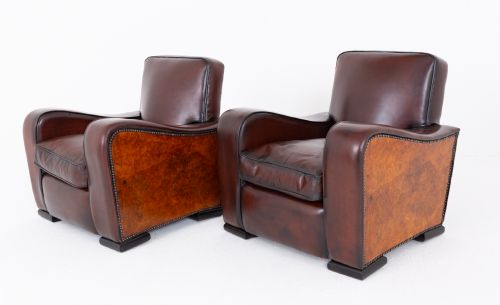
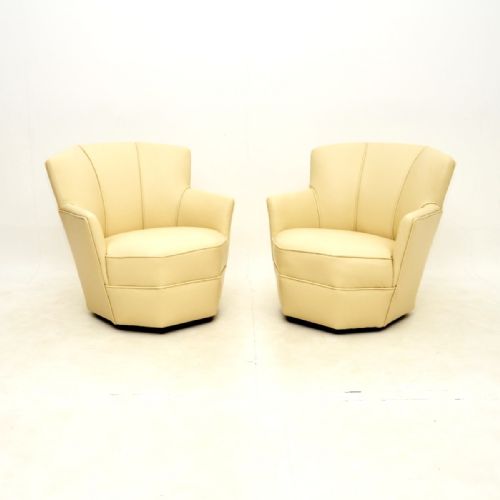
Leather Seating Pair
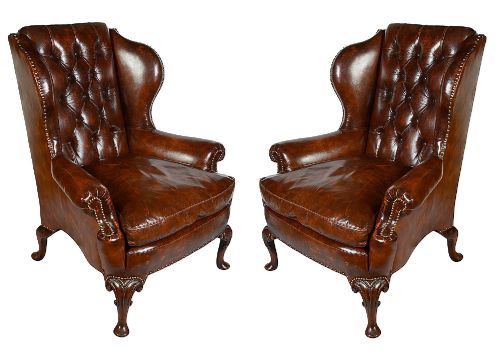
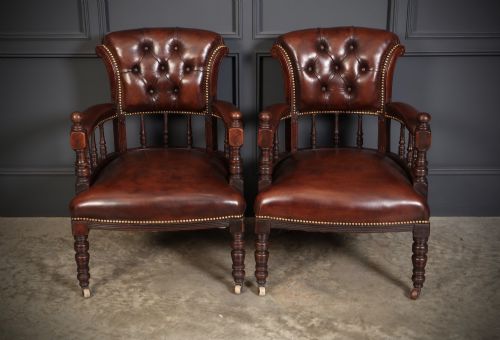
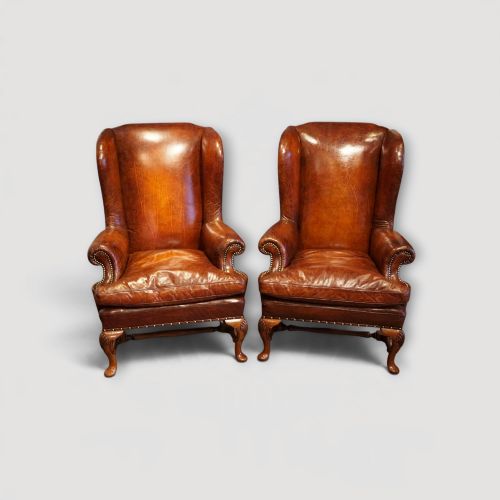
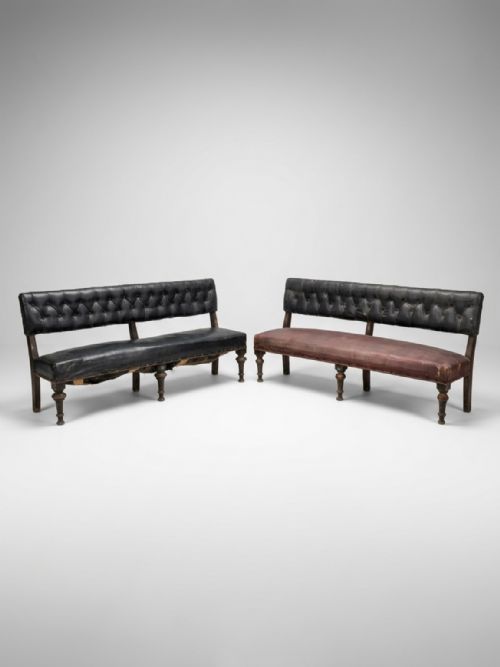
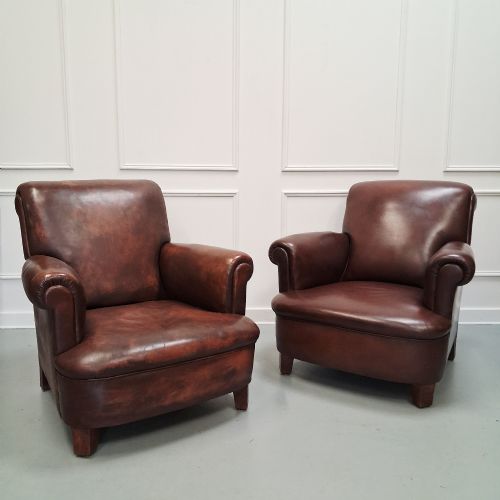
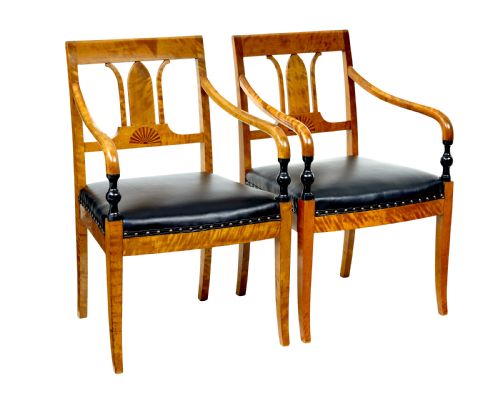
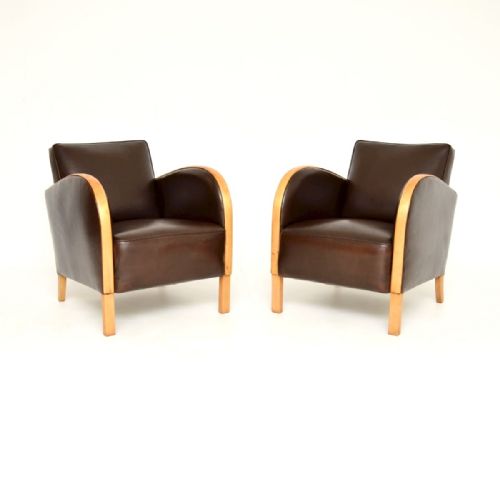
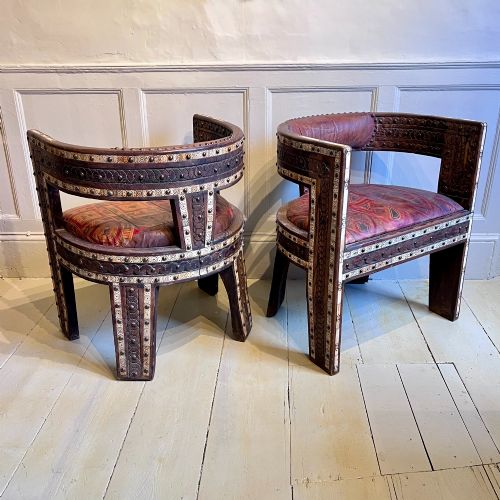
A leather seating pair brings matched historical character to a room, offering simultaneous double seats across armchairs, club chairs, and side chairs spanning the nineteenth century through the art deco era.
Leather Seating Pair
A leather seating pair spans diverse historical periods including the Regency, Victorian, and Art Deco eras, presenting matched twin seating arrangements for studies, libraries, and living spaces.
The selections on this page range from nineteenth-century mahogany and walnut library armchairs to twentieth-century club chairs and occasional seating.
Forms include wingback chairs, desk chairs, benches, and lounge suites constructed across various regional workshops.
Materials and construction
Frameworks rely on timber species such as mahogany, walnut, oak, rosewood, birch, and satinwood, occasionally accented with brass inlay, parcel-gilding, or carved details.
Upholstery incorporates leather, embossed leather, woven leather, and cane, paired with traditional button-back techniques and wood framing.
Leather Seating Pair Retail Price Guide 2026
Typical asking prices for leather seating pair among the pieces listed under this phrase on Sellingantiques today, from the lower quarter to the upper quarter. They describe what is for sale here now, not the wider market.
Listings feature items spanning the seventeenth century through the Art Deco period, utilising oak, mahogany, walnut, and rosewood.
Quality factors in paired seating
Distinctions in quality arise from the precision of timber carving, the integrity of the wood joinery, and the richness of the natural leather hide.
Matched sets depend on the exact pairing of proportions, timber grain, and decorative elements across both individual chairs.
Maurice Adams·Hille·Harry and Lou Epstein
The Leather Seating Pair Glossary
- Bergère
- An enclosed upholstered armchair with wooden framing exposed around the sides and back. These French-inspired seats often feature cane or leather elements.
- Wingback
- An armchair with side panels or wings attached to the back, designed to shield the sitter from drafts. Eighteenth and twentieth-century interpretations utilise walnut or mahogany frames.
- Club chair
- A comfortable, deep-seated armchair upholstered in leather, commonly associated with twentieth-century Art Deco design. They provide low-slung, substantial lounging proportions.
- Parcel-gilt
- Partially gilded woodwork where gold leaf highlights specific carved details on a walnut or timber frame. This technique adds contrast to seventeenth and nineteenth-century seating.
- Balloon back
- A chair back shaped in a continuous curved oval resembling a balloon, popular during the Victorian period. Rosewood and mahogany were frequently utilised for these frames.
Leather Seating Pair: Frequently Asked Questions
How do I match leather seating pairs?
Look for matching timber tones, identical leg styles like cabriole or tapered supports, and corresponding upholstery treatments such as button-back leather or embossed hides.
Verify that the overall scale and period details align between both pieces to maintain visual harmony in the room.
Where should I place a leather seating pair?
These matched sets suit studies, libraries, and drawing rooms where dual armchairs or club chairs create a balanced seating arrangement.
Position them opposite a fireplace or flanking a central table to utilise their matching proportions effectively.
How do I care for antique leather seating?
Maintain historical leather by keeping the material away from direct heat sources and sunlight to prevent the hide from drying and cracking.
Apply appropriate leather balms periodically to nourish the surface while preserving the original texture and patina.