

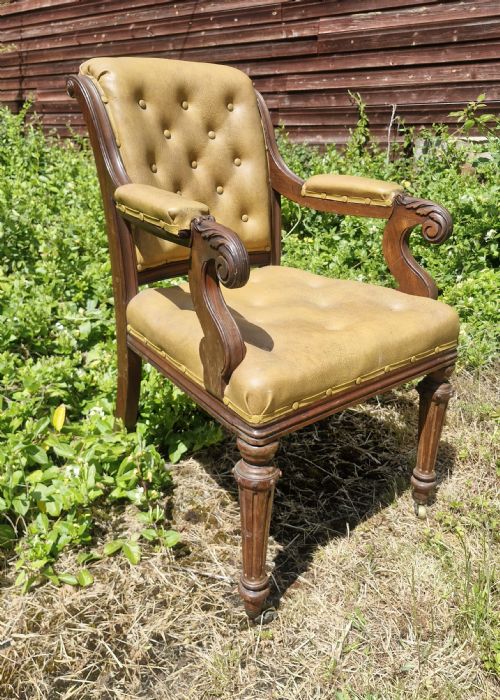


Leather Executive Desk Chair
A leather executive desk chair brings substance to a study, combining durable upholstery with the solid timber frames of the nineteenth and early twentieth centuries.
Leather Executive Desk Chair
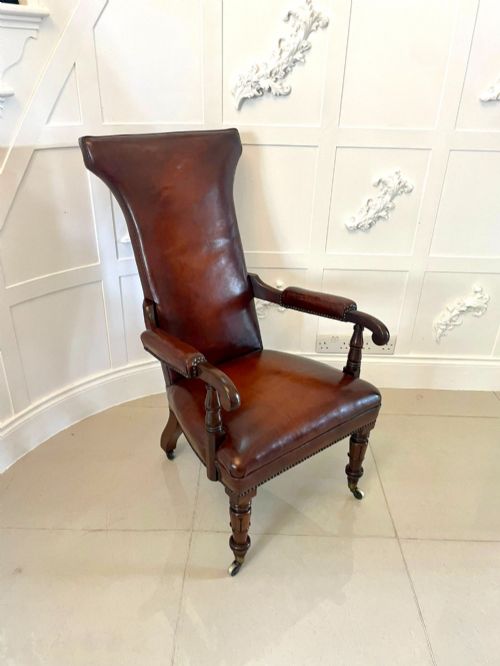
When you search for a leather executive desk chair, you encounter seating designed for serious work, spanning Victorian, Edwardian, and Regency periods. Most examples found here originate from the nineteenth century or the early decades of the twentieth century, reflecting a time when office furniture was built from timber to last decades.
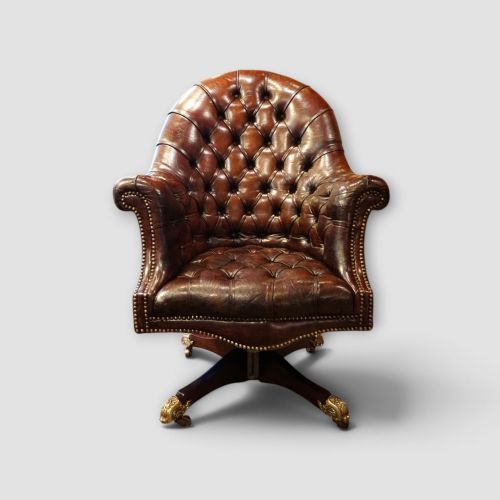
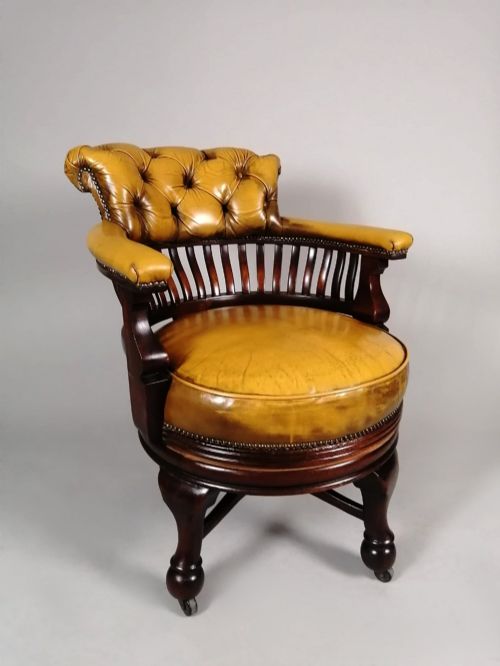
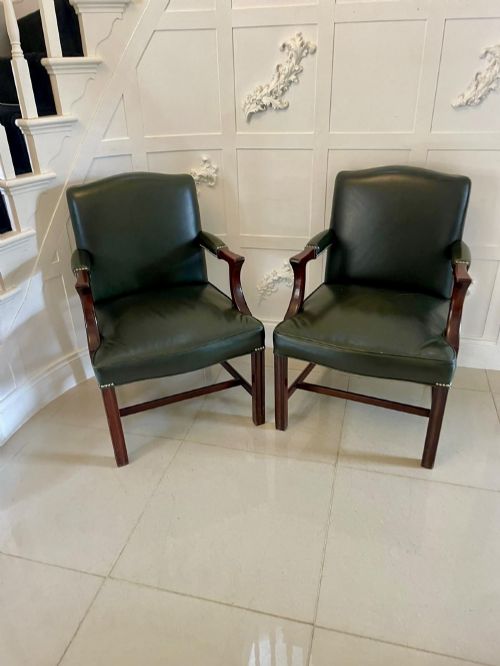
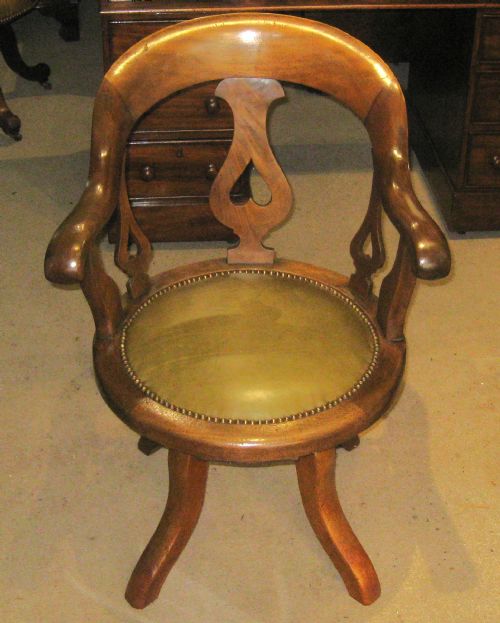
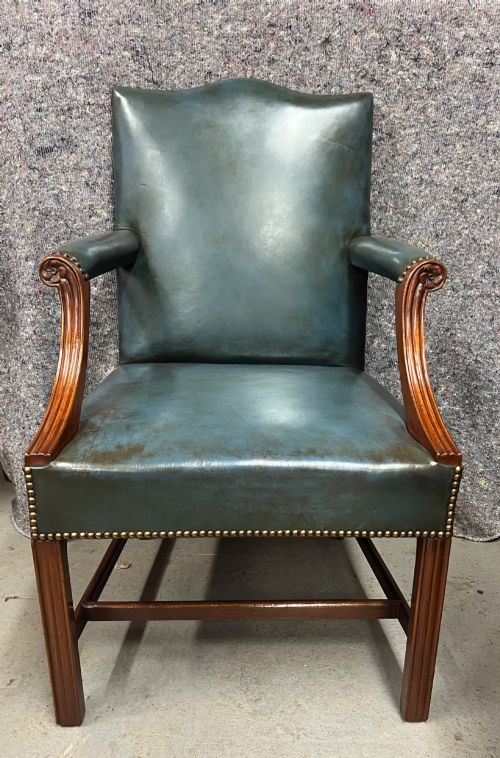
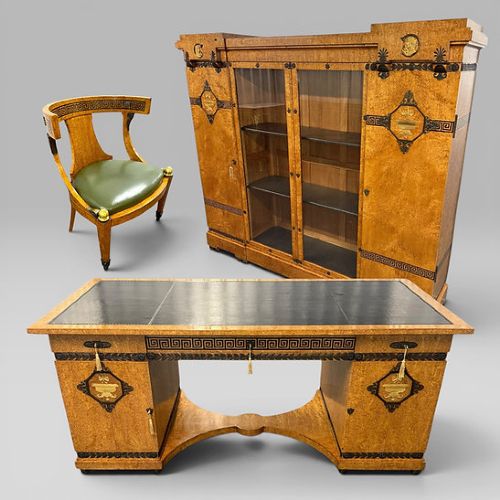
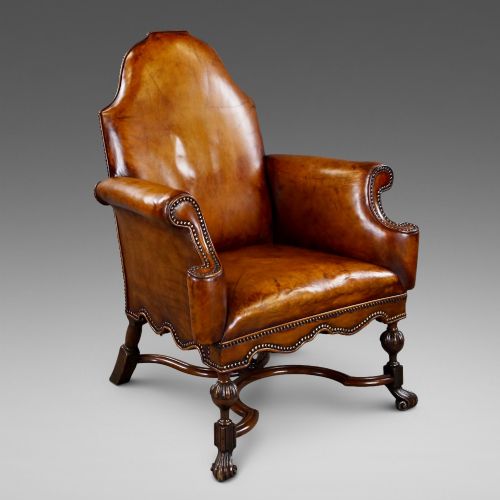
The forms vary from simple revolving desk chairs with swivel mechanisms to large library armchairs, Gainsborough styles, and French Empire office seating. Makers utilised sturdy woods like mahogany, walnut, and oak to support padded leather seats intended for long hours at a ledger or writing table.
You will see variations in function, including stationary armchairs, bow backs, and X-framed designs alongside height-adjustable swivel models mounted on brass or cast iron hardware. These pieces served solicitors, bankers, and private library owners who required both mobility and comfort at the desk.
How they were made
Makers constructed the primary frames of these chairs using dense hardwoods, predominantly mahogany, walnut, and oak, occasionally turning to rosewood for finer decorative effect. These timbers were joined using traditional mortise and tenon joinery to withstand the constant twisting and shifting of daily office use.
Upholsterers padded the seats and backs with horsehair or wool stuffing before securing top-grade leather over the surface, often finishing the edges with brass nail tacks. Swivel models incorporated robust iron and brass mechanisms beneath the seat to allow smooth rotation and height adjustment.
One past piece included a gentleman's gaming chair made across the Atlantic, proving executives enjoyed a gamble just as much as paperwork.
What varies in quality
The distinction between ordinary and superior pieces rests on the choice of timber and the complexity of the frame construction, such as carved mahogany details versus plain turned oak. Heavier, denser woods and well-executed stylistic revivals, like French Neoclassical or Chippendale influences, indicate a higher grade of original manufacture.
The integrity of the underlying swivel mechanism and the depth of the leather buttoning also separate utilitarian office seating from grand library armchairs. Original brass hardware, substantial cast iron underpinnings, and well-preserved secondary timbers elevate the standing of any desk chair.
Mercier Frères·WM Heywood Chair Co
The Leather Executive Desk Chair Glossary
- Swivel desk chair
- A seat mounted on a central pivot mechanism that allows the user to rotate without moving the base. These often feature iron or brass spindles concealed beneath the wooden seat.
- Library armchair
- A wide, deeply padded seat designed for reading rooms and studies rather than active writing. They typically feature upholstered arms and generous proportions for comfort.
- Gainsborough armchair
- A type of open-arm easy chair with a padded back and seat, set on a square-framed undercarriage. They date back to the eighteenth century but were widely revived in later periods.
- Bow back
- A curved wooden backrest that sweeps around the user in a continuous arc. This design provides ergonomic side support during long periods at a desk.
- Fauteuil de bureau
- A French term for an upholstered desk armchair with enclosed sides and a rounded back. These pieces often display refined carving or decorative woodwork.
Leather Executive Desk Chair: Frequently Asked Questions
Are these chairs comfortable for daily modern work?
Many nineteenth-century desk chairs provide solid lumbar support and generous padding, making them suitable for everyday use at a modern computer desk.
However, buyers should check the seat height and swivel action, as older mechanisms may not offer the pneumatic adjustments found in modern office seating.
How do I tell a Victorian desk chair from an Edwardian one?
Victorian examples often display heavier timbers like dark mahogany or walnut with deep buttoned leather and robust turned legs. Edwardian versions tend to utilise lighter oak or mahogany framing, sometimes featuring simpler lines and Edwardian swivel mechanisms.
Examining the secondary woods underneath and the style of the turning helps clarify the exact manufacturing period.
What is the difference between a library armchair and an office desk chair?
Library armchairs are stationary seats designed for reading, featuring wide padded arms and lower centres of gravity intended for relaxed study. Office desk chairs frequently incorporate swivel actions, castors, and adjustable heights to facilitate movement around a large partners desk.
Both types share durable leather upholstery suited to heavy daily use in a study.
Can I replace the leather on an antique desk chair?
Original leather shows age through scuffs, patina, and fading, which many collectors prefer to preserve rather than replace. If the hide is torn or missing, a specialist can fit new leather using traditional vegetable-tanned hides and individual brass tacks.
Retaining the original leather maintains the historical integrity and visual character of the piece.