



Leather Desk Box
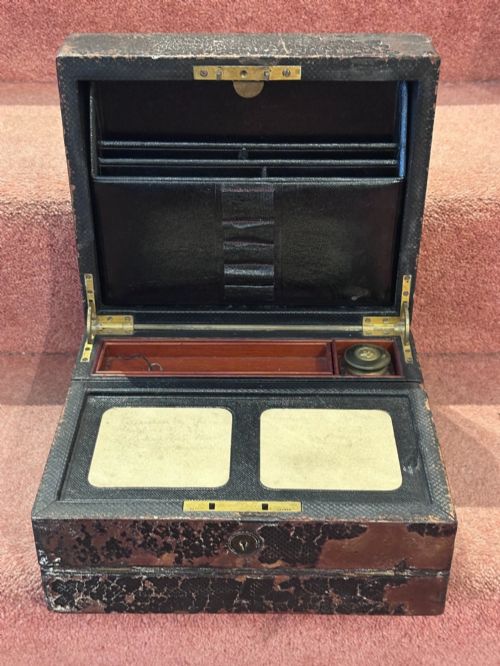
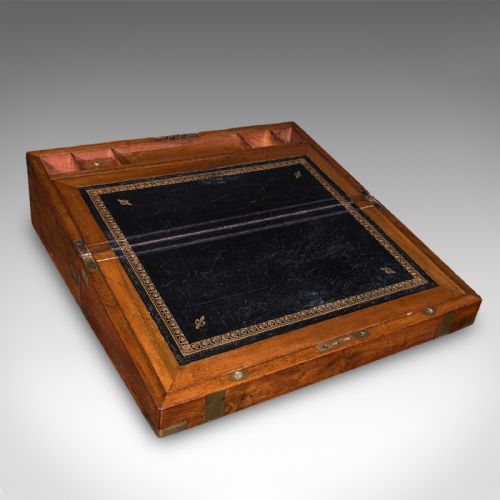
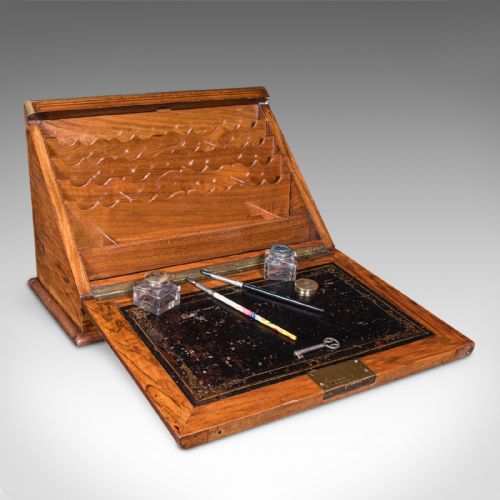
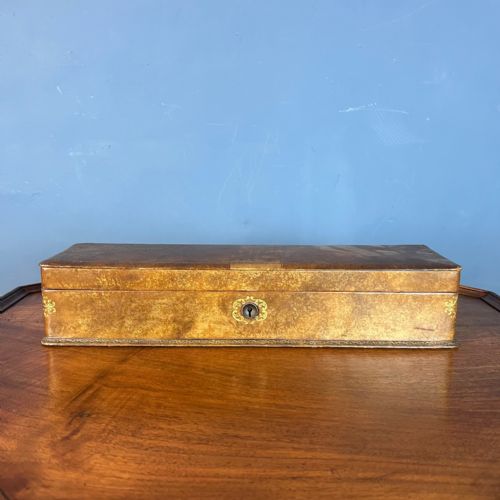
A leather desk box brings order to correspondence, housing inkwells, paper and pens within a structured hide exterior.
Leather Desk Box
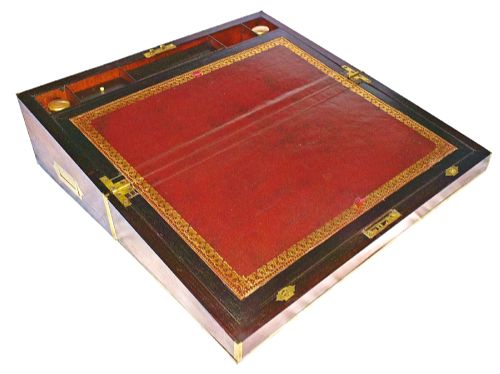
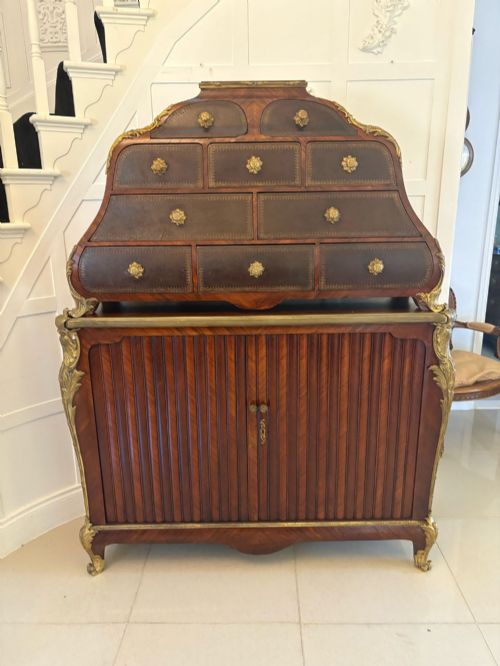
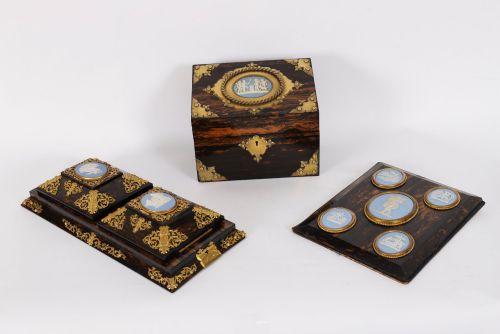
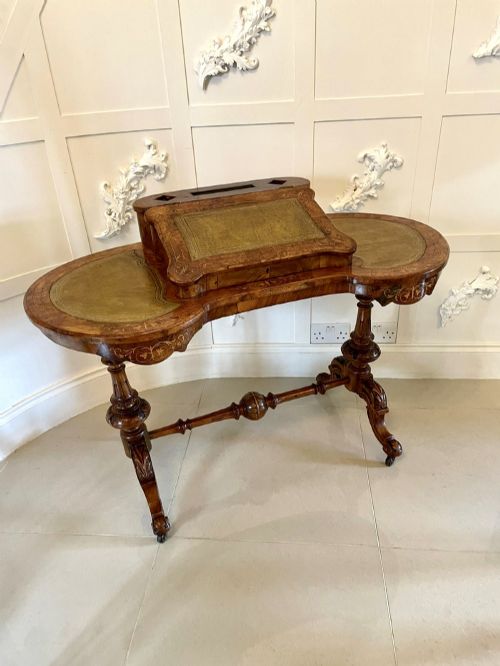
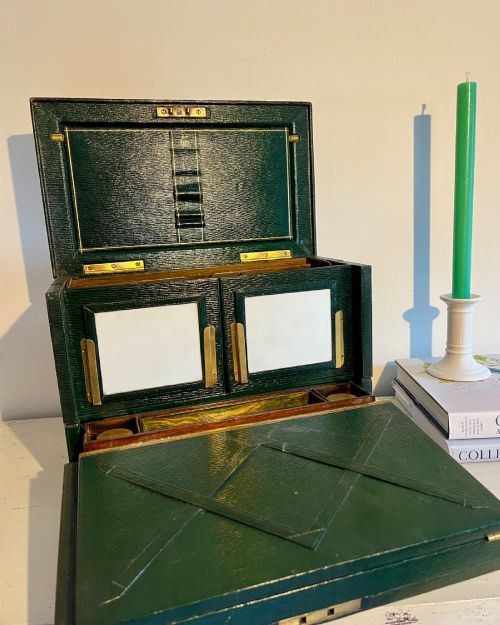
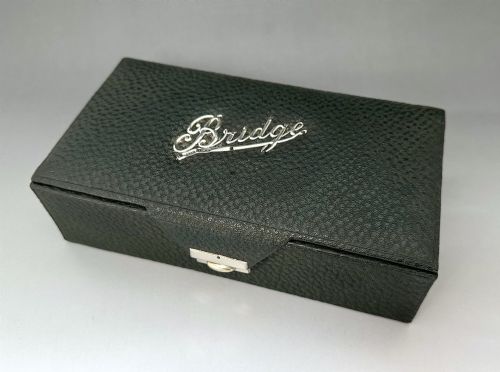
A leather desk box encompasses portable writing slopes, stationery cases, correspondence boxes and bridge boxes designed for domestic and campaign use. The pieces appearing here span the Regency, Victorian and Edwardian periods alongside later twentieth-century iterations.
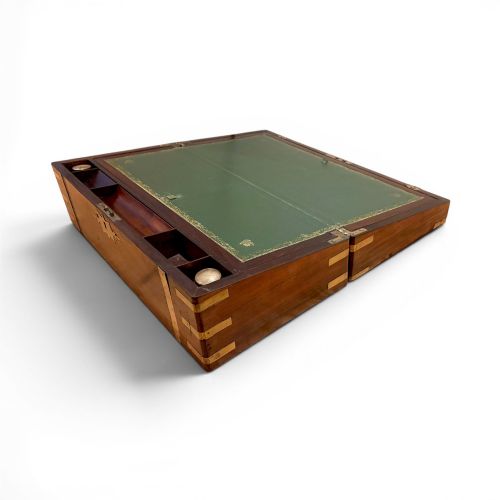
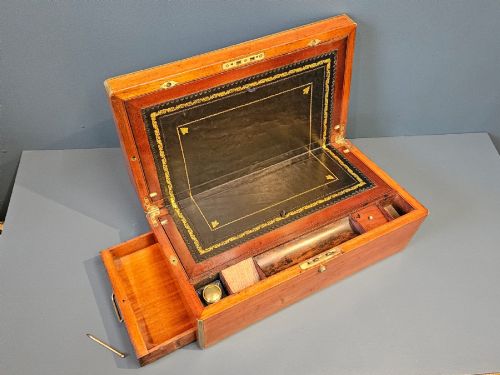
Victorian examples predominate on this page, often constructed from timber carcases clad in tooled leather or fitted with brass mounts and campaign handles. Interiors frequently reveal velvet writing surfaces, secret drawers and compartments for ink and nibs.
Materials and Construction
Construction relies upon robust timbers such as mahogany, walnut, oak and kingwood, providing a stable carcase for the exterior skin. Hides and leathers, including tooled calfskin and pigskin, are stretched and secured over the wood, sometimes accented with gold leaf tooling.
Metal fittings such as brass hinges, escutcheons, corner brackets and locks are integrated to withstand frequent travel and daily desktop handling. Ormolu mounts, glass inkwells and silver or gold accents appear on finer desk accessories and fitted cases.
Leather Desk Box Retail Price Guide 2026
Typical asking prices for leather desk box among the pieces listed under this phrase on Sellingantiques today, from the lower quarter to the upper quarter. They describe what is for sale here now, not the wider market.
Listings feature leather desk boxes across the Victorian, Regency and Edwardian eras, utilising mahogany, walnut, oak, and brass bindings.
Gradations of Quality
Quality rests upon the crispness of the leather tooling, the precision of the brass binding and the integration of internal fitments like secret drawers and matching inkwells. Finer specimens display superior timber selection beneath the leather and fully functioning locks with original keys.
Exhibition or bespoke pieces demonstrate tighter joinery, higher grade hides, and detailed metalwork by named makers, whereas utilitarian boxes offer simpler joints and standard brass hardware.
Edwards & Jones·Cartier·W & J Milne·P&F Shafer·John Newman
The Leather Desk Box Glossary
- Writing slope
- A portable box with a hinged sloping lid that opens to reveal a baize or leather-lined surface for writing letters. Compartments beneath store paper and writing implements.
- Campaign box
- A piece designed for military travel, constructed with brass binding, recessed drop handles and durable exterior leather to survive transit. These items prioritise structural resilience.
- Escutcheon
- A protective metal plate surrounding a keyhole, usually fashioned from brass to reinforce the timber or leather around the lock. It prevents the key from damaging the surrounding surface.
- Cartonnier
- A cabinet or tiered box fitted with upright compartments or drawers designed to hold papers, letters and documents. These pieces are often highly decorative and mounted with ormolu.
Leather Desk Box: Frequently Asked Questions
What fits inside a leather desk box?
These boxes accommodate writing paper, envelopes, pens, inkwells and small personal documents within dedicated internal compartments. Many feature slots for stamps or slots designed specifically for incoming and outgoing correspondence.
Larger stationery cases and writing slopes offer deeper wells and removable trays to organise a complete desk setup. Smaller bridge boxes and notelet cases narrow this capacity to cards and essential notes.
How do I maintain the leather exterior?
Leather surfaces require minimal intervention, benefiting chiefly from stable humidity and protection from direct sunlight which can dry and crack the hide. Gentle dusting with a dry cloth prevents particle buildup in the tooling.
Avoid applying modern chemical cleaners or heavy waxes to antique hide. Specialist leather conservation balms should be used sparingly only if the material feels excessively dry.
Where were these boxes used?
They served as portable writing desks for travellers, military officers and nobility before the widespread adoption of fixed stationery cabinets. Owners placed them on tables or desks to maintain an organised correspondence setup in drawing rooms, studies or aboard ships.
Their lockable compartments also provided a secure repository for personal letters and private journals.