

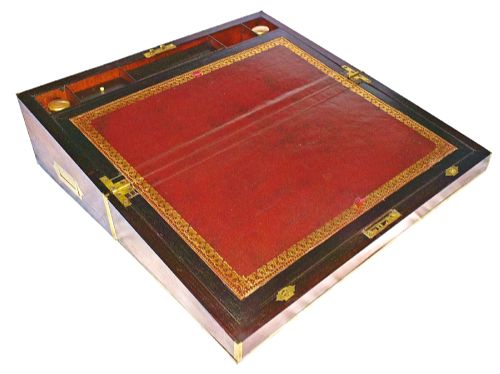
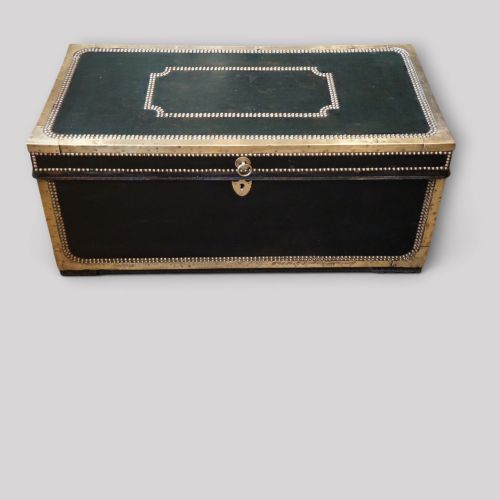
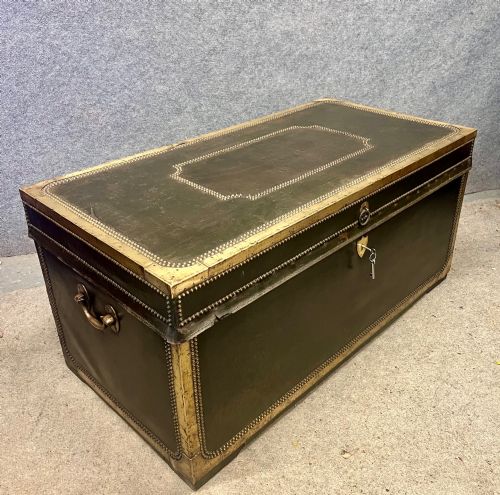
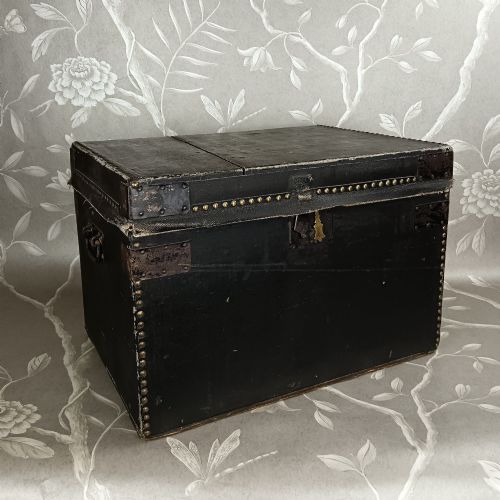
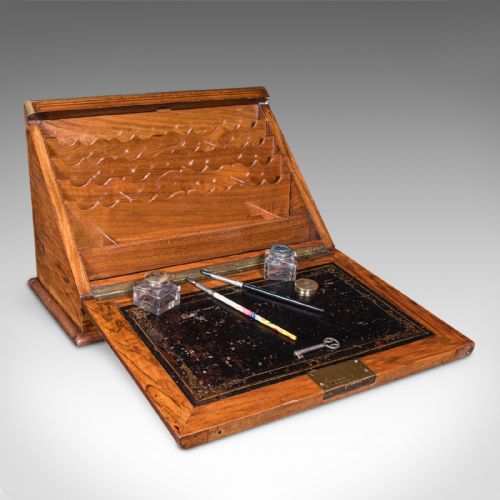
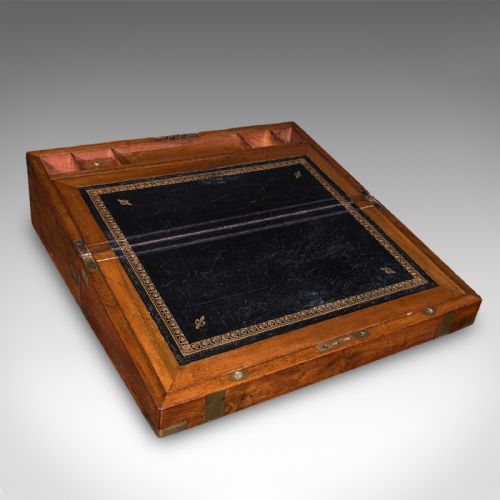
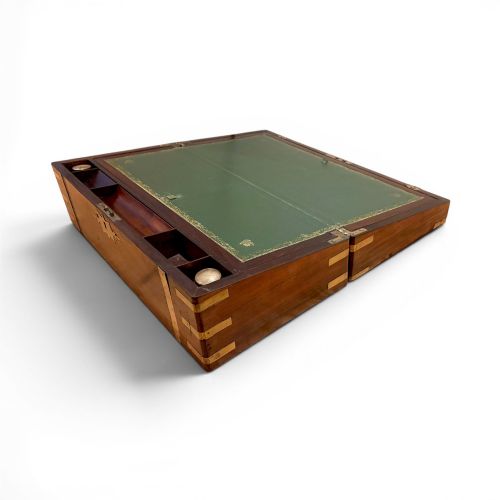


Leather Campaign Box
These pieces of leather campaign box history are portable containers designed for travel, offering sturdy construction and enduring utility.
Leather Campaign Box
A leather campaign box encompasses travel trunks, writing slopes, and chests created during the Georgian, Regency, and Victorian periods. Buyers search for these items to acquire authentic portable furniture that served officers, officials, and travellers on the move.
The selections on this page most frequently include brass-bound trunks and leather-covered chests originating from English workshops and China Trade routes. These forms reflect the practical demands of nineteenth-century mobility.
Examples span from the early nineteenth century through to the early twentieth century, incorporating camphor wood, mahogany, and walnut beneath protective leather exteriors. Each piece demonstrates the specialised cabinetry required for long-distance transit.
How they were made
Maker's workshops combined robust timber frames of camphor wood, mahogany, or walnut with durable exterior coverings of leather, hide, or black canvas. Brass corners, straps, and studding were applied to reinforce edges against the heavy wear of coaching and maritime journeys.
Internal fittings frequently featured specialised compartments, secret drawers, and leather-lined writing surfaces designed to secure documents and personal effects. Metal carrying handles and robust locks ensured both portability and security during transit.
Leather Campaign Box Retail Price Guide 2026
Typical asking prices for leather campaign box among the pieces listed under this phrase on Sellingantiques today, from the lower quarter to the upper quarter. They describe what is for sale here now, not the wider market.
Current listings feature nineteenth-century pieces spanning the Regency and Victorian eras, utilising leather, brass, camphor wood, and mahogany.
What varies in quality
The distinction between standard travel gear and exhibition pieces lies in the refinement of the timber selection, such as finely grained camphor wood or figured walnut, paired with meticulous brass joinery. Superior examples exhibit precise brass-studding and original fitted interiors that remain intact.
Maker attribution and provenance elevate certain items, particularly those bearing the stamps of established firms like Samuel Pratt, William Insall, or Drew & Sons. The integration of working keys, original leather interiors, and specialised multi-compartment layouts distinguishes higher-grade utilitarian boxes.
Samuel Pratt·Wm Insall of Bristol·Chapple & Sons·Seabrook of St Pauls·Drew & Sons·P&F Shafer
The Leather Campaign Box Glossary
- Campaign trunk
- A robust portable chest designed for military or travel use, typically reinforced with brass corners and handles for protection during transit.
- Writing slope
- A portable desk featuring a slanted writing surface that opens to reveal compartments for stationery, inkwells, and correspondence.
- Camphor wood
- An aromatic timber valued in nineteenth-century cabinet-making for its insect-repellent properties, frequently utilised in trunks made for the China Trade.
- China Trade
- Goods manufactured in China during the nineteenth century specifically for export to Western markets, often incorporating traditional local materials with European forms.
- Brass-bound
- A method of reinforcing wooden furniture edges and corners with fitted brass plates and strips to withstand heavy travel conditions.
Leather Campaign Box: Frequently Asked Questions
What is a leather campaign box used for?
These boxes served as portable storage for officers, diplomats, and travellers needing to transport personal belongings, uniforms, or writing materials securely across long distances.
Today, they function as decorative storage furniture, coffee tables, or desk accessories that introduce historical character into domestic interiors.
How do I date a campaign trunk?
Dating relies on observing construction methods, material choices, and stylistic markers such as Regency curves, Victorian brass strapping, or early twentieth-century canvas bindings.
Maker stamps and original brass locks often provide additional documentary evidence to narrow the period of manufacture.
Were all campaign boxes made in England?
While many pieces originated in London and regional English workshops, a significant portion was produced along the China Trade routes using local camphor wood covered in leather.
Both English domestic production and Chinese export variations served the global mobility needs of the nineteenth century.
How do I care for antique campaign leather?
Leather surfaces benefit from gentle dusting and occasional specialist wax application to maintain suppleness and prevent the material from drying out.
Keeping the boxes away from direct heat sources and excessive moisture preserves the timber frames and brass mounts.