
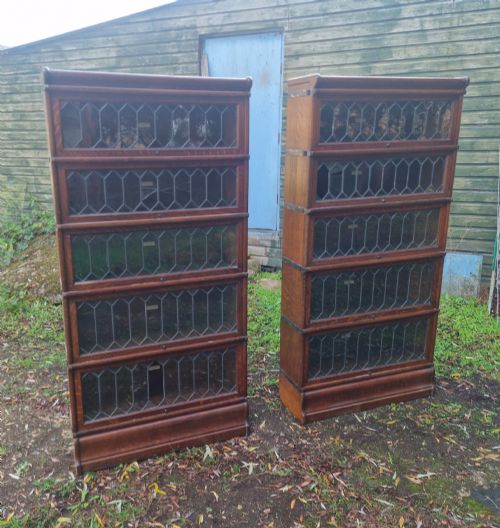
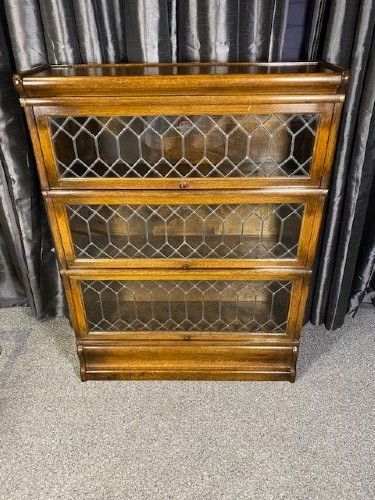
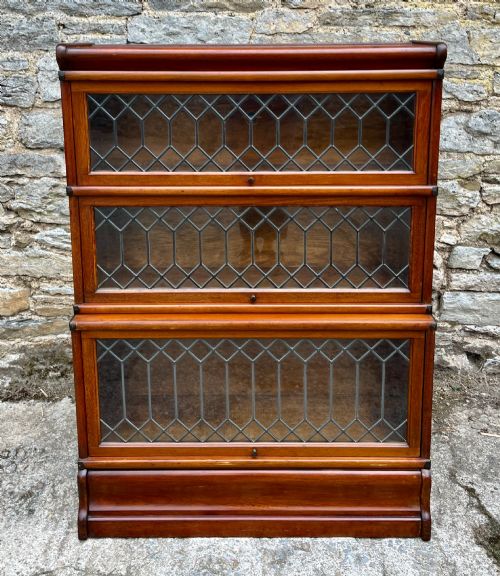
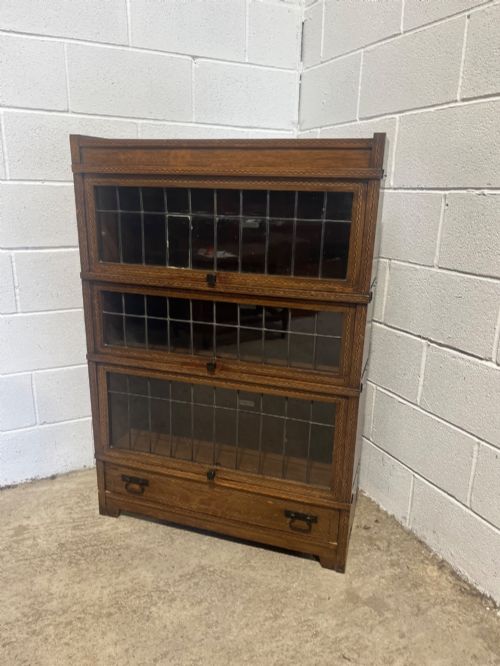

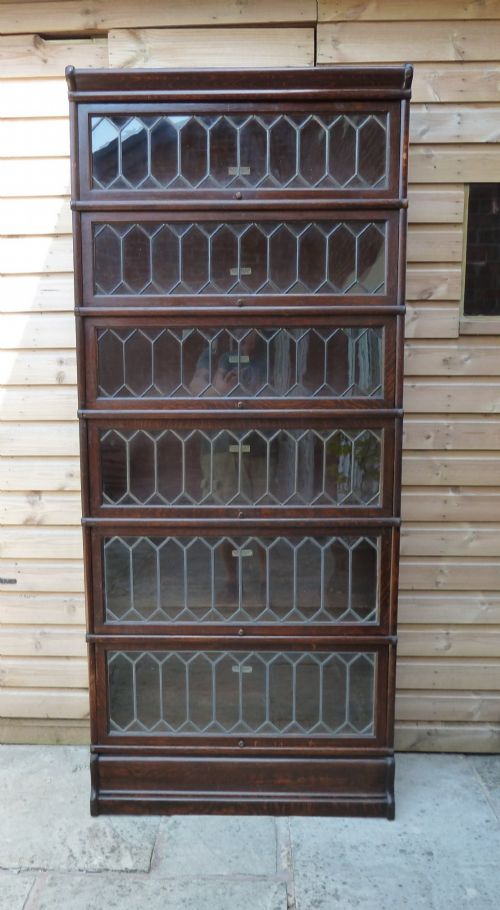
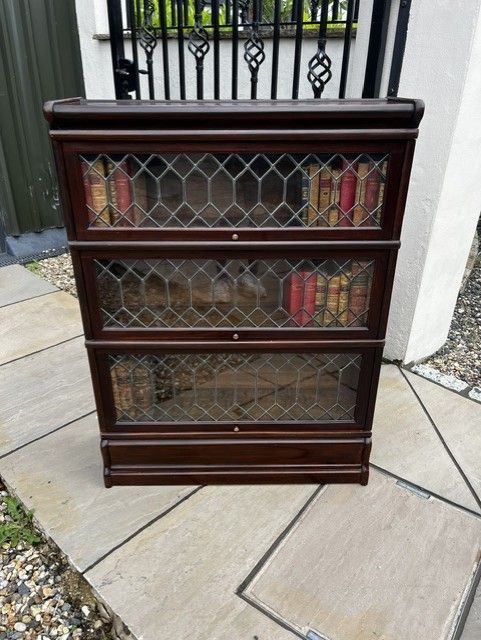


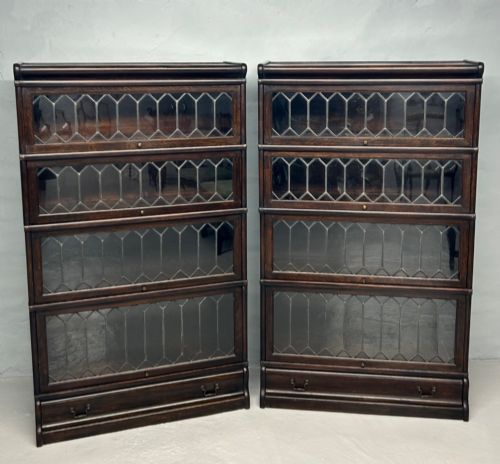

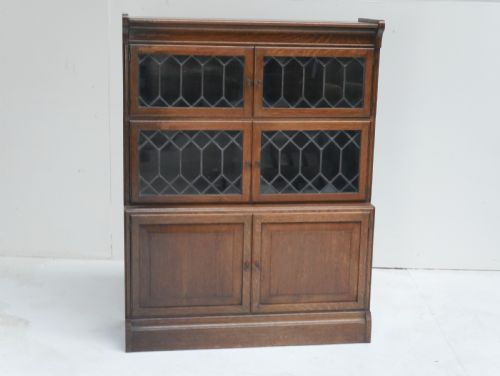
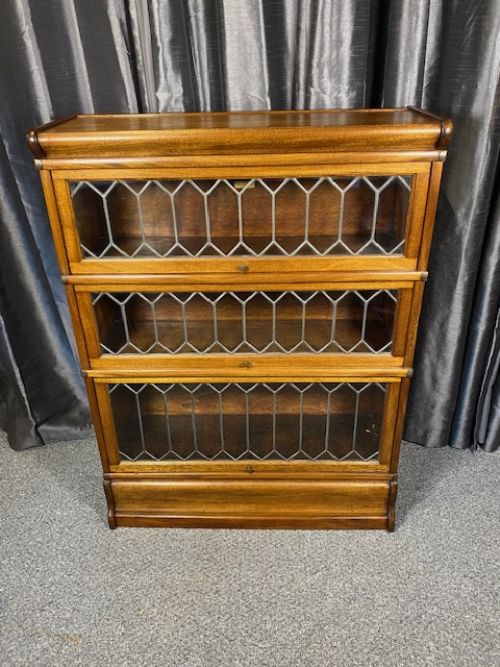


Leaded Glass Modular Bookcase
These leaded glass modular bookcase options offer flexible stacking storage that suits any room.
Leaded Glass Modular Bookcase
A leaded glass modular bookcase provides a practical storage solution made of stacking sections that lift and slide shut. Buyers look for these tiered units to house books while keeping dust at bay through individual glazed doors.
Most examples found here date from the Edwardian period through the nineteen thirties, spanning nineteen hundred to nineteen thirty. Oak dominates the selection, accompanied by mahogany, walnut, and limed oak variations.
Makers such as Globe Wernicke, Minty, Lebus, and Warwick produced these sectional forms. The stackable design allowed owners to add tiers as their libraries grew.
Materials and construction methods
Construction relies primarily on solid oak and mahogany framing, often incorporating wood inlay for decorative detail. Individual tiers feature brass hardware alongside glass held together by lead cames.
Sectional boxes are built to interlock securely when stacked one upon another. Each tier incorporates a mechanism allowing the glazed door to slide inside above the books.
Object forms include stacking lawyer cabinets alongside tall narrow variations and wider three or four tier configurations.
Distinguishing quality across tiers and makers
Quality shows in the choice of timber and the precision of the joinery across each stacking tier. Finer examples display select oak or mahogany grains and intact wood inlay work.
The operation of the door mechanism and the condition of the leaded glass panels indicate the level of craftsmanship. Maker attribution to firms like Globe Wernicke or Minty also influences desirability.
Globe Wernicke·Minty·Lebus·Warwick
The Leaded Glass Modular Bookcase Glossary
- Modular bookcase
- A piece of furniture built from separate stacking sections that can be rearranged or added to over time. This design allows for easy transport and customisation of height.
- Barrister bookcase
- An alternative name for a stacking bookcase with glazed doors, traditionally used by lawyers to protect books. The doors lift and slide into the cabinet above each shelf.
- Leaded glass
- Individual panes of glass joined together by narrow strips of lead called cames. This technique creates geometric patterns or holds the glass securely within cabinet doors.
- Wood inlay
- Pieces of contrasting timber fitted into the surface of furniture to form decorative patterns. Edwardian makers often utilised this technique on oak cabinets.
- Section
- An individual tier or box within a stacking bookcase unit. Each section functions as an independent shelf with its own door.
Leaded Glass Modular Bookcase: Frequently Asked Questions
How do stacking bookcase sections separate?
Each tier lifts off the section beneath it once the top cornice and base are taken into account. The boxes rest upon one another without permanent fixings.
This modular design allowed owners to transport the furniture easily or expand their storage by purchasing additional tiers.
What periods do these bookcases span?
The available pieces date from the Edwardian era through the nineteen thirties. Common production years cited include nineteen hundred, nineteen ten, nineteen twenty, and nineteen thirty.
Craftsmanship and materials shifted slightly across these decades, moving from traditional dark oak towards limed finishes in later years.
How do the glass doors operate?
The doors feature a mechanism that allows them to swing outward slightly before sliding horizontally into the cabinet above the books. This keeps the door out of the way while browsing titles.
Brass fittings and lead cames support the glass panes within each frame during this movement.
Can I stack extra tiers onto my unit?
Sections from the same maker and period often share dimensions that permit interchangeability. However, matching timber grain and finish requires careful attention.
Checking the manufacturer stamp helps determine compatibility between different stacking sections.