

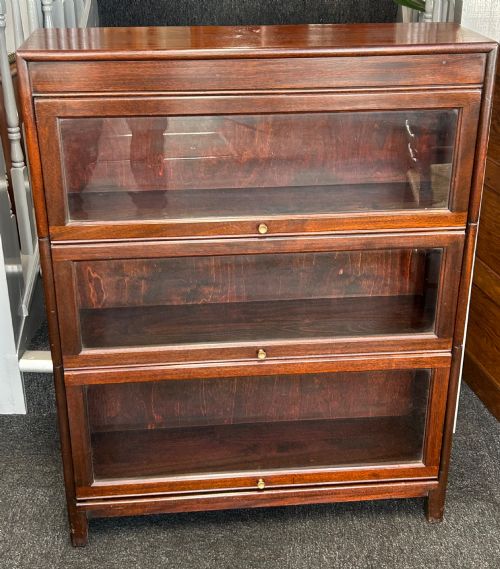
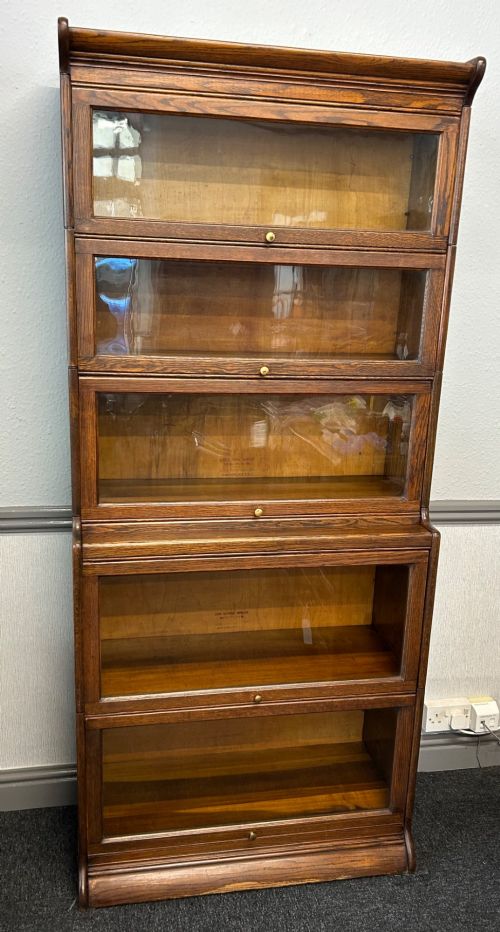
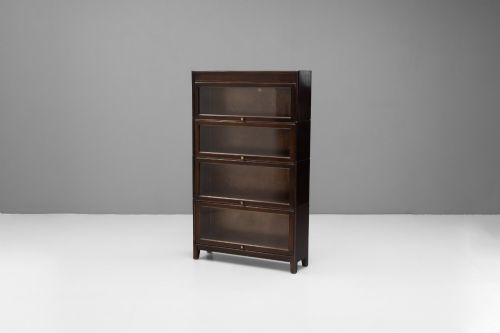
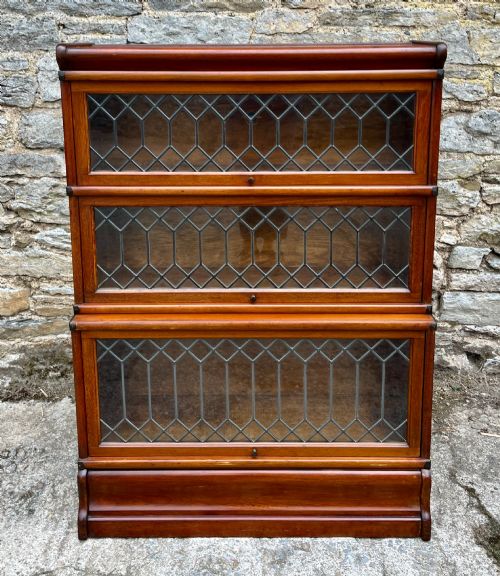
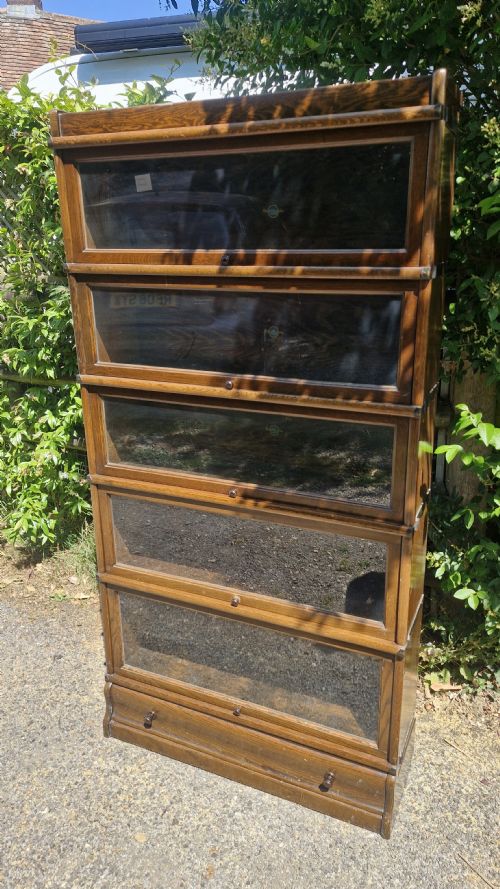
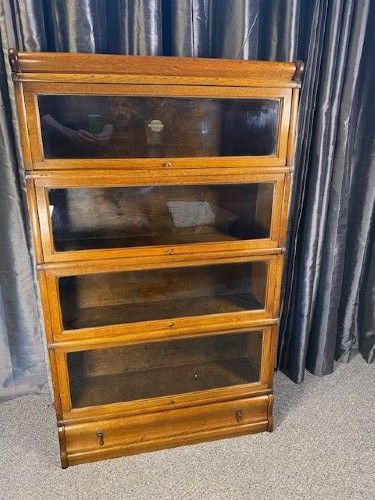
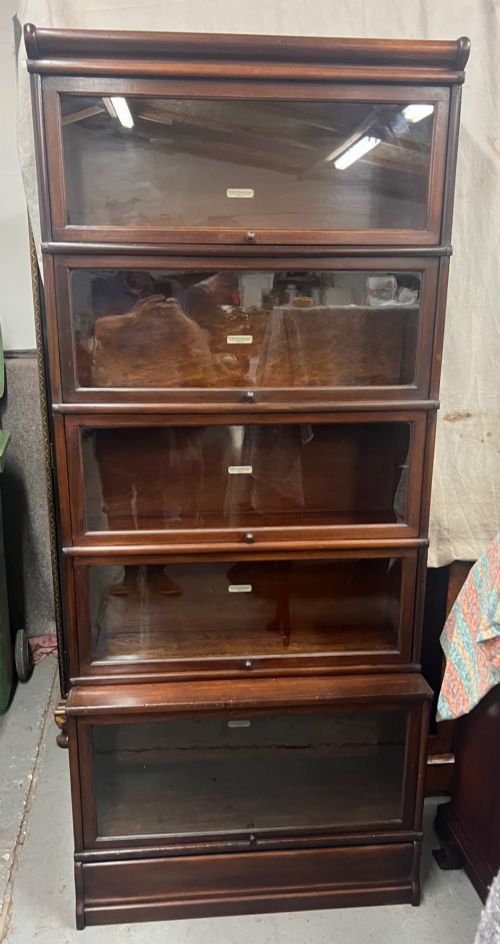


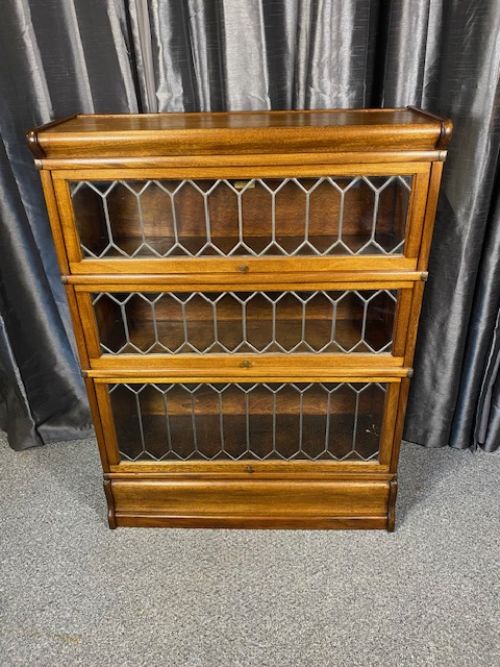
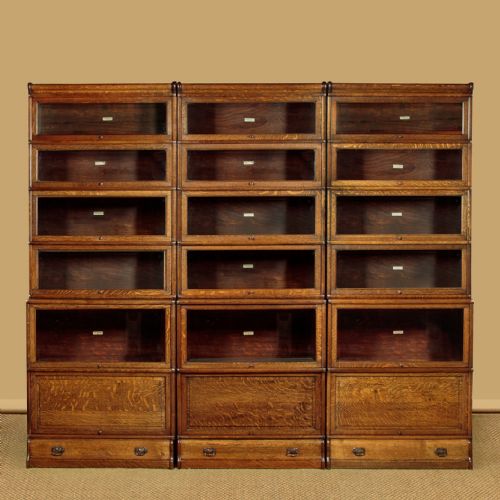

Lawyers Stack Bookcase
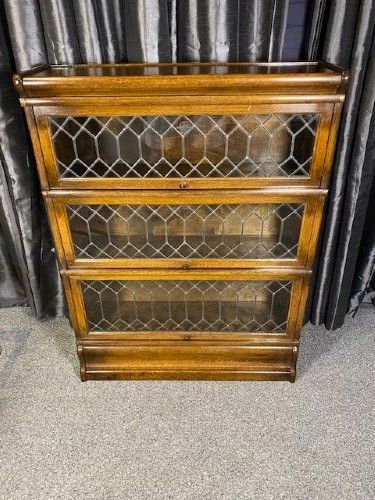
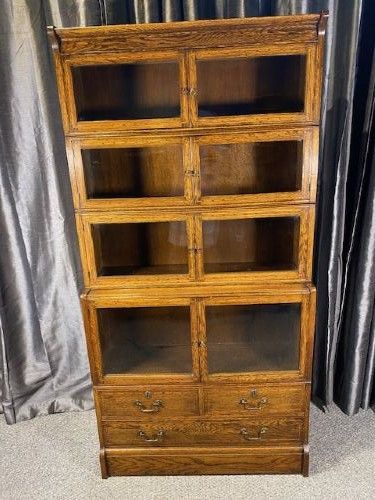
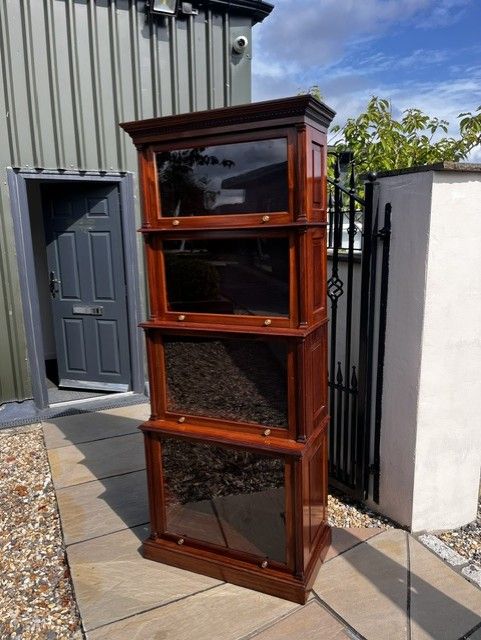
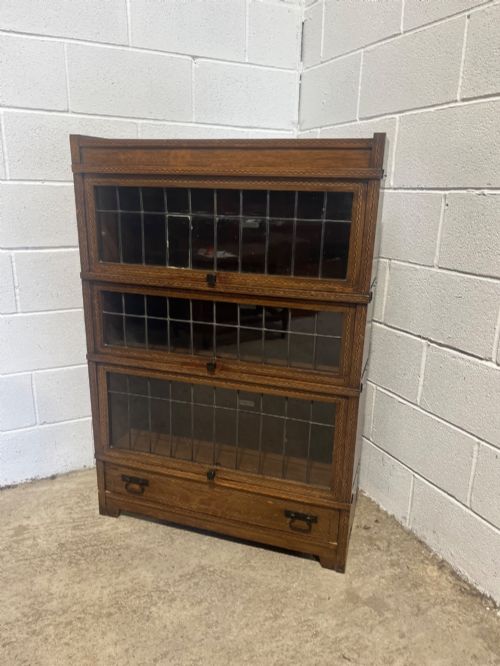
These lawyers stack bookcase designs offer modular storage with glazed up-and-over doors, combining practicality with early twentieth-century office character.
Lawyers Stack Bookcase
A lawyers stack bookcase consists of independent modular tiers stacked vertically, allowing individual sections to be added or rearranged as collections grow. The pieces appearing on this page date from the Edwardian era through the nineteen-thirties, reflecting commercial and office origins.
Most examples utilise oak or mahogany, often fitted with glass panels or leaded glass in the up-and-over doors. These bookcases serve to protect books from dust while maintaining visible organisation in studies and libraries.
Materials and construction methods
Makers constructed these sectional units using solid timber frames in oak and mahogany, housing glazed or leaded glass doors on mechanical pivots. Brass hardware commonly secures the stacking tiers and operates the lifting mechanism for each individual shelf level.
The modular design relies on precise joinery so that separate cabinet sections align correctly when stacked one upon another. Metal components inside the frame guide the smooth sliding movement of the doors as they lift into the recess above each tier.
Lawyers Stack Bookcase Retail Price Guide 2026
Typical asking prices for lawyers stack bookcase among the pieces listed under this phrase on Sellingantiques today, from the lower quarter to the upper quarter. They describe what is for sale here now, not the wider market.
Lawyers originally favoured these modular shelves because they doubled as packing crates during circuit court travels.
Distinctions in build and finish
Quality differentiates itself through the selection of timber grain, particularly in figured mahogany or golden oak variants, alongside the weight and clarity of the glass. Superior examples retain original brass fittings and smoothly functioning lifting mechanisms across every tier.
Workshop execution dictates the longevity of the stacking mechanism and the tightness of the joints between sections. Pieces bearing manufacturer marks often demonstrate finer attention to internal cabinetry and timber selection.
Gunn Furniture·Macey·Globe Wernicke·Warwick
The Lawyers Stack Bookcase Glossary
- Sectional
- A piece of furniture built in separate modular tiers that stack together. This construction allows the cabinet to be easily dismantled and moved in parts.
- Up-and-over door
- A glazed door fitted with a mechanism that swings outward slightly before sliding upward into the recess above the shelf. This movement protects the books inside while providing clear access.
- Leaded glass
- Small panes of glass held together by strips of lead to form decorative geometric patterns. This technique appears on select Edwardian office cabinets.
- Barrister bookcase
- An alternative name for a stacking bookcase used by legal professionals to transport and house law reports. The modular format kept volumes accessible in chambers.
Lawyers Stack Bookcase: Frequently Asked Questions
How do the stacking sections stay together?
Each tier rests upon the one below it using interlocking wooden lips or side brackets that prevent sliding without requiring permanent fixings.
The weight of the timber and the heavy glass doors keep the modular units stable when fully assembled in an upright position.
Can individual tiers be removed easily?
Yes, the sections lift apart once the books are emptied and any connecting side clips or screws are detached from the frame.
This modularity originated to facilitate office relocations and the gradual expansion of professional libraries over time.
Why do the doors lift upward?
The upward sliding motion allows the glazed front to tuck neatly above the books, keeping the shelf open during reading without swinging into the room.
A system of internal metal arms guides this movement smoothly from closed to recessed positions.
How do I distinguish Edwardian pieces from later ones?
Edwardian and early twentieth-century examples often feature golden oak or rich mahogany with specific hardware styles, while nineteen-thirties models show slight variations in commercial production.
Examining the internal timber and joining methods helps determine the precise period of manufacture.