

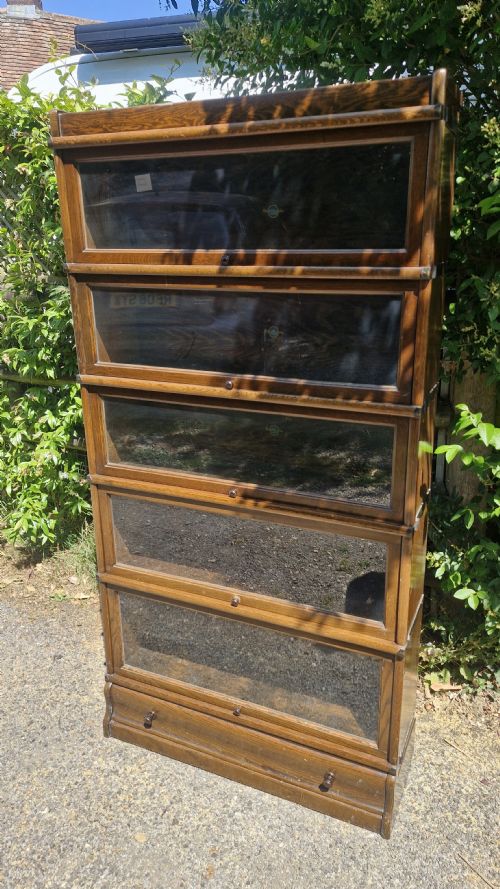
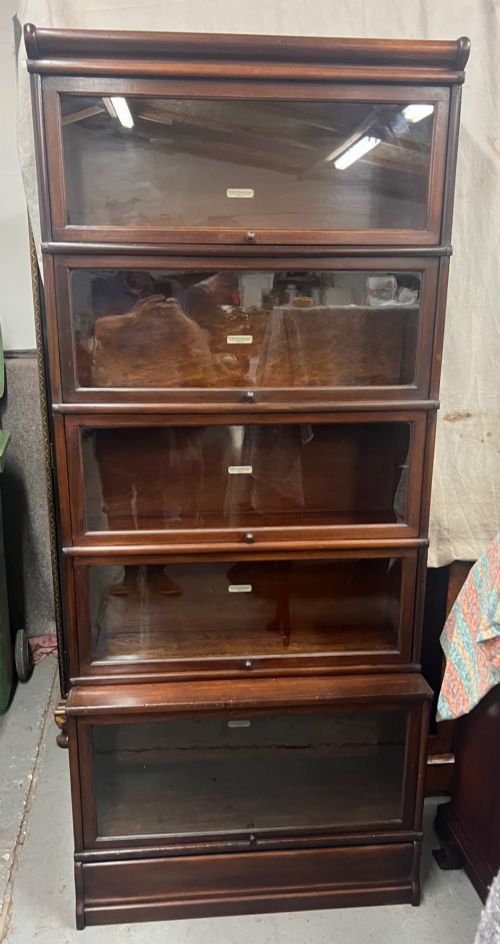
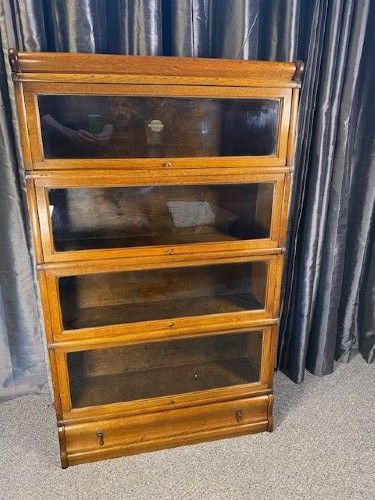
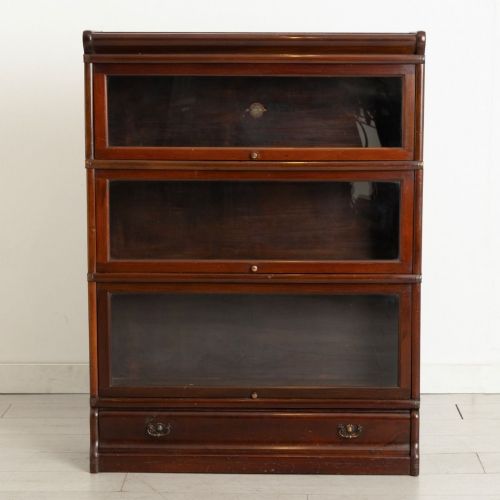


Lawyers Glazed Cabinet
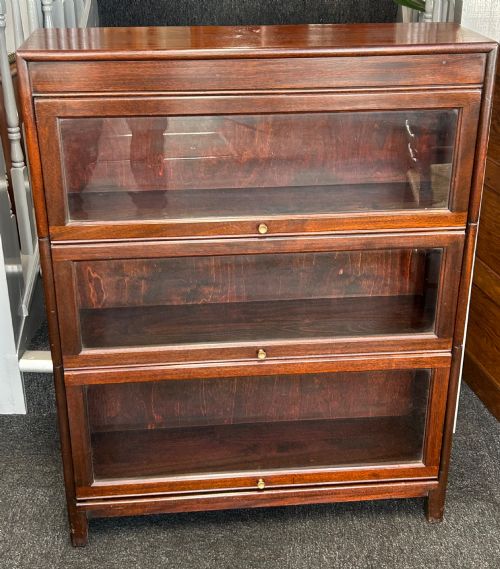
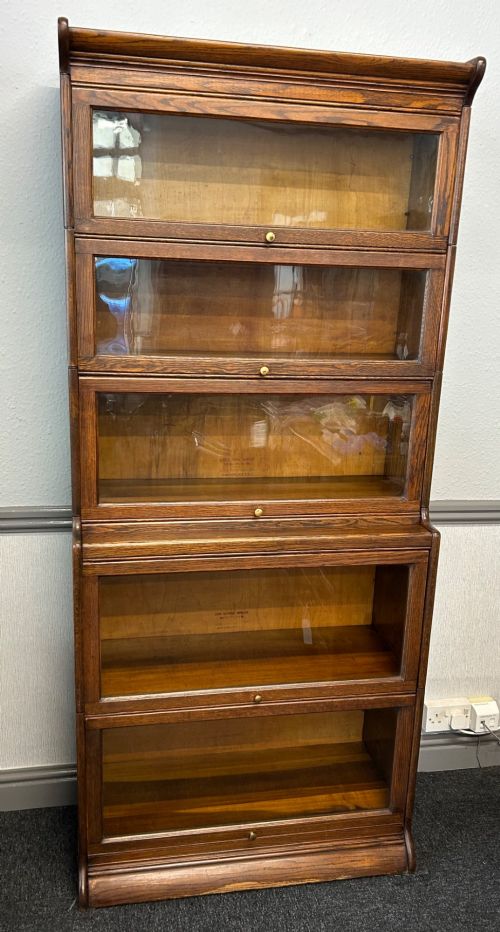
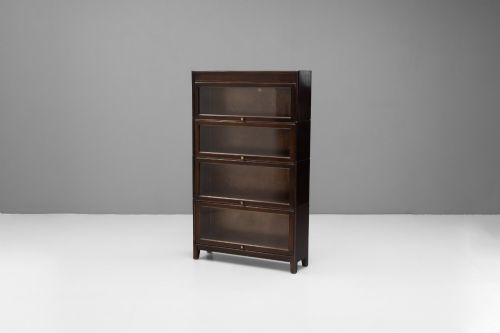
These lawyers glazed cabinet designs are sectional stacking bookcases built to protect working libraries behind glass.
Lawyers Glazed Cabinet
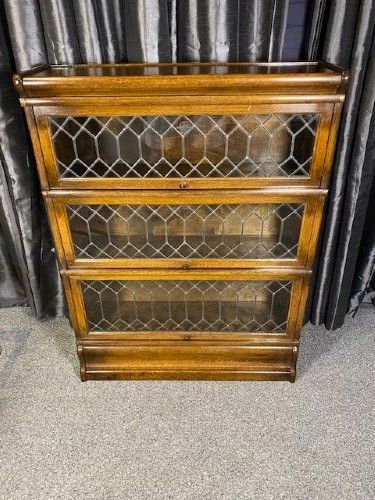
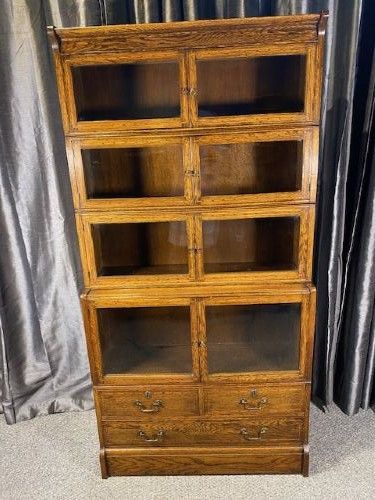
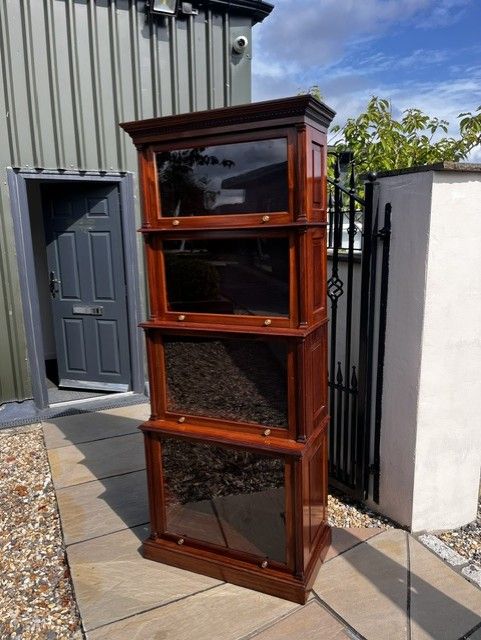
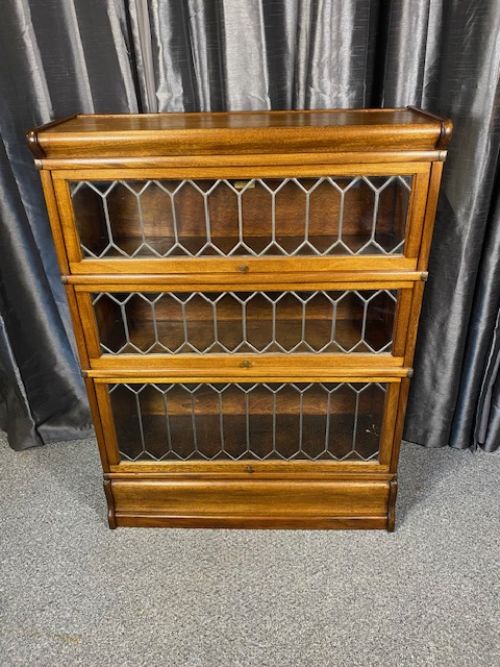
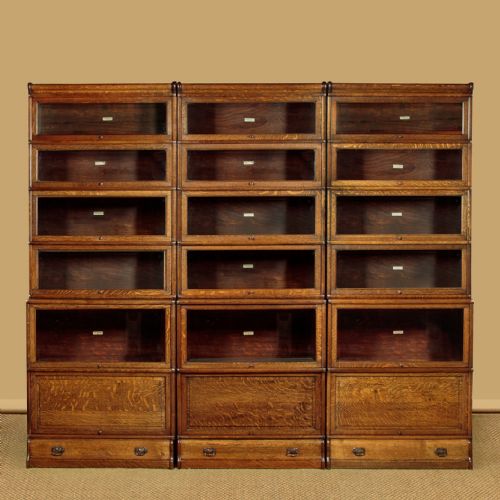
When you search for lawyers glazed cabinet pieces, you are looking at sectional stacking bookcases designed for offices and studies. The versions most likely to meet you on this page are Edwardian and early twentieth century sectional bookcases made in oak or mahogany. These modular cabinets use individual stacking tiers topped with a cornice and grounded on a plinth.
Most examples originate from the early decades of the twentieth century, including pieces dated to nineteen ten, nineteen twenty, and nineteen thirty. The format allows the individual glazed sections to lift and slide inward to reveal the books stored within. Makers constructed these units to keep dust from valuable working libraries while keeping volumes visible.
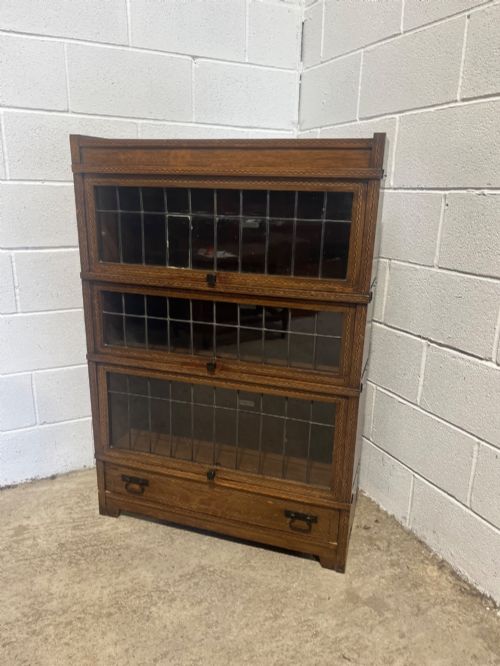
The styles seen on this page span plain utilitarian office furniture to inlaid oak variants and Edwardian Arts and Crafts interpretations. While some units stand as single tall stacks, others appear in matched pairs or three tier arrangements. The fundamental form remains a practical stacking bookcase designed for modular expansion.
What varies in quality
The grade of timber and the choice of grain figure heavily in the hierarchy of these cabinets, moving from plain utilitarian oak to finely figured solid mahogany or inlaid oak. The presence of specialised maker brands such as Globe Wernicke or Warwick elevates the standing of a piece compared to unbranded style equivalents. Cabinet quality also shows in the precision of the stacking joints and the smoothness of the sliding glass door mechanisms.
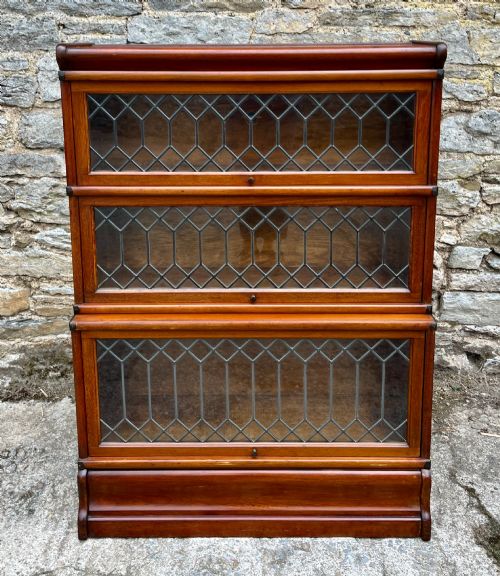
Detailing such as decorative inlay, leaded glass panels, and substantial brass hardware separate standard office utility pieces from finer domestic library editions. The structural integrity of the individual stacking tiers and the crispness of the cornice and plinth mouldings dictate the overall refinement of the cabinet.
Lawyers Glazed Cabinet Retail Price Guide 2026
Typical asking prices for lawyers glazed cabinet among the pieces listed under this phrase on Sellingantiques today, from the lower quarter to the upper quarter. They describe what is for sale here now, not the wider market.
Legal documents suggest lawyers loved these because they could lock up the whiskey behind one shelf and the statutes behind another.
Globe Wernicke·Warwick
The Lawyers Glazed Cabinet Glossary
- Sectional bookcase
- A bookcase built from multiple independent tiers that stack vertically to form a single tall unit. Each tier contains its own shelf and glass door.
- Barrister bookcase
- An alternative name for a stacking lawyer bookcase, traditionally used by legal professionals to transport and house working volumes. These units feature dust-proof glass doors that retract into the cabinet.
- Globe Wernicke
- The prominent manufacturing firm that popularized the sectional stacking bookcase design with patented door mechanisms. Many subsequent makers produced similar units in the style of this firm.
- Leaded glass
- Glass panes joined together with narrow strips of lead came to form geometric or decorative patterns within the door frame. This technique appears on selected Edwardian and early twentieth century cabinet doors.
- Cornice
- The ornamental moulding fitted to the very top of a stacking bookcase above the uppermost tier. It provides a finished architectural cap to the modular assembly.
Lawyers Glazed Cabinet: Frequently Asked Questions
What is a lawyers glazed cabinet?
A lawyers glazed cabinet is a sectional stacking bookcase featuring individual glass-fronted tiers designed to protect books from dust. The modular boxes stack on top of one another without permanent fixings.
These cabinets were originally used in offices and legal practices to house working libraries that could expand over time by adding new tiers.
How do the glass doors open?
The glass doors on these cabinets typically lift upward and slide inward on internal metal tracks or scissor mechanisms. This allows the door to recess into the top of the tier above the books.
Users can keep the door open while reading or selecting volumes without needing clearance for swinging hinges.
Are these cabinets fixed together?
The individual tiers of a stacking bookcase rest unfastened upon one another, held in place by their own weight and locating pins or rebates. A separate base plinth supports the bottom tier, and a cornice caps the top.
This loose assembly allows the entire cabinet to be disassembled easily for transport or reconfiguration.
How do I date an antique stacking bookcase?
Dating relies on the materials, hardware styles, and maker stamps found inside the cabinet tiers. Most examples on this page date from the Edwardian period through the nineteen twenties and nineteen thirties.
Oak was particularly common in the nineteen tens, while mahogany variants and specific maker labels help narrow down the production era.