

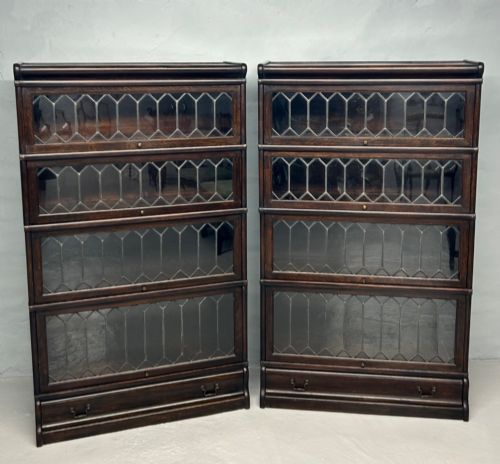
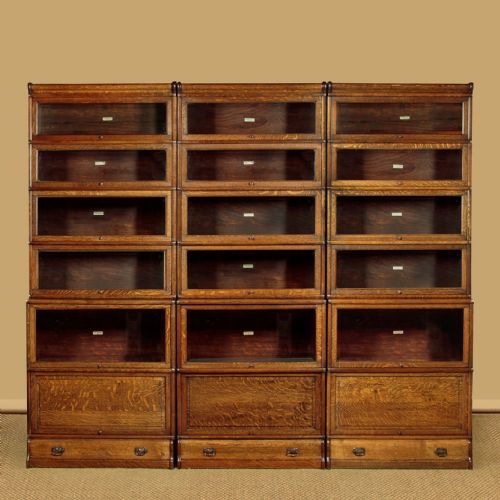

Lawyer Glass Bookcase
A lawyer glass bookcase offers clever modular storage with glazed front sections that lift and slide away.
Lawyer Glass Bookcase
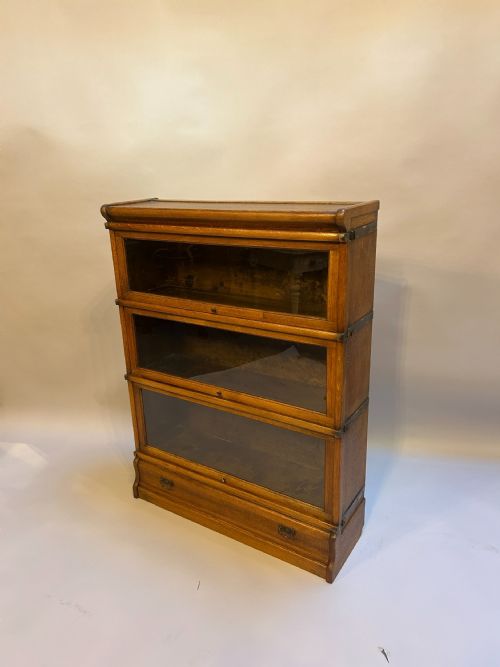
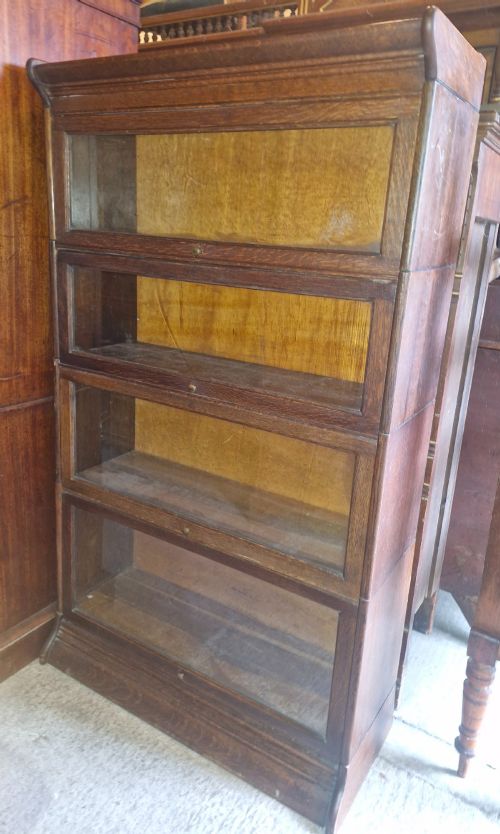
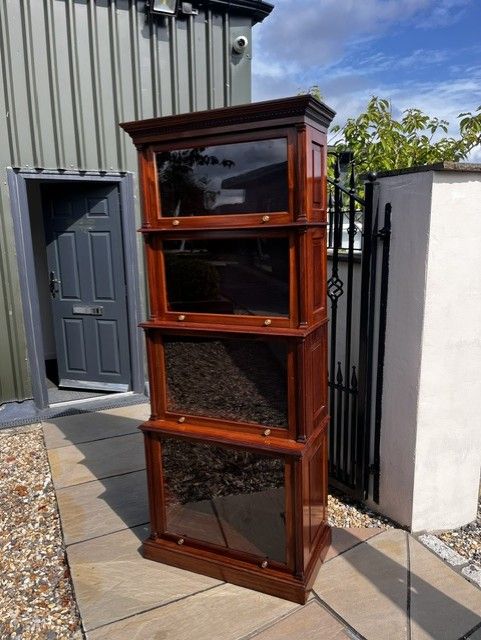
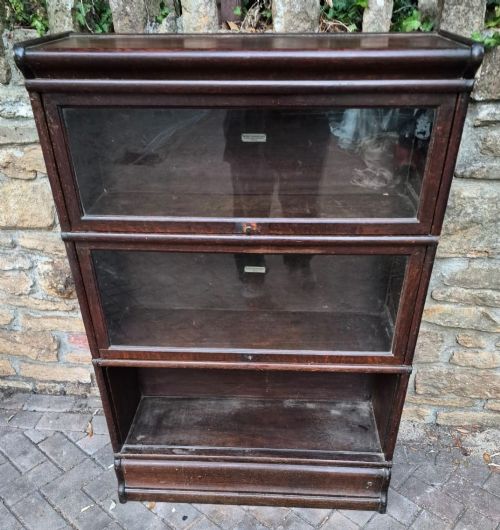
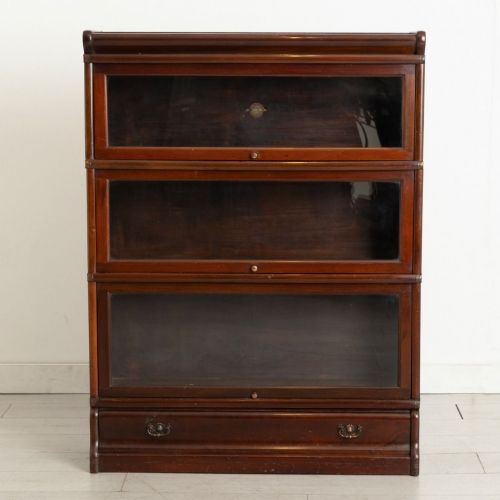
A lawyer glass bookcase is a sectional cabinet designed with individual tiers that stack together, allowing each shelf to protect books behind its own glass door. These items emerge primarily from the early twentieth century, spanning the Edwardian era through the 1930s.
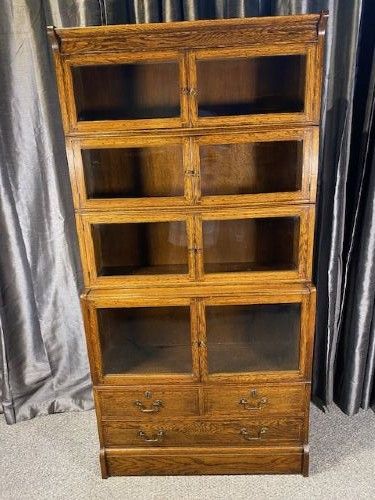
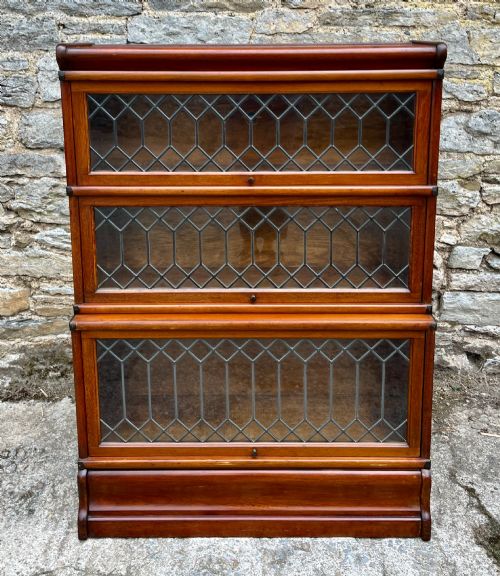
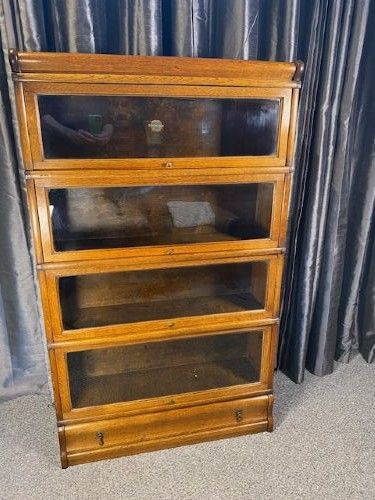
The versions most commonly met on this page are constructed from oak or mahogany, often configured in three or four stacking sections. They derive directly from traditional office and study furniture designed to keep volumes clean and accessible.
How they were made
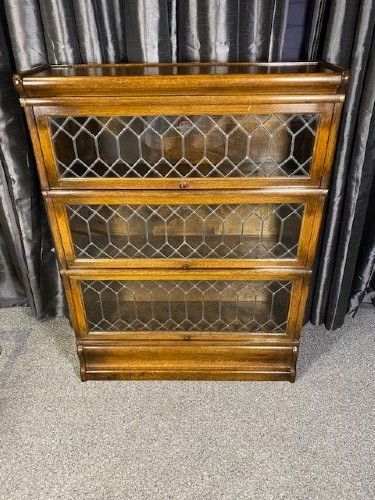
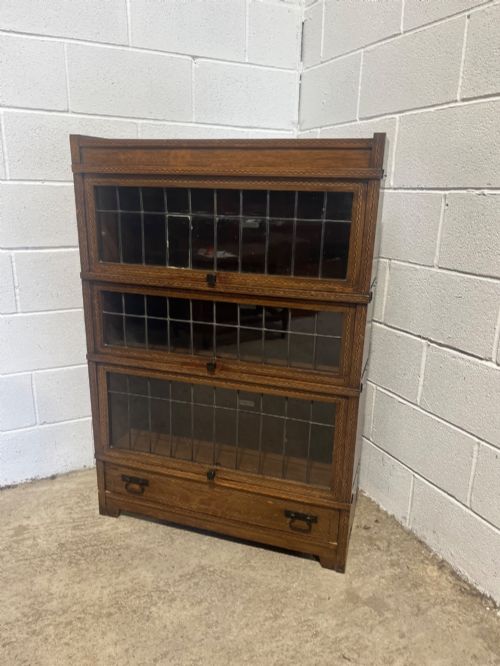
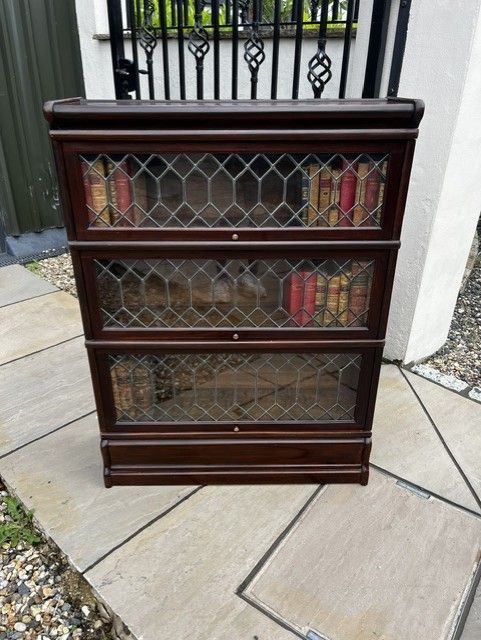
Makers built these pieces using solid oak and mahogany timbers, frequently incorporating brass hardware to connect the stacking tiers and operate the lifting mechanisms. Leaded glass panels appear on specific doors, adding geometric detail to the transparent fronts.
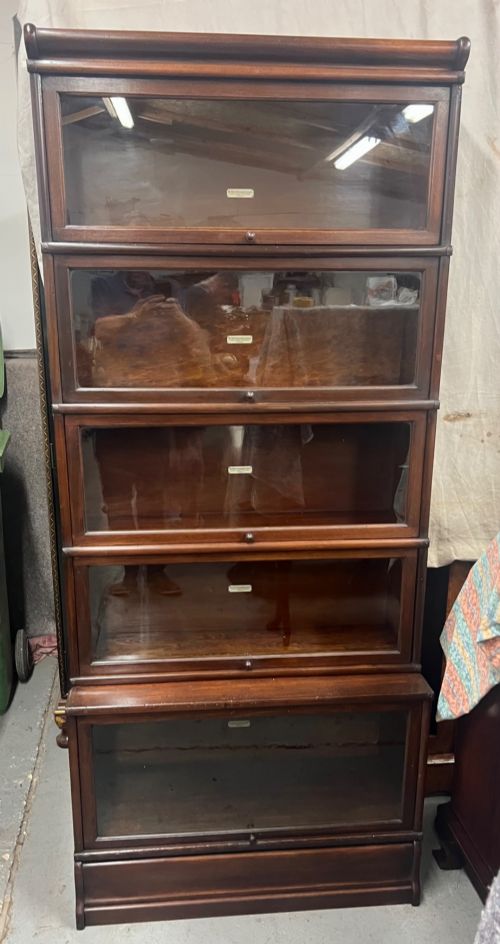
The sectional design relies on independent carcases that fit securely one above the other without permanent fixings. Each tier integrates a sliding glass mechanism that retracts smoothly into the cabinet body above the shelf.
Listings feature oak and mahogany materials, with styles spanning the Edwardian period and the early decades of the twentieth century.
What varies in quality
Construction methods separate standard production models from finer examples, particularly in the thickness of the solid timber and the precision of the stacking joints. Superior pieces exhibit well-figured mahogany or oak grains with careful inlay work.
The complexity of the glazing and the presence of maker attribution influence the standing of a cabinet. Original brass fittings and smooth mechanical action across every individual tier distinguish the better specimens.
Globe Wernicke·Warwick
The Lawyer Glass Bookcase Glossary
- Sectional bookcase
- A piece built from multiple independent tier units that stack vertically to form a tall cabinet. This modular construction allowed owners to add extra sections as their library grew.
- Barrister
- A traditional term for a lawyer, reflecting the historical use of these stacking cabinets in legal offices to protect valuable law reports. The design kept volumes free from dust while remaining portable.
- Leaded glass
- Glass panels held together by narrow strips of lead, creating decorative geometric patterns across the door front. This technique appeared on selected oak and mahogany editions.
- Edwardian
- The architectural and furniture style spanning the reign of King Edward VII, noted here for refined proportions in mahogany and oak. Pieces from this period often display lighter tones than Victorian predecessors.
Lawyer Glass Bookcase: Frequently Asked Questions
Can the stacking sections be separated?
The individual tiers rest one upon another without permanent fixings, secured by side brackets or simple gravity locks. This modular build makes transportation and repositioning much easier.
Owners can add, remove, or rearrange sections to alter the overall height of the cabinet according to their space.
What is the difference between oak and mahogany versions?
Oak examples often feature prominent grain patterns and fit comfortably into traditional Edwardian and Arts and Crafts interiors. Mahogany variants tend to display smoother, darker surfaces with a refined finish.
Both timbers provide the structural rigidity required to support heavy rows of books within the stacking sections.
How do I date a sectional bookcase?
Dating relies on timber selection, hardware details, and maker marks stamped on the internal sections. Most pieces on this page originate from the early twentieth century, spanning the Edwardian period up to the 1930s.
Examining the brass connectors and the style of the leaded glass panels also helps narrow down the decade of production.