



Late Victorian Wooden Bed
A late victorian wooden bed offers solid construction and period charm, bringing substantial nineteenth-century presence to a bedroom.
Late Victorian Wooden Bed
When you search for a late victorian wooden bed, you encounter functional furniture built around the turn of the twentieth century. These pieces reflect the cabinet-maker's art from the 1890s and 1900s, constructed to serve domestic life with robust proportions.
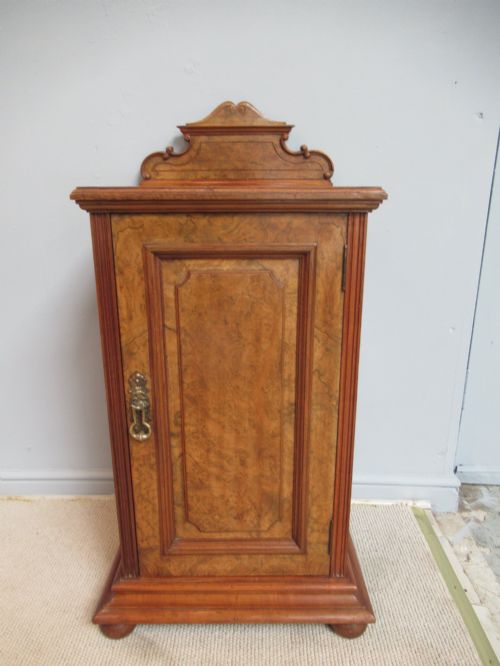
You are most likely to meet standard double bedsteads or larger formats on this page, alongside related forms like day beds and bedside cabinets. The selection shows variety in timber choice rather than a single monotonous design.
Makers of this era employed traditional joinery combined with aesthetic influences from France and Britain. The resulting frames range from straightforward utilitarian pine and walnut to painted satinwood and clever campaign structures.
How they were made
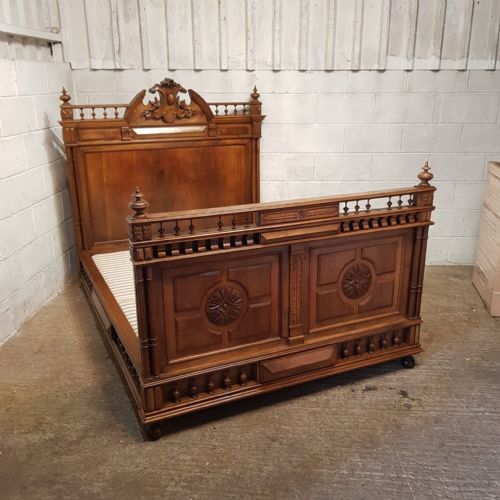
Cabinet-makers relied on dense hardwoods and selected veneers, utilising walnut, burr walnut, mahogany, oak, and beech for the primary structural framework. Turned hardwood components and structural pine appear frequently in the framing and internal supports.
Surface treatments included polished wood finishes that highlighted natural grain patterns alongside painted decoration on satinwood. Structural ingenuity also played a part, visible in adjustable campaign formats and pieces fitted with original castors.
Some beds feature clever detachable legs for easy travel, proving that nineteenth-century officers still demanded a proper night's sleep in the field.
What varies in quality
The distinction between standard output and finer work rests on timber selection and decorative ambition. A simple pine frame serves a purely utilitarian function, whereas burr walnut or painted satinwood demands greater skill from the cabinet-maker.
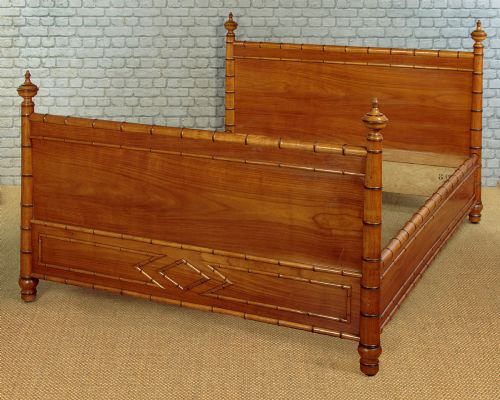
Execution of detail defines the upper tier, seen in sophisticated turning, applied bamboo-effect moulding, or integrated brass hardware. The presence of named firm attribution further elevates a piece above anonymous workshop production.
The Late Victorian Wooden Bed Glossary
- Bedstead
- The structural framework of a bed, including headboard, footboard, and side rails, designed to support a mattress base.
- Campaign bed
- A portable bed designed for travel or military use, typically featuring detachable legs or folding mechanisms for easy transport.
- Burr walnut
- A prized timber veneer showing swirling, knotty grain patterns harvested from growths on walnut trees.
- Faux bamboo
- Wood carved, turned, or painted to imitate the segmented stalks of natural bamboo, popular during the aesthetic movement.
Late Victorian Wooden Bed: Frequently Asked Questions
How do I assemble a late victorian wooden bed?
Most antique wooden beds use traditional iron bed bolts that connect the side rails securely to the headboard and footboard posts.
Ensure you have the correct spanner to tighten these internal bolts evenly without damaging the surrounding timber.
Will a modern mattress fit a late victorian wooden bed?
Historical bed sizes often differ slightly from modern standard mattress dimensions. You should measure the internal space between the side rails and headboard carefully.
Custom mattress makers can supply a correctly sized base and mattress to drop neatly into the antique frame.
What wood types were used for late victorian beds?
Cabinet-makers of the period worked with a range of timbers including walnut, burr walnut, mahogany, oak, and beech. Pine frequently served as a secondary wood for internal frames and slats.
More decorative examples utilised satinwood with painted finishes or turned hardwood shaped to resemble bamboo.
How do I care for polished wood on an antique bed?
Maintain the polished timber surfaces by dusting gently with a soft, dry cloth rather than using silicone sprays. Regular application of a quality beeswax feed helps preserve the moisture and natural lustre of the walnut or mahogany.
Keep antique wooden furniture away from direct heat sources and strong sunlight to prevent the timber from drying out.