
Late Victorian Carved Cabinet
A late victorian carved cabinet brings substantial timber and intricate ornamentation together, offering practical storage disguised as domestic theatre.
Late Victorian Carved Cabinet
A late victorian carved cabinet encompasses a diverse group of domestic furniture produced during the final decades of the nineteenth century, typically associated with the Victorian period and specific revival aesthetics.
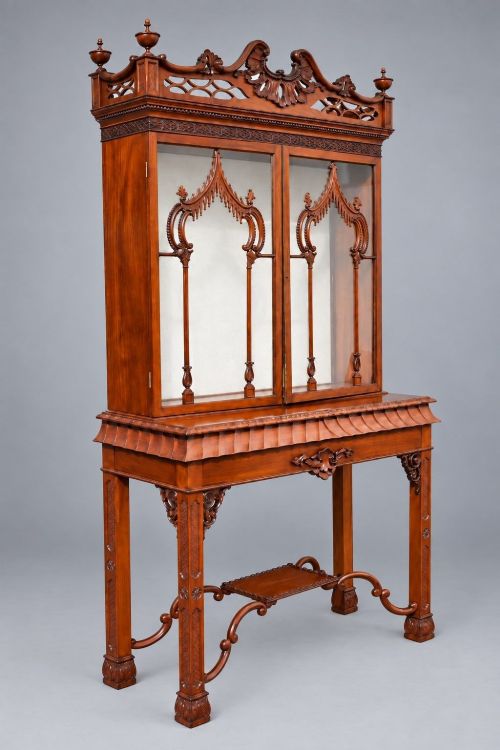
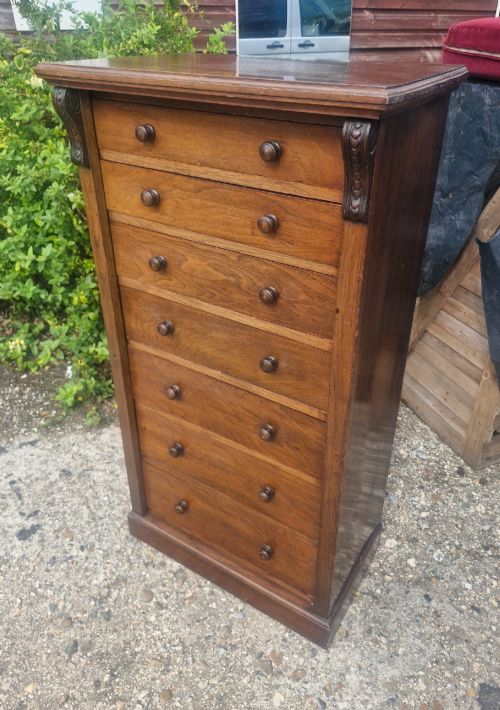
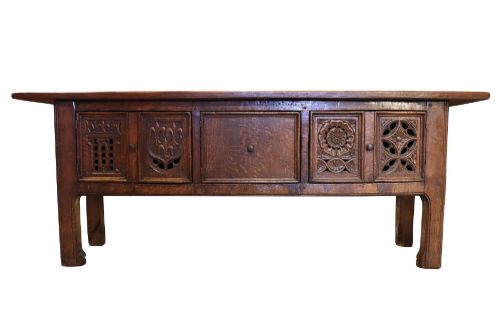
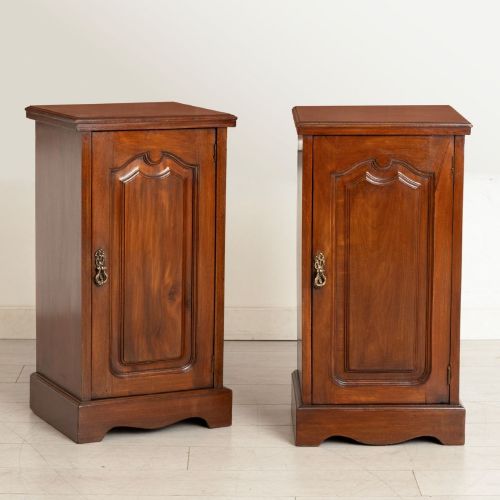
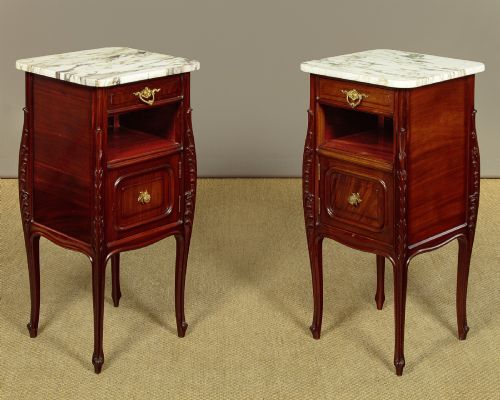
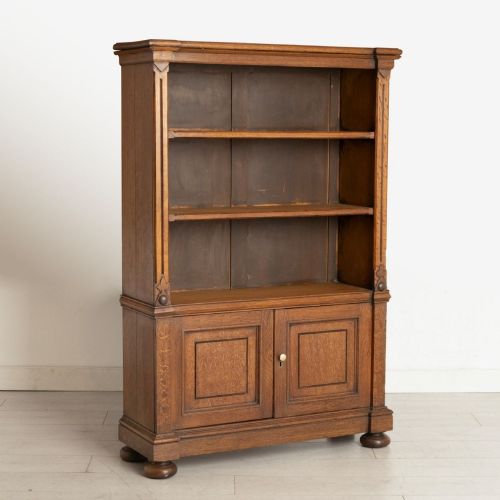
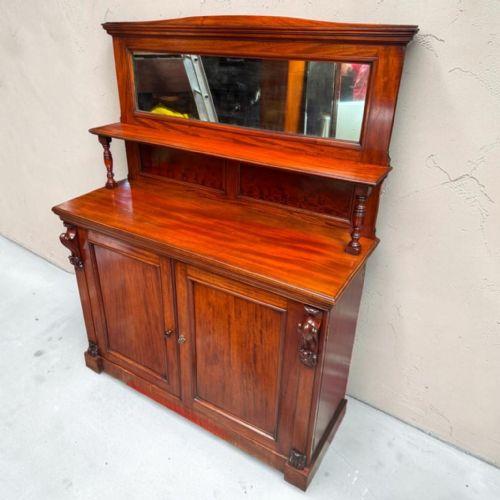
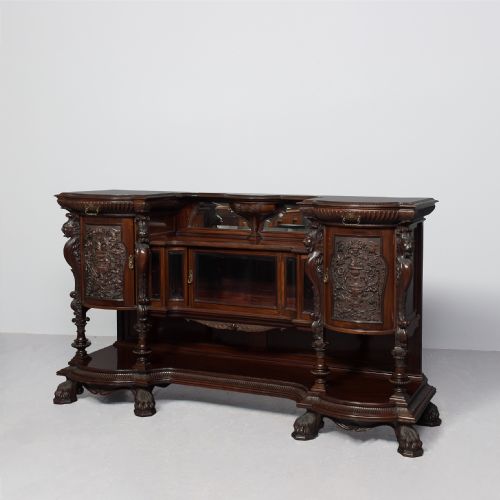
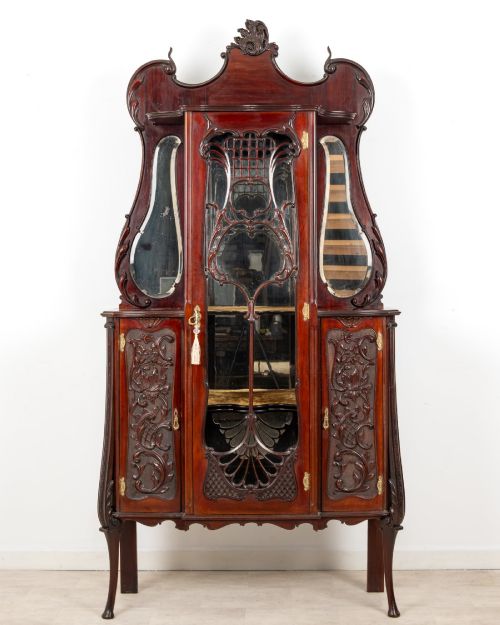
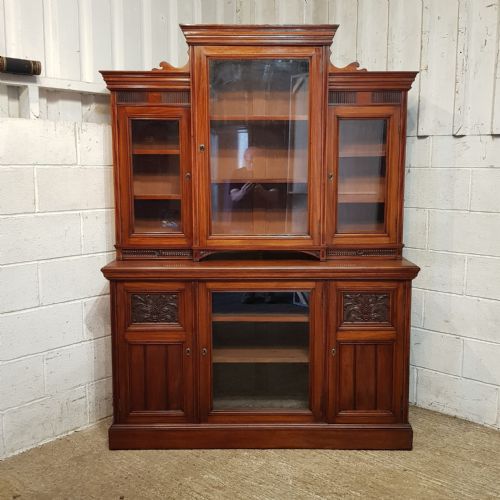
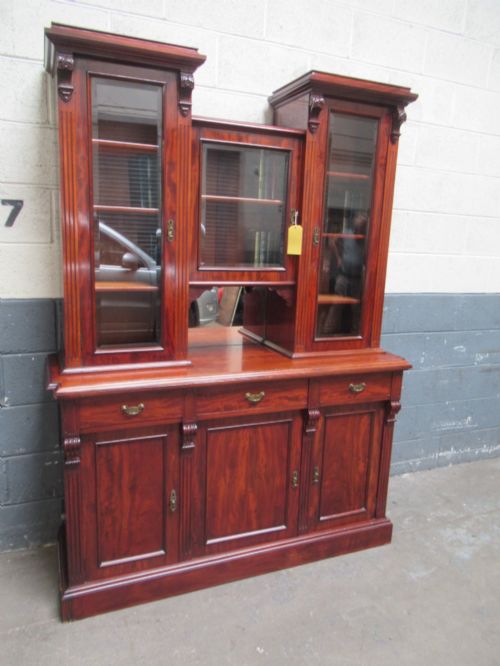
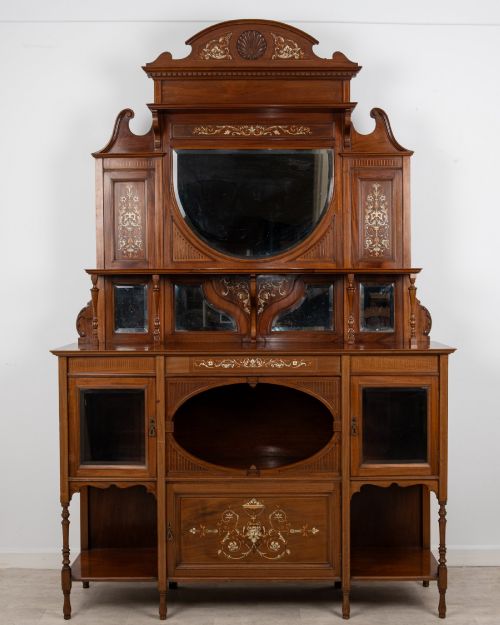
The varieties met most frequently on this page include sturdy oak bookcases, display cabinets in mahogany, and compact bedside units, often featuring architectural mouldings or carved figural motifs such as Green Man masks.
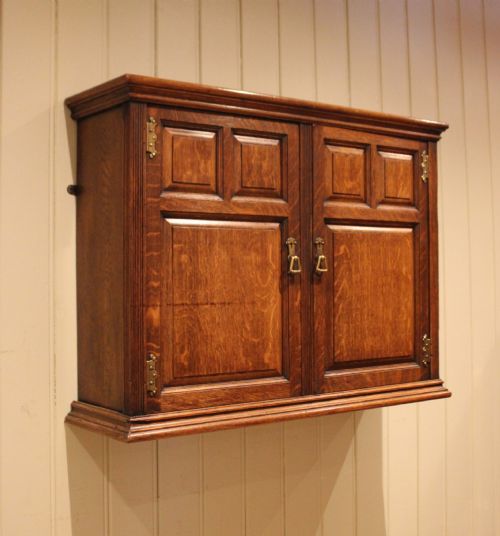
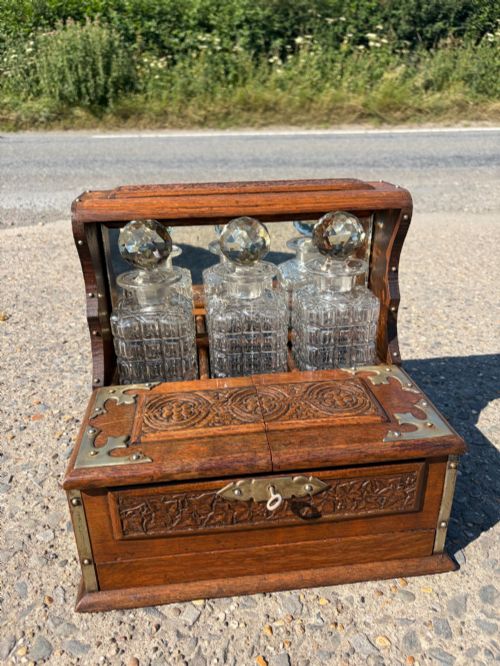
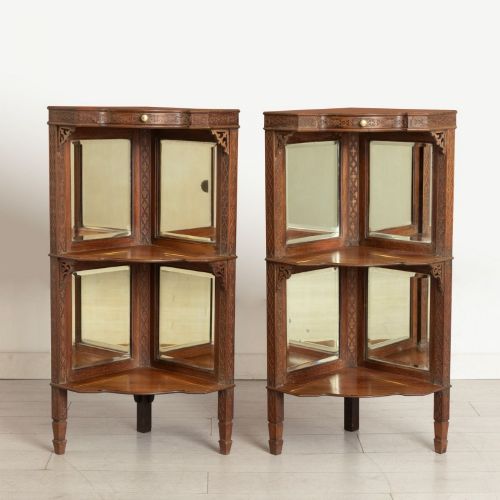
Makers and workshops of the era also produced specialised forms such as music cabinets, tantalus frames, and wall-mounted cupboards utilising various native and exotic woods.
How they were made
Cabinet makers of this period employed robust timbers including oak, mahogany, and walnut, frequently combined with brass hardware, glass panels, and mirror glass to create depth and reflection within domestic interiors.
Construction techniques balanced machine assistance with traditional hand-carving, yielding deep relief work on drawer fronts, cupboard doors, and pediments alongside fitted interiors for books, sheet music, or display.
Listings feature woods spanning oak, mahogany, walnut, amboyna, and bamboo, alongside decorative additions of brass, mirror glass, and stained glass.
What varies in quality
The distinction between standard commercial output and superior craftsmanship rests upon the depth and crispness of the hand-carving, the selection of figured timber veneers such as burr walnut or amboyna, and the integration of secondary hardwoods.
Execution of revival styles, from Gothic Revival mass to Chinese Chippendale delicacy or Aesthetic Movement linearity, dictates the refinement of proportion and the integrity of internal fittings.
Edwards & Roberts·Henry Ogden & Son·Gabriel Viardot·Heals
The Late Victorian Carved Cabinet Glossary
- Green Man
- A sculptural motif depicting a human face entwined with or emerging from foliage, frequently encountered on late nineteenth-century oak furniture.
- Chinoiserie
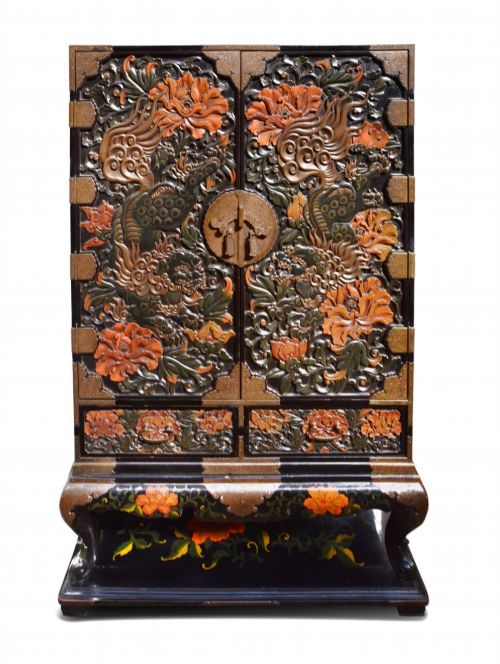
- A decorative style reflecting European interpretations of Chinese artistic traditions, often applied through lacquer work or intricate fretwork on display furniture.
- Tantalus
- A locked wooden drinks holder featuring visible decanters, designed to secure contents from unauthorized access while displaying the bottles.
- Bijouterie
- A glass-topped display table or cabinet specifically manufactured for the exhibition of small ornaments, jewellery, or curiosities.
- Aesthetic Movement
- A late nineteenth-century design ethos prioritising visual beauty and artistic expression over conventional moral or narrative utility.
Late Victorian Carved Cabinet: Frequently Asked Questions
Where were these cabinets placed in Victorian homes?
These pieces served practical and decorative functions across multiple rooms, appearing in libraries as bookcases, in bedrooms as bedside storage, and in reception spaces as display units.
Larger variations such as breakfront bookcases and mirror-back sideboards anchored formal dining rooms and parlours, while smaller wall cabinets utilised vertical space in tighter quarters.
How do I identify the wood used?
Oak and mahogany dominate the surviving examples, distinguished by their characteristic grain patterns, colour tones, and weight.
More decorative interiors or highlights frequently incorporate walnut, burr walnut, amboyna, or exotic hardwoods to contrast against the primary structural timber.
What defines the Gothic Revival style here?
Gothic Revival pieces draw inspiration from medieval ecclesiastical architecture, featuring pointed arches, heavy mouldings, and robust proportions.
These designs often utilise solid oak and deep relief carvings to project an air of historical weight and architectural permanence.
How do I care for nineteenth-century cabinet timber?
Maintain stable indoor humidity levels away from direct heat sources and strong sunlight to prevent timber splitting and veneer lifting.
Apply traditional wax polishes sparingly and buff gently with a soft cloth to preserve the natural lustre of the aged wood surface.