

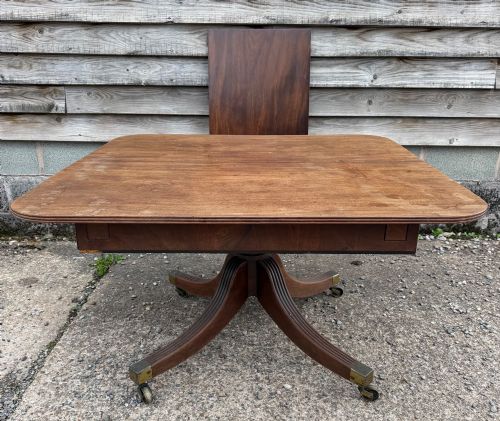
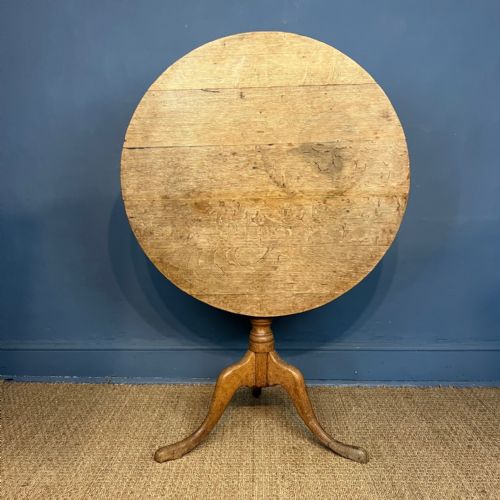
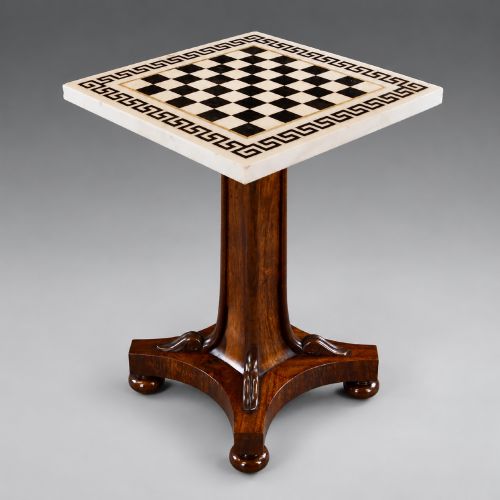
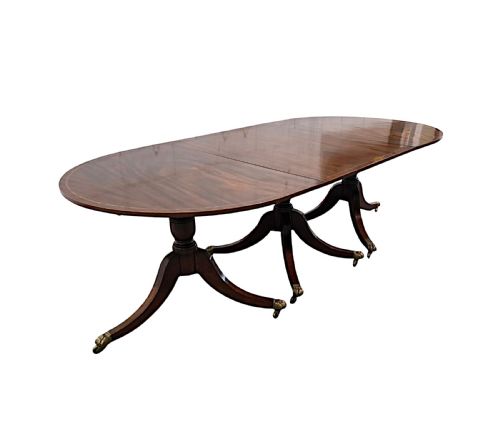


Late Regency Table
A late regency table brings structural clarity and rich timber figure into a room, serving dining, writing and display with understated elegance.
Late Regency Table
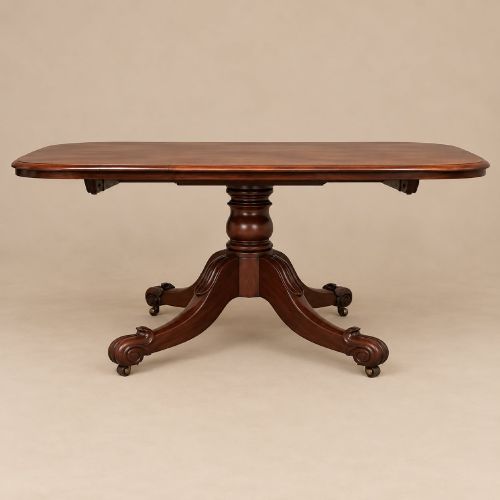
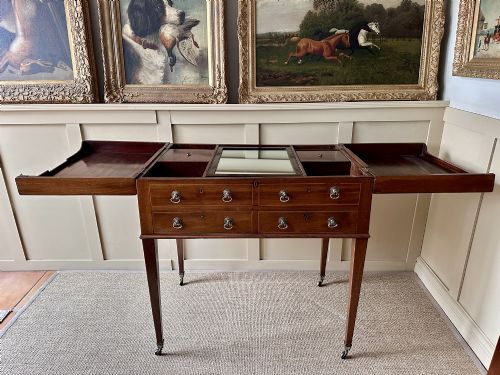
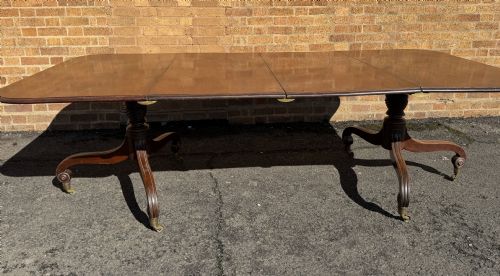
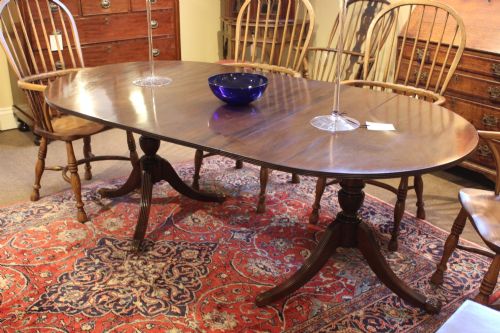
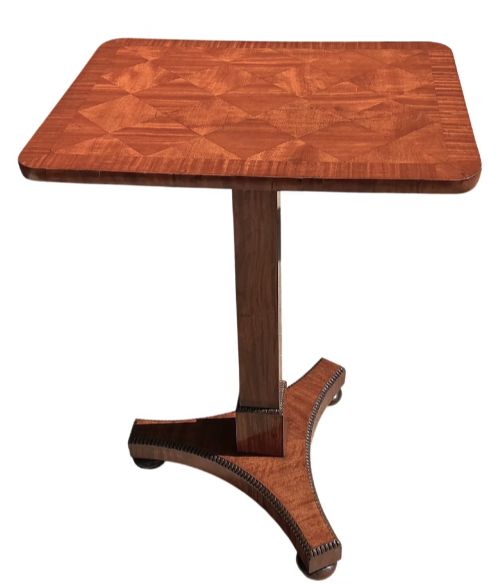
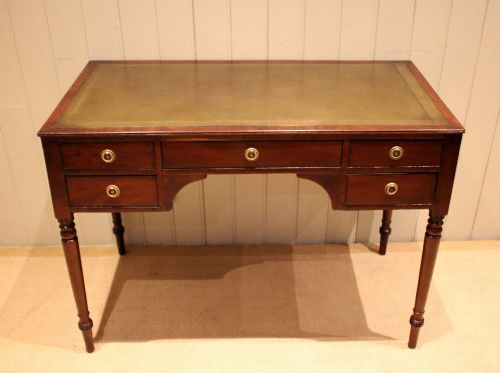
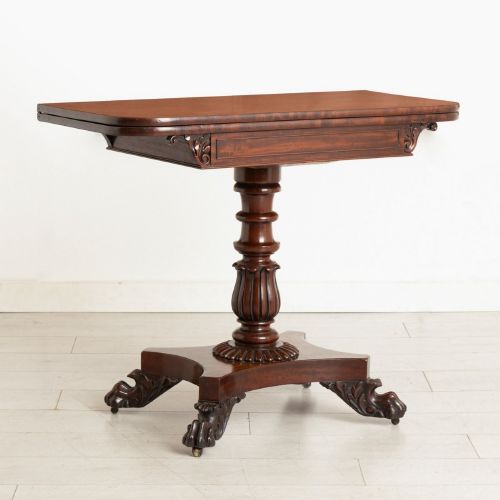
A late regency table bridges the transition from the strict classical symmetry of the late eighteenth century into the heavier proportions of the early Victorian era. Buyers searching for a late regency table encounter dining tables with multiple pillars, fold-over card and tea tables, and pedestal-supported library or centre tables.
Mahogany and rosewood dominate the surviving examples, shaped into forms ranging from compact occasional stands to twelve-foot extending dining boards. These pieces emerge in dining rooms, libraries and drawing rooms as practical furniture designed for domestic utility and formal hospitality alike.
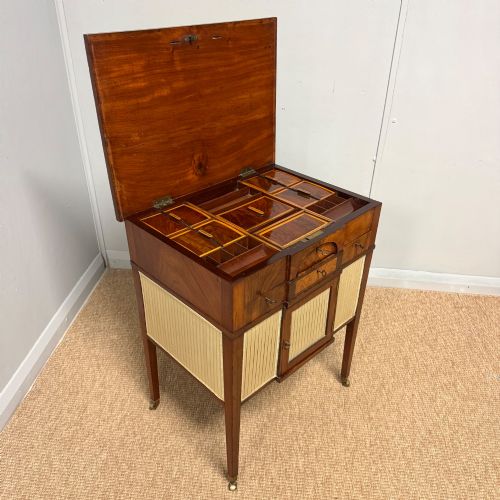
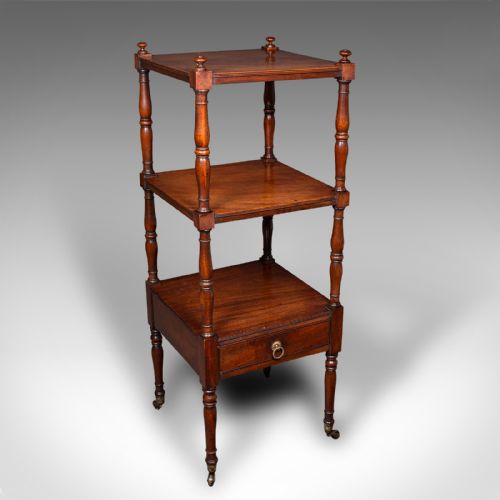
The material palette recorded in the evidence spans solid timbers and figured veneers, often supported on pillar and claw bases with brass castors. Makers incorporated clever mechanisms for extension, drop leaves and pivoting tops to suit changing social demands within the home.
Materials and Construction
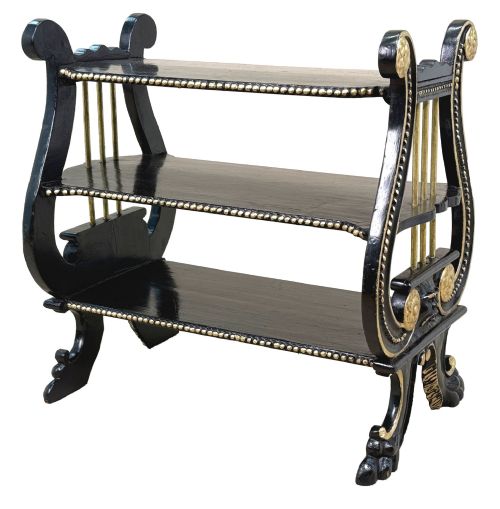
Cabinet makers built these tables using dense timbers such as mahogany and rosewood, frequently laid as veneers over stable secondary woods to display rich grain patterns. Workshops also utilised brass inlay, parcel gilding and penwork decoration to add contrast and surface detail.
Structural strength relied on turned pedestals, tripod legs with carved paw feet, and robust pillar supports fitted with brass castors for mobility. Joinery techniques accommodated folding leaves, sliding mechanisms and tilt-top pivots without compromising the clean lines of the silhouette.
Late Regency Table Retail Price Guide 2026
Typical asking prices for late regency table among the pieces listed under this phrase on Sellingantiques today, from the lower quarter to the upper quarter. They describe what is for sale here now, not the wider market.
Listings feature rosewood, mahogany, brass inlay and leather surfaces across writing, dining and occasional tables.
Standards of Execution
Quality rests in the selection of the timber figure, where book-matched veneers and dense, heavy mahogany elevate a piece far above plain equivalents. The crispness of carved details, such as acanthus leaves or paw feet, distinguishes workshop output.
Construction integrity defines the upper tier, seen in smooth pivoting mechanisms, tightly fitted joints and original brass hardware rather than later replacements. The balance of proportions and the subtlety of brass or marquetry inlay separate standard domestic pieces from exceptional commissions.
Gillows·Pierre Philippe Thomire·Miles & Edwards
The Late Regency Table Glossary
- Pembroke table
- A small occasional table with two hinged drop leaves supported by folding brackets. It typically includes one or two small drawers beneath the top.
- Card table
- A folding table with a hinged top that opens to reveal a baize-lined surface for playing games. These pieces often feature swivel actions that expose a shallow compartment for cards and counters.
- Library table
- A large freestanding desk or table designed for reading and writing, finished on all sides so it could sit in the centre of a room.
- Tilt-top table
- A table with a hinged mechanism allowing the top to rotate to a vertical position when not in use. This clever design saved valuable floor space in smaller period rooms.
- Parcel gilded
- Partially covered with gold leaf or gilt paint to highlight specific carved details, mouldings or decorative motifs. This technique created contrast against dark woods like ebonised timber or rosewood.
Late Regency Table: Frequently Asked Questions
How do I spot a tilt-top table?
Look underneath the central pillar to find a catch or release mechanism that allows the wooden top to pivot ninety degrees vertical. This mechanism saved floor space in cramped drawing rooms when the furniture was pushed against a wall.
Original brass latches and sturdy block catches indicate high workshop standards from the period.
What is a pembroke table used for?
A pembroke table served as a versatile breakfast table, writing desk or occasional stand that could expand via its drop leaves. The folding flaps made it easy to tuck away into corners when floor space was required.
Drawers built into the frieze typically held stationery, sewing materials or small household items.
How do card tables open?
The hinged top swivels on a pivot to reveal a hidden compartment beneath, then folds out flat to rest upon a swing leg or gateleg frame. This clever pivot action kept playing cards and counters close to hand.
Most surfaces are lined with baize or leather to provide a stable area for evening entertainment.
Where should I place a library table?
A library table is finished on all four sides, meaning it sits comfortably in the middle of a room rather than pushed against a wall. This positioning allowed scholars and readers to access drawers from multiple angles.
Ensure adequate clearance around the pedestal base so chairs can pull out easily.