
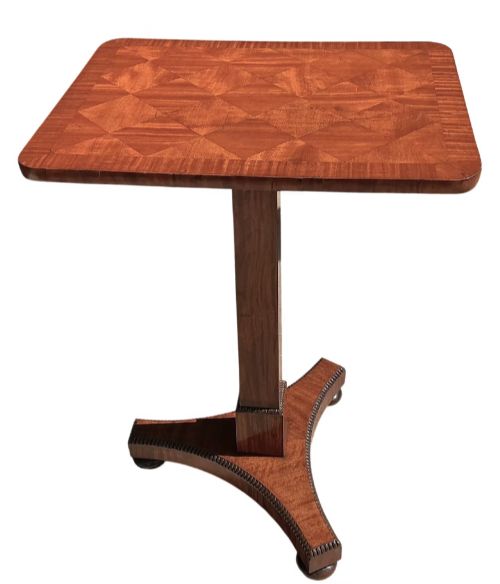
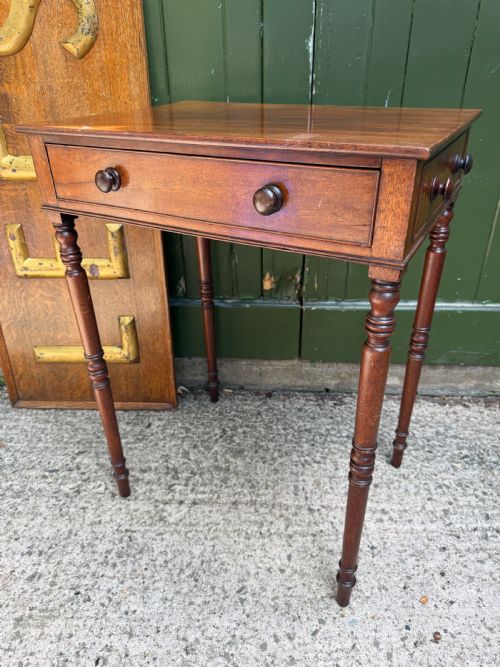
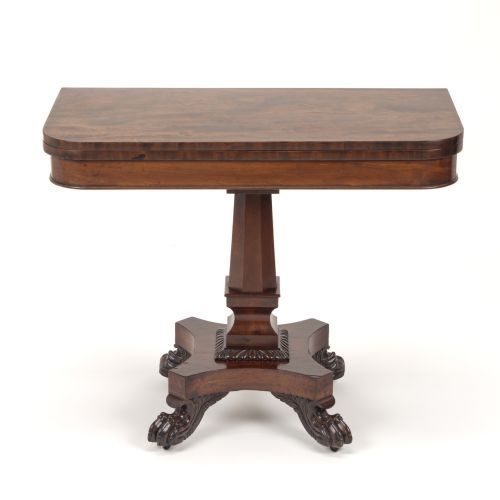


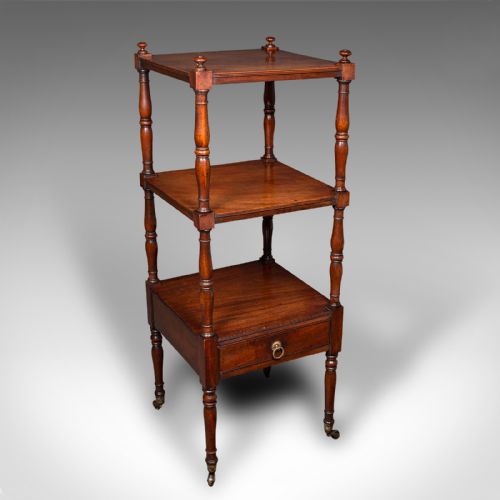

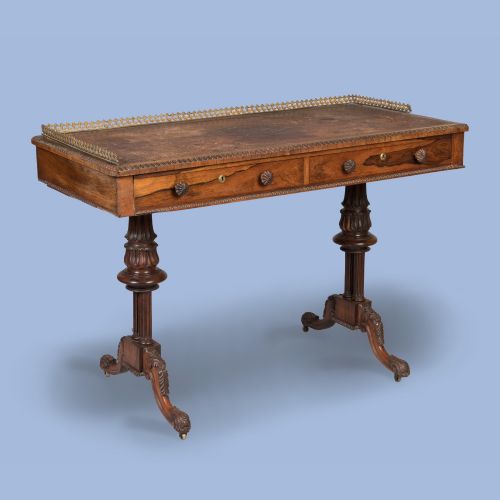

Late Regency Side Table
A late regency side table offers a refined surface for lamps and books, combining early nineteenth-century utility with sophisticated proportions.
Late Regency Side Table
When you search for a late regency side table, you encounter a selection of compact furniture forms designed for domestic use during the early decades of the nineteenth century. These pieces appear under various designations such as occasional tables, console tables, and tea tables, reflecting the versatile layout of rooms from the period.
The most common examples on this page are constructed in mahogany and rosewood, aligning with the prevailing tastes of Georgian and Regency makers. Side tables from this era frequently feature rectangular tops supported by pillars, pedestals, or carved feet, serving functional roles in both formal drawing rooms and private chambers.
How They Were Made
Cabinet makers of this era utilised solid timbers alongside timber veneers, applying mahogany and rosewood to carcase woods to achieve rich surface figures. Construction often involved precise joinery for drawers and folding tops, while decorative details such as brass mounts, bone inlay, and ebonised wood accents enhanced the visual depth.
Surface finishing ranged from polished wood to hand-painted geometric designs and penwork, depending on the intended function of the table. Turned pillars and carved paw feet required careful hand-tooling by skilled artisans working within established Georgian and Regency traditions.
The furniture spans Georgian, Regency, and early nineteenth-century periods, including multi-tiered whatnots and writing tables.
What Varies in Quality
The distinction between standard examples and top-tier pieces rests upon the selection of timber figures and the crispness of carved details. Tables exhibiting finely-drawn proportions and superior inlay demonstrate the elevated skill of the workshop that produced them.
Integration of secondary woods, the stability of folding mechanisms, and the preservation of original painted or polished surfaces further separate individual pieces. Higher quality items maintain structural integrity alongside harmonious design proportions that reflect the aesthetic standards of the period.
Gillows
The Late Regency Side Table Glossary
- Console table
- A table designed to stand against a wall, frequently secured to it or supported by front legs. These pieces often served decorative purposes in formal reception rooms.
- Fold-over top
- A hinged table surface that opens to double its area, commonly found on tea and card tables. This mechanism allowed furniture to adapt to different social uses throughout the day.
- Penwork
- A decorative technique using fine ink lines to create geometric or pictorial designs on a light wood ground. This painstaking method mimics more costly inlay work.
- Timber veneer
- A thin layer of figured wood applied to a stable secondary carcase. This practice allowed makers to display rich grain patterns without using solid scarce woods.
- Whatnot
- An open shelving unit designed for displaying small objects and books. These tiered stands date from the late Georgian period and utilise upright supports.
Late Regency Side Table: Frequently Asked Questions
How were late regency side tables used originally?
These tables served multiple functions in domestic interiors, acting as surfaces for lamps, writing, or serving tea. Fold-over variants adapted easily from compact side stands to functional tables for evening gatherings.
Smaller occasional tables moved around rooms as needed, while console tables remained fixed against walls to display decorative items and support lighting.
What woods should I expect to find?
Mahogany and rosewood dominate the surviving examples, often selected for their deep colour and pronounced grain patterns. Timber veneer was frequently applied to enhance the visual appeal of the top surfaces.
Other materials include oak, pine, and ebonised wood, sometimes decorated with paint, bone inlay, or brass elements to add contrast and detail.
How do I distinguish late regency from earlier Georgian pieces?
Late regency pieces tend to display bolder forms, heavier pedestals, and specific decorative motifs like carved paw feet or brass accents. The transition from George III styles incorporates classical revival themes with a distinct architectural influence.
Examining the construction methods and secondary timbers helps clarify the date, as cabinet-making techniques evolved steadily across the early nineteenth century.
How do I care for a historic wood table?
Keep wooden tables away from direct heat sources and strong sunlight to prevent timber shrinkage and fading. Regular dusting with a soft, dry cloth preserves the polished surface without damaging the finish.
Avoid using silicone-based polishes, as these can penetrate old finishes and attract dust. Professional wax maintenance helps nourish antique wood surfaces over time.