



Late 19th Century Servers
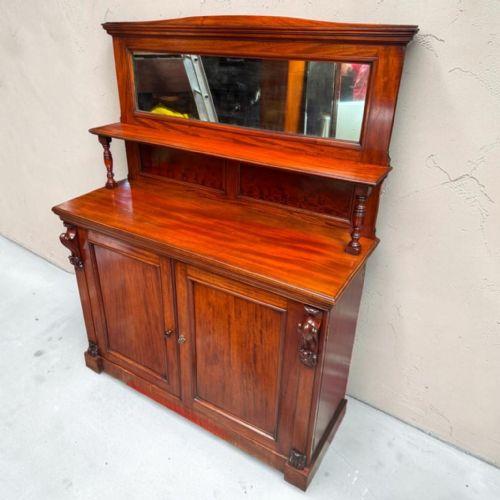
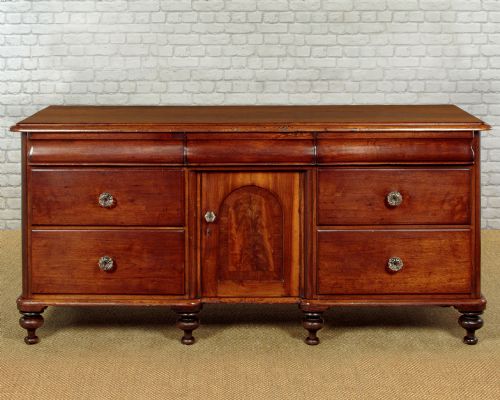
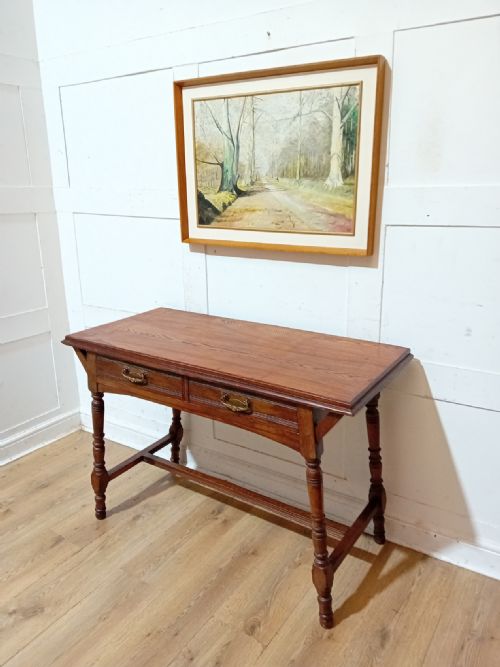
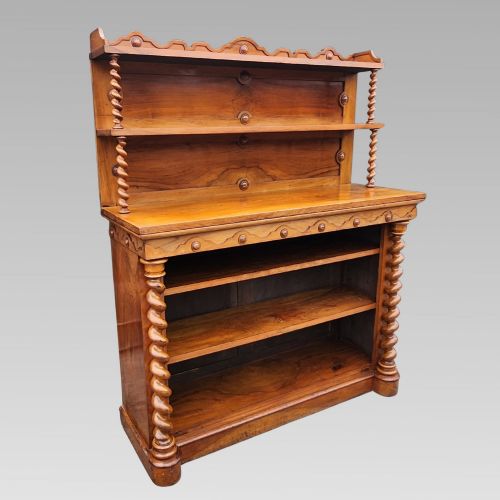
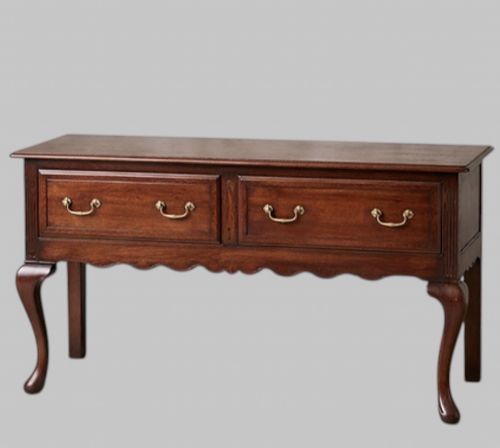
Late 19th century servers bring robust utility and distinct period character to a room, offering practical surface space or serving implements shaped by Victorian and revival hands.
Late 19th Century Servers
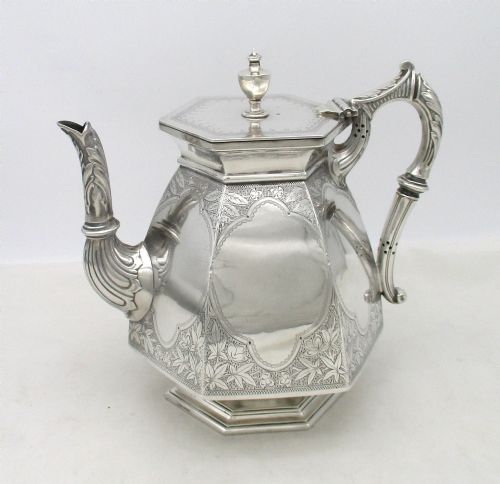
Beyond large furniture, the broader category encompasses functional serving items such as teapots, dishes, and fish servers made from silver plate and ivory. These pieces reflect both formal dining traditions and the sturdy practicalities of late nineteenth-century households.
Materials and construction
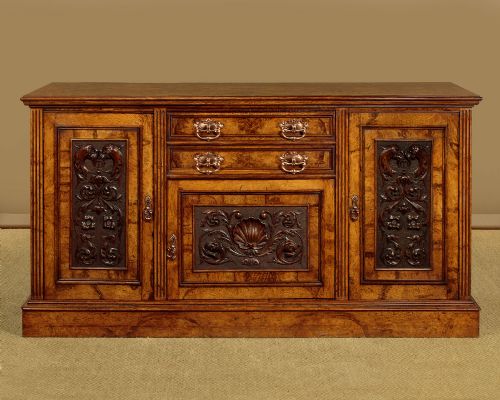
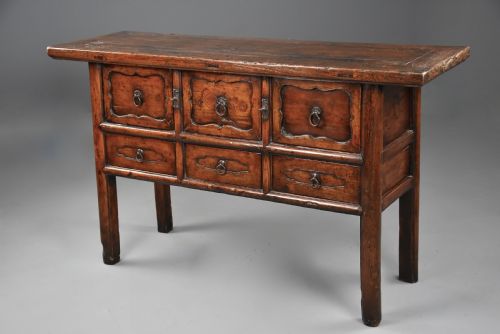
Cabinet makers utilised a variety of timbers including mahogany, oak, walnut, pine, ash, and elm, often shaping them according to Georgian Revival, Gothic Revival, or Chinese Provincial tastes. Surfaces display inlaid details, carved ornamentation, and fine patinas developed through decades of use.
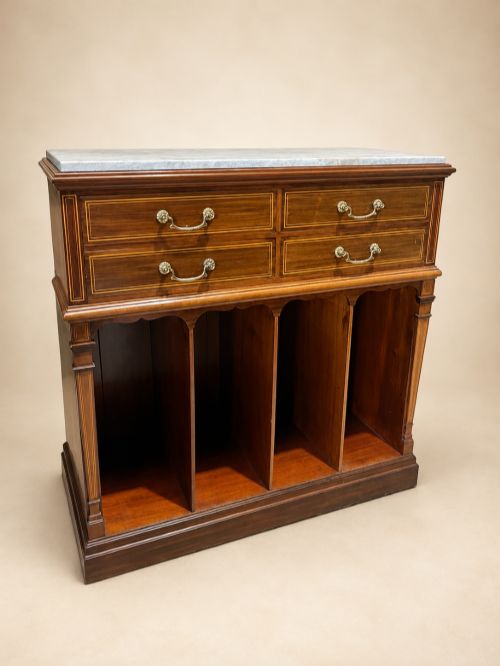
Metal and ceramic elements are equally prominent, ranging from cast brass fittings and silver-plated tea vessels to majolica and Sevres porcelain dishes. Cut glass and marble tops add contrasting textures to the wooden frames of tables and consoles.
Among the servers, a solitary set of fish servers rests quietly in its original fitted case, waiting for another nineteenth-century feast.
Assessing quality and execution
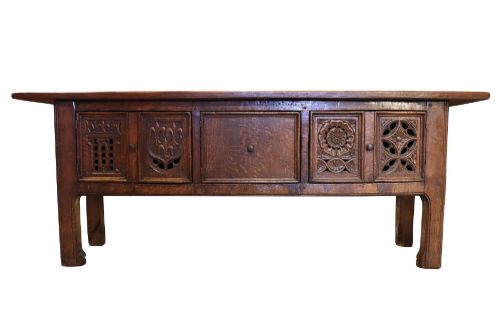
The distinction between average and exceptional pieces lies in the crispness of the carving, the selection of timber veneers, and the integrity of structural joints. Superior examples exhibit harmonious proportions, such as narrow proportions on Gothic Revival dresser bases, and careful attention to secondary timbers.
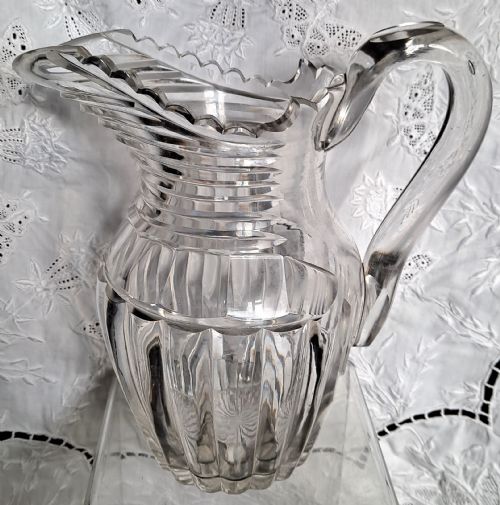
In smaller serving items and tableware, quality is determined by the weight and finish of the silver plating, the preservation of original fitted cases, and the clarity of porcelain glazes or cut glass facets.
Thomas Forester & Sons·Liberty
The Late 19th Century Servers Glossary
- Dresser base
- A low wooden sideboard or table fitted with drawers and occasionally a pot shelf underneath. It served as a primary storage and serving surface in Victorian kitchens and dining rooms.
- Aesthetic Movement
- A late nineteenth-century design style that prioritised visual beauty over narrative meaning, often drawing inspiration from Japanese motifs and simple geometric forms.
- Sideboard
- A large dining room piece designed for holding serving dishes, glassware, and cutlery. Examples from this era frequently incorporate mirror backs or carved buffet superstructures.
- Console table
- A wall-mounted or freestanding table designed to sit flat against a wall, frequently topped with marble or featuring decorative legs in revival styles.
- Silver plate
- A base metal coated with a thin layer of silver, widely utilised for teapots and serving cutlery during the nineteenth century.
Late 19th Century Servers: Frequently Asked Questions
What is a dresser base?
A dresser base is a heavy wooden sideboard or table equipped with drawers and sometimes an open lower shelf. These pieces provided essential storage and workspace in nineteenth-century domestic settings.
Today they function effectively as sideboards in dining rooms or console tables in hallways, combining practical storage with period presence.
How do I identify Aesthetic Movement furniture?
Aesthetic Movement pieces display clean geometric lines and often feature influences from Japanese design rather than heavy historical revivals. They typically utilise oak, walnut, or ash without excessive ornamentation.
Look for honest construction methods and understated forms that prefigure later modernist movements.
Where should I place a console table?
Console tables fit neatly against walls in narrow hallways, living rooms, or dining spaces where floor space is limited. Their shallow depth allows them to serve as display surfaces without obstructing walkways.
Pairing a console table with a mirror or placing one beneath a painting creates a balanced focal point in a room.
What woods were commonly used?
Cabinet makers relied on durable hardwoods and softwoods such as mahogany, oak, walnut, pine, and elm. The choice of wood often depended on the regional workshop and the intended function of the furniture.
Dark timbers suit formal Victorian and revival dining rooms, while lighter pine and elm pieces reflect country domestic traditions.
How do I care for marble-topped tables?
Marble surfaces require gentle cleaning with warm water and a soft cloth to avoid damaging the stone. Acidic substances like lemon juice or wine should be wiped away immediately to prevent staining.
Using coasters and placemats helps preserve the polished finish over years of daily use.