





Late 19th Century Maritime Art
Late 19th century maritime art captures the unpredictable pull of the sea through period watercolours, oils, and carved works.
Late 19th Century Maritime Art
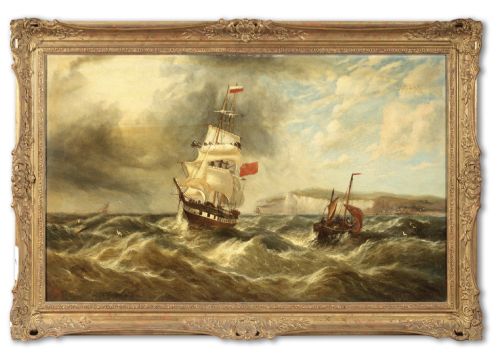
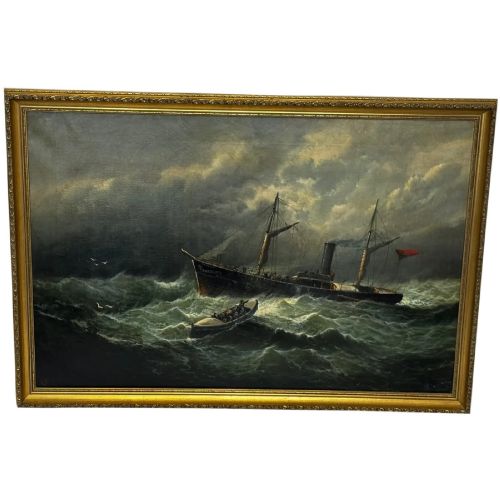
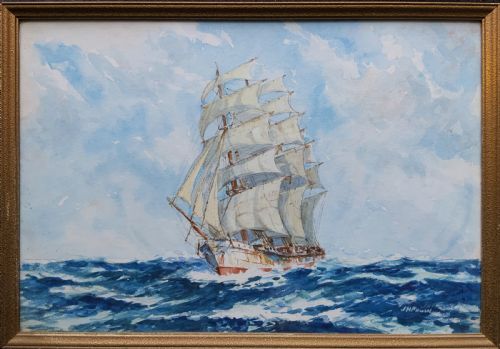
Late 19th century maritime art encompasses framed watercolours, oil paintings on canvas or card, and carved wooden objects focused on coastal scenes, harbours, and stormy seas. You are most likely to encounter Victorian watercolours and oil paintings depicting British fishing boats, Cornish harbours, and merchant ships in rough waters.
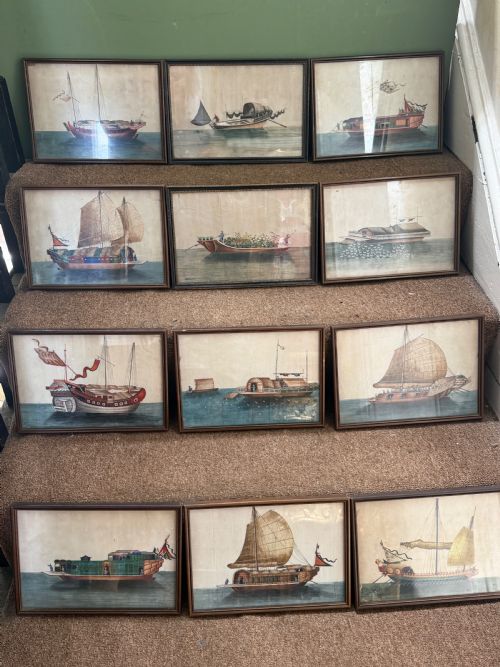
The selection extends from named British artists and foreign schools to decorative sets of Chinese Export gouache paintings and carved Pitcairn Island objects. These works document nineteenth-century seafaring life, coastal trade, and European marine topographies with directness.
How they were made
Artists worked primarily with watercolour pigment on paper and oil paint on canvas or card, frequently capturing movement with fluid brushwork or layered impasto. Gilt frames were commonly utilised to house these paintings, protecting the delicate paper surfaces behind glass or framing heavy canvas works.
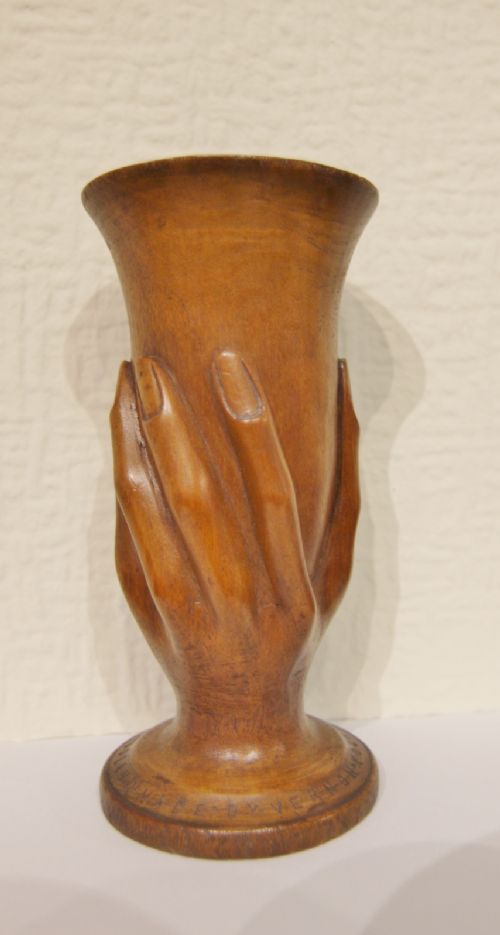
Carved wooden artefacts from this period, such as decorative chalices and sculpted flying fish, were shaped by hand from native timbers using traditional maritime carving techniques.
Materials across these listings include paper, wood, watercolour, glass, oil on canvas, oil paint, watercolour pigment, and gilt.
What varies in quality
Quality rests upon the artist's ability to render atmosphere, light, and maritime motion convincingly within the chosen medium. A strong piece demonstrates assured handling of choppy seas and coastal weather, whereas lesser examples rely on stiff compositions and generic forms.
The condition of the paper, pigment, and canvas significantly influences the overall merit of a painting, alongside the originality of the period frame.
James Orrock·William Banks Fortescue·John Rose Miles·William Broome·Kate E Booth·Clara Montalba·Consalvo Carelli
The Late 19th Century Maritime Art Glossary
- Watercolour
- A paint consisting of colour suspended in a water-soluble vehicle, frequently applied to paper to achieve translucent coastal effects. It allows artists to capture sudden shifts in light and weather along the shore.
- Oil on Canvas
- Pigment mixed with drying oil applied to a stretched woven fabric support. This medium permits rich texture and deep tonal variation for dramatic sea scenes.
- Gouache
- An opaque watercolour paint containing pigment and a binding agent, often used in Chinese Export ship paintings for flat, vivid areas of colour.
- School of Posillipo
- A nineteenth-century group of artists based near Naples who focused on luminous coastal landscapes and marine views. Their work heavily influences regional Italian maritime paintings.
- Chinese Export
- Goods produced in China specifically for Western markets during the nineteenth century. These often included detailed studies of junks and trading vessels.
Late 19th Century Maritime Art: Frequently Asked Questions
What subjects appear in late 19th century maritime art?
The works depict fishing boats, merchant ships, bustling harbours, and stormy coastal waters across Britain, Europe, and Asia.
Scenes frequently record local maritime trades, such as spreading nets in Yorkshire or navigating the choppy seas off Cornwall and Scotland.
How should I care for a nineteenth-century watercolour?
Keep watercolours away from direct sunlight to prevent the pigments and paper from fading over time.
Display them behind UV-filtering glass and maintain stable indoor humidity to protect both the paper and the original frame.
What is the difference between oil and watercolour marine paintings?
Oils offer rich textures and heavy impasto suited to depicting turbulent waves and dramatic skies on canvas or card.
Watercolours provide a lighter, more translucent quality that captures delicate coastal light and atmospheric haze on paper.