


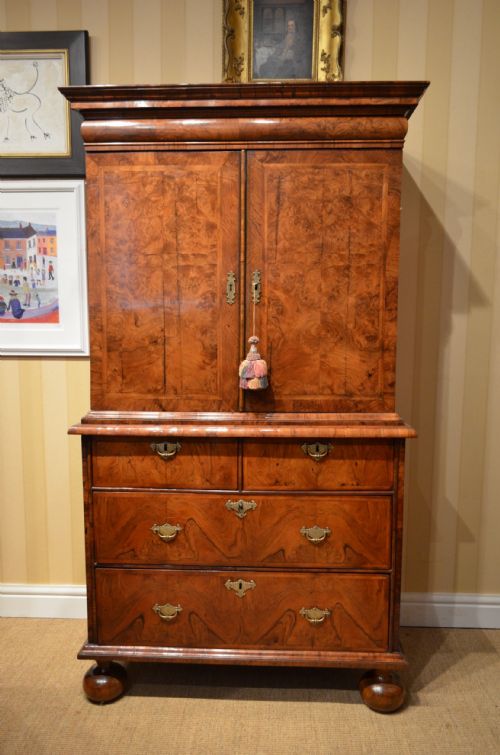

Late 17th Century Tallboy
A late 17th century tallboy is a monumental case piece of early English furniture, offering grand storage through stacked drawers and stands.
Late 17th Century Tallboy
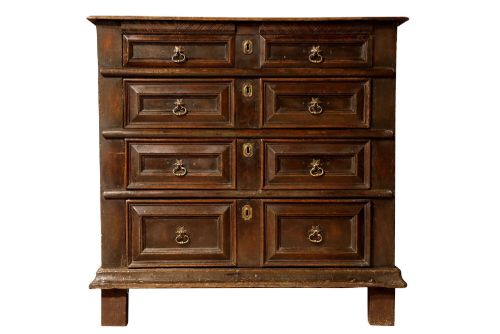
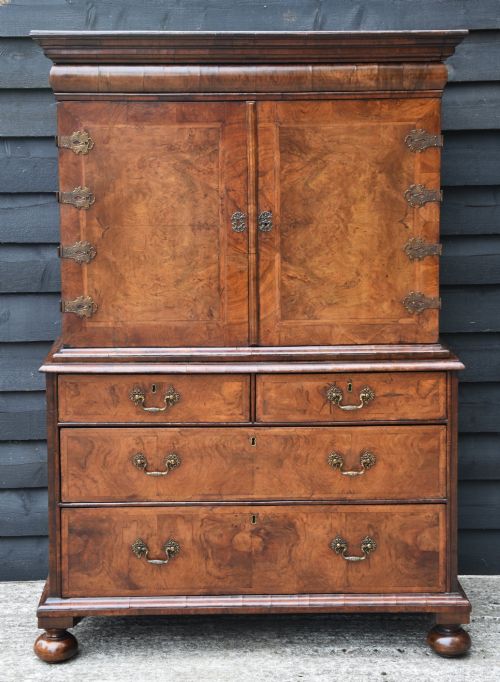
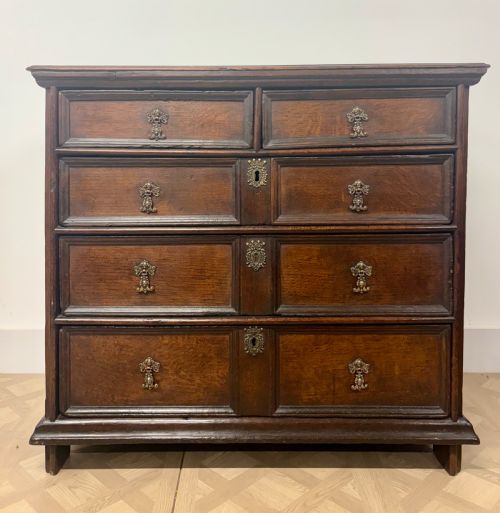
When you search for a late 17th century tallboy, you encounter substantial case furniture designed for elevated storage and display. The examples on this page span the 17th century and 18th century, incorporating forms such as the chest of drawers, chest on stand, and cabinet on chest. These substantial items represent the height of seventeenth-century case construction.
The version you are most likely to meet on this page is walnut or oak, frequently styled in the William and Mary or Jacobean tradition. Many pieces utilise vertical stacking, placing a chest over a stand or lower cabinet to create imposing height. They survive from domestic settings where secure, compartmentalised storage was paramount.
Makers of this era constructed these works using solid timber carcases with applied decorative faces. The lineage includes distinct variants like the chest on stand and the standard chest of drawers. Each configuration reflects the domestic architecture and storage needs of the late seventeenth century.
How they were made
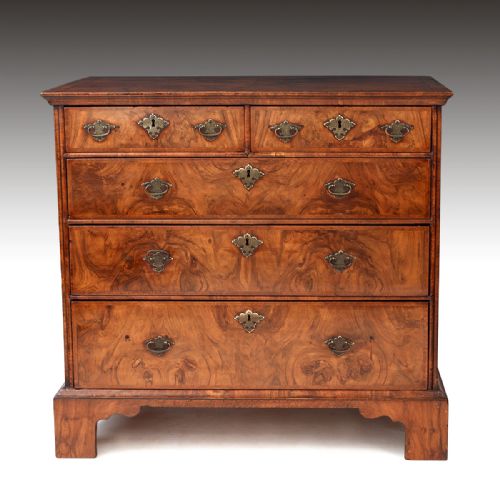
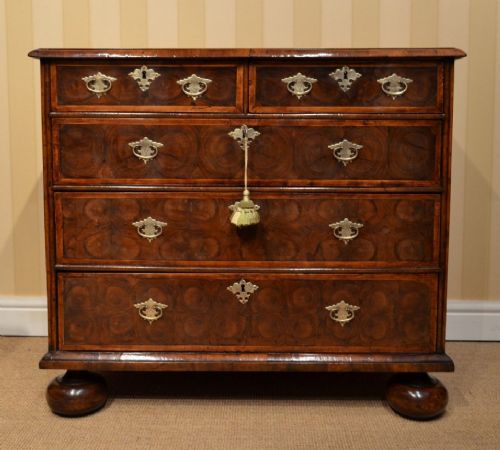
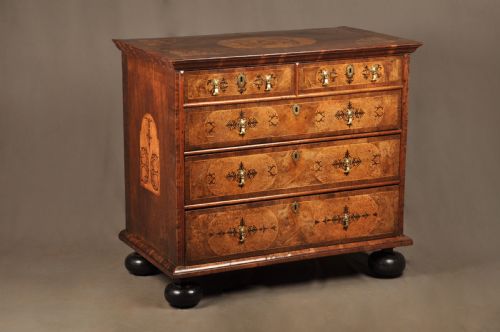
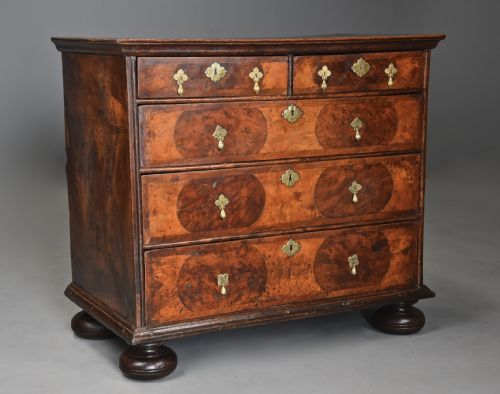
Cabinet makers of the period utilised heavy timber frames of oak and walnut, overlaid with finer decorative veneers. Oyster veneering required slicing branch wood into circular discs to create intricate repeating patterns across the drawer fronts. Marquetry inlay added floral and arabesque ornamentation using contrasting woods.
Brass drop handles and escutcheons punctuate the facades, secured with hand-beaten pins. Drawers run on side guides within solid timber carcases, built to withstand centuries of use. Ebonised wood and maple provide stark contrasts to the warm tones of walnut and yew.
Branch wood was sliced like carrots to make oyster veneer, ensuring no two tabletops shared the same growth rings.
What varies in quality
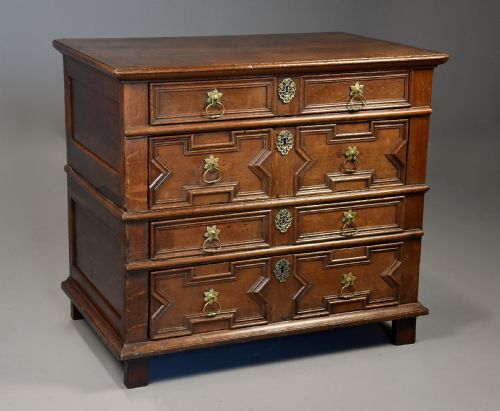
The distinction between ordinary and exceptional examples rests upon the ambition of the surface decoration and the selection of timber. Pieces featuring intricate floral marquetry or balanced oyster veneer require vastly superior skill from the joiner than plain moulded oak fronts. The richness of the grain and the depth of the surviving patina dictate the visual success of the piece.
Structural integrity and the retention of original brass hardware elevate certain examples above others. The harmony between the upper chest and its supporting stand or base defines the proportions of the more complex cabinet pieces. Masterful execution of the marquetry and veneer patterns separates standard workshops from the finest hands of the period.
The Late 17th Century Tallboy Glossary
- Oyster veneer
- Slices of branch wood cut transversely to show circular growth rings resembling oyster shells. This technique created rich, patterned surfaces across drawer fronts.
- Marquetry inlay
- Decorative patterns formed by fitting contrasting veneers into shaped recesses in the carcase. Floral and arabesque motifs are typical of this detailed work.
- Chest on stand
- A case of drawers elevated on an open frame with legs and stretchers. This form reduces the visual weight of tall storage pieces.
- Cabinet on chest
- A large enclosed cabinet sitting atop a lower chest base. These pieces provided secure storage for documents and valuables.
- Ebonised wood
- Timber treated to imitate ebony through staining or chemical processes. It provided stark dark contrasts against lighter walnut or maple.
Late 17th Century Tallboy: Frequently Asked Questions
What is a tallboy?
A tallboy is a tall case piece of furniture formed by stacking drawers or placing a chest upon a stand. This configuration maximised vertical storage space in seventeenth-century rooms.
Such pieces combine practical capacity with architectural presence, often featuring decorative veneers or marquetry across their facades.
How do I identify William and Mary style?
William and Mary pieces display Dutch influences, characterised by trumpet turned legs, flat stretchers, and elaborate veneering. The forms become lighter than heavy Jacobean furniture while retaining grand scale.
Look for oyster veneers, arabesque marquetry, and geometric mouldings that define the aesthetic of this period.
How do I care for antique walnut?
Antique walnut requires stable humidity levels and protection from direct sunlight to prevent veneer lifting and timber drying. Regular dusting with a dry, soft cloth preserves the historic surface.
Avoid modern silicon polishes and maintain the finish with traditional wax sparingly applied when the wood appears dry.
Are these pieces made of solid wood?
They feature solid timber carcases, usually oak, faced with decorative veneers such as walnut, yew, or maple. This construction method prevented warping while displaying expensive decorative grains.
Internal drawer linings and structural framing remain solid wood to ensure long-term durability.