




Large Wooden Pedestal Desk
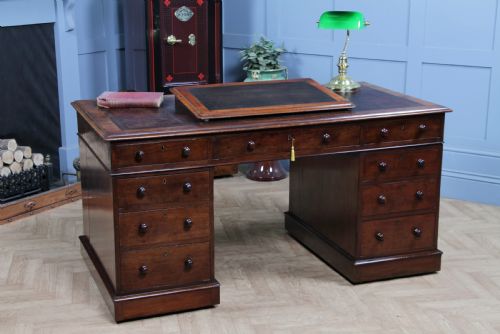
A large wooden pedestal desk offers generous working space and deep storage, built to anchor a serious study with traditional craftsmanship.
Large Wooden Pedestal Desk
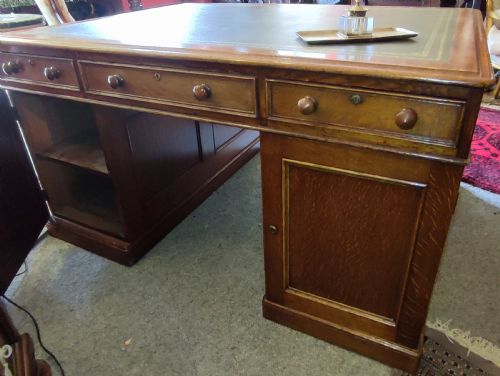
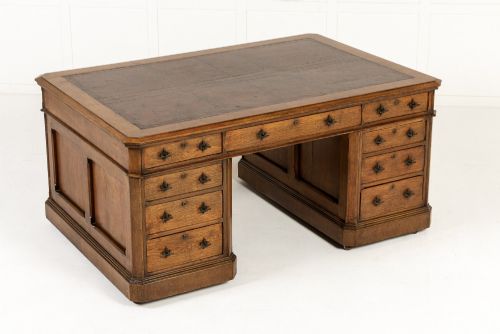
A large wooden pedestal desk provides a commanding workspace, typically featuring banks of drawers supporting a wide writing surface. Buyers searching for a large wooden pedestal desk often encounter substantial double-sided partners desks designed for two people to work opposite one another.
The pieces appearing here span from the George III and Victorian eras through to the Edwardian period and mid-twentieth century. Many examples incorporate oak, mahogany, walnut, or flame mahogany, with some featuring leather writing surfaces and brass hardware.
Materials and construction
Cabinet makers utilised dense hardwoods including mahogany, oak, and walnut to build the robust carcasses required for large desks. Flame mahogany and burr walnut veneers were frequently selected for their striking grain patterns on drawer fronts and top surfaces.
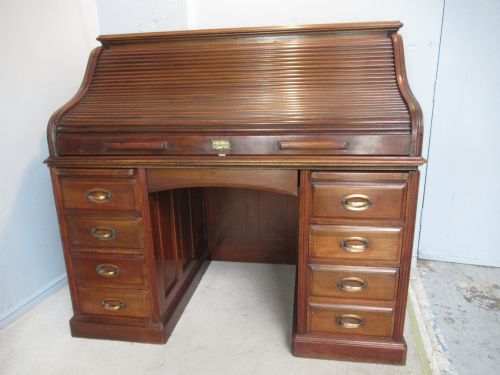
Functional details include inset leather writing surfaces, brass handles, and heavy drawer configurations, sometimes exceeding eighteen individual drawers in partners formats. Carved ornamentation appears on specific regional styles, while solid oak provides sturdy durability for roll-top and kneehole variants.
Listings feature mahogany, oak, walnut, and teak, spanning the Georgian, Victorian, Edwardian, and mid-twentieth-century periods.
Distinctions in quality
The grade of timber and the complexity of the internal drawer construction set finer desks apart from standard utility furniture. Superior examples display carefully matched grain veneers, solid secondary woods, and robust structural joinery designed to bear heavy daily use.
Hardware choice and secondary detailing also differentiate pieces, with high-quality brass fittings and integrated writing slopes marking out superior workshop output. The presence of fully finished back panels on double-sided partners desks indicates a higher tier of original commission.
Gillows of Lancaster
The Large Wooden Pedestal Desk Glossary
- Partners desk
- A large double-sided desk designed with drawers and cupboards on both sides so two people can work facing each other.
- Pedestal desk
- A heavy freestanding writing table supported by two vertical banks of drawers rather than four separate legs.
- Kneehole desk
- A compact or moderately sized desk featuring a central recessed space for the user's legs, flanked by pedestals.
- Flame mahogany
- Timber cut from the fork of the mahogany tree to produce a distinctive, highly figured flame-like grain pattern.
- Roll-top desk
- A desk fitted with a flexible slatted wooden cylinder that slides down to cover the writing surface and pigeonholes.
Large Wooden Pedestal Desk: Frequently Asked Questions
What is a partners desk?
A partners desk is built with matching drawers and cupboards on both sides, allowing two people to sit opposite each other and work simultaneously. These substantial pieces were traditionally used in offices and libraries.
They offer exceptional surface area and storage capacity, making them suitable for shared studies or central placement in large rooms.
How do I date a wooden desk?
Dating relies on examining the timber species, construction methods, hardware styles, and overall aesthetic. Victorian and Edwardian examples often feature heavy mahogany or oak with specific drawer configurations.
Earlier George III pieces display distinct cabinet-making techniques and proportions that separate them from later nineteenth and twentieth-century reproductions or variants.
Where should I place a large desk?
Large pedestal and partners desks function best when given sufficient space to allow movement around all sides, particularly double-sided variants. Placing them centrally in a study or library highlights their finished proportions.
Ensure doorways and stairwells are measured carefully before delivery, as these heavy timber constructions cannot be easily dismantled.
What maintenance do antique desks need?
Wooden surfaces benefit from occasional treatment with appropriate wax to nourish the grain and protect the finish from drying out. Inset leather tops require gentle cleaning without harsh chemicals.
Keeping the timber away from direct heat sources and strong sunlight preserves the colour and structural integrity of the wood.