



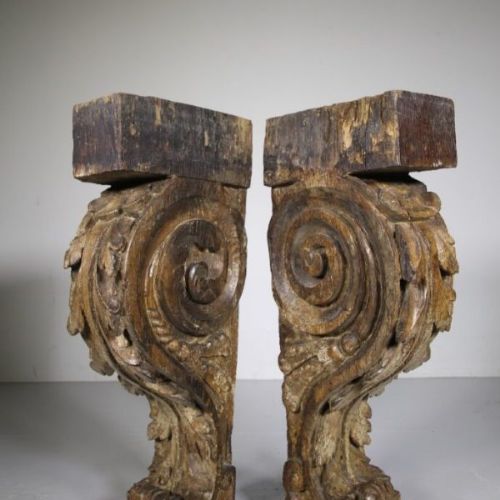
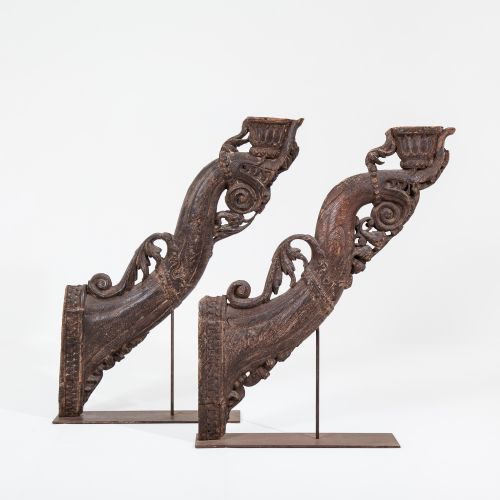


Large Wooden Brackets
Large wooden brackets are substantial architectural supports and structural ornaments designed to carry weight while adding bold proportion to a room.
Large Wooden Brackets
Large wooden brackets include architectural salvage, carved corbels, and supporting elements sourced from historic buildings and grand interiors. These substantial pieces serve functional roles as load-bearing architecture or decorative wall supports.
The selection here encompasses eighteenth-century and nineteenth-century examples alongside specific Georgian and Victorian period items. Buyers encounter architectural salvage pieces designed to mount directly to walls for structural or display purposes.
Makers and carvers utilised dense hardwoods to ensure these architectural elements could support heavy loads over long periods. The forms range from simple functional timber supports to elaborate carved scrollwork and figural corbels.
Materials and construction
Makers constructed large wooden brackets using durable timbers such as oak, mahogany, and walnut, chosen for their structural strength and stability. These woods allowed carvers to execute deep relief work and intricate mouldings without compromising the integrity of the support.
Traditional joinery and hand-carving techniques defined the creation of these architectural elements, often employing solid timber blocks rather than veneered surfaces. Craftsmen shaped the timber using hand chisels and gouges to achieve the flowing profiles seen in classical and baroque designs.
Large Wooden Brackets Retail Price Guide 2026
Typical asking prices for large wooden brackets among the pieces listed under this phrase on Sellingantiques today, from the lower quarter to the upper quarter. They describe what is for sale here now, not the wider market.
Some historic brackets retain stubborn traces of centuries-old whitewash trapped deep inside their carved acanthus leaves.
Assessing quality
Quality in large wooden brackets rests upon the crispness of the hand-carving and the depth of the relief work. Superior examples exhibit confident tool marks and balanced proportions, whereas lesser pieces display flat detailing and mechanical uniformity.
The choice of timber significantly influences the tier of the piece, with dense, well-figured oak, walnut, or mahogany commanding greater appreciation. Original surfaces and patination earned through age elevate an example far above one stripped or heavily restored.
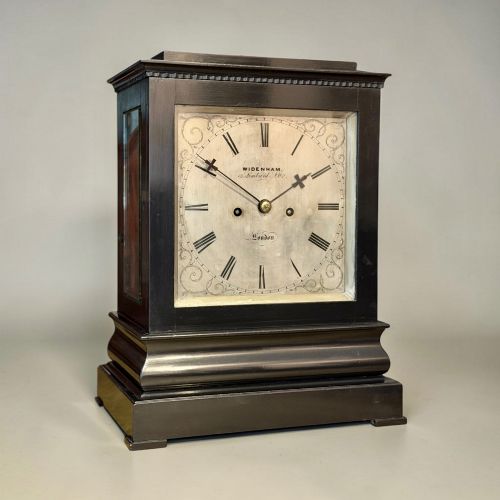
Widenham of London
The Large Wooden Brackets Glossary
- Corbel
- A structural piece of stone, wood, or metal projecting from a wall to carry a weight. In woodwork, these elements often feature decorative scroll or acanthus motifs.
- Architectural salvage
- Building materials and decorative elements rescued from demolition or historic structures for reuse. These pieces retain the authentic character of their original period.
- Relief carving
- A sculptural technique where the figures or design elements remain attached to a solid background of the same material. High relief projects boldly from the plane.
- Patina
- The surface sheen and coloration developed by timber through age, handling, and exposure to light. This deepens the visual appeal of historic wood.
Large Wooden Brackets: Frequently Asked Questions
How do I mount a heavy wooden bracket?
Mounting heavy wooden brackets securely requires locating wall studs or fixing directly into solid masonry using heavy-duty structural screws. The weight of the timber and any load it bears demand robust internal anchoring.
Consulting a professional installer ensures the wall substrate can safely handle the combined weight of the bracket and its intended display load.
How do I distinguish eighteenth-century brackets from nineteenth-century copies?
Eighteenth-century brackets typically display hand-cut joinery, native timber usage, and deeper, more expressive hand-carving specific to Georgian or Baroque design canons. Tool marks left by primitive saws and chisels offer clear clues to their age.
Nineteenth-century and revival pieces often incorporate standardised machine-sawn components and denser, darker applied finishes characteristic of Victorian production methods.
How should I clean historic wooden brackets?
Cleaning historic wooden brackets requires only a soft, dry cloth to remove surface dust without disturbing the fragile aged patina. Avoid using modern chemical polishes, water, or abrasive cleaners that strip historic wax.
Applying microcrystalline wax sparingly helps protect the dry timber surface and preserves the historical integrity of the finish.