

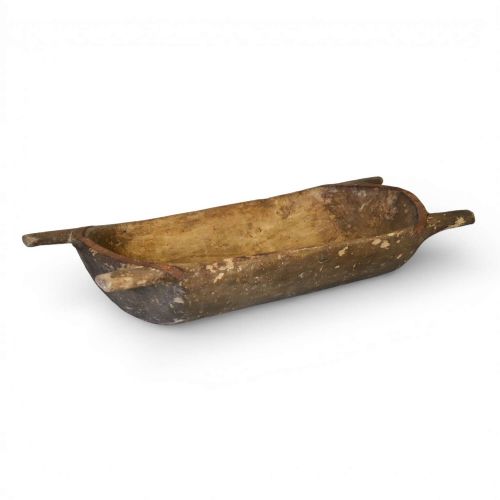


Large Wooden Bowl
A large wooden bowl brings tactile warmth to a room, offering both practical service and centuries of rustic character.
Large Wooden Bowl
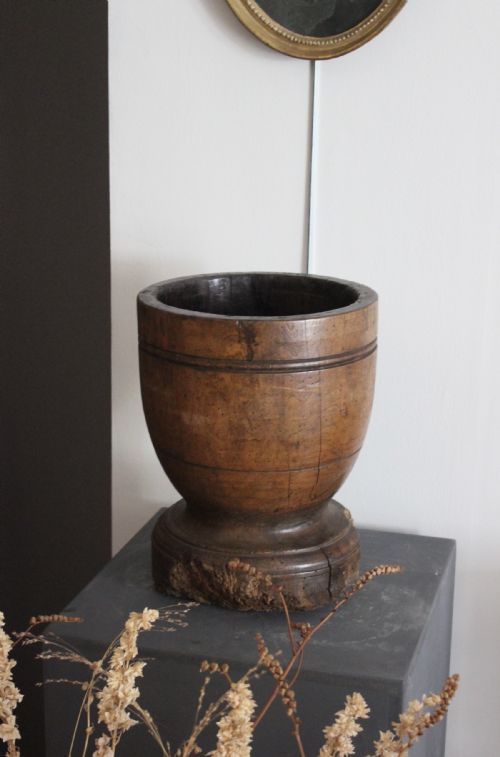
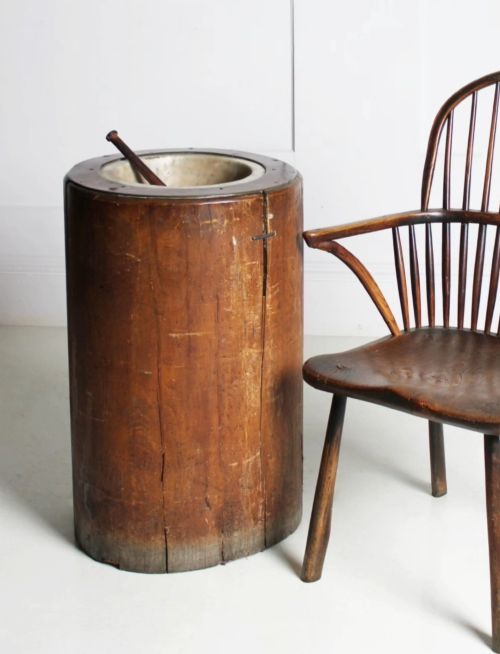
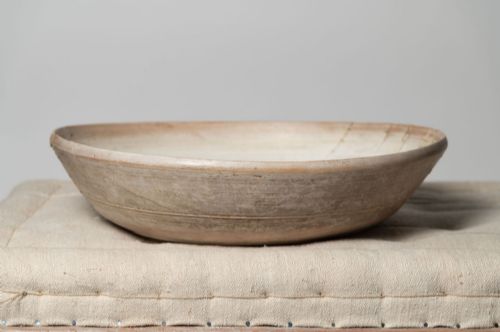
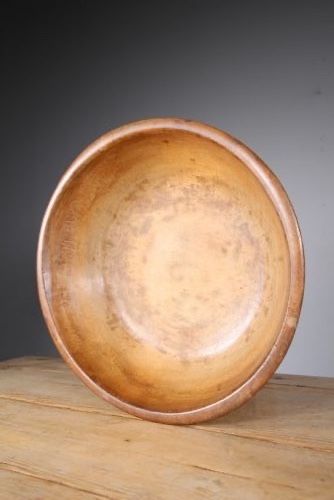
When someone searches for a large wooden bowl, they encounter domestic utility vessels shaped from solid timber for heavy daily work. These include dairy bowls, kneading troughs, dough bowls, treen platters, and mortars spanning the nineteenth and early twentieth centuries.
The versions most commonly met on this page are nineteenth-century dairy and dough bowls turned or carved from sycamore, ash, and elm. English, French, Scandinavian, and Welsh examples dominate, reflecting rural utility across different European farming traditions.
Beyond traditional treen, occasional silver-plated presentation vessels, stone items, and hardwood stands appear alongside carved fruit bowls. Each form carries the distinct toolmarks of its maker, whether intended for churning cream, mixing bread, or displaying provisions.
How they were made
Makers selected dense native timbers such as sycamore, ash, elm, and shisham, often working the wood green to shape large vessels before timber shrinkage locked the form. Lathe turning and hand-carving or digging out formed the primary construction methods for these heavy bowls.
Surfaces received hand polishing and natural oils rather than modern synthetic finishes, building up rich patinas over generations of use and washing. Metal components, where present, utilised silver plate or associated hardware mounts.
Some nineteenth-century dairy bowls still retain faint circular rings on their base where wooden skimming spoons rested for generations.
What varies in quality
The primary distinction rests in the harmony between proportion, wall thickness, and timber selection, where well-balanced turning meets deep, unforced historical patination. Superior examples retain honest signs of domestic service without compromising structural integrity or losing their original profile.
Depth of colour and tactile grain visibility separate ordinary utility vessels from those with exceptional visual presence. The quality of the hand-carved or turned rim dictates how cleanly the vessel sits and how comfortably it handles.
The Large Wooden Bowl Glossary
- Treen
- Small handmade wooden household objects. These items range from bowls and platters to spoons and cups fashioned for domestic tasks.
- Dairy bowl
- A wide, shallow vessel used in traditional milk processing. Cream rose to the top in these bowls before being skimmed off for butter making.
- Dough bowl
- A large trough used for mixing and proving bread dough. They are typically carved from a single log and feature thick walls.
- Patina
- The surface sheen and colour developed through age, handling, and use. This finish cannot be artificially replicated with modern chemicals.
- Dug out bowl
- A vessel hollowed directly from a solid block of timber rather than assembled from staves. This method ensures robust construction for heavy tasks.
Large Wooden Bowl: Frequently Asked Questions
What were large wooden bowls used for originally?
These vessels served demanding rural tasks such as kneading bread dough, setting milk for cream separation, and preparing communal meals.
Their robust timber construction allowed them to withstand constant scraping, washing, and heavy ingredients in farmhouses and dairies.
How do I care for an antique wooden bowl?
Keep these pieces away from direct heat sources, radiator panels, and strong sunlight to prevent the timber from splitting or warping.
Clean them gently with a damp cloth and occasionally feed the dry wood with natural food-safe oils to preserve the historic finish.
Can I use an old wooden bowl for food?
Many of these vessels held dairy or bread, making them suitable for dry foodstuffs like fruit or bread service today.
Inspect the interior surface to ensure it remains clean and free from old chemical treatments before serving food directly.
How can I tell the age of a wooden bowl?
Look for tool marks, timber shrinkage patterns, and the depth of the surface patina accumulated through decades of use.
Turned rings, adze marks, and specific wood species characteristic of regional workshops help narrow down the period of manufacture.