



Large Wooden Bookshelves
Large wooden bookshelves are substantial repositories for libraries and studies, bringing practical depth and period character to domestic interiors.
Large Wooden Bookshelves
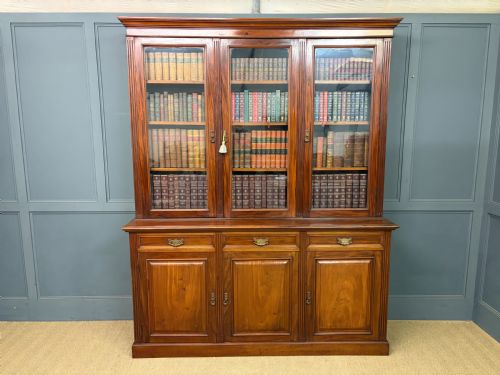
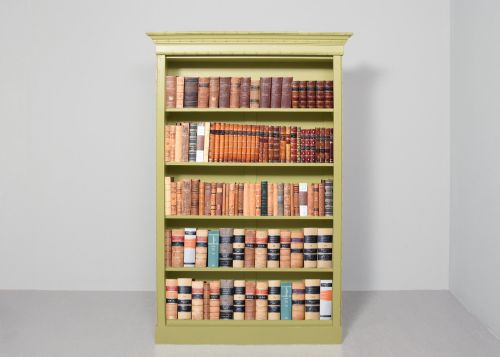
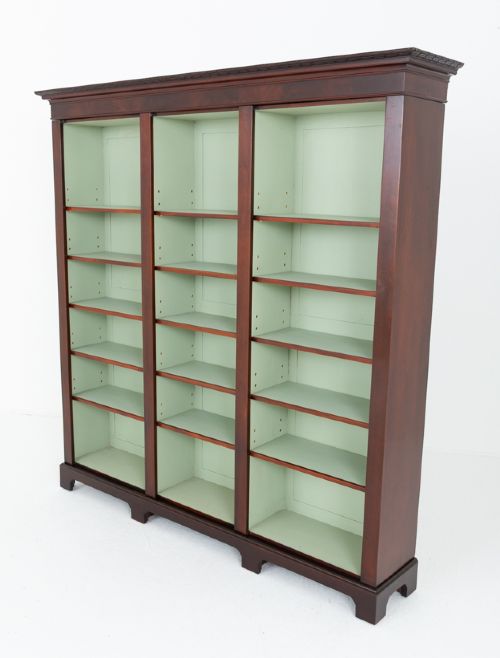
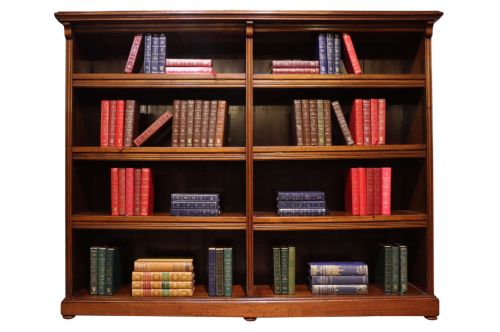
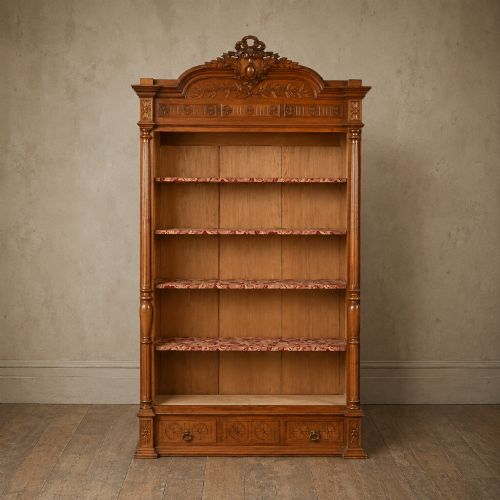
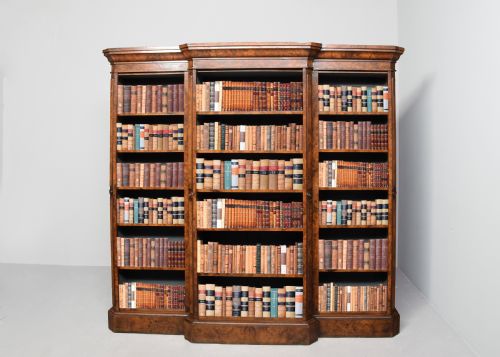
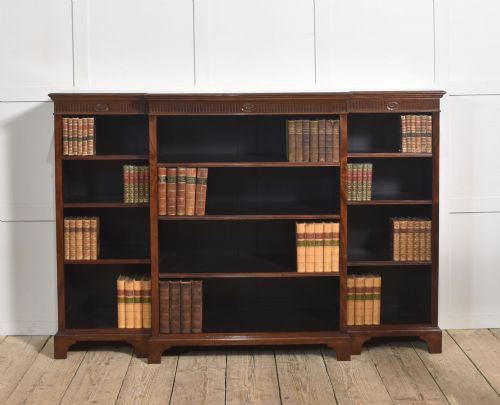
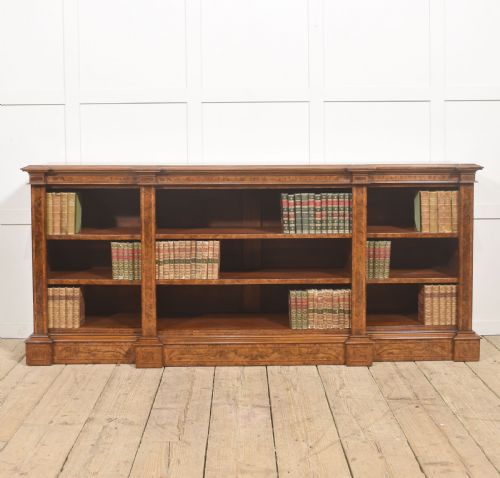
Large wooden bookshelves span open library bookcases, breakfront forms with adjustable shelves, and revolving designs suited to substantial volumes. These pieces emerge chiefly from the nineteenth century and the Edwardian era, reflecting domestic and institutional reading habits of the past.
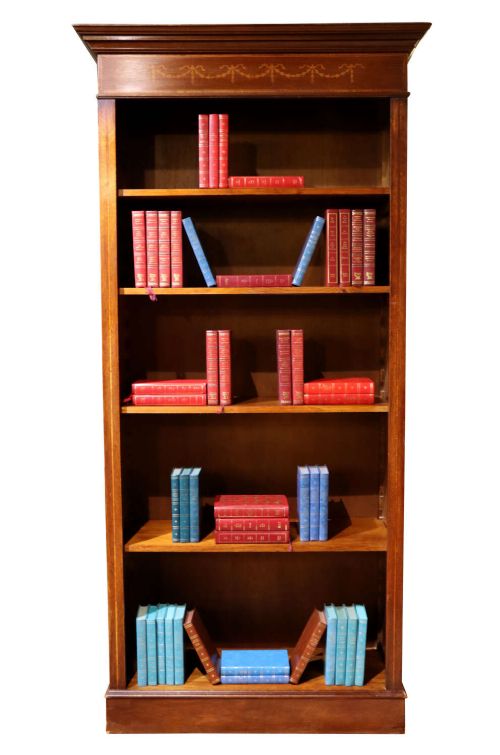
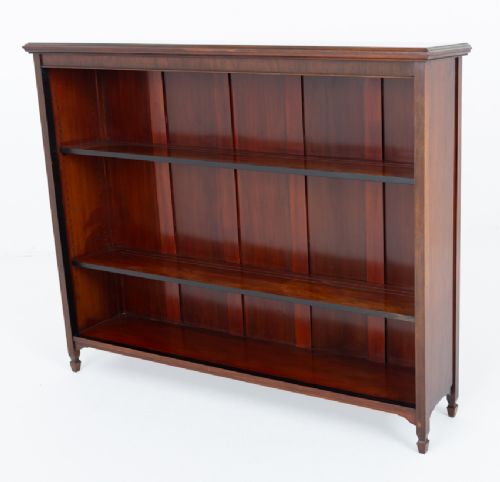
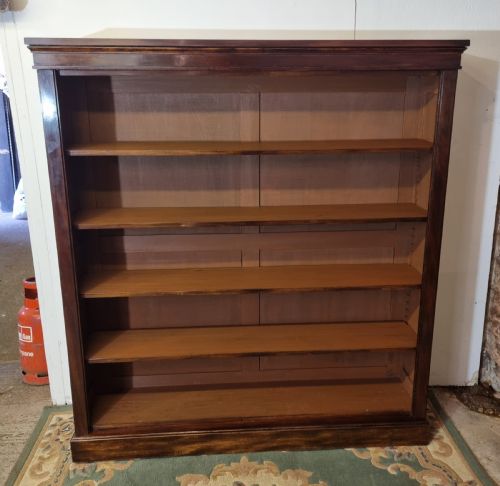
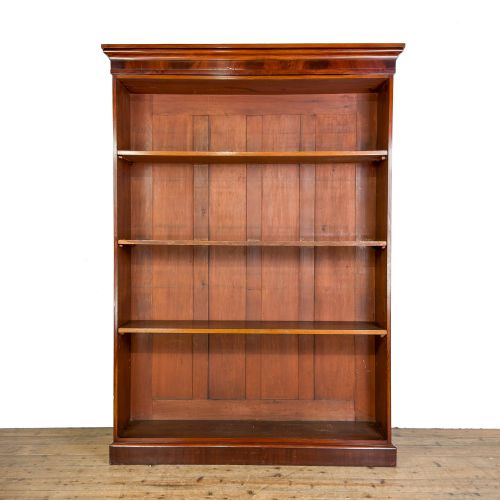
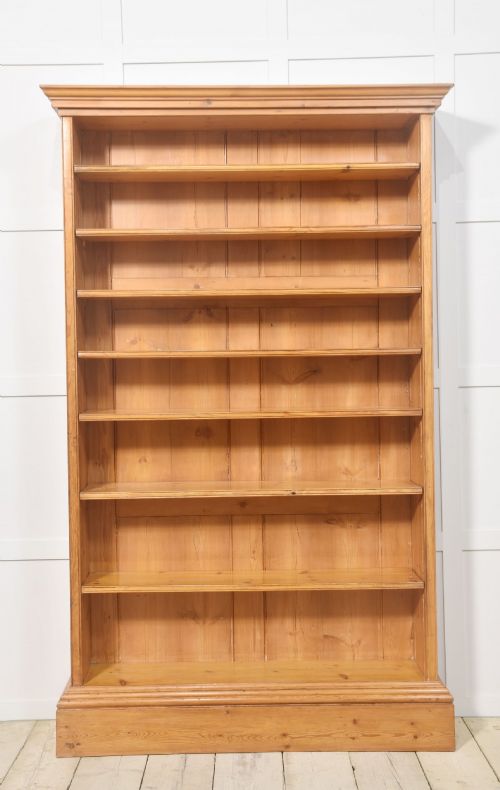
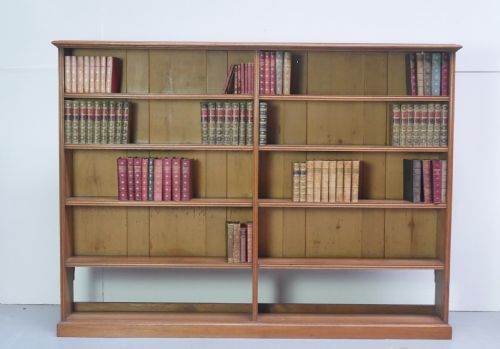
The version most commonly met on this page is the open mahogany bookcase from the Victorian period, frequently fitted with adjustable shelving and plinth bases. Oak, walnut, pine, and satinwood examples also appear, ranging from country house styles to continental and French neoclassical designs.
How they were made
Construction relies on solid timbers such as mahogany, oak, and pine, often enhanced with burr walnut or birdseye maple veneers on breakfront carcasses. Brass fittings support adjustable shelving systems within sturdy vertical panels and plinth or bracket bases.
Joinery techniques demonstrate cabinetmaking standards of the nineteenth and early twentieth centuries, incorporating carved solid wood details and formal architectural proportions. Timbers are selected for grain pattern and finished to display the natural warmth of the wood.
Large Wooden Bookshelves Retail Price Guide 2026
Typical asking prices for large wooden bookshelves among the pieces listed under this phrase on Sellingantiques today, from the lower quarter to the upper quarter. They describe what is for sale here now, not the wider market.
Listings feature mahogany, pine, oak, walnut, burr walnut, and birdseye maple across nineteenth-century and Edwardian periods.
What varies in quality
Quality rests upon the selection of timber, such as figured mahogany or burr walnut, and the sophistication of breakfront or architectural massing. Finer pieces demonstrate superior cabinetmaking through precise jointing, integrated carving, and well-designed adjustable shelving mechanisms.
Proportion and scale dictate the visual weight of the piece, where balanced cornices and substantial plinths separate standard utility furniture from exceptional country house or designer commissions.
The Large Wooden Bookshelves Glossary
- Breakfront
- A cabinet or bookcase whose central section projects forward from the flanking wings. This configuration creates architectural depth in large library rooms.
- Plinth base
- The heavy flat-faced block at the bottom of a bookcase that supports the main carcass. It elevates the shelves above floor level.
- Adjustable shelves
- Shelving supported by pegs or rack-and-pinion strips allowing vertical movement. This mechanism accommodates books of varying heights.
- Revolving bookcase
- A compact or large freestanding book holder designed to rotate on a central spindle. It provides access to volumes from multiple angles.
- Spanish mahogany
- A dense, richly grained tropical timber utilised in nineteenth-century cabinetmaking. It yields deep colouration and a smooth polished surface.
Large Wooden Bookshelves: Frequently Asked Questions
How do I adjust the shelves?
Shelves typically rest on wooden support blocks, brass pins, or slotted vertical strips inset into the interior sides. You lift the shelf slightly to clear the supports and reposition them into adjacent slots or peg holes.
Care should be taken when moving heavy timber shelves to avoid marking the interior veneer or solid wood surfaces.
Are these bookcases sturdy enough for heavy books?
These large wooden bookcases were built to hold substantial libraries of folio and octavo volumes. Solid mahogany, oak, and walnut construction provides robust load-bearing strength for dense collections.
Checking the stability of the plinth base and the integrity of the shelf supports ensures safe weight distribution.
How do I identify a Victorian bookcase?
Victorian pieces often feature dense mahogany or walnut timbers, deep mouldings, and architectural plinth bases. They frequently incorporate adjustable shelving systems developed during the nineteenth century.
Proportions tend to be grand and substantial, reflecting the domestic architecture of the period.
Where should I place a large bookcase?
These large pieces require stable wall space away from direct heat sources and strong sunlight to protect the wood and veneer. Rooms with consistent ambient temperature and humidity preserve the finish.
Breakfront and tall open forms anchor studies, libraries, and living rooms with significant wall clearance.