

Large Walnut Table
A large walnut table anchors a room with dark grain and solid presence, spanning formats from heavy refectory boards to refined Victorian library pieces.
Large Walnut Table
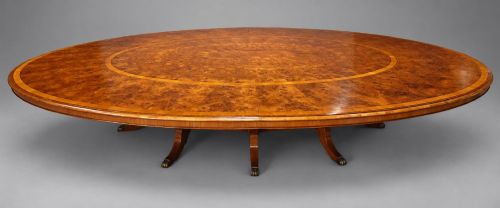
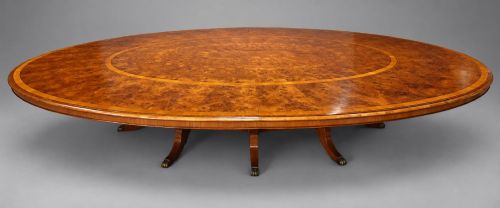
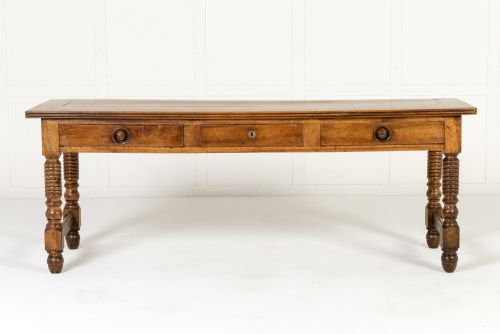
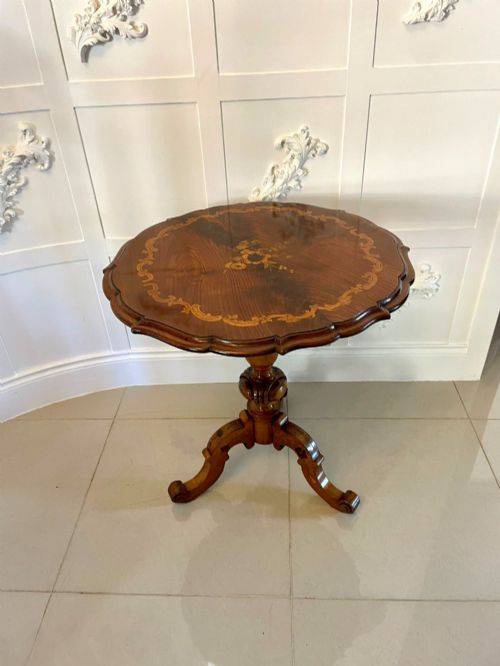
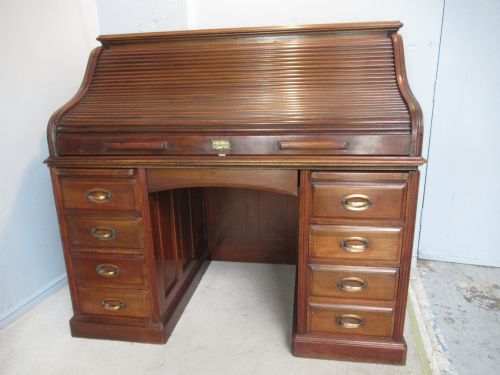
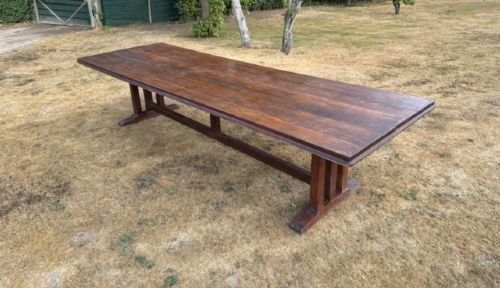
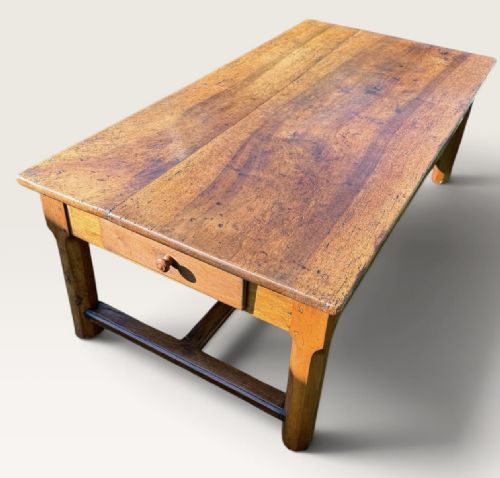
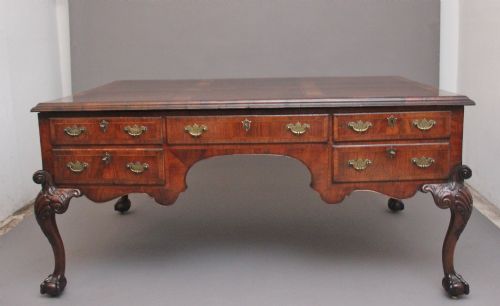
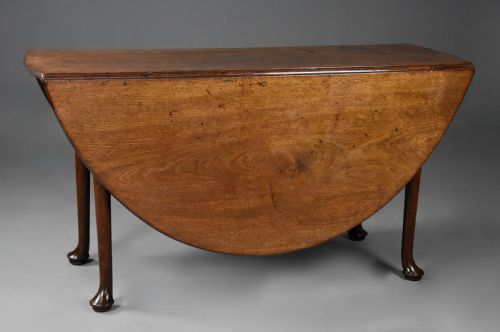
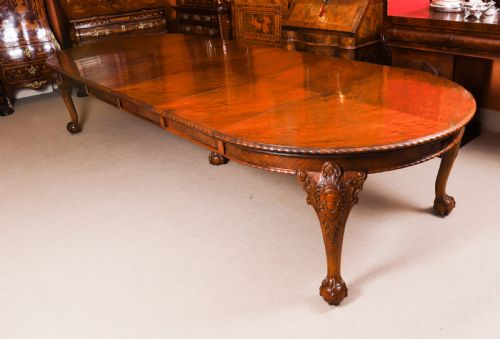
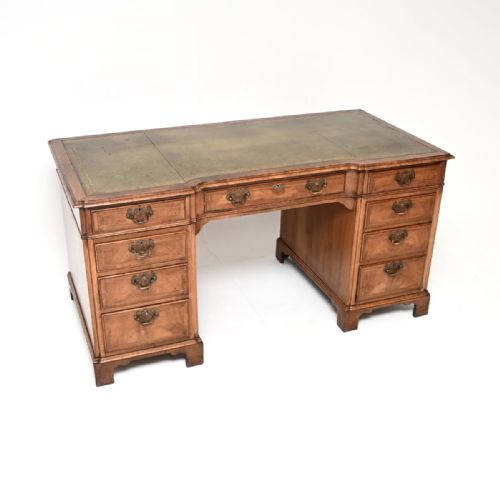
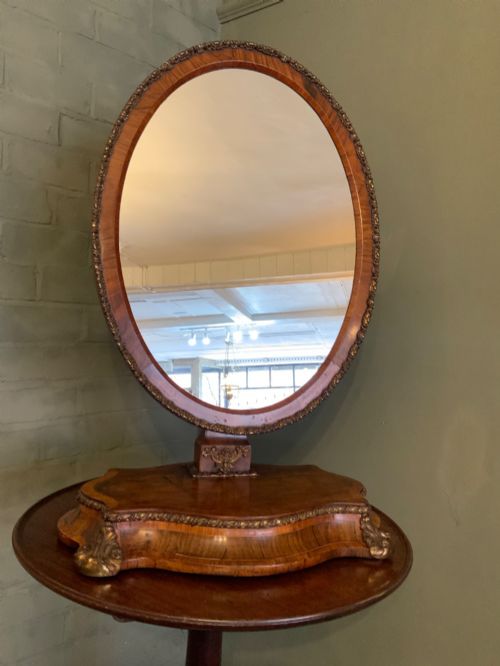
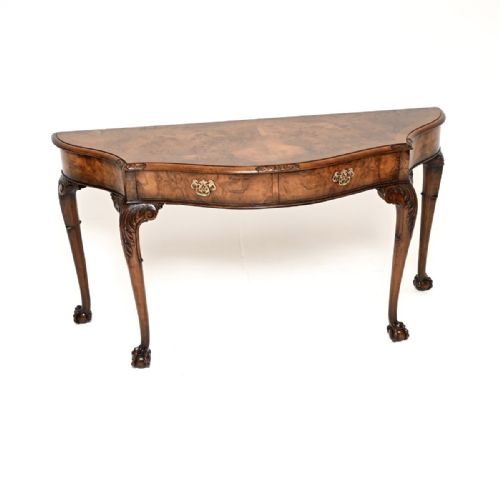
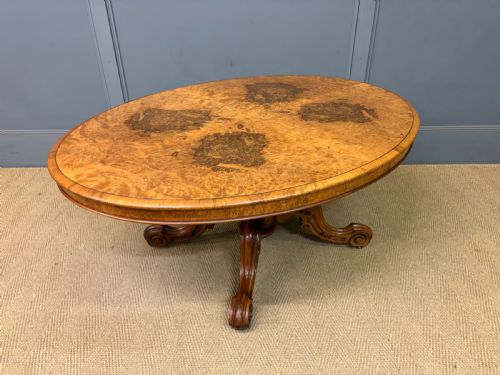
A large walnut table encompasses an array of formats designed for central domestic use, appearing most frequently in dining rooms, libraries, and grand hallways. The selection ranges from robust eighteenth-century drop-leaf and refectory boards to ornate nineteenth-century Victorian pedestal desks, coffee tables, and marquetry-inlaid centre pieces.
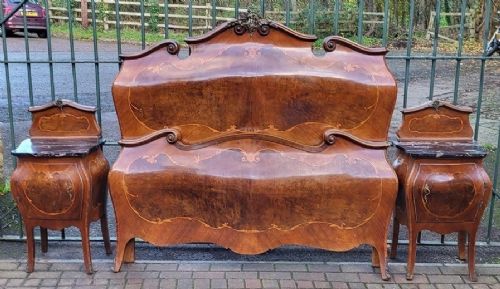
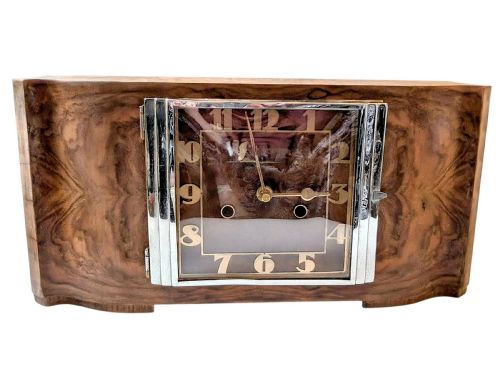
Buyers encounter diverse regional interpretations and stylistic revivals, including French Provincial, Queen Anne, Louis XV, and Art Deco iterations. Forms span practical utility items such as partners desks and extending dining boards alongside decorative occasional tables and console tables fitted with marble or brass mounts.
How they were made
Cabinet makers utilised solid timber alongside figured and burr veneers laid over secondary woods to create rich surface patterns. Construction methods combined traditional joinery with decorative elements such as marquetry inlay, ormolu mounts, leather desk inserts, and carved gilt details.
Finishes relied on natural polishes that emphasised the deep brown tones and complex grain figures inherent in walnut. Structural integrity was achieved through heavy refectory frames, pedestal bases, trestle supports, and robust drop-leaf mechanisms.
Large Walnut Table Retail Price Guide 2026
Typical asking prices for large walnut table among the pieces listed under this phrase on Sellingantiques today, from the lower quarter to the upper quarter. They describe what is for sale here now, not the wider market.
Materials paired with walnut across these tables include marble, brass, chrome, leather, and ormolu mounts.
What varies in quality
Quality rests in the selection of the timber grain, distinguishing plain stock from intensely figured burr walnut and master-cut marquetry panels. The ambition of the design and the crispness of hand-carved mouldings separate standard production from exceptional workshop output.
The integration of secondary materials such as original leather writing surfaces, untouched marble inserts, and cast brass or ormolu mounts determines the overall execution. Structural stability across expansive surfaces reveals the underlying skill of the cabinet maker.
Maple & Co·Whytock & Reid of Edinburgh·Haller
The Large Walnut Table Glossary
- Burr walnut
- A veneer taken from the knotted growth of a walnut tree, prized for its swirling, highly figured grain patterns. It frequently covers the primary display surfaces of Victorian and Edwardian tabletops.
- Partners desk
- A large double-sided desk designed for two people to work opposite one another, typically featuring banks of drawers and cupboards below a leather-lined top.
- Marquetry
- Decorative patterns formed by fitting together thin slices of wood veneer and other materials onto a structural surface. It appears on high-status Victorian and Edwardian tabletops.
- Refectory table
- A long, narrow dining table traditionally used in communal dining halls, constructed with heavy legs connected by stretchers for stability.
- Ormolu
- Gilded bronze mounts applied to furniture edges and legs, commonly found on French revival pieces from the nineteenth and early twentieth centuries.
Large Walnut Table: Frequently Asked Questions
How do I clean a walnut surface?
Dust regularly with a soft dry cloth to prevent particulate build-up on the polished timber. Avoid modern silicone sprays and excessive moisture which can damage the traditional finish.
Apply a quality beeswax periodically to nourish the wood and maintain a soft sheen. Buff gently along the direction of the grain after application.
Where should I place a large table?
Position the piece away from direct sunlight and heat sources to prevent the timber from drying out or splitting. Ensure adequate clearance around the edges for chairs and natural movement.
Centre tables and refectory boards work best as focal points in spacious rooms. Desks and console tables sit effectively against walls or within open study spaces.
How do I identify a revival style?
Queen Anne revival pieces typically display characteristic cabriole legs and shaped aprons produced during later nineteenth or early twentieth-century periods. Louis revival items incorporate heavy ormolu mounts and curved profiles echoing eighteenth-century French courts.
Examine the construction methods and interior secondary woods to confirm the actual date of manufacture. Revival furniture often combines earlier decorative motifs with contemporary mechanical extensions.
Can I use a dining table daily?
Solid timber and sturdy pedestal constructions are built for regular domestic use and gathering. Use heat mats and protective covers to guard against spills and hot serving dishes.
Fitted leather inserts on desks require careful maintenance to prevent staining and drying. Routine gentle cleaning preserves the functional surface over generations of use.