






Large Walking Stick Stand
A large walking stick stand holds hall clutter with authority, and these substantial pieces sort hallway umbrellas and heavy walking canes in style.
Large Walking Stick Stand
A large walking stick stand is a substantial piece of hallway furniture designed to corral numerous umbrellas, parasols and walking canes. These items serve as practical architectural anchors for grand entryways, keeping wet canopies and heavy sticks contained. Buyers searching for a large walking stick stand encounter robust hallway items originating from the Victorian period through to the early twentieth century.
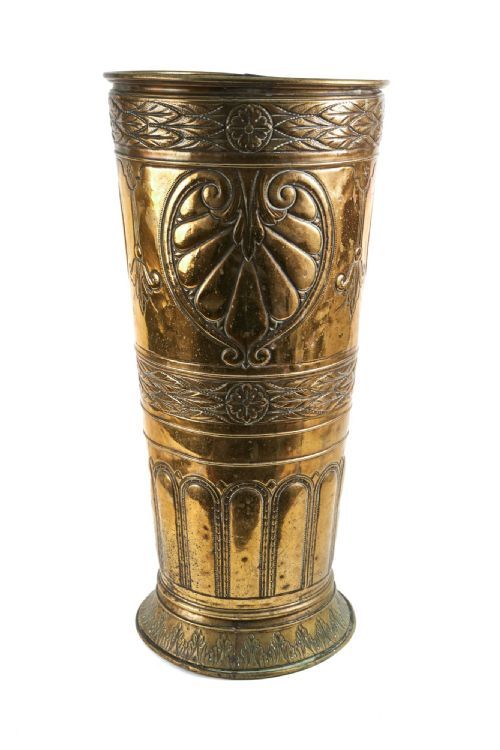
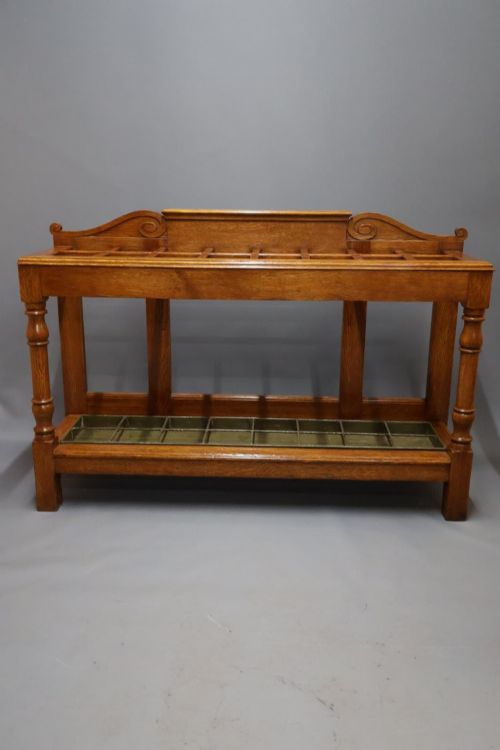
The assortment on this page spans solid oak and pitch pine constructions alongside heavy metal designs in cast iron, brass, copper and zinc. Formations range from standard barrel shapes and country house gothic pairs to specialised military leather shell carriers and expansive multi-hole grid layouts. Oak and saltglaze stoneware examples bring earthy textures to domestic spaces, whereas metal iterations offer industrial heft.
How they were made
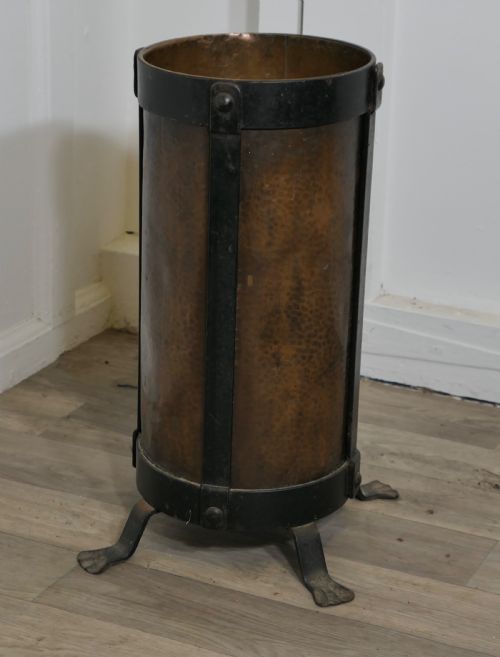
Makers utilised cast iron, brass, copper and zinc alongside sturdy timbers like oak and pitch pine to build structures capable of withstanding heavy daily use. Metalwork techniques involved casting intricate patterns, such as gothic arches or botanical motifs, and binding metal barrels with iron bands for added reinforcement. Saltglaze stoneware provided a durable, water-resistant ceramic cylinder ideal for collecting dripping rainwater from umbrellas.
Woodworkers joined oak and pitch pine planks using traditional cabinetry methods to construct stable frames and barrel bodies that resisted moisture damage. Leather found purpose in utilitarian adaptations, such as converted First World War shell carriers reinforced for domestic hallway service. These varied fabrication methods ensured each stand could bear the weight of multiple heavy walking sticks without buckling.
Large Walking Stick Stand Retail Price Guide 2026
Typical asking prices for large walking stick stand among the pieces listed under this phrase on Sellingantiques today, from the lower quarter to the upper quarter. They describe what is for sale here now, not the wider market.
Some walking sticks eventually retired into military leather shell carriers, swapping artillery for umbrella duty in peaceful hallways.
What varies in quality
The distinction between ordinary and exceptional examples lies in the ambition of the design and the integrity of the materials employed. A Coalbrookdale iron stand with dozens of designated holes demonstrates sophisticated foundry work and commercial scale, whereas a simple pine barrel represents straightforward domestic utility. Finer pieces display deliberate stylistic unity, such as cohesive Arts and Crafts copper hammering or precise Gothic Revival tracery.
Surface preservation and material weight dictate the tactile presence of the object in a room. Heavy gauge brass and thick iron bounds maintain their structural rigour far better than thin sheet metals prone to denting. Original patination on copper and untreated oak tells a truthful story of age without obscuring the foundational build quality.
The Large Walking Stick Stand Glossary
- Saltglaze stoneware
- A ceramic material fired at high temperatures where salt is thrown into the kiln to produce a glassy, pitted texture. This finish resists moisture effectively.
- Gothic Revival
- An architectural and decorative style drawing inspiration from medieval design. Pieces often incorporate pointed arches and heavy vertical lines.
- Arts and Crafts
- A design movement valuing handcraftsmanship and simple forms over mass production. Items from this tradition frequently showcase hammered copper surfaces.
- Pitch pine
- A resinous softwood noted for its density and durability. Cabinetmakers utilised this timber for robust furniture subject to heavy wear.
- Coalbrookdale
- A famous ironworks location associated with ornamental iron castings. Foundry products from this tradition include intricate multi-hole umbrella frames.
Large Walking Stick Stand: Frequently Asked Questions
What is a large walking stick stand?
A large walking stick stand is a piece of furniture built to hold multiple umbrellas, parasols and walking canes in an entrance hall. These tall vessels prevent clutter by keeping wet and bulky items upright and contained.
They appear in materials ranging from heavy cast iron and brass to saltglaze stoneware and oak, reflecting the domestic needs of nineteenth and early twentieth-century homes.
How were these stands used originally?
Households placed these stands near front doors so residents and visitors could deposit walking canes and wet umbrellas upon entering. The containers caught dripping rainwater and provided an orderly spot to grab walking gear before heading outdoors.
Industrial and military pieces, such as converted shell carriers, served similar utilitarian functions before finding new life in domestic hallways.
How do I live with a large stick stand?
Position the stand near your primary entryway where it can receive wet umbrellas and heavy walking sticks as you walk through the door. Ensure metal iterations have a suitable tray underneath if wooden floors require protection from residual moisture.
Allow the natural patinated surfaces of brass, copper or oak to anchor your hallway decor without over-polishing the character away.
How can I tell Victorian stands apart?
Victorian stands often display distinct period characteristics such as Gothic Revival architectural motifs, heavy saltglaze ceramic bodies or ornate cast iron frames. Examining the joining methods, such as iron bands on wooden barrels, helps identify nineteenth-century construction.
Materials like pitch pine and heavy brass point directly to Victorian and late nineteenth-century manufacturing preferences before lighter modern materials took over.