
Large Victorian Mantle Mirror
A large victorian mantle mirror brings scale and reflected light to a room, sitting naturally above a fireplace with grand nineteenth-century presence.
Large Victorian Mantle Mirror
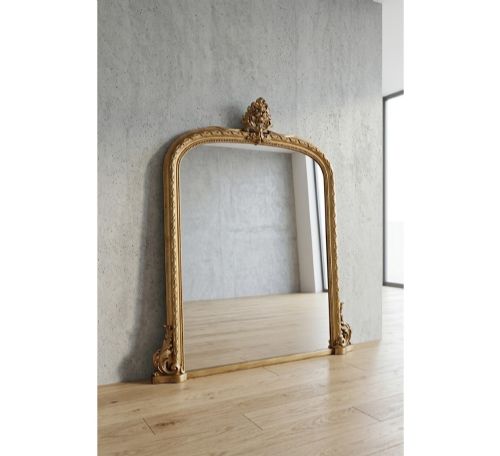
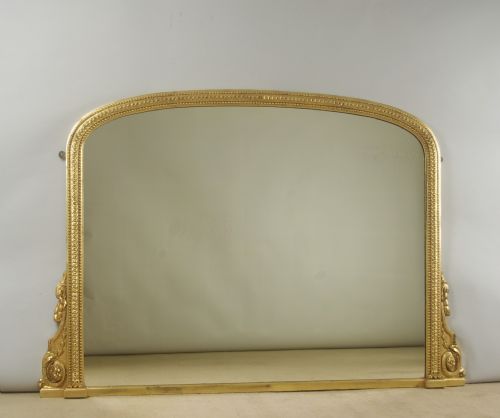
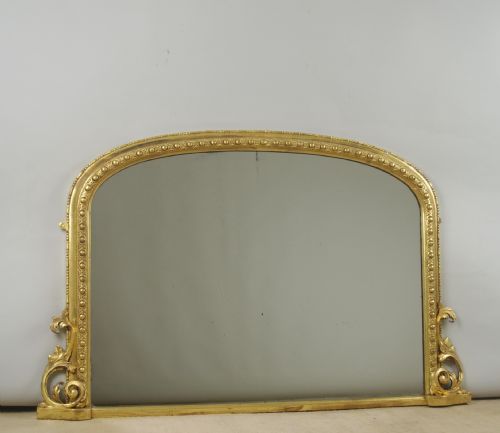
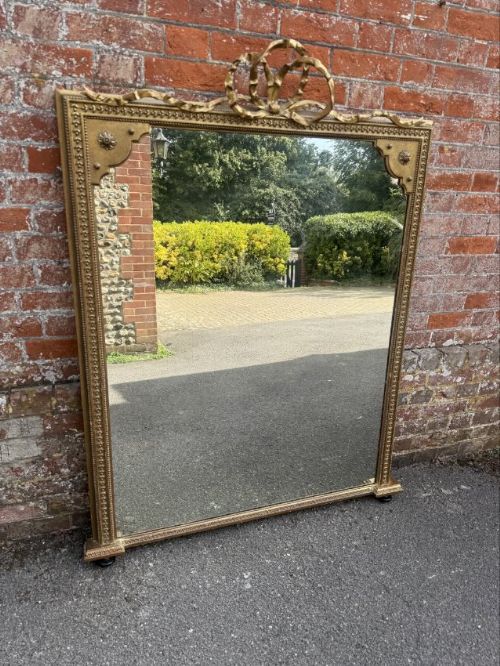
A large victorian mantle mirror serves as a principal architectural focal point, designed specifically to rest on the mantelpiece above a fireplace or function as a leaner mirror against a wall.
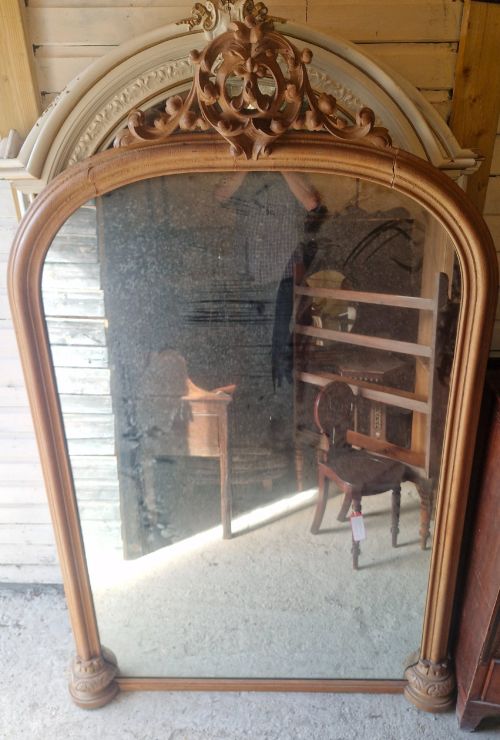
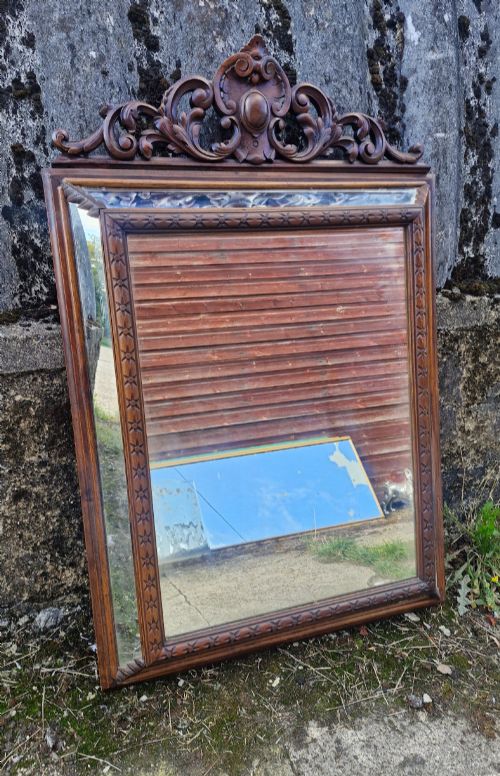
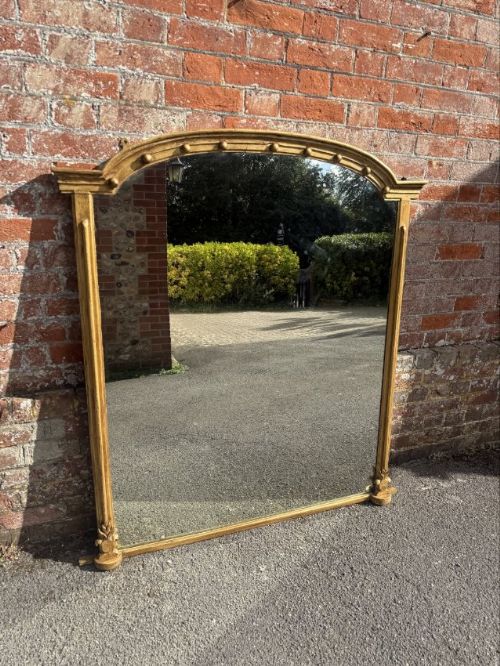
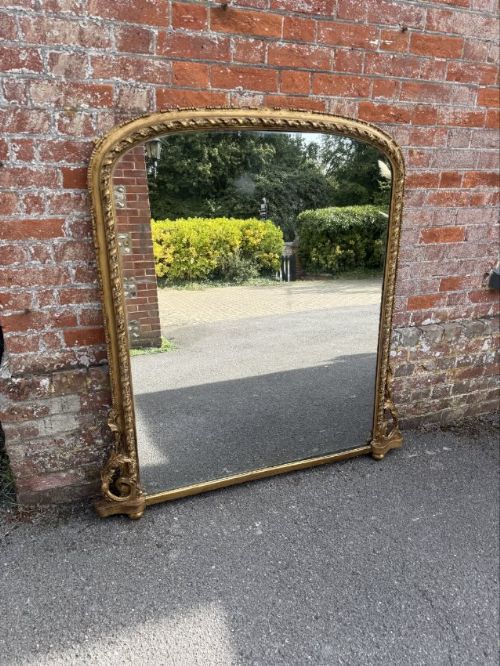
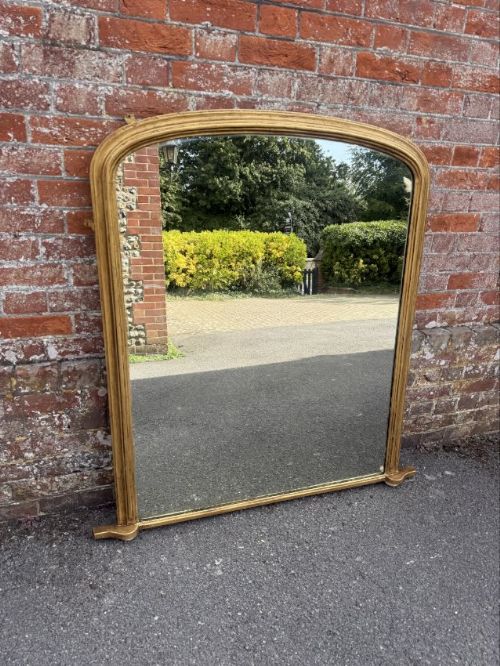
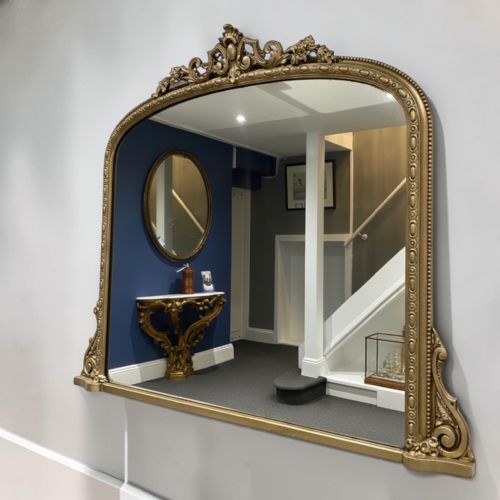
Most examples found here date from the nineteenth century, taking the form of overmantel mirrors with arched tops, rectangular frames, or triple plate configurations.
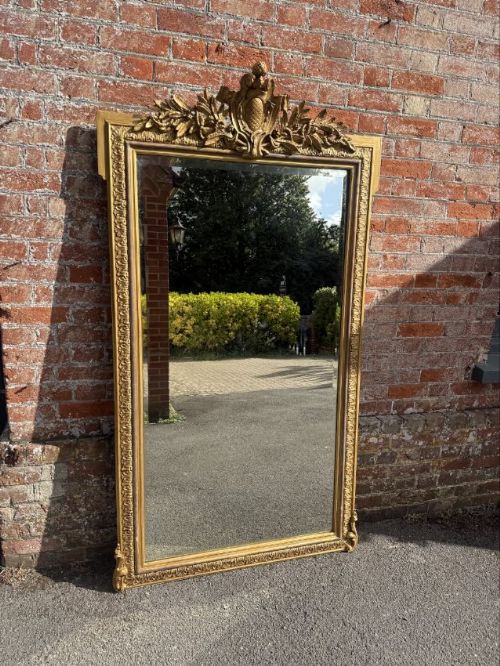
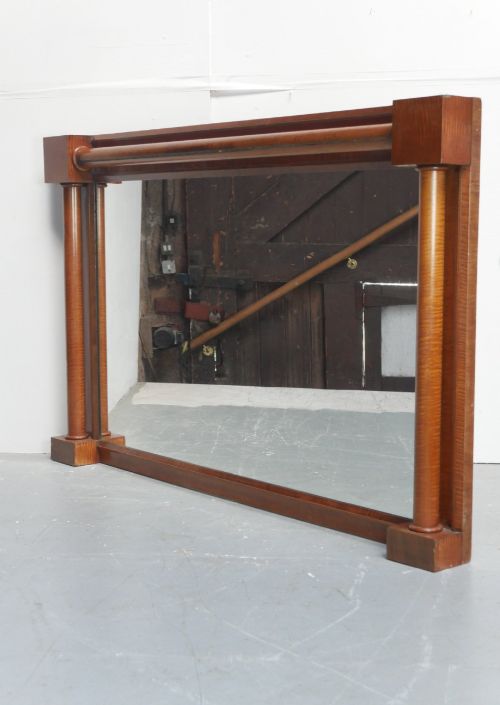
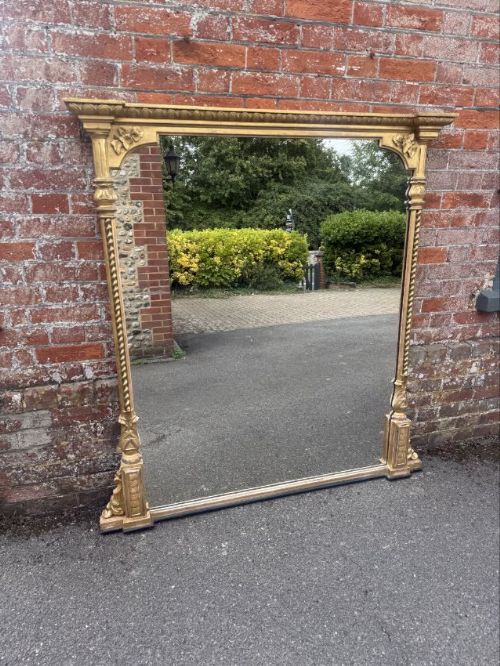
English and French workshops produced these pieces in substantial proportions, often incorporating architectural surrounds like columns, rope twists, and ribbed mouldings.
How They Were Made
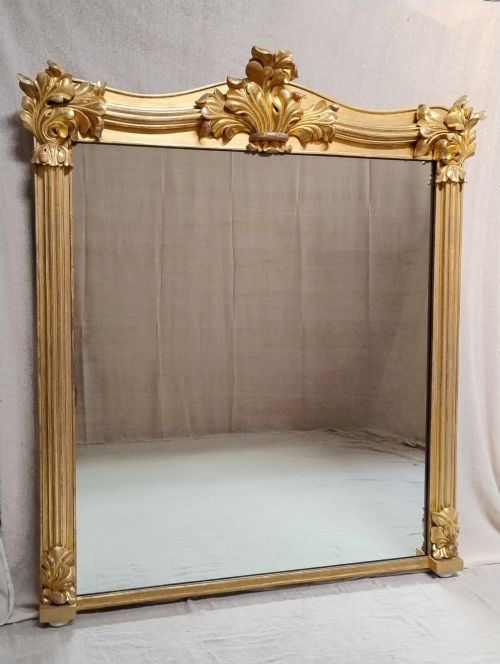
Carved wood and gesso form the structural base for the majority of these frames, providing a smooth surface for subsequent gilding.
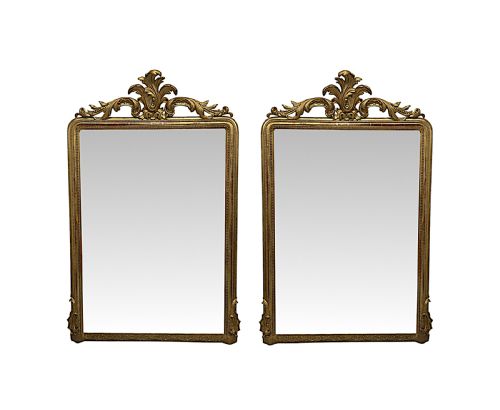
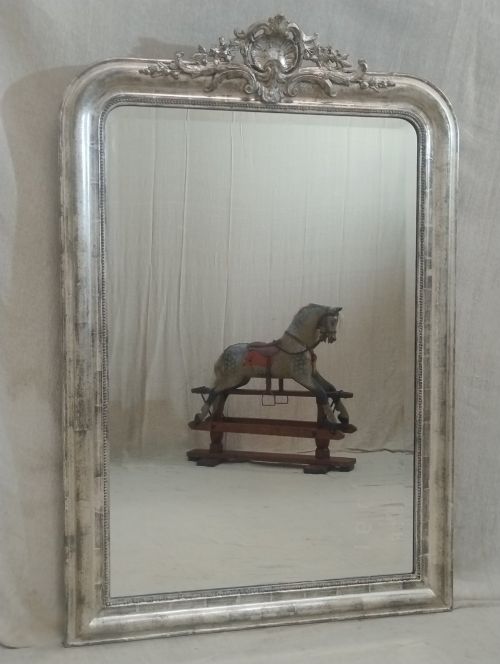
Giltwood, gold leaf, and gilded wood finishes dominate the construction, complemented by composition ornaments moulded to create elaborate rococo revival scrolls and architectural motifs.
Alternative frames utilise walnut, oak, mahogany, and ebonised finishes, sometimes featuring parcel-gilt highlights or painted surfaces.
Listings feature nineteenth-century periods alongside French Chateau and Regency styles, constructed from giltwood, gesso, walnut, and mahogany.
What Varies in Quality
The crispness of the carved wood and gesso ornamentation dictates the visual weight of the frame, where hand-carved details show superior depth compared to mass-moulded composition.
Original mercury glass or silvered mirror plates display subtle ageing characteristics that differentiate period glass from later replacements.
The structural integrity of large frames depends on the original joinery supporting heavy glass plates, particularly across triple plate and arched formats.
The Large Victorian Mantle Mirror Glossary
- Overmantel mirror
- A large mirror specifically proportioned to hang or stand on the mantelpiece above a fireplace. These pieces often feature arched tops to match the curve of nineteenth-century chimney breasts.
- Gesso
- A plaster-like mixture applied to a wooden frame and carved or moulded before gilding. It provides the smooth, responsive ground necessary for crisp surface ornamentation.
- Parcel-gilt
- A finish where portions of an object are gilded with gold leaf while other areas show painted, ebonised, or natural wood surfaces. This technique creates strong visual contrast on Victorian frames.
- Triple plate
- A mirror configuration split into three adjacent glass panels within a single frame. This layout widens the reflective surface across larger chimney breasts.
- Rococo revival
- A nineteenth-century design style drawing on eighteenth-century French motifs characterised by asymmetrical scrolls, C-scrolls, and naturalistic foliage. It frequently appears on ornate giltwood overmantel frames.
Large Victorian Mantle Mirror: Frequently Asked Questions
Where should a mantle mirror be placed?
These mirrors traditionally rest directly on a fireplace mantelpiece, anchored securely to the wall to support their substantial weight. They also function successfully as leaner mirrors placed flat against a principal wall.
Their generous dimensions and reflective glass help to distribute natural light and create an illusion of increased room depth.
How do I identify a Victorian overmantel mirror?
Nineteenth-century pieces typically feature heavy timber frames coated in gesso and giltwood, often constructed with arched tops designed for period chimney breasts. Look for robust timber backs and traditional joinery methods appropriate for the Victorian era.
Many examples incorporate stylistic elements such as rope twists, columns, or rococo revival ornamentation.
What is the difference between single and triple plate mirrors?
A single plate mirror utilises one continuous sheet of glass within the frame, providing an uninterrupted reflection. Triple plate mirrors divide the reflection across three separate glass sections, frequently seen on larger nineteenth-century overmantels.
This division allows for wider frames that span expansive fireplace walls without requiring a single impossibly large sheet of glass.
How do I care for antique gilt wood frames?
Giltwood and gesso surfaces require gentle dusting with a dry, soft brush to protect the delicate gold leaf and composition ornaments. Avoid liquid cleaners and harsh chemicals, which can strip or damage the historic gilded surface.
Keep the mirror away from direct sources of extreme heat or dampness to preserve the underlying wood and gesso.