


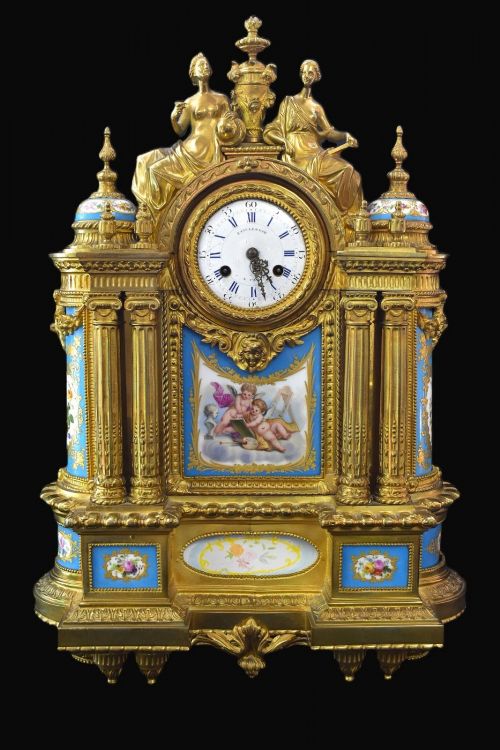


Large Table Clock
A large table clock brings architectural presence to a room, anchoring a mantelpiece or sideboard with mechanical weight and decorative ambition.
Large Table Clock
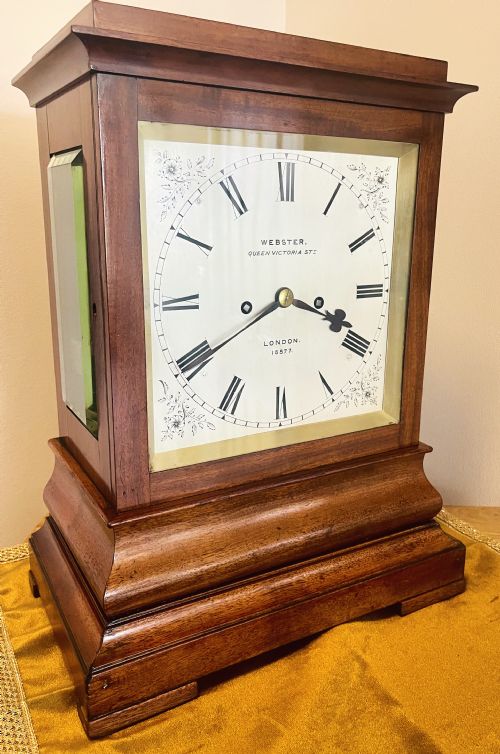
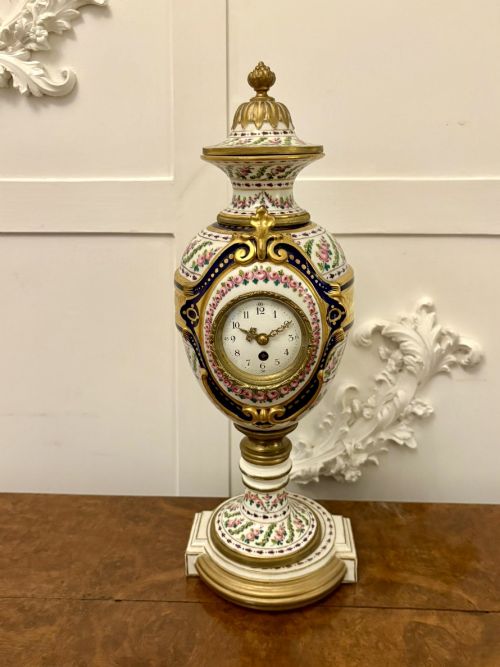
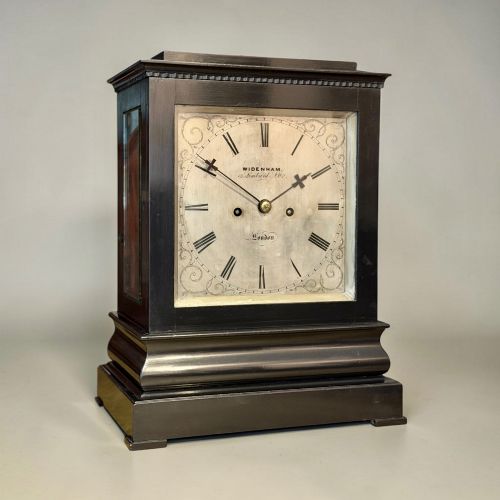
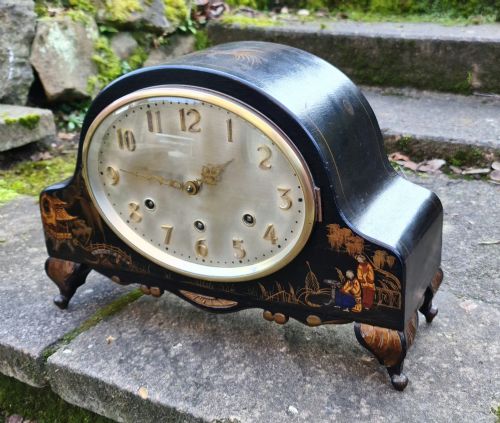
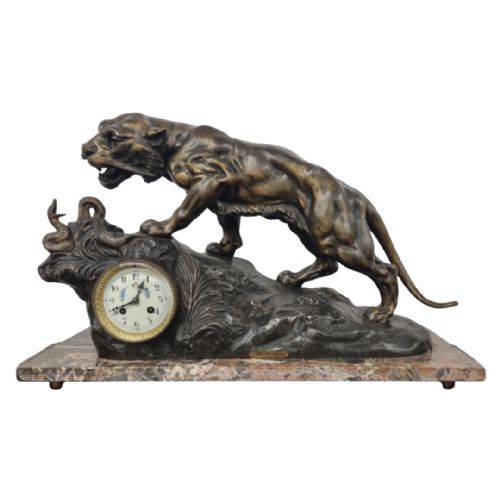
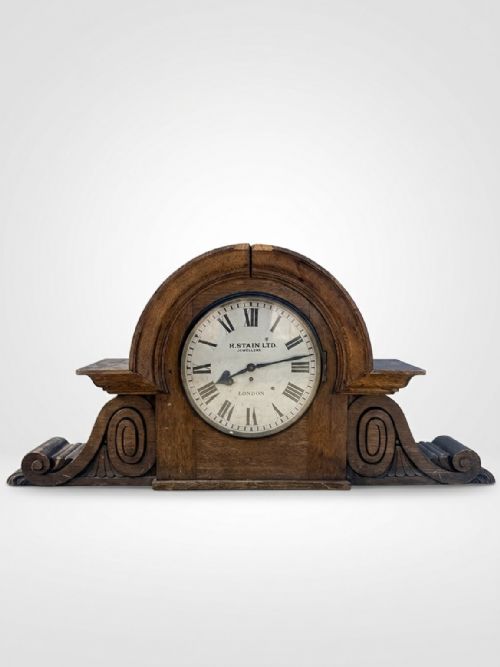
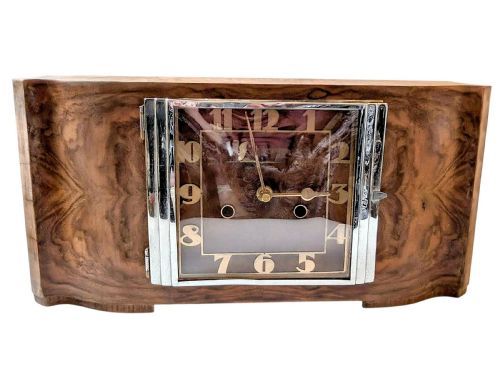
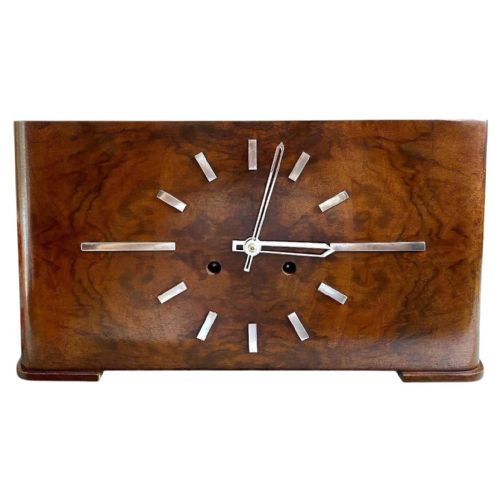
A large table clock is a substantial timekeeper designed to sit on a horizontal surface rather than hang upon a wall, often taking the form of a mantel clock, bracket clock or carriage clock. When searching for a large table clock, a buyer encounters pieces originating primarily from the nineteenth century through to the Art Deco period of the 1930s. The selection spans French Rococo Revival models, heavy marble architectural pieces, and streamlined walnut and chrome designs from the twentieth century.
The objects vary considerably in their specific housing and mechanics, ranging from simple timepieces to striking bracket clocks and musical boardroom pieces. French gilt bronze, ormolu, porcelain and slate appear frequently alongside Edwardian mahogany and Victorian oak cases. Many incorporate elaborate garniture sets or delicate hand-painted porcelain panels set into heavy metal or stone frames.
How they were made
Makers constructed these clocks using a combination of heavy structural materials and intricate metalwork, casting cases in ormolu, gilt bronze, brass and white marble or rouge marble. Wood-cased examples utilise mahogany, walnut and oak, frequently inlaid with brass or carved with deep Victorian detailing. Enamel dials, hand-blown glass domes and porcelain urns provide the visual focal points against the metal and stone foundations.
Movements within these large housings rely on sophisticated brass gear trains, often featuring eight-day escapements, fusee mechanisms, or repeating complications. Smiths, Haller, and French makers like Samuel Marti and Deniere engineered these mechanical hearts to drive complex gearsets, striking hammers, and occasionally moon phase dials within substantial architectural cases.
Large Table Clock Retail Price Guide 2026
Typical asking prices for large table clock among the pieces listed under this phrase on Sellingantiques today, from the lower quarter to the upper quarter. They describe what is for sale here now, not the wider market.
Design eras represented range from Regency and Victorian architectural forms through to the geometric lines of 1930s Art Deco.
What varies in quality
Cabinetry also divides the range, with superior wooden bracket clocks showing precise brass inlay and tightly joined carved oak or mahogany rather than simple veneering. The weight and quality of the bronze, marble, and glass elements determine whether a clock holds a commanding presence or merely fills a space.
George Orpwood·Etienne Lenoir·Philippes Paris·Samuel Marti·Deniere Et Fils·Smiths Clockmakers
The Large Table Clock Glossary
- Bracket clock
- A portable spring-driven clock originally designed to sit on a wall bracket to aid sound distribution. These pieces later sat upon tables and desks as domestic decor.
- Ormolu
- Gilded bronze produced by applying a mercury-gold amalgam to a bronze base and heating it. This technique creates a durable golden finish characteristic of French decorative arts.
- Fusee
- A conical pulley connected to the mainspring by a chain or cord, designed to equalise the torque as the spring unwinds. This mechanism ensures consistent timekeeping throughout the power reserve.
- Garniture set
- A clock accompanied by matching decorative side pieces, such as urns or vases. These sets create a balanced ornamental arrangement across a mantelpiece.
- Carriage clock
- A small, portable spring-driven clock with a glass-sided brass case and a folding handle on top. Originally designed for travellers, larger examples serve as robust table timepieces.
Large Table Clock: Frequently Asked Questions
Where should I place a large table clock?
These timepieces require a sturdy horizontal surface capable of supporting considerable weight, particularly marble or bronze examples. A mantelpiece, sideboard or heavy desk provides an ideal foundation where the mechanical action and visual detail can be appreciated.
Ensure the location avoids direct sunlight and damp environments to protect the delicate enamel dials, mercury gilding and internal brass movements from premature wear.
How do I wind an antique clock?
Winding requires a dedicated key matched precisely to the winding squares on the dial face. Turn the key smoothly and stop the moment resistance increases to avoid over-tensioning the mainspring.
Different movements require winding at varying intervals, with eight-day mechanisms needing attention weekly while fusee or musical variants demand careful adherence to their specific mechanical layout.
What is a garniture clock set?
A garniture set consists of a central clock flanked by two matching decorative objects, commonly urns, vases or candelabra. These matched components were designed to create a symmetrical display across a fireplace mantel.
The side pieces often share the exact materials of the main clock, incorporating marble, bronze or porcelain panels to unify the decorative scheme.
How do I identify French pieces?
French clocks frequently utilise cast ormolu, gilt bronze, rouge marble, and Sevres-style porcelain panels within Rococo or Empire revival styles. Maker signatures are often stamped directly onto the brass movement backplate.
The integration of decorative elements like hand-painted porcelain urns and distinctive pendulum suspensions points directly to nineteenth-century French workshops.