

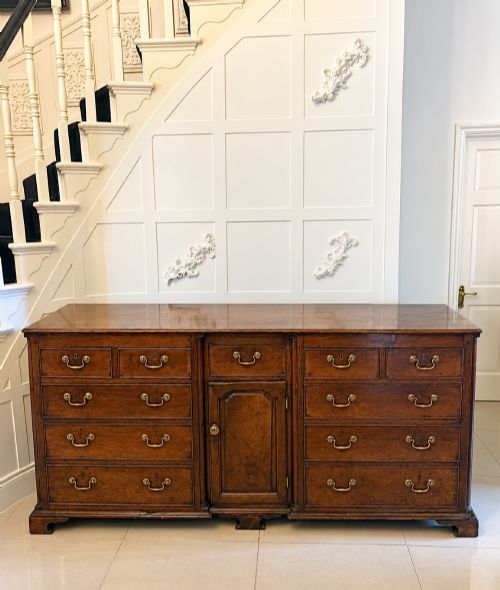
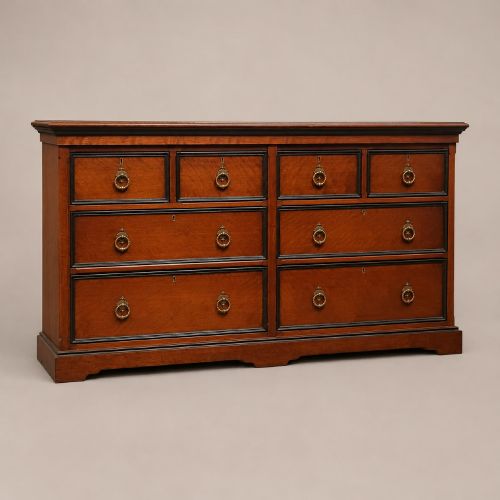
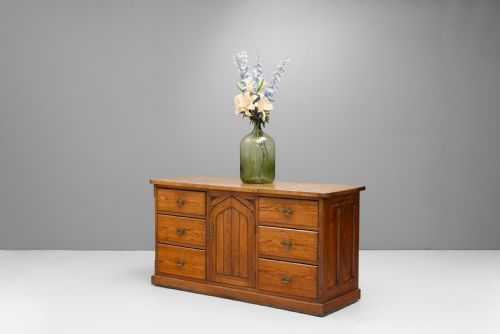
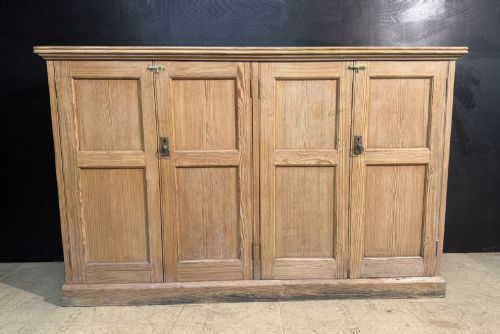



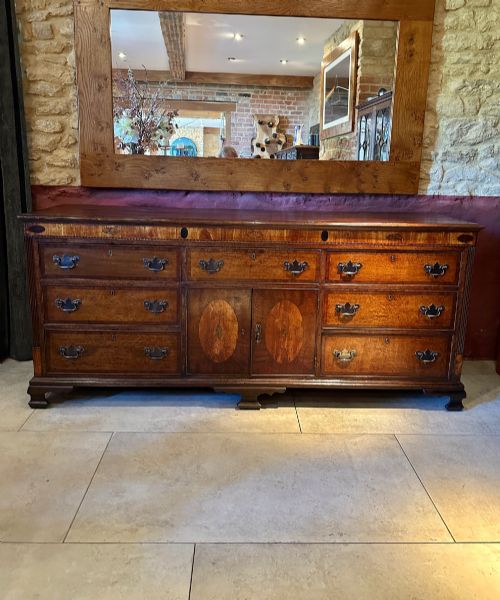
Large Storage Credenza
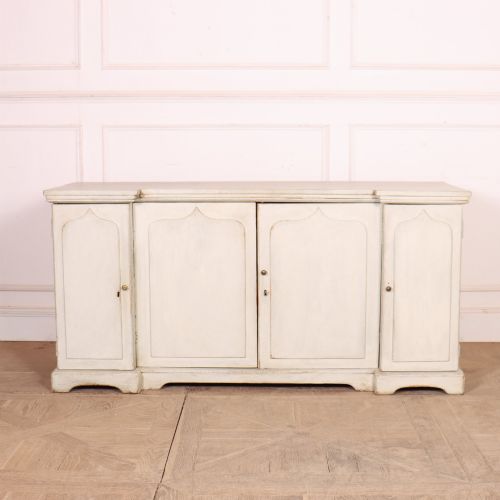
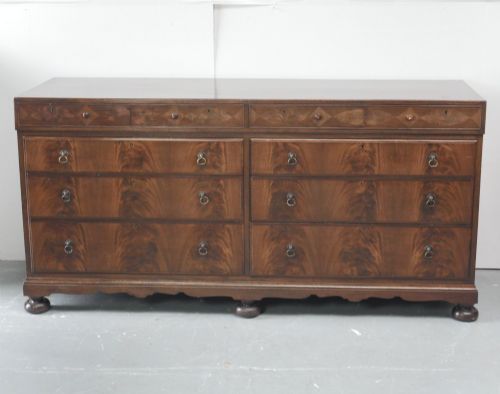
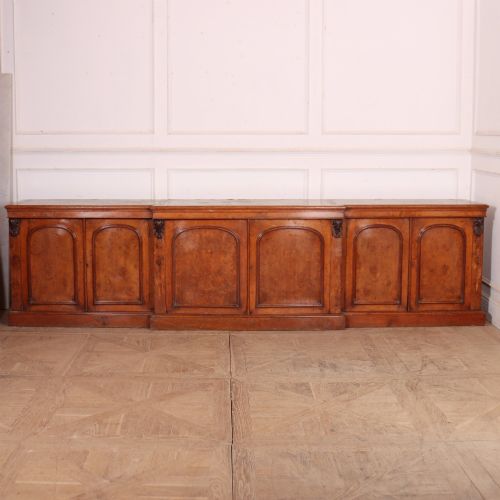
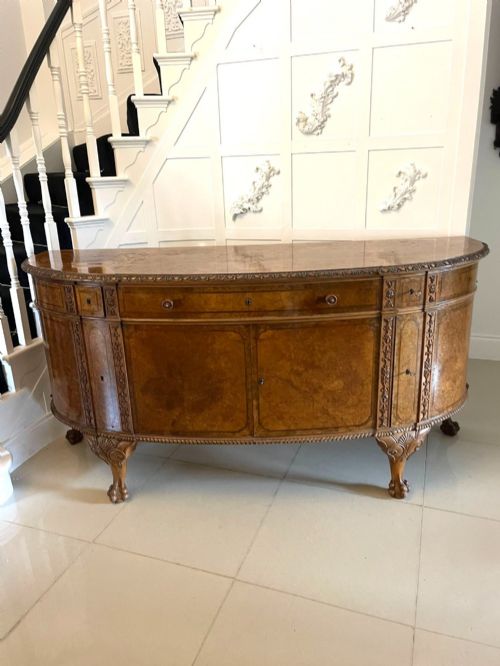
A large storage credenza offers substantial capacity and presence, uniting deep cupboards and drawers in timber forms made for serious room use.
Large Storage Credenza
When you search for a large storage credenza, you encounter substantial timber furniture designed to hold housewares, linen, and dry goods across dining rooms, kitchens, and halls. The pieces appearing here span centuries of British, continental, and global craftsmanship, grouped together by their scale and storage capacity rather than a single rigid design.
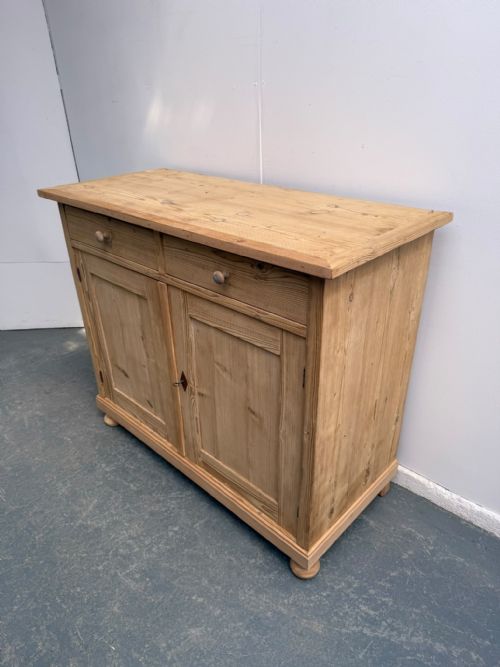
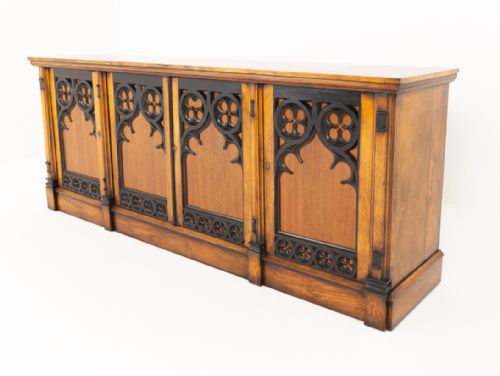
The versions you are most likely to meet on this page lean heavily towards generous pine farmhouse pieces, mahogany and walnut revival servers, and oak dresser bases. They take the form of sideboards, buffets, linen cupboards, and breakfront cabinets that anchor a wall while swallowing clutter behind panelled doors.
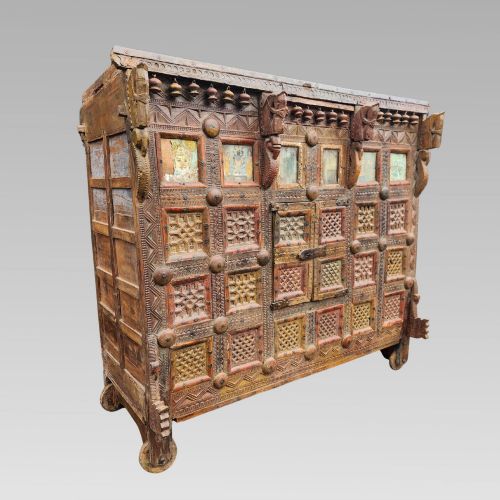
Origins stretch from English country houses and Scottish workshops to Italian and French provincial spaces, alongside occasional examples such as Indian carved teak dowry chests. This variety means each piece brings distinct regional timber character and proportions to interior storage.
How they were made
Makers utilised solid native and imported hardwoods alongside sturdy softwoods, employing oak, mahogany, walnut, and pine as the structural backbone of these large carcasses. Flame mahogany veneers and burr walnut figured surfaces frequently face the main presentation areas, adding rich grain patterns to frontal doors and drawer fronts.
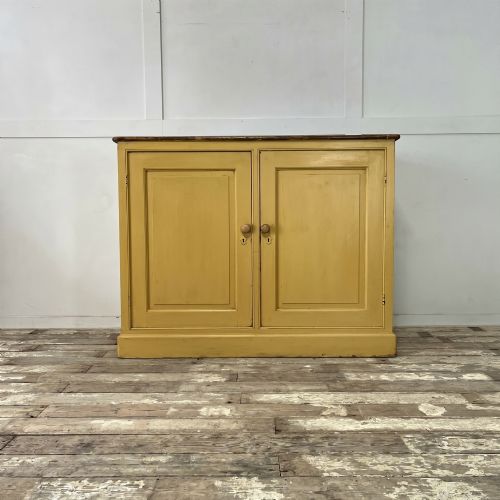
Construction relies heavily on traditional joinery methods such as mortise and tenon frames, hand-cut dovetails for drawer boxes, and panelled doors designed to accommodate seasonal timber movement. Brass handles, escutcheons, and iron hardware secure the heavy doors and drawers, while paint finishes, wax, or bleached treatments protect the pine and oak surfaces.
Large Storage Credenza Retail Price Guide 2026
Typical asking prices for large storage credenza among the pieces listed under this phrase on Sellingantiques today, from the lower quarter to the upper quarter. They describe what is for sale here now, not the wider market.
The furniture styles represented include Georgian, Victorian, Louis XV style, French Empire, Jacobean Revival, and rustic farmhouse country interpretations.
What varies in quality
The distinction between tiers of quality rests upon timber selection, architectural ambition, and the integrity of the original hardware and joinery. Pieces featuring figured burr walnut, flame mahogany, or dense old-growth oak sit at the upper end, often displaying meticulous hand-carving and boxwood stringing.
Simpler utilitarian painted pine pieces and farmhouse kitchen cupboards form the broader base of utility, where durability and capacity outweigh decorative flourish. The crispness of internal drawer construction and the original retention of brass or iron mounts further separate standard workshop output from exceptional commissions.
Whytock & Reid·Maple & Co.·Howard and Sons
The Large Storage Credenza Glossary
- Dresser base
- A low wooden storage unit featuring drawers and cupboards beneath a flat top, historically used in kitchens and dining rooms for food preparation and serving.
- Breakfront
- A cabinet or sideboard whose central section projects forward from the flanking outer wings, creating architectural depth and varied surface planes.
- Court cupboard
- A heavy oak enclosed storage piece with an upper recessed cabinet supported by columns, originating in the sixteenth and seventeenth centuries.
- Enfilade
- A long cabinet or sideboard with a continuous row of doors designed to align symmetrically along a wall, drawing inspiration from French formal rooms.
- Bow front
- A convex curved cabinet or sideboard front that softens the linear geometry of a room while expanding internal storage depth.
Large Storage Credenza: Frequently Asked Questions
What rooms suit a large storage credenza?
These generous pieces fit well in spacious dining rooms, large kitchens, wide hallways, or living areas where substantial storage capacity is required.
Their deep cupboards and long tops handle heavy household loads while anchoring large wall spaces with historical timber presence.
How do I care for antique pine furniture?
Maintain waxed or painted pine surfaces by dusting with a dry cloth and occasionally applying traditional beeswax to nourish the timber.
Keep these pieces away from direct heat sources and sudden humidity shifts to prevent the wood from warping or splitting.
What is the difference between a sideboard and a dresser base?
A dresser base traditionally served country kitchens and domestic utility spaces with deep drawers and panelled cupboard doors beneath a working top.
Sideboards generally emerged in more formal dining settings during later periods, often featuring refined veneers, bow fronts, and specialised cutlery storage.
How can I tell a Victorian piece from Georgian work?
Georgian pieces often display restrained classical proportions, premium mahogany or oak timbers, and subtle stringing or bracket feet.
Victorian examples frequently expand in scale, incorporating heavier mouldings, four-door configurations, figured mahogany, and sometimes industrial or school utility roots.