
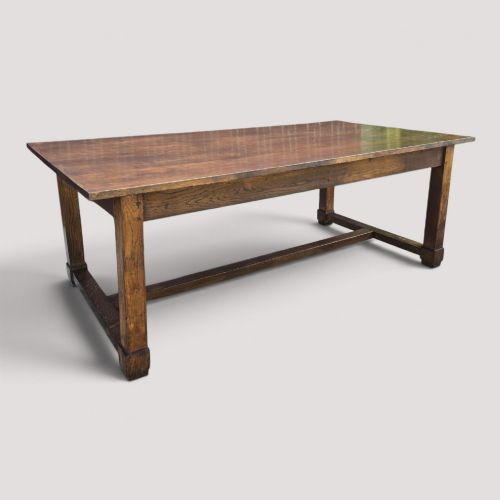
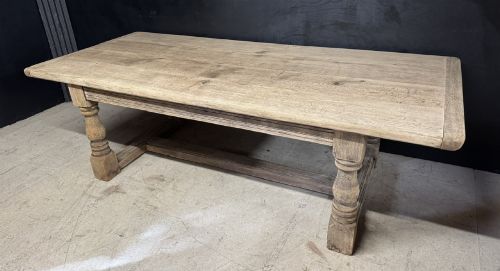
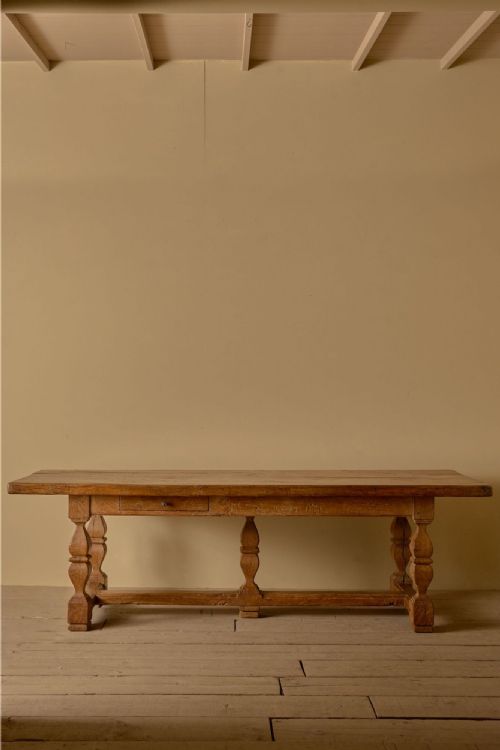
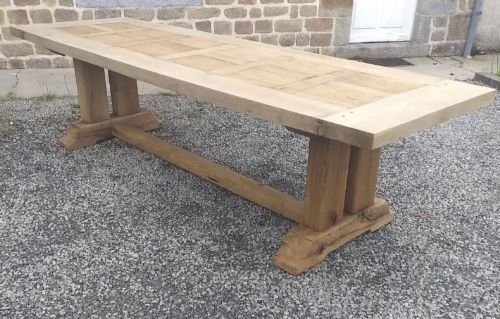
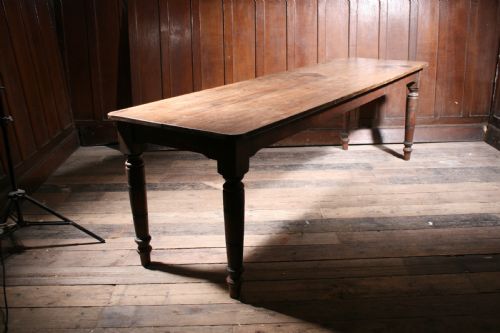
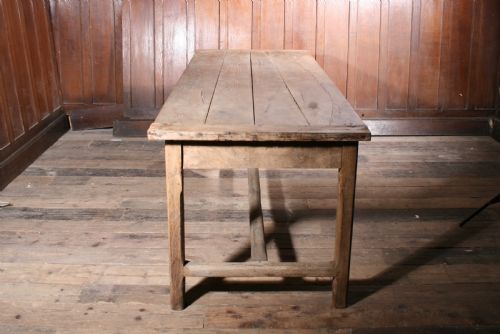
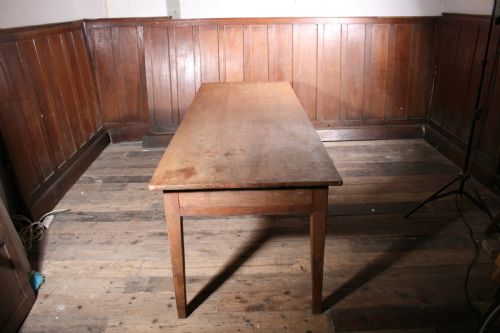
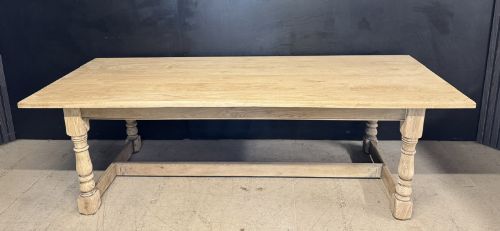
Large Rustic Table
When you search for a large rustic table, you enter a world of heavy timbers and honest joints built for family meals.
Large Rustic Table
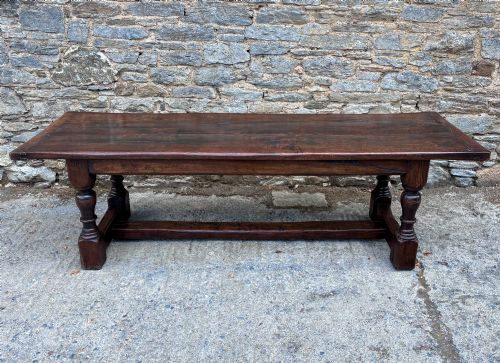
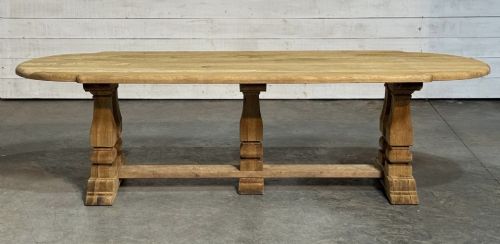
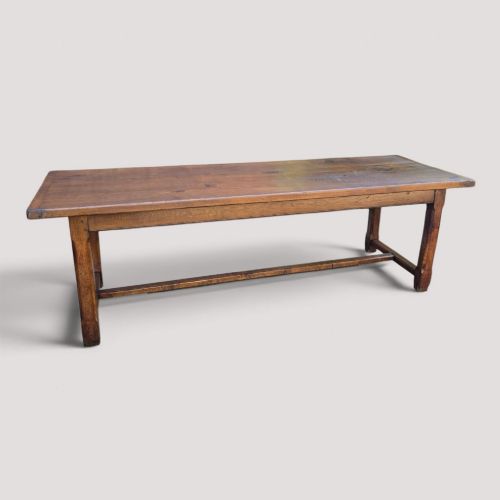
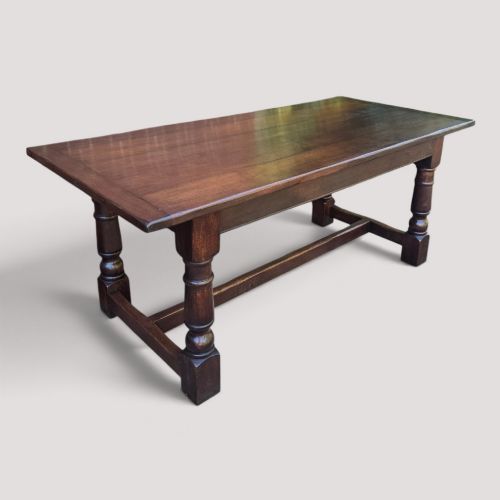
A large rustic table is primarily a heavy dining piece designed for communal use, built in oak, pine, elm or fruitwood across the eighteenth, nineteenth and early twentieth centuries. These boards served generations in farmhouses, sculleries and kitchens, acquiring deep patination from daily domestic work.
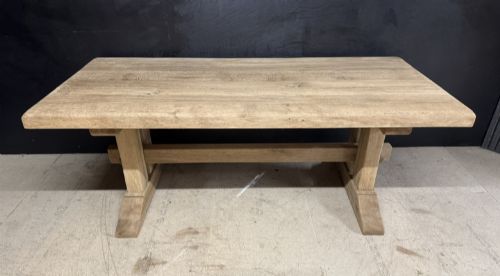
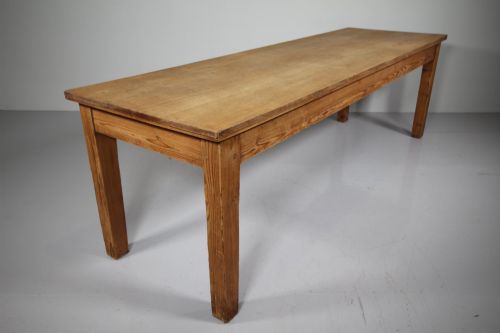
You will most frequently encounter refectory and farmhouse formats originating from English and French provincial workshops. These tables range from long oak dining boards with trestle ends to scrubbed pine harvest tables built to seat eight or more diners comfortably.
How they were made
Joiners constructed these pieces from solid indigenous timbers like oak, pine and elm, utilising pegged mortise and tenon joints to withstand heavy daily pressure. Tabletops often consist of single, double or triple planks secured with robust cleats or stretchers beneath.
Surfaces were left plain, waxed or scrubbed, allowing the natural grain of the wood to show without heavy varnishes. Iron bracing and stretcher bases provided stability for long spans used in busy kitchens and refectories.
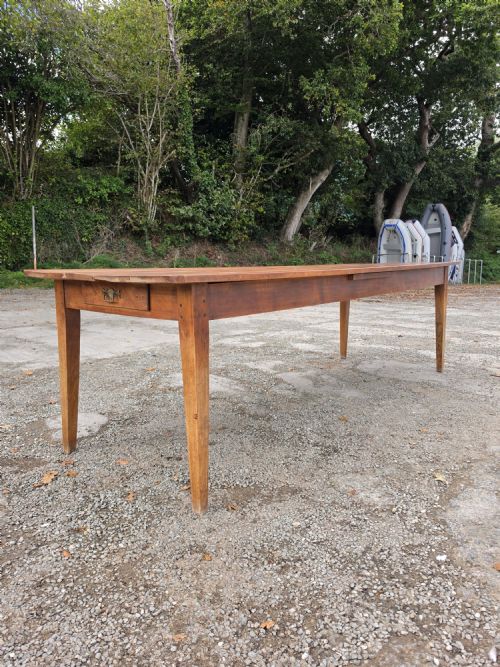
Listings feature solid oak, pine, elm and cherrywood spanning the eighteenth and nineteenth centuries, alongside refectory and gateleg forms.
What varies in quality
Quality rests in the integrity of the timber and the honesty of the construction, where single-plank tops and substantial undercarriages command greater respect. Tables retaining original stretchers and unblemished structural framing show superior joinery from regional makers.
The degree of honest wear distinguishes better examples, as centuries of scrubbing and use create a smooth, undulating surface rather than dry, splintering damage. Proportion and balance between the heavy top and the trestle or leg supports dictate the visual weight of the piece.
The Large Rustic Table Glossary
- Refectory table
- A long, narrow dining table originally built for monastic refectories and later adopted in domestic farmhouses. These pieces usually feature substantial trestle or four-leg bases connected by low stretchers.
- Gateleg table
- A table with hinged drop leaves supported by swinging legs that pivot out like a gate. This clever design allows the surface area to expand or contract depending on the company.
- Scrubbed top
- A tabletop cleaned repeatedly with water and sand or stone, removing old finishes to leave pale, smooth wood. This treatment highlights the natural grain developed through decades of hard use.
- Plank top
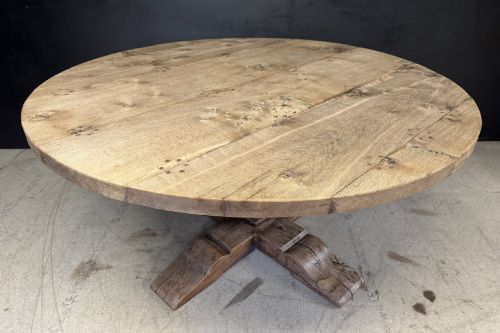
- A surface constructed from several wide boards laid side by side. Single-plank versions utilise exceptionally wide trees and remain prized for their unbroken expanses.
Large Rustic Table: Frequently Asked Questions
How do I care for an old wooden table?
Feed the timber periodically with a neutral beeswax to maintain the moisture in the dry boards and protect the surface from spills. Avoid placing these tables near direct heat sources to prevent the historic wood from splitting.
Clean the surface simply with a slightly damp cloth rather than harsh chemical sprays that strip the aged patina. Respect the dents and marks as part of the working history of the wood.
How do I seat eight people comfortably?
Look for refectory or farmhouse formats measuring at least eight feet in length to allow adequate legroom between the trestle ends or legs. Check the clearance beneath the apron or skirts to ensure dining chairs slide under easily.
Bench forms often accompany these tables, offering flexible seating arrangements that tuck away neatly when not in use. Measure your dining space carefully to leave room for people to pull out their seats.
Are these tables suitable for modern kitchens?
These robust surfaces anchor contemporary open-plan spaces by adding warmth, texture and historical contrast to modern interiors. Their generous proportions make them natural gathering points for cooking, dining and working.
Pairing an antique board with modern seating creates a striking balance between old craftsmanship and contemporary living. The durable nature of these timbers means they continue to handle daily family life without fuss.