

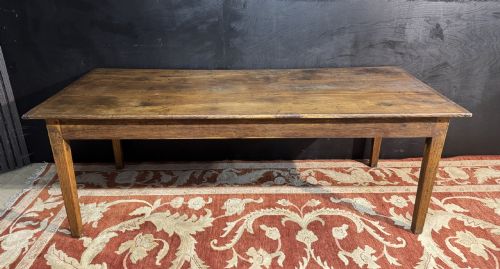
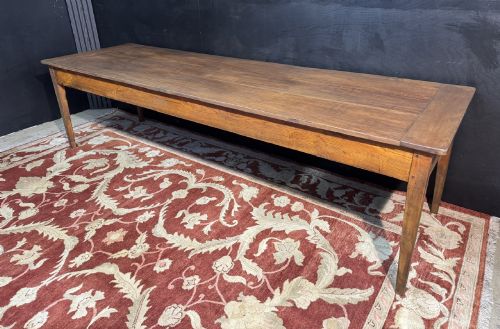
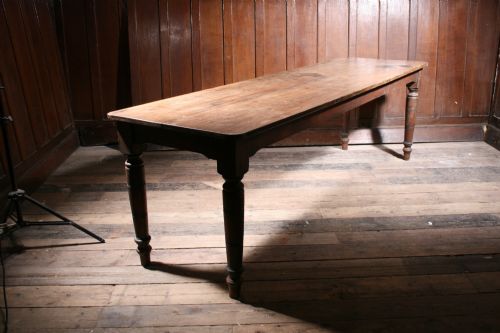
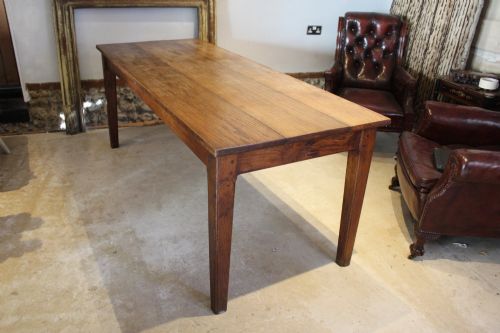
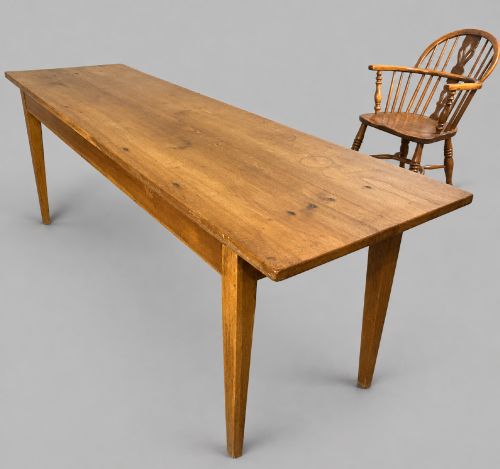
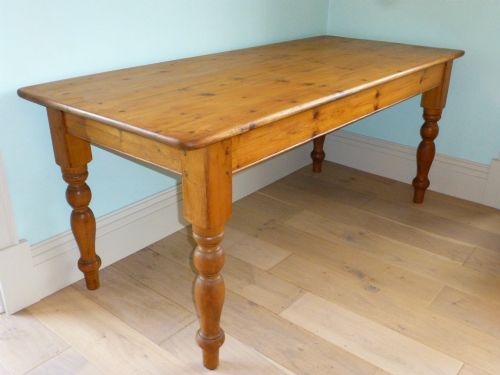
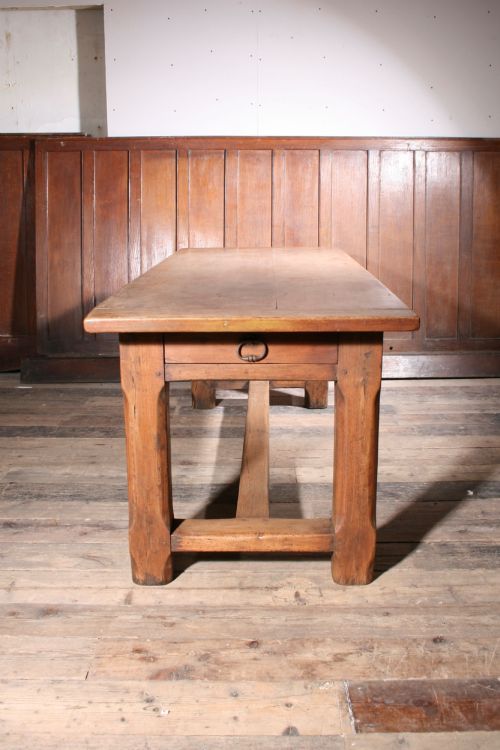
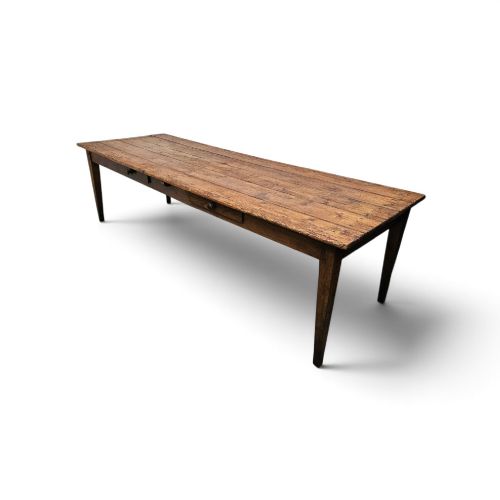
Large Rustic Kitchen Table
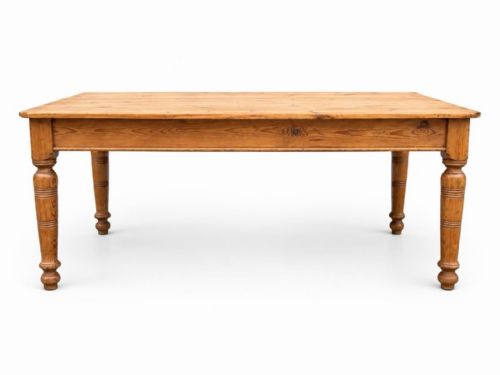
A large rustic kitchen table grounds a room with substance, offering generous proportions for daily meals and gatherings around timeworn timber.
Large Rustic Kitchen Table
A large rustic kitchen table serves as the central gathering place in a home, combining generous proportions with utilitarian design. When searching for a large rustic kitchen table, buyers encounter substantial dining surfaces originating from French provincial and English country traditions.
The pieces on this page span the eighteenth, nineteenth, and early twentieth centuries, encompassing styles from Victorian country to French farmhouse. Dining tables, refectory tables, and prep tables dominate the selection, built originally for heavy daily domestic use.
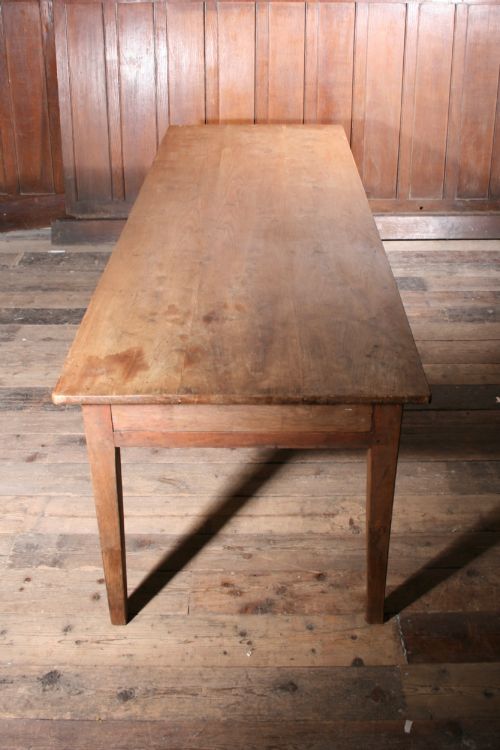
Surviving examples display the marks of generations of preparation and dining. Oak and pine appear most frequently, shaped into refectory and plank forms designed to seat eight or more people.
Materials and construction
Carpenters relied on solid hardwoods like oak, elm, fruitwood, and chestnut alongside softer timbers such as pine and pitch pine. Planks were selected for width and strength, often joined simply to handle heavy daily labour in domestic kitchens and farmhouses.
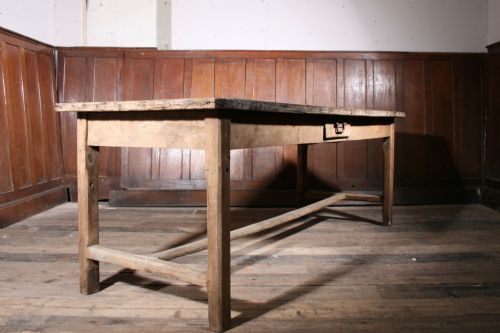
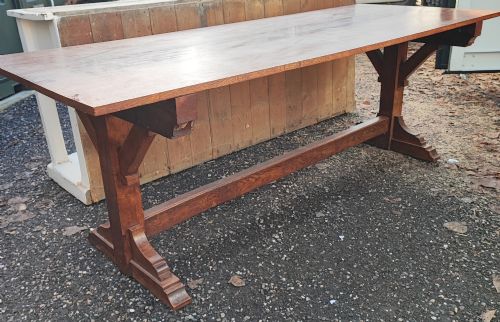
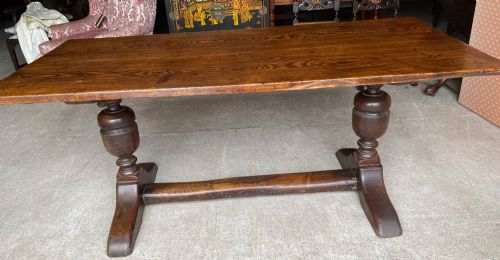
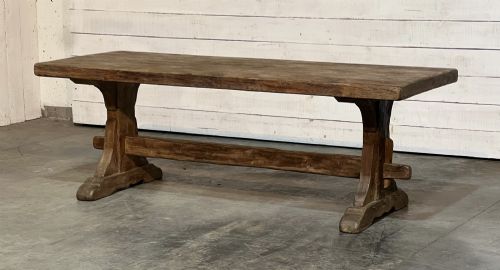
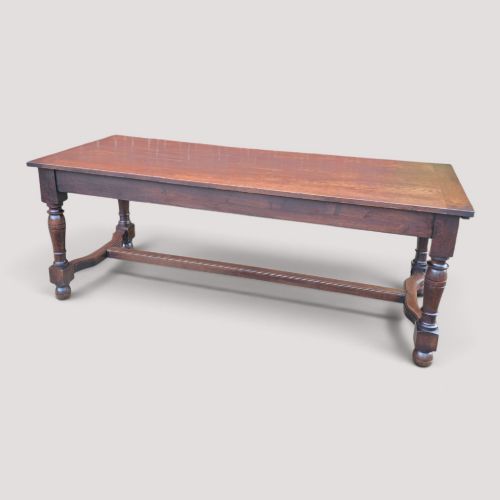
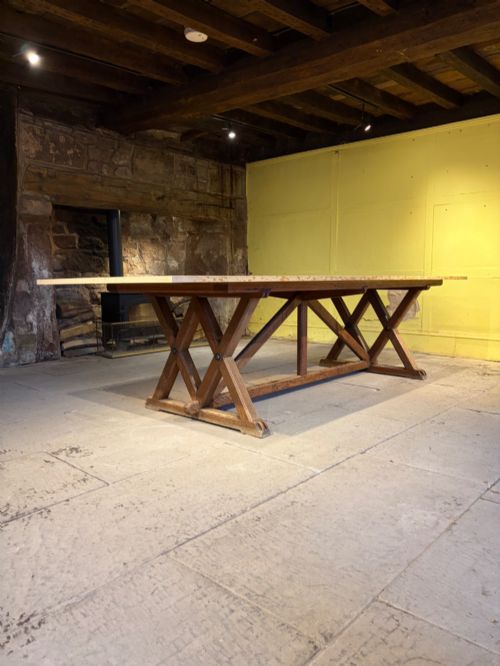
Supports range from sturdy turned wooden legs to traditional refectory trestles and simple straight legs. Timbers show the tool marks of manual planing and sawing, reflecting regional workshop practices across English and French regions.
Large Rustic Kitchen Table Retail Price Guide 2026
Typical asking prices for large rustic kitchen table among the pieces listed under this phrase on Sellingantiques today, from the lower quarter to the upper quarter. They describe what is for sale here now, not the wider market.
The inventory includes regional forms spanning English country, French provincial, and Arts and Crafts traditions.
Distinctions in quality
Quality rests upon the integrity of the original timber and the proportion of the frame. Single plank tops and dense hardwood construction command attention for their structural honesty and resistance to warping.
The character of the surface timber dictates visual success. Tables retaining patinated finishes, untouched grain, and honest structural joints demonstrate superior historical integrity compared to overly restored counterparts.
The Large Rustic Kitchen Table Glossary
- Refectory table
- A long, narrow dining table originally built for monastic dining halls. These forms provide ample length and stable leg placement for large gatherings.
- Drapers table
- A long, utilitarian table traditionally used in textile shops for folding cloth. They often feature generous length and practical working heights.
- Plank top
- A table surface constructed from wide boards joined side by side. Single plank versions utilise exceptionally wide trees felled in earlier centuries.
- French provincial
- A style reflecting regional furniture making outside Paris. These pieces prioritize sturdy utility and local timbers over ornate metropolitan carving.
- Patina
- The surface sheen and colour developed by wood over decades of handling, polishing, and exposure to light.
Large Rustic Kitchen Table: Frequently Asked Questions
How do I seat eight people comfortably?
Look for lengths exceeding two hundred centimetres to ensure adequate leg room between the supporting legs or trestles. Refectory formats often provide unobstructed seating along the entire length.
Consider the width of the frame as well, ensuring chairs fit beneath the apron without crowding.
Are these tables suitable for daily dining?
These pieces were originally constructed for heavy kitchen and farmhouse use, making them inherently durable for modern meals. Solid timber surfaces handle daily wear and accumulate further character over time.
Maintenance involves simple cleaning with damp cloths and occasional waxing to protect the dry grain.
How do I identify eighteenth century timber?
Early timber surfaces display wide growth rings and distinct manual sawing marks rather than uniform modern machine milling. Oak and chestnut from this era show deep patination and minor historical shrinkage.
Joints often incorporate pegged mortise and tenon construction executed entirely by hand.
What is the difference between oak and pine?
Oak provides a dense, heavy hardwood surface with prominent grain patterns suited for formal refectory and farmhouse designs. Pine offers a softer, lighter timber frequently found in painted or bleached kitchen prep formats.
Both materials weather differently, with pine acquiring a paler, scuffed texture and oak deepening to a rich brown hue.